TL;DR — The Short Version
- Treat Instagram DMs as a lead source, not just conversations — capture and store data instantly.
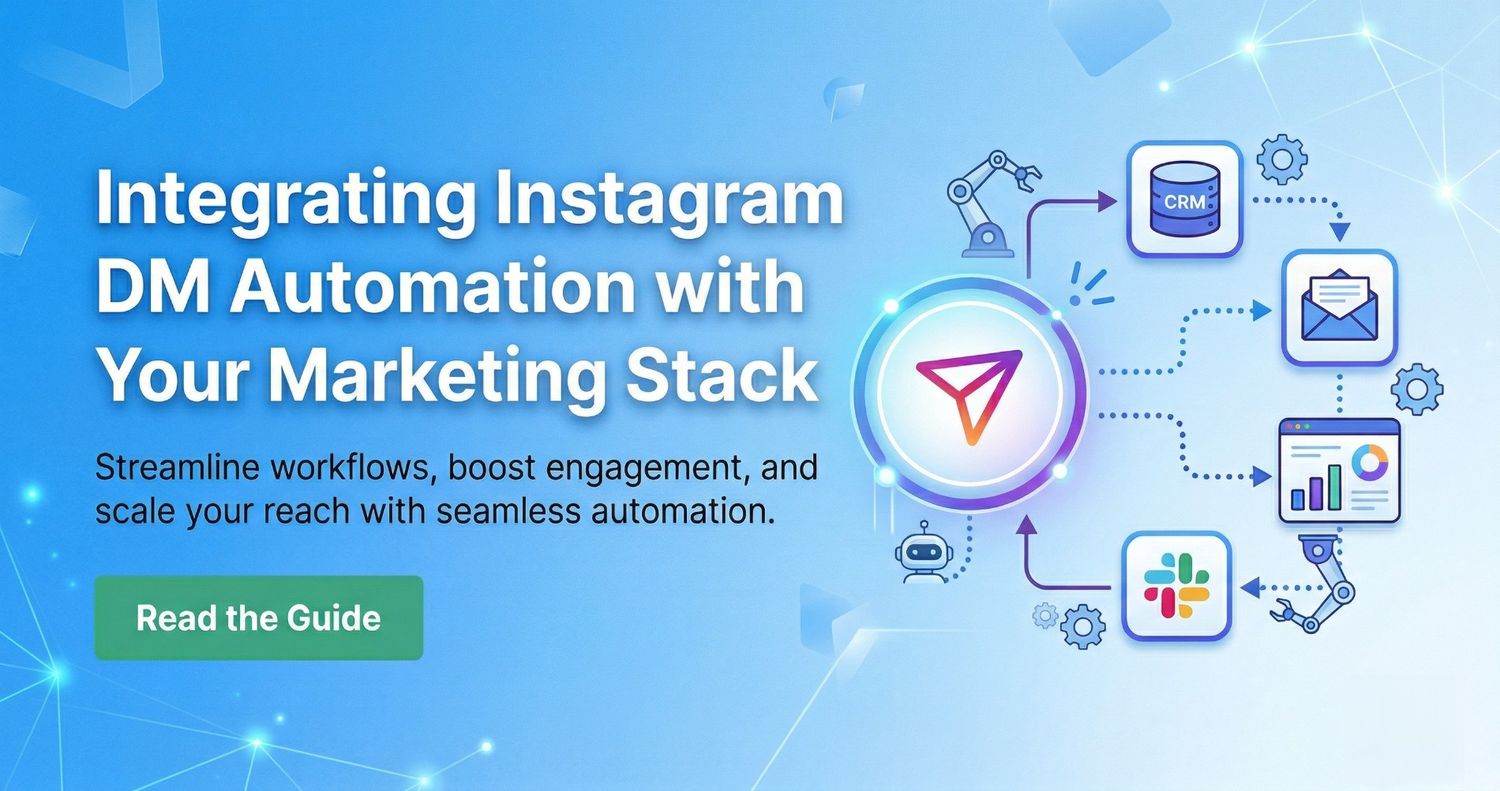
- Connect your DM flows to your CRM so leads don’t get lost inside Instagram.
- Trigger email sequences immediately after someone completes a DM interaction.
- Use UTM tracking on every DM link to measure real performance in analytics.
- Feed key interactions back into your CRM so sales teams have full context.
- Build one simple flow from DM → CRM → email → conversion, then improve it over time.
Most brands treat their Instagram DMs like a separate thing. A standalone inbox. Something the social media person manages. Occasionally someone checks it, sends a few replies, and moves on.
That's a waste.
If you've set up any kind of DM automation—comment triggers, story replies, or keyword flows—you already have people raising their hands and telling you exactly what they want. The problem is that information usually lives and dies inside Instagram. It never makes it into your CRM. It never fires an email sequence. It never shows up in your analytics as a conversion source.
You're generating leads with one hand and dropping them with the other.
Connecting your DM automation to the rest of your marketing stack isn't a technical project that requires a developer and three weeks. Most of it is an afternoon of setup with tools you probably already pay for. Here's how it actually works.
For small businesses and growing digital marketing agencies, relying on outdated social media tactics is a quick way to burn through your time and resources. Whether you are scaling an agency project or driving targeted traffic for SEO clients, you need a framework that prioritizes actual ROI over vanity metrics like simple likes and views. To stop guessing and start implementing tactics that reliably fill your sales pipeline, refer to this breakdown of the Best Instagram Marketing Strategy For Small Business 2026 (PROVEN & PROFITABLE). This video strips away the fluff and focuses entirely on actionable, revenue-generating steps you can apply immediately to attract and close high-paying clients.
1. First, stop thinking of DMs as a social media thing
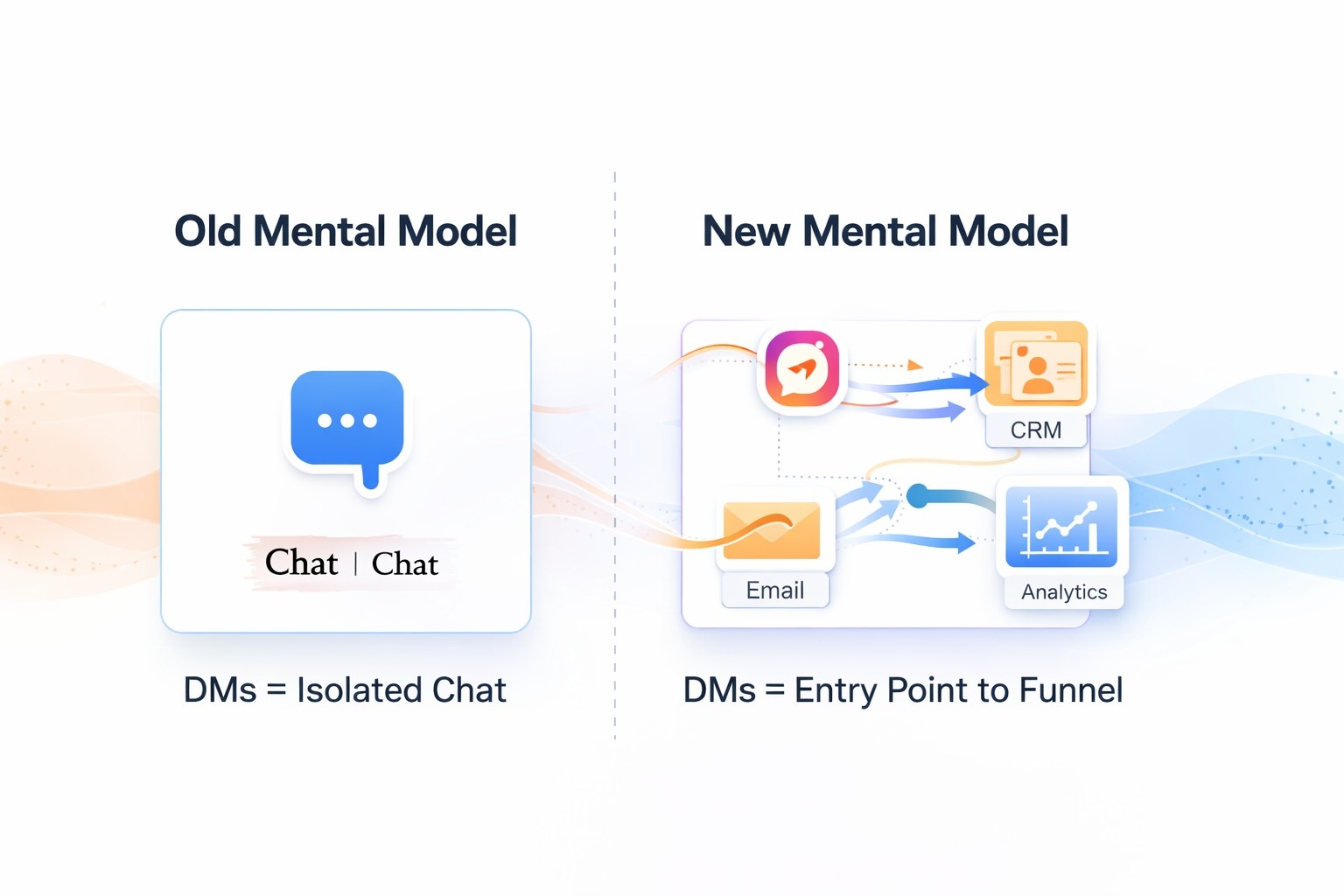
The reason most brands never integrate their DM automation is a mental model problem. DMs feel social. Social feels like a separate department. And separate departments don't share data.
When you relegate your direct messages to the "social" bucket, you implicitly tell the organization that these interactions are only about brand awareness or community engagement. But look at what's actually happening. Someone sees your reel, comments a keyword, gets a DM, clicks a link, and lands on your site.
That's a lead. That's a conversion event. That's precisely the kind of interaction you'd track obsessively if it happened through a Google ad or an email campaign.
The moment you start treating DM automation as a lead generation channel—not a community management task— everything changes. You begin to view every message, every auto-reply, and every captured email as part of a sophisticated marketing funnel. You start asking different questions: Where do these people go after the DM? Are they converting? How long does it take? Which flows perform best?
You can't answer any of those questions if your DMs are siloed. So the first step is just deciding that they're not.
Most automation tools today are built to handle these interactions smoothly — triggering replies, capturing data, and guiding users through simple flows. But all of that work falls flat if the data never leaves Instagram.
2. Connect DM opt-ins to your CRM on the same day they happen
When someone completes a DM flow—sharing their email, clicking a CTA, or answering a qualifying question— that's a contact event. It should land in your CRM within minutes, not in a spreadsheet someone exports once a month.
The speed of data transfer dictates the warmth of the lead. If someone hands you their email address or phone number through an Instagram chat, their interest is peaking. The cleanest way to do this is through Zapier or Make (formerly Integromat).
When a contact completes a flow, a webhook can be triggered automatically. You catch that webhook in Zapier and push the data—name, Instagram handle, email if collected, and the tag they received—straight into HubSpot, Salesforce, PipeDrive, or wherever you're working. Most automation tools integrate with platforms like HubSpot, Zapier, and Make, so you don’t need to write code to achieve this.
A few things worth setting up from day one:
- Create a contact automatically whenever someone completes a keyword flow. Don't wait for them to fill in a form somewhere else. Many automation tools can collect and validate emails and phone numbers directly within the chat, making this transition entirely frictionless.
- Map your automation tags to CRM properties. If someone clicked "keto" in your DM flow, that should show up as a field in HubSpot, not disappear when they leave Instagram. You can tag contacts based on their behaviour. Passing these tags to your CRM segments your audience instantly.
- Log the source. Tag every contact created this way with "Source: Instagram DM" so you can filter by it later and actually see how the channel is performing.
It takes about an hour to set up the first time. After that it runs itself.
As your agency scales and lead volume increases, managing conversations solely within the native app becomes a logistical nightmare. To ensure no potential client falls through the cracks, it is crucial to funnel those interactions directly into your central database. Whether you are tracking inbound SEO inquiries or organizing prospects for your digital marketing services, syncing your communications is a complete game-changer. Discover the seamless integration process by reading this guide on How to Connect Instagram DMs to your CRM. By linking these two powerful systems, you can automatically capture contact details, organize follow-ups, and keep your entire sales pipeline perfectly organized without manual data entry.
3. Trigger email sequences the moment someone finishes a DM flow
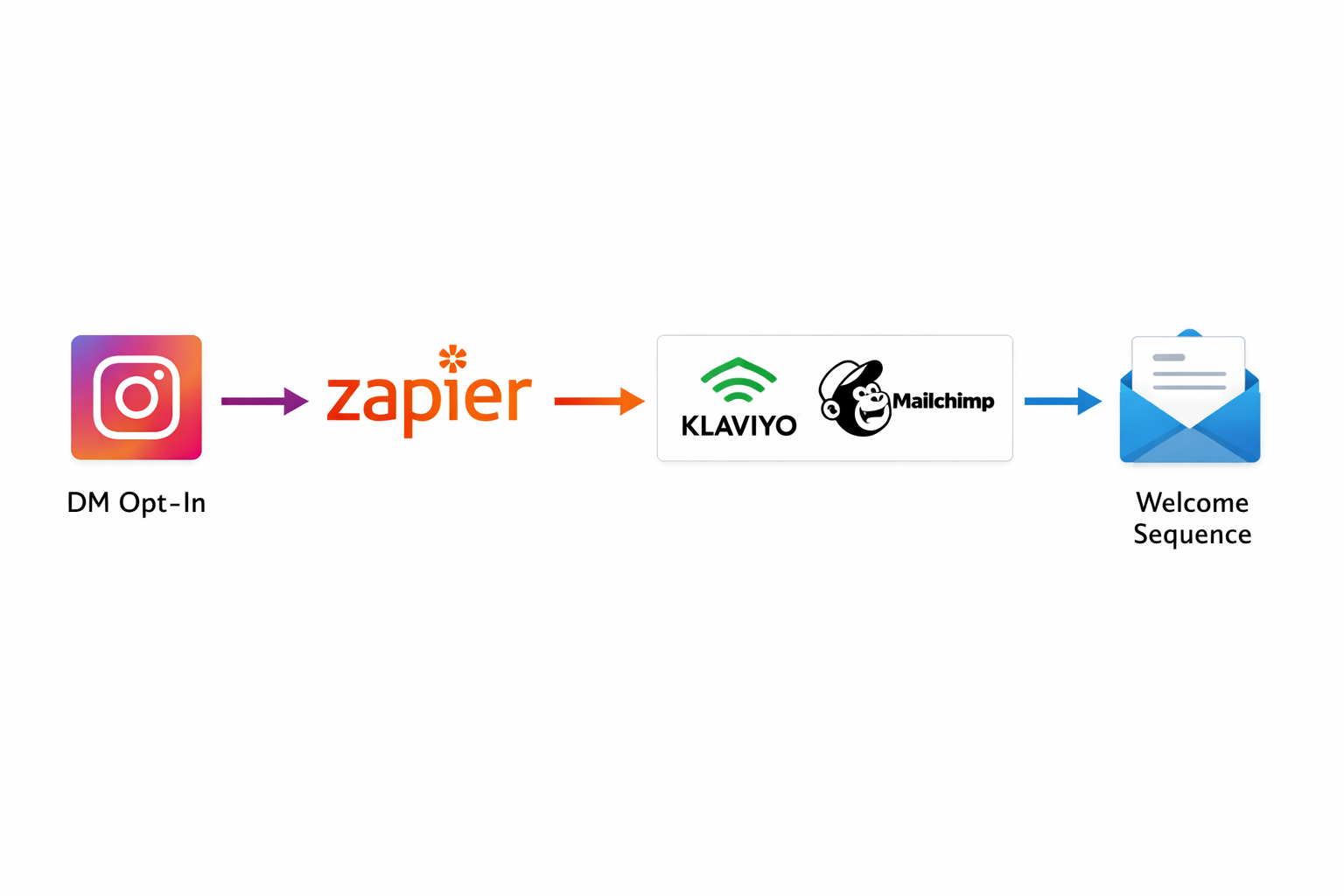
Here's a pattern that almost nobody uses but absolutely should: when someone completes a DM flow and shares their email, fire them into a welcome sequence immediately. Not tomorrow. Not whenever your email platform next syncs. Right now.
The reason this matters is timing. The moment someone engages with your DM automation, their intent is as high as it's going to get. They just raised their hand. A well-timed email that lands within the hour – referencing what they asked about in the DM – converts at a completely different rate than one that arrives two days later with no context.
Imagine an email reading: "Hey, thanks for grabbing that guide earlier on Instagram — here's the quick-start version so you can actually use it today." That email could have been sent to a thousand people. It still feels like it was written for the one person reading it, because it references exactly what they did and when.
The setup is brilliantly simple: Zapier can detect when a DM flow is completed and pass that data to your email platform (Klaviyo, Mailchimp, ActiveCampaign — all work), tagging the subscriber based on the flow they came from. Your email sequence then starts automatically.
, pushes the email address to your platform (Klaviyo, Mailchimp, ActiveCampaign — all work), and tags the subscriber with whatever flow they came from. Your email sequence fires from that tag. Done.
With features like InstantDM's Follow-up Messages, you can even run a dual-channel nurture sequence. While Klaviyo is sending them an onboarding email, your automation can send a 24-hour follow-up message directly in the chat
directly in the Instagram chat, ensuring the prospect is engaged on the platform where they are most active.
4. UTM-tag every link in your DM flow.
This one's so simple it's almost embarrassing to mention, but the majority of brands skip it: add UTM parameters to every link you send through DM automation.
Without UTMs, Google Analytics has no idea that the person who just converted came from an Instagram DM. It files them under "direct" or sometimes "referral", and your DM channel gets zero credit for the revenue it's actually driving. This leads to catastrophic misallocations of marketing budgets. Marketing directors often analyse analytics, observe high direct traffic, attribute it to their brand awareness, and neglect the significant impact of their DM automation.
A basic UTM structure that works:
- utm_source=instagram — where they came from
- utm_medium=dm-automation — how they arrived
- utm_campaign=story-trigger-jan — which specific flow
Build this into every link before you publish the flow, not after. It takes thirty seconds per link and means you can actually prove in Google Analytics – and in your next team meeting – exactly how much revenue Instagram DMs contributed this month.
If you're running multiple flows (story triggers, comment-to-DM, welcome sequences), give each one its own campaign name. You'll start to see which flows convert best at the bottom of the funnel, not just which ones generate the most clicks. For instance, you might discover that your "Follow for Link" automation via InstantDM drives fewer clicks than a generic story trigger, but the resulting audience converts at three times the rate because they are deeply engaged followers.
If you are managing inbound marketing for a growing agency, keeping your social data siloed from your sales data is a massive mistake. When a prospect interacts with your Instagram content, that information needs to flow seamlessly into your central database so you can track the entire customer journey from first touch to closed retainer. For teams utilizing one of the most popular enterprise platforms, understanding how to connect your social media accounts to HubSpot is an absolute must. This integration allows you to monitor engagement, track ROI, and tie every direct message or comment directly to a specific contact record, ensuring your digital marketing and SEO campaigns are perfectly aligned with your actual sales pipeline.
5. Feed DM conversations back into your CRM as notes
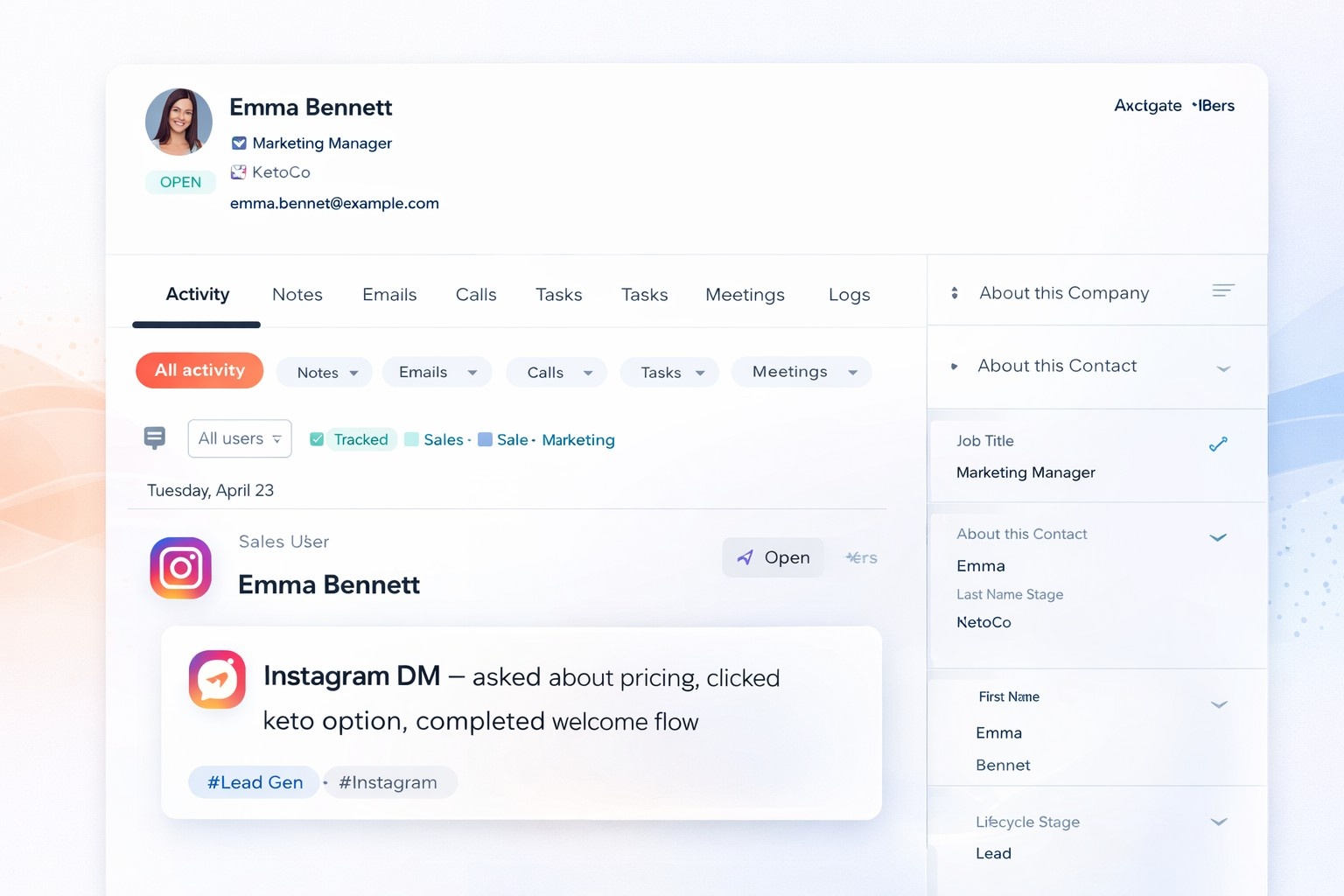
Your sales team is going to call these leads. Or email them. Or they'll show up to a discovery call. In every one of those situations, it helps to know what the person actually said and did in the DM before any of that happened.
Most teams don't have this. The DM conversation happened in Instagram, the contact showed up in the CRM, and there's no bridge between them. The salesperson either asks questions the person already answered, or they wing it with no context and the call starts cold. This completely destroys the customer experience. The lead feels like they are starting from scratch, repeating themselves to a brand they thought they were already talking to.
The fix: use Zapier to log a note on the CRM contact every time a significant DM event happens. Flow completed. Tag applied. Question answered. Link clicked. It doesn't have to be the full transcript — a one-line summary of what happened is enough.
When your salesperson opens the contact and sees "Completed story trigger flow, selected keto option, asked about pricing in follow-up", they walk into that conversation with context. That changes the quality of every interaction downstream. Most automation tools allow you to map custom questions, capture responses, and record those answers, so every piece of contextual data gathered by the automation bot serves as pre-call research for your sales representatives.
6. Build the full end-to-end flow once, then let it run
The reason most brands never do this is that they think about integration as a one-time big project. It isn't. It's a handful of Zaps (or Make scenarios) that take an afternoon to wire up, and then they run in the background indefinitely.
Here's what a complete, integrated flow actually looks like:
- The story goes live. You tell your audience to DM the word "guide" or reply to your story.
- InstantDM fires. They get an instant DM, complete the flow, and share their email.
- Zapier catches the event. Contact is created in HubSpot. Tagged "Instagram DM — guide". Note logged.
- Email sequence triggers. They're added to a welcome series in Klaviyo. The first email lands within the hour.
- Analytics tracks it. Every link they click from the DM carries UTMs. Google Analytics knows this lead came from Instagram.
- Sales picks it up. If they qualify, a salesperson opens the CRM, sees the full context, and reaches out with something relevant.
That's the whole thing. Once it's running, a lead can go from seeing a story to being inside your CRM and email sequence in under five minutes, with no one touching anything manually.
Some tools also allow you to schedule posts alongside automation triggers, so everything goes live at the same time. If a post gains traction, good systems handle the increase in activity by pacing messages instead of sending everything at once. This keeps your account safe and the experience natural for the person receiving the message.
Most brands are nowhere near this. Not because it's hard, but because nobody ever sat down and drew the line from DM to closed deal and asked, 'What needs to be connected for this to actually work?'
7. Measure what actually matters
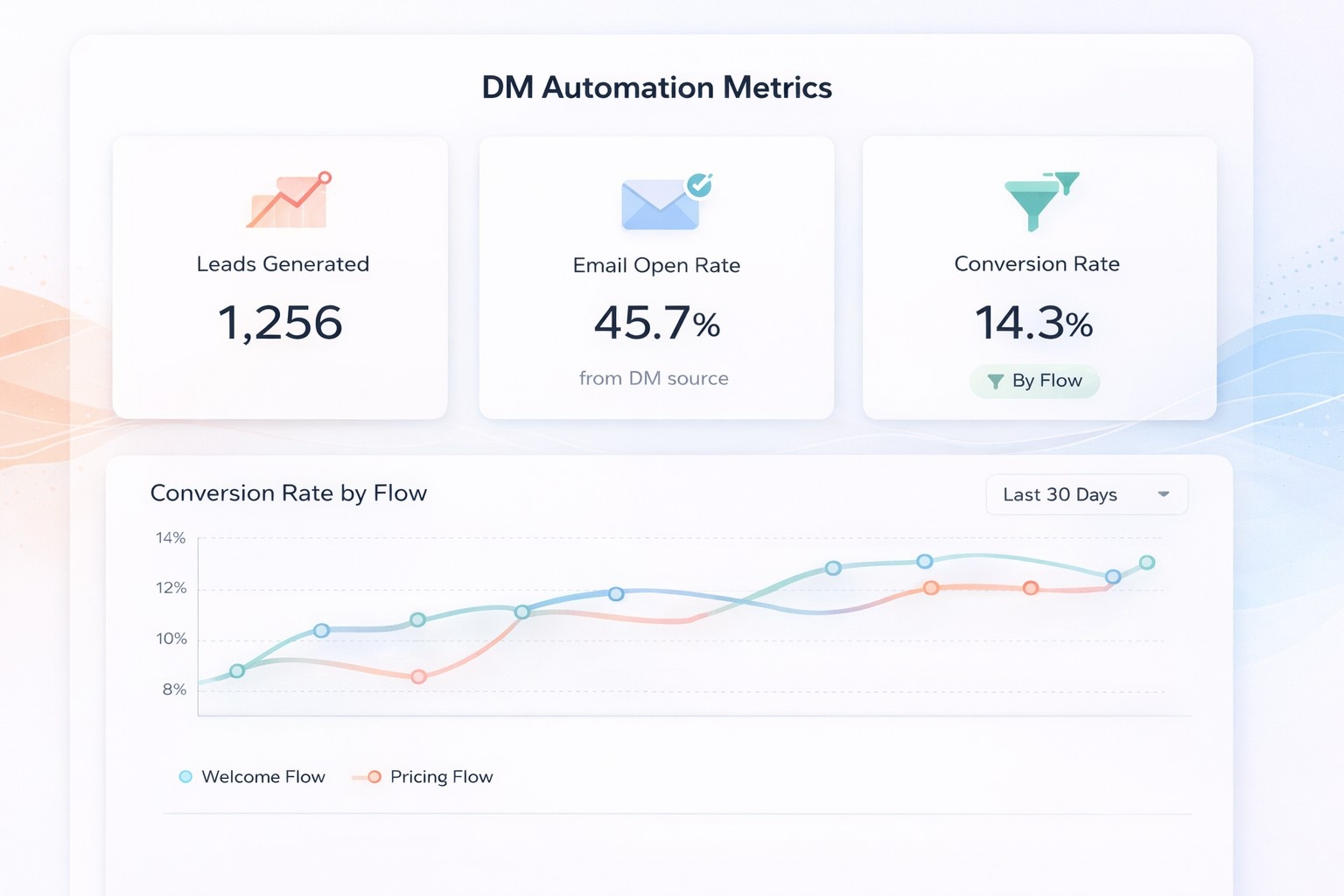
Once the integration is set up, you have access to metrics you couldn't see before. Don't ignore them. The numbers worth watching aren't DM open rates or comment counts. Those are vanity.
The numbers that matter are the following:
- Lead-to-contact rate: what percentage of DM flow completions result in a CRM contact?
- DM-to-email conversion: of the people who finish a DM flow, how many end up on your email list?
- Flow-to-close rate: which specific DM flows produce the leads that eventually convert to customers?
- Revenue by source: in Google Analytics, how much revenue is attributed to your DM automation UTMs?
You're looking for the flows that convert all the way down the funnel, not just the ones that generate the most initial clicks. A story trigger that sends 500 DMs but produces two customers is less valuable than one that sends 80 DMs and produces twelve.
InstantDM provides an advanced dashboard to track these fundamental engagement metrics, allowing you to instantly assess which keywords, posts, and automated sequences are truly resonating. Review these numbers monthly. Kill the flows that don't convert. Double down on the ones that do.
8. Clean data matters more than more data
More leads don’t help if your data is messy.
If your CRM is filled with duplicate contacts, missing fields, or unclear tags, your follow-ups will feel just as messy. You’ll send the wrong emails, target the wrong people, and lose trust without realising why.
Keep it simple:
- capture only what you’ll actually use
- label contacts clearly
- remove or fix broken entries regularly
Good automation depends on clean inputs. Without that, everything downstream gets weaker.
When executing high-level SEO strategies or managing complex digital marketing campaigns for multiple clients, proving the exact origin of your web traffic is what separates a good agency from a great one. While setting up basic links is a start, truly understanding how to structure, organise, and analyse your campaign data is essential for long-term success. If you want to master the fundamentals of campaign attribution and ensure every single click is properly measured, dive into this comprehensive resource: What Is UTM Tracking? A Complete Guide to Using UTM Parameters. Mastering these tracking codes will allow you to confidently show exactly which social posts, automated DMs, or specific content pieces are driving the most qualified leads and the highest overall ROI.
9. Don’t overcomplicate the flow
Most integrations fail because people try to build everything at once.
You don’t need ten flows, five tools, and complex branching on day one. You need one working path:
DM → CRM → email.
That’s it.
Once that works smoothly, then you expand. Add segmentation. Add follow-ups. Add tracking layers.
Start small, make it work, then build on top of it.
Once your automated DM sequences and content strategies are running smoothly, you need to know exactly which posts are actually driving traffic to your landing pages. When running campaigns for a digital marketing agency, relying solely on native platform analytics often isn't enough to prove real ROI to your clients—you need granular, link-level data. To accurately attribute your leads and monitor your campaign success, watch this quick tutorial on How to Add UTM Parameters to Social Media Posts (Track Every Click!). By tagging your URLs correctly, you eliminate the guesswork and can easily identify exactly which pieces of content are generating the most valuable clicks, allowing you to scale what works
10. Speed matters more than perfection

When someone interacts with your DM flow, timing is everything.
If their data hits your CRM instantly and they receive a follow-up email within minutes, the experience feels connected. If it takes hours or days, it feels broken.
You don’t need a perfect system. You need a fast one.
People act when interest is high. Your system should move at the same speed.
When you are building robust social media strategies for your digital marketing agency, relying on native integrations alone can sometimes leave frustrating gaps in your workflow. To truly scale your operations—whether you need to push fresh leads from your automated DMs straight into a customized tracking sheet or trigger instant team notifications for new high-ticket inquiries—you need a universal connector. For a masterclass on linking your social presence to the rest of your tech stack, dive into Your Guide to Instagram Automation | Zapier. Mastering these custom "Zaps" will allow you to build a completely hands-off ecosystem, freeing up your schedule so you can focus entirely on high-level content creation and client strategy.
Conclusion: Connect the dots or lose the value
DM automation on its own is useful. But on its own, it’s incomplete.
The real value comes from what happens after the conversation — where the data goes, how quickly you act on it, and whether your system keeps the context intact.
Most brands stop at the DM. That’s where they lose momentum.
If you connect your flows properly, a simple interaction can turn into a full journey—from a message to a lead to a customer.
Start with one connection. Get it working. Then improve from there.
That’s how this becomes a system, not just a tactic.