TL;DR
The TikTok algorithm in 2026 is no longer a random lottery for viral dances; it is a highly sophisticated search and retention engine. To win today, you must prioritise video completion rates, master the 3-second hook, and treat your content exactly like traditional website SEO—optimise captions and on-screen text. TikTok heavily favours longer-form content (60+ seconds) and raw, authentic storytelling over polished corporate ads. By niching down, posting consistently, and building smart funnels to move traffic off-platform, you can turn fleeting FYP views into a dedicated community and measurable sales.
Introduction: The Death of the Old TikTok
If you are trying to figure out how the TikTok algorithm works in 2026, you need to understand one basic rule: it is a sophisticated retention and search engine designed to keep people engaged as long as humanly possible. Let’s be completely real for a second. If you are still operating on the 2021 playbook—pointing at text bubbles on the screen while lip-syncing to a trending Doja Cat song—you are going to be incredibly frustrated with your analytics. The era of effortless, low-effort virality has come to an end.
The underlying system, known as the algorithm, dictates the recommendation of videos to users on their For You Page (FYP). Going viral on TikTok now requires a more strategic approach. The algorithm has evolved from prioritising short, catchy dances to rewarding high-retention, deeply search-optimised content.
If you're a creator, an agency owner, or a brand trying to figure out why your views are seemingly stuck in the dreaded "200-view jail", it’s time to update your strategy. Understanding what TikTok values right now is the difference between blending into the background noise and building a highly engaged community that actually converts into revenue. Let’s break down exactly what the algorithm favours today, step-by-step, and how you can use it to grow a massive, sustainable presence.
1. Completion Rate is the Ultimate Currency
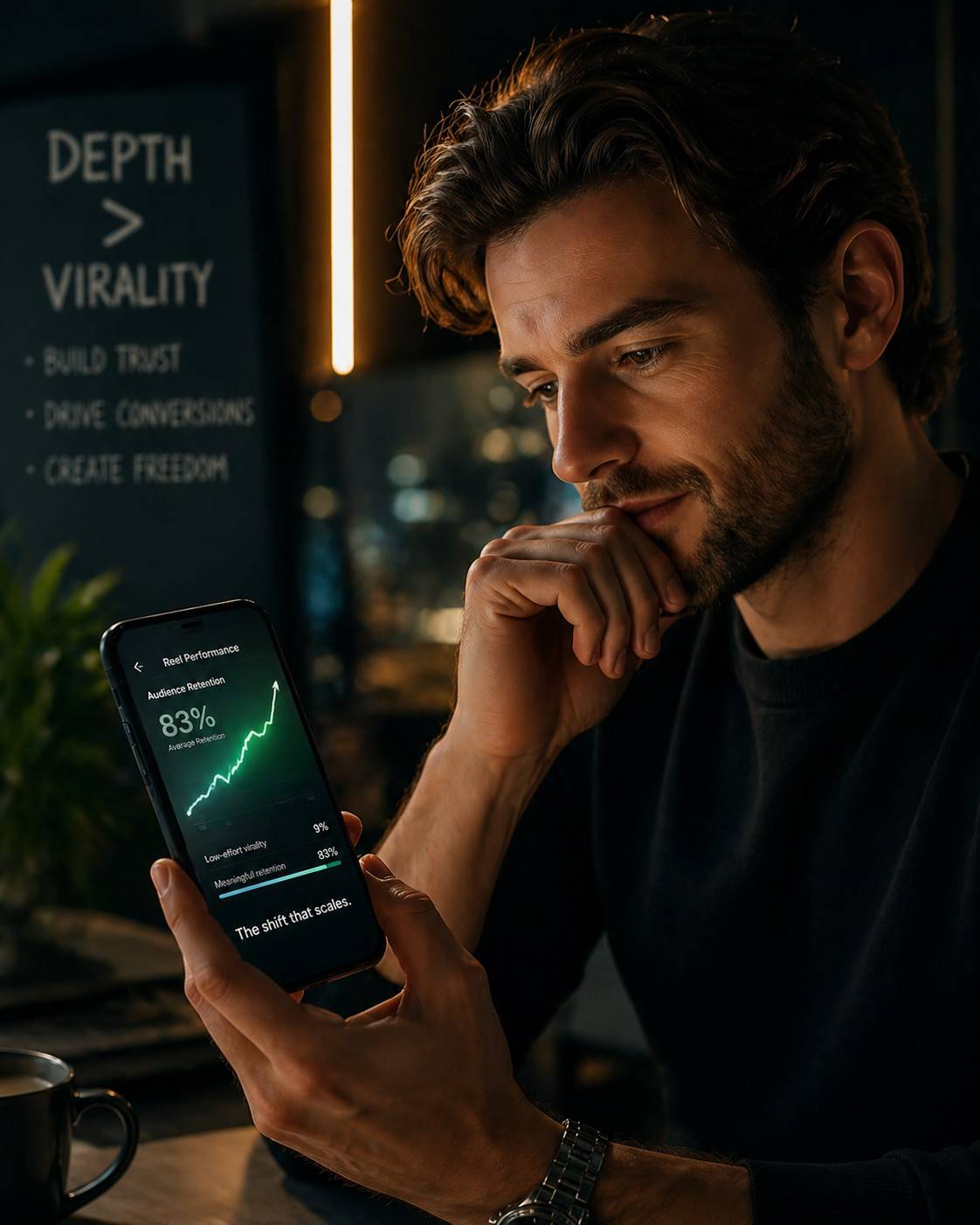
Forget likes. Forget shares. Forget saves for a second. If people aren't watching your video all the way through, the algorithm simply will not push it to new feeds. TikTok’s entire business model relies on keeping users on the app so they can be served advertisements. Therefore, videos with high completion and rewatch rates get prioritized for the FYP. In the early days, you could get away with a mediocre video if it had a trending sound, but the 2026 algorithm is ruthless when it comes to watch time.
Building your first 1000 followers on any platform starts with understanding this retention-first logic—but the actual path from 0 to 1000 is more about systematic content than viral luck. The framework that turned 0 into 500+ followers per day → For a deeper dive into maximizing your overall Instagram engagement, check out our complete 2026 guide.
How the Algorithm Grades Your Retention
When you post a video, TikTok pushes it to a small "seed" audience of a few hundred people. If a large percentage of that audience swipes away after two seconds, TikTok logs that as a negative signal and kills the reach. If they watch to the end, it’s a positive signal, and the video is pushed to a larger tier (say, 1,000 people). If they let the video loop and watch it a second time? That is the algorithmic jackpot.
Engineering the Perfect Pace
To manufacture this kind of retention, your pacing needs to be incredibly tight. Cut out every single pause, "um," and breath during your editing process. The video should feel like a continuous, rapid-fire stream of value or entertainment from the very first frame to the very last.
The Art of the Loop
You can also use looping techniques, where the final sentence of your video seamlessly flows into the opening sentence, tricking the brain into watching the first few seconds again before realising the video has restarted. For example, if your video ends with "And that is exactly why you should..." and the beginning of your video starts with "...always check your website's indexing", the viewer will naturally watch the loop happen. That extra three seconds of watch time can push your completion rate over the 100% mark, sending massive viral signals to the algorithm.
To align your video strategy with the latest platform shifts, you can follow this detailed breakdown of how the TikTok algorithm works in 2026 to master the new "follower-first" distribution model and build niche authority.
2. The 3-Second Hook is Non-Negotiable
You have less time than ever to stop the scroll. The modern attention span is incredibly fractured. Your hook needs to be visual and auditory and directly address the viewer's pain point or curiosity within the first three seconds. If the beginning drags, the user swipes, and your retention tanks immediately.
The Psychology Behind the Scroll
Users are in a trance state when scrolling the FYP. Their thumbs are moving automatically. To snap them out of it, you need a massive pattern interrupt. This could be a sudden movement, a controversial statement, or a highly specific question that targets your ideal audience.
The Three Layers of a Viral Hook
- The Visual Hook: Text on the screen that immediately tells the viewer what the video is about. Do not use clickbait; use clear, readable text like "The exact SEO template I use to rank local businesses." The brain reads text faster than it processes audio.
- The Auditory Hook: What you say out loud. Start with the absolute most captivating part of the story, not the boring backstory. Instead of starting with, "Hi guys, today I want to talk about website traffic," you should say, "I just doubled my website traffic in 48 hours, and I'm going to show you the exact button I clicked."
- The Action Hook: Doing something visually intriguing while talking. Motion keeps the eyes locked. Start the video mid-action—pouring a cup of coffee, opening a laptop, walking down the street, or dropping a stack of papers on a desk. Static talking heads are boring; kinetic energy retains viewership.
This video from Mike Yanda provides a 12-minute deep dive into how the TikTok algorithm actually functions in 2026, debunking common myths and offering a structured framework for growth.
3. TikTok is a Search Engine Now
Gen Z and the Millennials are literally using TikTok, like Google. Keyword optimisation in your captions, on-screen text, and even what you say out loud matters significantly more than stuffing your post with random trending hashtags. Create content that answers specific questions people are actively typing into the search bar.
Treating Your Videos Like Web Pages
If you do technical SEO or backlink outreach for a living, you already understand how Google spiders crawl a website to understand its context. TikTok’s algorithm does the exact same thing to your videos. It is scanning for context clues to categorize your content so it can serve it to the right people.
The Ultimate TikTok SEO Workflow
TikTok's algorithm "reads" your video in multiple ways. It scans the native text you type on the screen, it listens to the audio via auto-captions to understand context, and it analyzes your written caption.
If you are creating a video about digital marketing, the exact phrase "digital marketing tips for beginners" needs to be:
- Spoken out loud in the first five seconds.
- Written using the native TikTok text tool on the screen (you can drag it off-screen if you don't want it visible, but the algorithm still reads it).
- Placed naturally in the first line of your caption.
This creates a bulletproof SEO signal that categorises your video accurately, allowing it to surface months later when someone types that exact query into the TikTok search bar. Evergreen content is real on TikTok now; a heavily optimised video can continue getting hundreds of views a day for a year.
How to Actually Find Your Keywords
It is one thing to know you need keywords, but where do you actually find them? Don't just guess. You have two free, incredibly powerful tools at your disposal right now.
First, use the native TikTok Search Bar. Type in your broad topic (like "SEO tips") and stop typing. Do not hit enter. Look at the drop-down menu of auto-suggested searches. These are the exact, long-tail phrases real human beings are currently typing into the app.
Second, if you want hard data, open the TikTok Creative Center on your desktop and go to the "Keyword Insights" tab. This is a massive goldmine. It allows you to search for industry keywords, see their exact popularity over the last 30 days, and even watch the top-performing videos that currently rank for that specific phrase. Steal the keywords that have a high search volume but a low competition score.
4. The Push for Longer-Form Content
While short, punchy clips still have a place in your content mix, TikTok is aggressively pushing videos that are over a minute long. They want creators to Make deeper, more educational, or entertaining mini-vlogs. If you can keep a viewer engaged for 60 seconds or more, the algorithm will reward you with a massive boost in reach.
The YouTube Competition Factor
Why the shift? TikTok is directly competing with YouTube for long-form dominance and TV-screen viewership in 2026. The platform is heavily financially incentivising creators to produce content that lasts 60+ seconds through its monetisation programs.
Don't Add Fluff, Add Value
However, you cannot just drag a 15-second thought into a 60-second video. Viewers are smart, and if they feel like you are wasting their time with fluff just to hit the one-minute mark, they will swipe away, destroying your completion rate. The content must justify the length. Deep-dive tutorials, complex storytelling, step-by-step case studies, and engaging day-in-the-life vlogs are dominating this space. Break your long videos down into distinct chapters with visual transitions to keep the viewer hooked all the way through.

5. Authenticity Always Beats Polish
Overly produced, corporate-looking videos tend to flop terribly on this app. Let’s be honest for a moment: consumers in 2026 possess a subconscious ad-blocker. They are marketed to from the second they wake up to the second they go to sleep. When they open TikTok, they are looking for an escape, a laugh, or a raw connection. They are not looking for a television commercial.
TikTok thrives on native-looking, raw, and highly relatable content. You need to talk directly to the camera like you are FaceTiming a close friend. Show the messy behind-the-scenes reality of your life or business, and focus on genuine, gripping storytelling rather than blowing thousands of dollars on a massive production budget.
The Lo-Fi Revolution: Why Cheaper is Better
People open TikTok to connect with real humans, not to watch slick, corporate propaganda. If your video looks like it was shot with a heavy, expensive cinema camera, color-graded to absolute perfection by a post-production house, and lit by a professional studio crew, you are shooting yourself in the foot.
Why? Because users will immediately flag it as an ad in their subconscious. The second their brain registers "this is a commercial," their thumb swipes up. They don't even give you a fraction of a second to make your pitch. The slicker the video, the faster the swipe.
The best-performing content right now is what the industry calls "Lo-Fi" (low fidelity). It’s shot vertically on a standard smartphone holding it in your hand. It’s slightly chaotic. The lighting might just be you standing in front of a dirty window in your apartment. It feels deeply personal. This raw aesthetic builds a level of instant trust that high-budget productions simply cannot replicate because it screams, "I'm a real person, just like you, and I have something cool to share."
Embrace the Mess (The Trojan Horse Strategy)
Perfection is boring. Flaws are engaging. Let's look at an example to see how this actually plays out algorithmically.
Let's say you're filming a serious, high-level marketing tip in your living room. You're explaining a complex SEO strategy, and suddenly your beagle wanders into the frame, bumps the tripod so the camera shakes, lets out a massive yawn, and falls asleep on your couch.
A traditional corporate video editor would be horrified. They would immediately yell "Cut!", delete the footage, and demand a perfect retake without the dog.
A smart, modern TikTok creator leaves it in. They might even include a brief zoom-in on the dog during the edit. Why? Because you are playing the algorithm. When that video goes live, the comments won't just be about SEO. Your comment section will immediately flood with people saying, "Omg, what kind of dog is that?", "The beagle totally stole the show!", and "I can't even focus on the marketing tip because the puppy is so cute."
This is raw, authentic engagement. The TikTok algorithm does not know what people are commenting about; it only knows that people are commenting rapidly. It sees this massive spike in engagement and assumes your marketing video is incredibly valuable, so it pushes it to ten thousand more people. Your messy mistake just became a viral catalyst.
Scripting vs. Speaking from the Heart
Another major trap is over-scripting. If you write out a word-for-word script and read it off a teleprompter app, your eyes will glaze over, your tone will flatten, and you will sound like a robot. Viewers can spot someone reading a script from a mile away.
Instead of full scripts, use bullet points. Write down the three main ideas you want to hit on a sticky note, stick it right next to your phone's camera lens, and just talk. If you stutter slightly or use filler words naturally, it’s fine. It makes you human.
6. Riding Trending Audio with a Twist
Trending sounds are still a great way to get a quick algorithmic boost, but the days of blindly lip-syncing to a random pop song are completely over. You cannot just use a popular track, point at text bubbles on the screen, and expect to get a million views anymore. The platform has matured past that.
The algorithm currently rewards original spins on popular audio. You need to use the sound as a background psychological trigger while you deliver your own unique value, education, or commentary over the top of it.
How to Actually Hunt for Early Trends
The biggest mistake people make is using a trending sound after it has already peaked. If a sound already has 2 million videos under it, you are way too late. Your video is just a drop in an ocean, and the trend is already dying out in the eyes of the algorithm.
The trick in 2026 is to find an audio track that is on a sharp upward trajectory. You want to find sounds that currently have under 10,000 videos created but are growing rapidly by the hour. How do you find them? Stop relying on generic "Trending TikTok Sounds" Spotify playlists. Instead, spend 15 minutes a day scrolling your FYP. Look for the little blue arrow pointing diagonally upward next to the music note at the bottom of a video. If you see that blue arrow, and the sound has 4,000 uses, save it immediately. You have found a winner before the masses have ruined it.
The 5% Volume Hack (Step-by-Step)
Once you have your early trending sound, here is the exact, fail-proof workflow to use it effectively:
- Film your original video speaking directly to the camera with your own voiceover. You want your message to be the undeniable star of the show.
- When you get to the final posting screen, click "Add Sound" and select the trending audio you saved earlier.
- Before you hit post, this is the crucial step: Go into the volume settings.
- Take the slider for "Added Sound" (the trending song) and drag it all the way down to 3% or 5%.
- Ensure your "Original Sound" (your voice) is pushed up to 100% or even 200%.
Why do we do this? This allows your actual voice to be the primary focus of the video so people can learn from you, but your post still gets the hidden algorithmic metadata tag of the trending audio. You are essentially piggybacking on the viral momentum of the song without letting the music overpower your message. Furthermore, that faint 5% background music sets a subconscious mood—whether it's a tense, dramatic instrumental to make your story more gripping, or an upbeat, lo-fi hip-hop track to make your tutorial feel relaxing.

7. Consistency Establishes Algorithmic Trust
Posting once a month, or binge-posting five videos in one day and then disappearing for three weeks, will absolutely destroy your reach. The algorithm heavily favors accounts that show up regularly. Finding a sustainable cadence—whether that's once a day or three times a week—helps categorize your account and consistently feed your audience.
The Television Network Analogy
Think of your TikTok account exactly like a traditional television network. If viewers don't know what days your shows air, they stop tuning in. Consistency gives the algorithm enough data points over time to figure out exactly who your ideal audience is.
When you take an unannounced three-week break, the algorithm essentially loses its confidence in your account. When you return, it has to "re-learn" who to send your videos to, which often leads to a massive, frustrating temporary dip in views. Batch record your content on the weekends so you always have a backlog of drafts ready to publish on your busiest days.
To effectively distribute your content and build a targeted audience, you can follow this guide on how the TikTok algorithm works and learn the key ranking factors that drive viral success.
8. Meaningful Engagement in the Comments
TikTok loves highly active comment sections. It signals that your video isn't just passive entertainment; it's a conversation starter. Replying to comments with a video is a fantastic way to create a secondary piece of content that the algorithm automatically pushes directly to the people who engaged with the first one.
Baiting the Comments
You can actually engineer comments through smart content creation. Don't give away every single detail in the video. Leave a minor, harmless question unanswered so people have to ask about it.
When someone does comment, don't just leave a generic heart emoji. Ask a follow-up question to start a thread. If someone asks for clarification on a complex topic you mentioned, use the native "Reply with Video" feature. This not only gives you an incredibly easy piece of content for your daily upload schedule, but it signals to the algorithm that your community is highly engaged, which boosts the overall authority score of your entire profile.
This video from Robert Benjamin explains the major updates to the TikTok algorithm in 2026, focusing on how its new AI-driven systems prioritize topic size and high-quality interaction.
9. Utilizing TikTok Live to Boost Your Profile
Going Live sends a massive, direct signal to the algorithm that your account is currently highly active on the platform. TikTok often pushes livestreams directly to the FYP, which acts as a glowing digital billboard for your profile, drawing brand new viewers into your regular video catalogue.
The Live Funnel Strategy
Whenever you hit the "Go Live" button, TikTok’s system temporarily boosts the reach of your most recent standard videos on the FYP. The goal is to drive FYP traffic to your profile, where they see your profile picture glowing with the "Live" ring.
If you have a major product launch, a new blog post, or a very important video you want people to see, post the video, wait exactly 15 minutes, and then immediately go Live for an hour. People will discover you on the live feed, click your profile, and watch your newly posted video. It creates a powerful, self-sustaining traffic loop.
10. Niche Down to Go Broad
The algorithm categorises your entire account based on who has historically interacted with your videos. By sticking to a highly specific niche initially, you help TikTok understand exactly who to show your content to. Once you build a dedicated, loyal core audience, you can slowly expand your topics.
The "Seed Audience" Phase
Imagine you are trying to build an audience around a specific passion—let's use sharing recipes for authentic, homemade biryani as an example. If you post a detailed, slow-cooked biryani recipe one day, a trendy lip-sync dance the next day, and a random vlog about cleaning your car the day after that, the algorithm gets completely confused. It doesn't know if you are a food creator, a comedian, or a lifestyle vlogger.
Because it's confused, it stops pushing your content. By posting 30 videos in a row strictly about homemade biryani variations, spice blends, and cooking techniques, you build a targeted "seed audience" of food lovers. Once the algorithm clearly maps your account to that specific demographic, your views stabilise. Once you establish yourself, you gain the freedom to gradually introduce other aspects of your life.
11. Funneling TikTok Traffic Off-Platform
Going viral on TikTok is fantastic for top-of-funnel brand awareness, but the real magic happens when you capture those leads off-platform. Create a clear call-to-action (CTA) that directs your large TikTok audience to an email newsletter, a dedicated landing page, or your other social channels.
Never Rely on Rented Land
By building an independent community, you can still retain your audience even if the algorithm undergoes drastic changes tomorrow or if your account gets shadowbanned. You should never build your business entirely on rented land.
Use your link in bio strategically. Do not just say "link in bio" at the end of a video; that is weak and easily ignored. Tell your viewers exactly what they will get by clicking it, and what problem it will solve for them. Whether that's a free PDF guide, an exclusive discount code, or access to a private WhatsApp community, the value proposition must be irresistible.
To effectively tailor your content for maximum reach on the platform, you can explore this full guide to the TikTok algorithm and discover how it prioritizes user interaction over follower count.
12. Turning Viral Views into Measurable Sales
Views alone do not generate revenue—sales do. Having a million views means nothing if your bank account is empty. When promoting a product in your TikTok videos, you must create a totally frictionless path to purchase. Utilize the link in your bio effectively, offer exclusive viewer discount codes, or use TikTok Shop to allow users to buy directly without leaving the app.
Reducing Buyer Friction
The easier it is to checkout, the higher your conversion rate will be. If a viewer has to click your profile, click a messy link tree, find the right website tab, search for the product they saw in the video, and then manually type in their credit card details, you have already lost 90% of your potential buyers to fatigue. You need to reduce the friction to one or two clicks max.
The TikTok Shop Algorithmic Boost In 2026, the algorithm heavily plays favorites when it comes to e-commerce. If you are telling people to click the link in your bio to go to an external Shopify store, you are taking users off the app. TikTok tolerates this, but they don't love it.
However, if you utilize native TikTok Shop links attached directly to your video, you are keeping buyers on the platform. Because TikTok takes a cut of those sales, they are financially incentivized to push your video. The algorithm actively prioritizes and boosts videos with native product tags. It is the ultimate win-win: the buyer gets a seamless checkout experience without leaving their feed, and your video gets supercharged algorithmic reach because the platform is making money right alongside you.
2026 TikTok Strategy Comparison Table
To visualize just how much things have changed, look at this breakdown of the old way of doing things versus the current reality:
| Metric/Strategy | The Old Algorithm (2021-2023) | The 2026 Algorithm |
|---|---|---|
| Video Length | 7 to 15 seconds was ideal | 60+ seconds is highly favored and monetized |
| Discovery Engine | Driven by trending sounds and random hashtags | Driven by strict SEO, captions, and search queries |
| Content Style | Highly polished, perfectly transitioned, aesthetic | Raw, lo-fi, messy, direct-to-camera storytelling |
| Commerce Strategy | Bio links only, high friction | Frictionless in-app checkout (TikTok Shop) |
| Key Growth Metric | Shares and fast Likes | Completion Rate and repeated Rewatches |
13. Reviewing Analytics to Spot Winning Patterns
The algorithm is always giving you direct feedback; you just have to be willing to look at the hard data. Dive into your TikTok analytics dashboard weekly to see exactly where viewer drop-off happens and which traffic sources (FYP, profile, followers, search) are actually driving your views. Double down relentlessly on the formats that keep people watching.
Identifying the Drop-Off Zone
Open the analytics for your last five videos and look at the line graph for retention. Most videos naturally lose 30-40% of viewers in the first 3 seconds—that is normal scroll behavior. But look closely at the middle of the graph. Is there a massive, sudden dip at the 15-second mark?
Go rewatch your video at that exact second. Did you pause to take a breath? Did you switch topics awkwardly? Did the background music stop? Did your energy drop? Identify the flaws in your delivery, take notes, and actively remove those mistakes from your next filming session. Analytics remove the emotion from content creation; the numbers do not lie.
The Benchmarks You Need to Hit Looking at a graph is useless if you don't know what a "good" number actually is. While metrics change depending on your niche, here are the baseline algorithmic benchmarks you should be aiming for in 2026:
- The 3-Second Mark: Aim to retain at least 30% to 40% of your viewers by the third second. If your retention rate falls below 20% at this point, it indicates a failure of your hook and renders the video ineffective.
- The Completion Rate (Short Videos): For videos under 15 seconds, you need a completion rate of 50% or higher to trigger viral distribution.
- The Completion Rate (Long Videos): For the heavily favoured 60+ second videos, it is much harder to keep people engaged. If you can hit a 10% to 15% completion rate on a long-form video, you are doing great. If you hit 20%+, prepare for a massive spike in traffic.
14. What NOT to Do: Avoiding the Algorithmic Penalty Box
We have talked a lot about what the algorithm loves, but we need to talk about what it absolutely hates. The algorithm is ruthless, and if you send the wrong signals, you will find yourself shadowbanned—meaning your videos will suddenly get zero views from the For You Page, and only your current followers will see them.
Never Post Watermarked Content If you download a Reel from Instagram and upload it to TikTok with the little Instagram logo still bouncing around the screen, the algorithm's visual AI will catch it instantly. TikTok aggressively suppresses content that carries the watermark of a competitor platform. Always create natively, or use a tool to strip the watermark before cross-posting.
Skip the artificial engagement. Joining "engagement pods" on Discord—where you and 50 other creators agree to like and comment on each other's videos to trick the system—does not work anymore. The algorithm tracks IP addresses and user behaviours. If exactly 50 people instantly comment on your video the second it goes live, the algorithm flags it as bot behaviour and kills your reach.
Protect Your Account Trust Score Finally, respect the community guidelines. Even minor violations (like using copyrighted music you don't have commercial rights to, or showing a dangerous stunt without a disclaimer) put a massive strike against your account's hidden "trust score". Once the algorithm flags you as a risky creator, it can take months of perfect, clean posting to get back into its good graces. Adhere to the rules, or you risk losing your ability to participate.
Conclusion
Mastering the TikTok algorithm in 2026 ultimately comes down to understanding deeply rooted human psychology and user behaviour. You have to give the platform exactly what it wants: massive retention, high searchability through SEO, and authentic, human-to-human engagement.
But always remember, a viral video is only the beginning of the digital journey. The real success, the kind that builds businesses and changes lives, lies in capturing that attention, moving it off the For You page, and turning passive scrollers into a loyal community or paying customers. Stay highly adaptable, never stop testing new video formats, and build incredibly smart off-platform funnels to make sure your hard-earned views actually count for something in the real world.
8 Proven Ways to Skyrocket Your Instagram Engagement in 2026
The 30 Minutes Around Every Instagram Post That Determines Its Reach - 2026 Edition
The Best Posting Times for Instagram in 2026: A Data-Driven Formula for Maximum Reach
5 Content Mistakes That Are Quietly Killing Your Instagram Reach
The Instagram Bio Formula 2026 - That Turns Profile Visitors Into Followers
Instagram Algorithm in 2026: The 6 Metrics That Actually Determine Your Reach
How Instagram Reposts Unlock Organic Reach That Most Creators Are Missing
The 2026 Instagram Algorithm Evolved Here's What Every Creator Needs to Know
Optimizing TikTok for Follower Growth: A Complete Creator's Guide
Instagram Growth Strategy 2026: The Exact Blueprint to 10K Followers