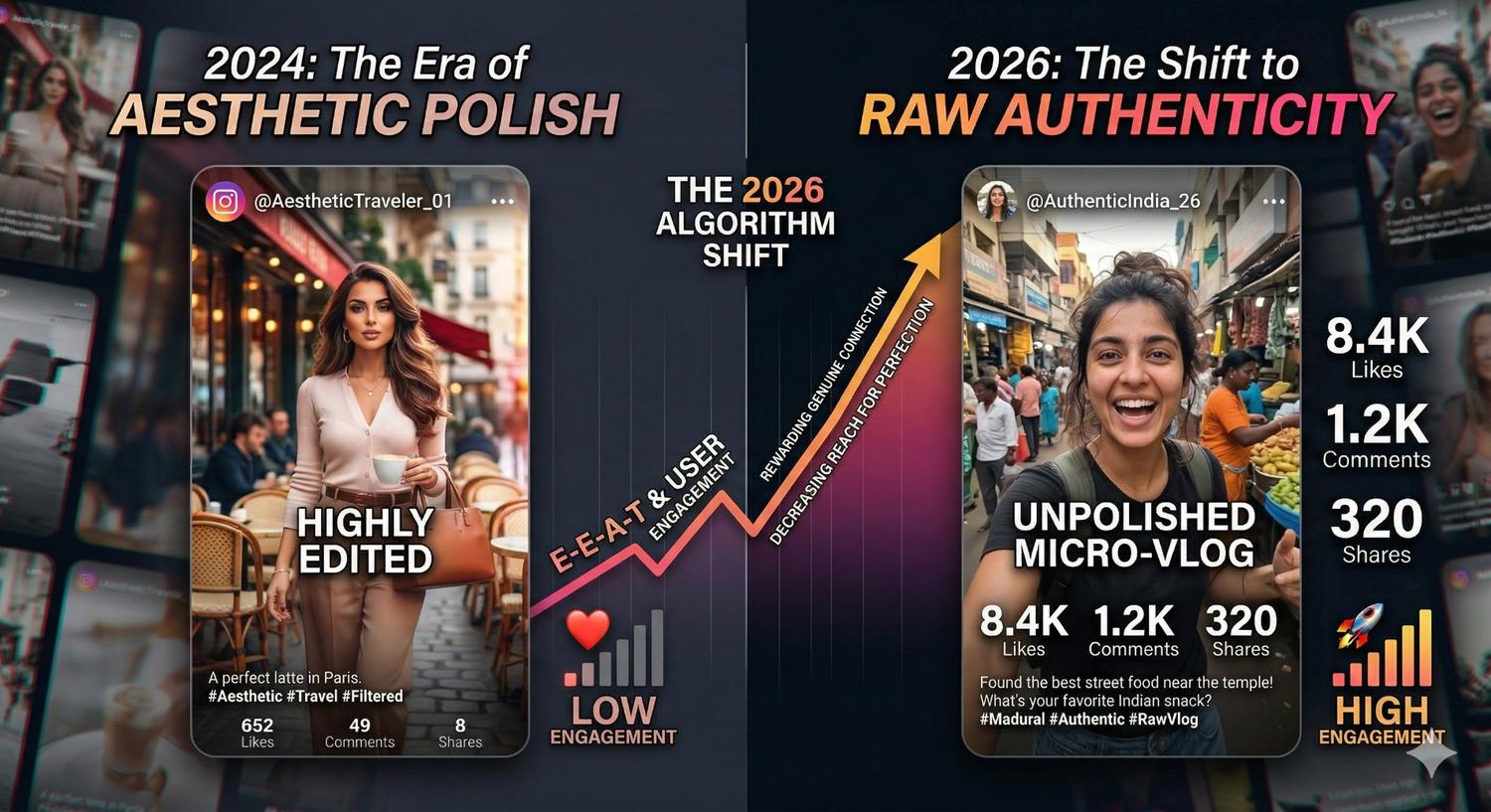

TL;DR: The Quick Breakdown
Do you currently lack the time to read the entire manual? Here is your necessary cheat sheet, but bookmark this page for later:
Instagram Content Strategy Fix- There is no "one" algorithm: Instagram employs four distinct ranking systems: Feed, Explore, Stories, and Reels. They cannot be treated equally. You must optimise for each of them independently.
- The Golden Metrics Changed: These days, likes and comments are essentially vanity metrics. They might seem attractive, but they don't really affect the result. The strongest algorithmic signals you can initiate are "Saves" and "Sends" (DM shares).
- Originality Wins: The algorithm actively eliminates watermarked TikTok reposts, meme aggregators, and unoriginal content. It is crucial to create native content within the app.
- Speed is a ranking factor: The AI knows that your account is a ghost town if you leave direct messages and comments unread for hours. Now more than ever, speed is crucial.
- Smart automation is required: using meta-verified comment and direct message automation not only saves you time, but it also makes the algorithm's desired engagement speed go up without tiring you out.
- Scale with Safety: Using official tools like InstantDM makes sure that your account can handle interactions around the clock without getting spam filters or shadowbans.
Introduction: The Death of the Old Instagram
Let's ignore any extraneous details and concentrate only on the essential points. You will probably fail if you try to use 2023 playbooks to interpret social media growth this year. Most likely, you've already noticed it. Posts that used to guarantee a barrage of likes now get no response; your follower growth has stagnated, and your views have declined.
You're not going insane, and you didn't just lose your ability to produce top-notch content. The game's rules were altered overnight.
You have to acknowledge that the 2026 Instagram algorithm isn't just one enigmatic gatekeeper in a server room somewhere making arbitrary choices. It has evolved into an extremely complex, predictive AI engine. It is intended to determine what a user wants to watch before their thumb even touches the glass, rather than merely responding to what they click on.
The days of adding thirty haphazard hashtags to a mediocre, dimly lit photo and hoping it would go viral are long gone. You must stop speculating in order to maximise the growth of your brand and transform your profile into a real, reliable revenue-generating machine. You must cease paying attention to antiquated gurus. You must begin adhering to the current, data-driven rules of the platform.
There is more to this guide than just advice. It is a thorough, in-depth analysis of the precise ranking factors, the new metrics hierarchy, and the backend engagement tactics required to fully grasp Instagram in 2026. Get a cup of coffee. Now let's get to work.
1. Welcome to 2026: How the Instagram Algorithm Has Evolved
If you've been using the same social media strategy for the last few years, your reach is probably going down, and that's because you're treating the platform like a chronological photo diary. The Instagram algorithm has changed from a simple timeline to a highly personalised machine that can Make predictions.
Remember when things were new. The system cared about how recent something was. Anyone who opened the app at 5:01 PM would have seen your picture if you posted it at 5:00 PM. It was easy. Then, the platform changed to an engagement-based model, where your reach was based on how many likes and comments you got in the first hour.
Today, the basic structure has changed a lot, mostly because of the rise of short-form video competitors. Meta has used deep machine learning to create a "interest graph" for each user. It keeps track of tiny things that you don't even know you're doing. It tells you how long someone stays on your post while scrolling. It keeps track of how many times users tap to read the full caption, how quickly they swipe away, and which Stories they tap past and which ones they watch all the way through.
This is a huge change for creators and digital marketers. The main goal of the algorithm is to keep users. Instagram's only goal is to keep users on the app as long as possible, as it makes money from ads. The algorithm will see you as a partner and give you a giant reach if your content keeps people's attention and gets them talking. Does your content make people stop using the app? You get buried.
Relying on outdated engagement tactics is the fastest way to kill your organic reach and dry up your inbound leads. By studying this complete guide to the 2026 Instagram algorithm shift, you can proactively adapt your top-of-funnel content strategy, ensuring your automated chat workflows are constantly fed with highly qualified traffic despite the platform's latest updates.

2. The Four Distinct Algorithms You Need to Master
One of the biggest and most costly mistakes you can make is to think of "the algorithm" as a single judge who is in charge of your whole account. People who say, "The algorithm hates me today," don't really understand how the app works. Instagram actually runs four separate algorithms that don't talk to each other.
The Feed Algorithm
The Feed is like your digital living room. It's meant to keep users up to date on the accounts they already follow, with a few highly targeted ads mixed in. The most important factors here are the history of the relationship and the chance of getting engaged. The AI wants to know, "Do you usually talk to this person?" If they liked your last three posts, you'll be at the top of their feed. You go to the bottom of the list if they haven't liked or commented on your last ten posts, even if they follow you.
The Stories Algorithm
Stories are for personal, daily, and unfiltered news. This algorithm isn't concerned about going viral; it cares about what you do every day. It puts your little round bubble at the top of the screen based on how many times you've watched it. Does this person touch your face every morning? Do they answer your polls? Being close is important here. You automatically win prime real estate if you are on their close friends list.
The Explore Page Algorithm
Explore is the search engine that finds things without any filters. This algorithm only uses predictive modelling to show users content from people they don't follow. For your post to get a high ranking here, it needs to get a lot of attention from your core audience right away after you post it. That early spike tells the AI that the content is "hot" enough to show to people who don't know you but have similar interests.
The Reels Algorithm
Reels are made just for fun, to get people excited, and to go viral. This algorithm rates content based on the "entertainment graph" instead of the "social graph." It is obsessed with audio and watch time trends. Did the user watch the whole thing? Did the video keep playing? Did they click on the spinning audio track at the bottom? If you want to build an audience from scratch in 2026, the only way to do it is to learn how the Reels algorithm works.
Understanding the core signals that dictate algorithmic reach is the only way to consistently scale your inbound traffic. As explained in this comprehensive guide to how the 2026 Instagram algorithm works, one of the absolute strongest ranking factors is the volume and speed of comments on your posts. Integrating an automated messaging system allows you to immediately drive up your comment count by offering free resources via keyword triggers, instantly boosting your content's algorithmic rank and feeding your lead funnels simultaneously.

3. The New Hierarchy of Engagement: Sends and Saves
Don't worry about how many likes you have. Stop checking your phone to see who left a fire emoji in your comments. The order of engagement has entirely changed by 2026. Instagram's algorithm puts Sends and Saves above all other actions because it wants to build close-knit communities and make the app useful for a long time.
The Unmatched Value of a "Send"
The algorithm pays close attention when someone clicks on that little paper aeroplane icon and sends your Reel to a friend in the DMs. A "Send" shows how fun your content is. It's shocking or relatable that a user was willing to share it privately to start a conversation. The fastest way to get to the Explore page is to use "Send" at a high speed. You should really ask yourself, "Would someone send this to their best friend?" when you make content. If the answer is no, think about the idea again.
Why "Saves" Dominate
Saves indicate high-level utility. When a user taps the bookmark icon, they are telling the platform, "I need to come back to this later." Think about what people save: a complex financial tip, a dense recipe, a travel itinerary for an upcoming trip, or a detailed workout routine. High save rates signal immense value to the AI. Because a save heavily implies that the user will open the Instagram app again in the future just to look at your post, the algorithm rewards it heavily. It proves you are driving return traffic.
4. The War on Unoriginal Content
If you run a meme page or a brand that depends a lot on content made by users, pay close attention. Instagram has made it clear that they will not allow any recycled content. For a long time, the feed was full of aggregator accounts and creators who just downloaded their TikToks and put them on Reels. Those days are gone for good.
Instagram's AI is now very good at finding media that isn't original. If the system sees a TikTok watermark, CapCut rendering artefacts, or low-quality videos that look like they were taken from another site, it immediately limits the reach. You will literally be shadow-capped at a few hundred views. Also, the platform punishes aggregator accounts that repost other people's work without adding important original comments or making big changes to it.
You have to make algorithmic favours yourself if you want them. Take your clips with the camera built into the app. For your captions, use Instagram's built-in text editor. Use their own filters. If you use Instagram as your main place to create instead of a place to dump things you don't need, you get a quiet but powerful algorithmic edge.
5. Cracking the Reels Algorithm: Watch Time and Looping
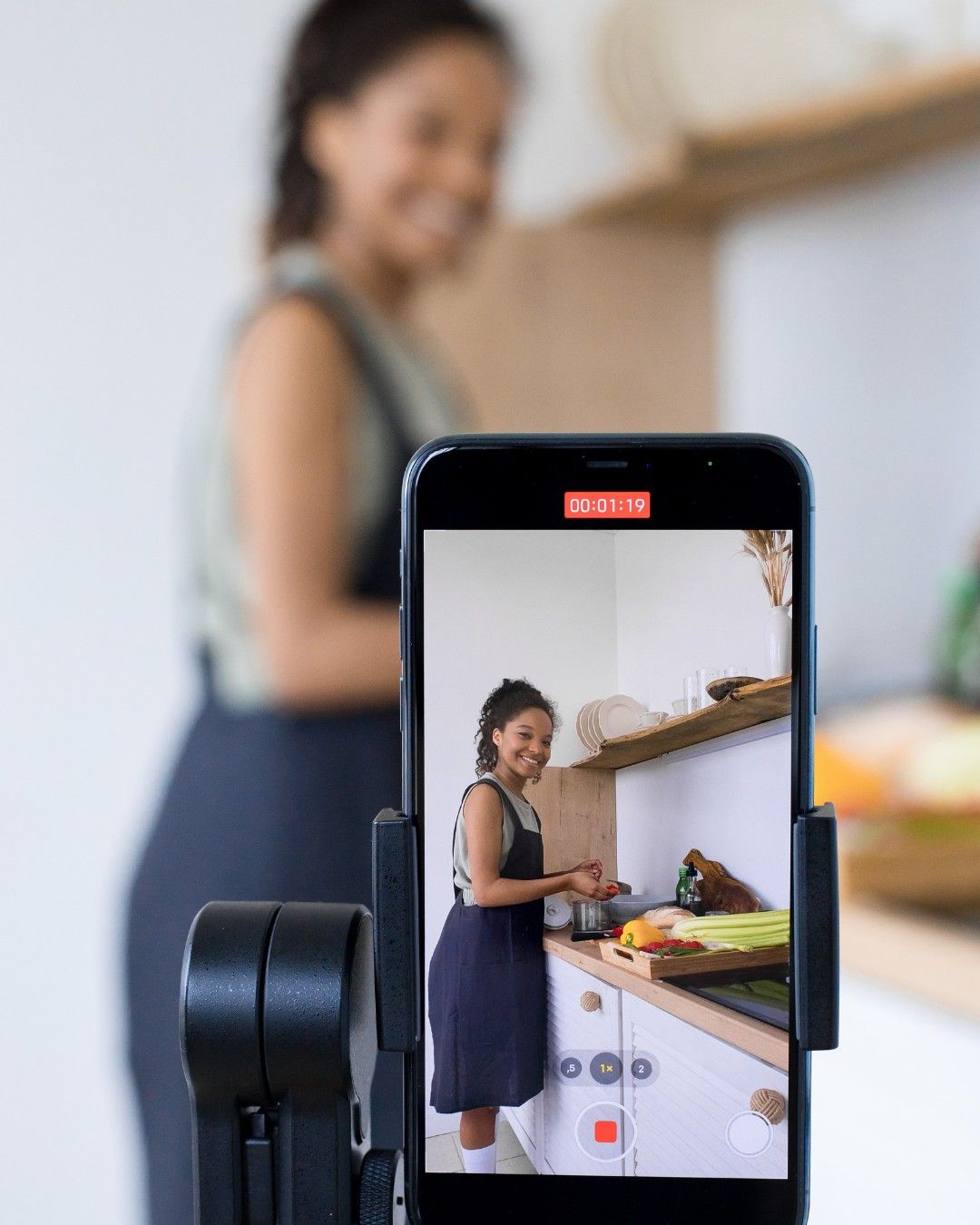
Reels are still the best way to grow your business naturally. There is no better way to reach millions of people who don't follow you. But because the space is so full, you need to make your videos grab people's attention right away and keep it.
If you're starting from zero and wondering how to actually build your first 1000 followers, the algorithm is only half the story—the other half is the systematic approach to content and trust-building that makes growth sustainable. The exact 5-step system for crossing 1,000 followers →
The Brutal 3-Second Rule
The first three seconds of your video will determine its fate. If a user swipes away before three seconds are up, the algorithm counts it as a "skip". If you get too many skips, your video will be dead. You can't start your video with a long, slow intro. "Hey everyone, I want to talk about..." is a death sentence. To get their attention right away, you need to start with a lot of movement, a bold text hook, or a statement that goes against the grain. Put the viewer right in the middle of the action.
Engineering the Loop
The algorithm gives big rewards to videos that people watch more than once. Smart creators write their last sentence so that it flows smoothly back into their opening hook.
Your video ends with "...and that is the exact reason why I will never trust..." and then it goes back to the beginning with "...a social media guru who tells you to buy followers." If done right, viewers will accidentally watch the first few seconds of your video a second time before they realise it's a loop. This makes your retention metrics go through the roof, pushing your average watch time over 100%, which makes the AI almost have to make the video go viral.
6. Carousels vs. Single Images: What the Data Says
You might notice that there are no single photos in your feed right now. Single photo posts aren't doing well, but carousels (galleries you can swipe through) are doing great. Why? "Dwell time" is the most important measure.
Dwell time is how long a user stops scrolling to look at your content on their screen. A pretty picture of your morning coffee might hold someone's attention for three seconds before they double-tap and move on. But a 10-slide educational carousel that explains a complicated marketing plan? That could keep them busy for 45 seconds to a minute. The longer someone stays on your property, the better your overall algorithmic score.
Also, carousels give you a second chance at the algorithm right away. Instagram will often show the same carousel post to a user again later that evening if they scroll past it in the morning without interacting with it. However, it will show the second slide instead of the first. It's a free retargeting campaign that comes with the feed.
2026 Format Performance Summary
| Format Type | Algorithmic Dwell Time | Primary Engagement | Best Used For |
|---|---|---|---|
| Single Image | Low (1-3 seconds) | Likes | Aesthetic grid filler, quick brand updates. |
| 10-Slide Carousel | Very High (15-60 seconds) | Saves & Comments | Deep education, step-by-step guides, storytelling. |
| Reels | High (Varies by length) | Sends & Views | Viral reach, top-of-funnel audience growth. |
7. Navigating the Shadowban: Myths vs. Reality
Creators are very quick to yell "Shadowban!" when engagement drops, which happens to everyone. It's now the go-to excuse for bad content performance. Let's separate the reasons from the truth.
There are real shadowbans, but they are very rare. If you use the wrong hashtag, fix a typo in your caption, or post at a strange time of day, you won't get shadowbanned. When you clearly break community rules, real algorithmic throttling happens. This includes posting aggressive engagement bait like "Tag 50 friends in the next ten seconds to win an iPhone!" or using unauthorised bot farms to buy fake likes. It also includes stealing someone else's music without permission.
If your reach drops and you haven't broken any of those rules, it is not a shadowban. It is just normal algorithmic fluctuation. Usually, it means your audience is experiencing ad fatigue with your specific content format. If you make the exact same style of talking-head video for eight months, people will naturally start swiping past you. The solution isn't to complain about a shadowban; the solution is to take a serious look at your metrics, pivot your creative strategy, and test entirely new visual hooks.
Understanding exactly how the platform categorizes and distributes your content is the true foundation of any successful automated workflow. By breaking down how the 2026 Instagram algorithm works, you can optimize your daily posts to capture maximum organic reach, ensuring your inbound messaging funnels are constantly supplied with fresh, highly targeted leads.
8. The Impact of Broadcast Channels and Close Friends
Users have naturally moved to private, quieter areas as the main feed has become more commercialised, crowded, and full of ads. The 2026 algorithm sees this big change in behaviour and gives a lot of weight to micro-communities like Broadcast Channels and Close Friends lists.
When someone clicks the link to join your Broadcast Channel, they are telling the AI that they are a big fan. They are literally raising their hands and saying, "I want more of this." The algorithm will start pushing your public Feed posts to the top of their app because they chose to join your private ecosystem.
Posting very private, behind-the-scenes content to your Close Friends list also makes a psychological connection. It gets many DM replies from your most loyal followers, which means a lot of engagement. This warms up the algorithm and improves your account health just before you post a huge, public Reel.
Scaling your inbound traffic doesn't require burning out by posting endlessly. As revealed in this breakdown of the 2026 Instagram algorithm, the platform has completely stopped rewarding sheer posting volume, showing that three or four high-quality posts a week easily outperform daily uploads. By focusing on creating deeper content and letting automated chat workflows handle the incoming conversations, you can generate more leads with significantly less daily effort.
9. Does Posting Time Still Matter in 2026?
Since the feed is no longer in order, does the time of a post still matter? Can you just post whenever you want? Yes, timing is very important, but only because of something called "initial engagement velocity".
Instagram doesn't show your video to all of your followers right away when you hit publish. It tests your post on a very small part of your most active audience from the past. It sits back and looks. The algorithm thinks, "This is great content," and sends it to a bigger audience if that small group likes, saves, and comments quickly in the first twenty minutes. Eventually, it ends up on the Explore page.
If you post at 3:00 AM when most of your audience is sleeping, your post fails the first test. Nobody is awake to watch, so the video dies in the feed before the sun comes up. You need to check your professional insights, find out when your followers are most active online, and post about 30 minutes before the most people are online. Catch the wave just as it's starting to build.
10. The Algorithmic Weight of Conversations (DMs)
Direct messages are the driving force behind the 2026 algorithm, but most amateur marketers don't pay attention to them at all. The AI's main job is to help people who care about each other get in touch. But how does a piece of code know who you like? It checks your DM frequency.
The algorithm gives your two accounts a high "relationship score" if a follower often replies to your Stories with laughing emojis and you take the time to write them back. Once that score is set, your content skips normal, competitive sorting for that user.
Your posts will always be at the top of their feed. The first thing they will see is your Story bubble. The best way to build an audience that can't be fooled by algorithms is to turn passive, public scrollers into active, private DM conversations. You own the relationship when you own the inbox.
11. The "Hidden" Ranking Factor: Response Times
Response time is an important ranking factor that is completely hidden, but it builds on the power of the inbox.
The Instagram system is keeping a close eye on how you run your community. If you post a Reel that gets popular, you might get 100 comments in just a few hours. The algorithm thinks your account is an unresponsive ghost town if you leave those comments up for three days without getting a single like or reply. If you don't pay attention to the people who already follow you, why would the platform show your content on the Explore page?
On the other hand, responding to comments within the first hour of posting creates a strong feedback loop. Every time you reply, it counts as another comment, which makes the post's total metrics look better than they really are. The sad truth is that as your account grows, it becomes physically impossible to respond to hundreds of comments and DMs by hand. It leads to creator burnout right away.
12. The "Auto-Reply" Growth Hack: Systematizing Engagement
If ignoring your community hurts your reach and answering hundreds of messages by hand makes you completely tired, the only logical thing to do is to make your engagement more organised. The best way to grow the algorithm in 2026 is to use smart comment automation.
Instead of writing a generic caption hoping for a few random thoughts, modern creators give their audience a specific, low-friction directive. A fitness instructor might write something like this: "Comment the word MEALPLAN, and I’ll send you my exact grocery list." This strategy does two incredible things for your account. First, it drives a massive, immediate spike in comment velocity. When fifty people type "MEALPLAN" in the first hour, the algorithm panics in a good way, assuming the post is highly engaging and immediately expanding its reach. Second, it triggers an automated backend system. When a user drops that exact keyword, the automation immediately likes their comment, replies to it publicly, and sends the requested asset directly to their Direct Messages. The algorithm sees an account that is hyper-active, instantly responsive, and driving deep DM connections. You completely satisfy the AI's demand for speed and engagement, and you didn't even have to pick up your phone.
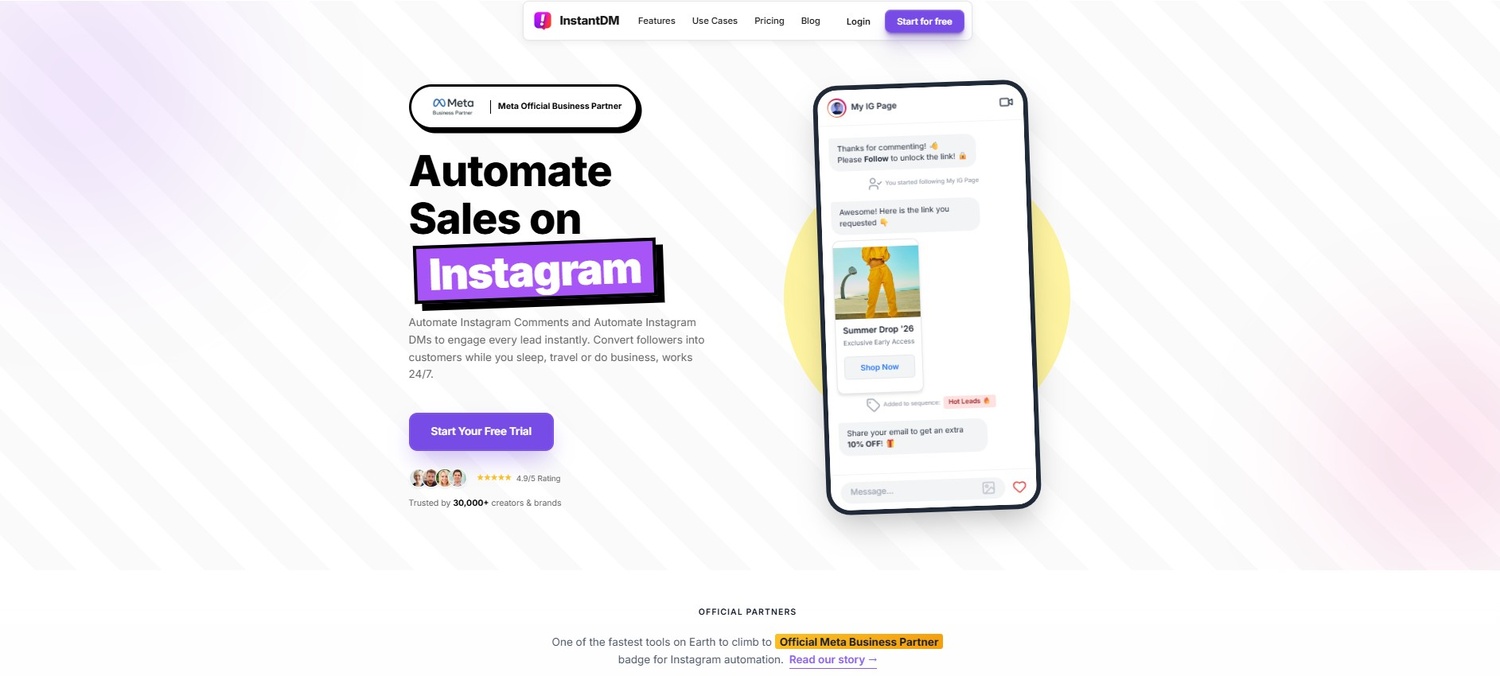 Shopify integration, designed for Meta-compliant messaging in 2026.">
13. Building Frictionless DM Funnels (That Feed the Algorithm)
Having high algorithmic reach is fantastic for your brand awareness, but if you are running a business, that reach has to actually convert into revenue. Traditionally, the social media sales funnel was incredibly clunky. It relied heavily on the dreaded "link in bio. "You would ask a highly engaged viewer to stop watching your video, navigate to your main profile, click a tiny link, wait for an external mobile browser to load, and then hunt through your website for a product.
Here is the massive, hidden problem with that old strategy: the algorithm absolutely hates it when you take people off the platform. Instagram makes its money from showing ads, so any action that causes a user to close the app or jump to an external browser is viewed as a negative signal. If your content constantly drives people away from Instagram, the AI will eventually throttle your reach.
The dominant strategy for 2026 fixes this by moving the entire point of sale directly into the direct messages. Advanced setups using platforms like InstantDM open a guided, interactive conversation right inside the chat, rather than simply dropping a raw URL and forcing users out of the app. The user receives a dynamic product carousel directly in their thread. They can browse your inventory, select a size, and hit a secure checkout button without ever leaving the native Instagram interface.
Why does this feature matter so much? This is because guiding users through an automated direct message (DM) conversation generates a significant "Time Spent in App" signal. You are actively keeping the user locked inside Instagram's ecosystem for a longer period. The AI heavily rewards this behaviour by flagging your account as a high-retention creator, which practically guarantees your future posts will be pushed straight to the top of their feeds. By using InstantDM to remove the friction of external browsers, you capitalise on the user's buying intent instantly, and you feed the algorithm exactly what it wants at the same time.
14. Protecting Your Account: The Rules of Safe Automation
There is always a real fear of getting banned when we talk about systematising engagements or automating DMs. And you should be careful. When it comes to getting rid of spam, Instagram's algorithm is completely heartless. Your account will be permanently suspended if you try to save time by using cheap, unverified scraper bots, fake follower panels, or shady engagement pods you found on a forum. You will lose everything you worked for.
The rules for safe automation are completely unique and very strict. Only use software that directly utilises the official Meta Graph API to grow your backend. Meta has given platforms like InstantDM permission to handle these kinds of conversations. This official integration means that your account isn't "hacking" the system; it's using the tools that Meta made for businesses and professional creators.
Furthermore, safe automation is made to act like people do. If a Reel goes viral and gets 5,000 comments, a cheap, poorly coded bot will try to send 5,000 DMs in one second. That makes a shadowban happen right away. Tools like InstantDM that are professional and Meta-verified follow the platform's rate limits. They send messages at different times, add random delays between messages, and obey the rules for traffic on the platform. You can protect your digital property while still getting huge, automated scale by only playing within Meta's technical limits and using InstantDM's smart flood-control settings. You can use the service 24 hours a day, seven days a week, without ever getting a "Your Account has been Flagged" message.
Keeping your automated messaging systems profitable requires a consistent stream of fresh, organic traffic. By implementing the latest growth hacks for the 2026 Instagram algorithm, you can maximise your top-of-funnel reach, ensuring your profile constantly attracts high-quality leads that filter directly into your automated sales funnels.
15. The Rise of Conversational AI Agents in DMs
Last year, basic keyword auto-replies were the most important thing for growth. In 2026, conversational AI agents will be the most important thing. We don't just send a link when someone comments on a Reel anymore and hope they figure out the rest. The platform now fully supports deep, generative AI agents that live right inside your inbox, and the algorithmic benefits are staggering.
Why does the algorithm like AI agents? Because a standard automated reply usually ends the chat. A user asks for a link, gets it, and then leaves the chat. But an AI agent is trained to ask more questions. If a user asks about a fitness programme, the agent might say, "Sure, I can send you that link!" Are you looking for the beginner or advanced workout? This changes everything. It turns a short, five-second talk into a three-minute conversation with multiple messages. That long time spent in the DM inbox is pure algorithmic gold. It tells the AI that you are building very deep, personalised relationships with your followers, which raises the overall authority score of your account.
It sounds like you need to know a lot about machine learning to build an AI agent, but you don't. You can set up a custom-trained AI agent in just a few minutes with platforms like InstantDM. All you have to do is give the software your website's FAQs, your brand voice guidelines, and your product catalogue. Your InstantDM agent doesn't just send a generic, annoying menu when a warm lead asks a very specific question at 3:00 AM. It really does read the context, answer their question, get past their reasons for not buying, and give them the secure checkout link. You're basically using a digital salesperson who works 24 hours a day, seven days a week, and never sleeps. This satisfies the algorithm's need for deep user retention while closing deals on its own.
It's not enough to know how the algorithm works; what separates the pros from the amateurs is being able to work with it every day.
Your action plan for the next 90 days is clear. First, audit your content. Stop recycling old videos and start creating native, high-quality Reels with aggressive three-second hooks. Plunge the viewer into the story. Build deep, educational carousels to drive up your dwell time. Focus entirely on creating content that people feel compelled to save for later or send to a friend in the DMs. If it doesn't trigger a Send or a Save, it isn't ready to publish.
Finally, remember that there is a limit to what people can do. If you are your own full-time customer service representative, you can't grow your brand. Put all of your creative energy into making the content, and let smart backend systems handle the community engagement. You can help the algorithm get what it wants by organising your comments and moving your sales funnels straight to your DMs. This will also help you grow your bottom line in a safe way.
Conclusion
The Instagram algorithm for 2026 is very complicated, but it doesn't mean any harm. It doesn't mean to hurt you. It's just a better way to match the best content with the most interested users. You can align your brand with the platform's ultimate goals by shifting your focus from vanity metrics to more meaningful ones like watch time, saves, and private conversations. The interface will change and new features will come out, but people who make their own content, build real relationships in their DMs, and use safe, smart automation will always be one step ahead of the code. Don't fight the algorithm; make it work for you.
8 Proven Ways to Skyrocket Your Instagram Engagement in 2026
Avoiding Instagram Bans for OnlyFans Creators: 2026 Guide
Why Your Personal Brand Isn't Connecting: The Storytelling Secret That Changes Everything
The 30 Minutes Around Every Instagram Post That Determines Its Reach - 2026 Edition
The Best Posting Times for Instagram in 2026: A Data-Driven Formula for Maximum Reach
5 Content Mistakes That Are Quietly Killing Your Instagram Reach
The Perfect Pinned Post Formula: How to Turn Your Instagram Profile Into a Client-Converting Machine
The Instagram Bio Formula 2026 - That Turns Profile Visitors Into Followers
Instagram Rewrote Its Rules in 2026. Here's What Changed.
Instagram Algorithm in 2026: The 6 Metrics That Actually Determine Your Reach
Instagram Just Made a Big Change 2026 And It's Good News for Original Creators
How Instagram Reposts Unlock Organic Reach That Most Creators Are Missing
The 2026 Instagram Algorithm Evolved Here's What Every Creator Needs to Know
Optimizing TikTok for Follower Growth: A Complete Creator's Guide
Instagram vs TikTok 2026: Which Platform Wins?
10 AI Instagram Post Generators Tested: Which One Actually Saves Time?
How to Monetize TikTok Content: The Complete 2026 Playbook for Creators
7 Instagram Updates 2026: What Creators Must Know
How to Maximize Instagram Engagement in 2026 (Data-Backed Strategies)
Instagram Growth Strategy 2026: The Exact Blueprint to 10K Followers
5 Things to Do Right After Posting on Instagram to Grow Your Account
The Difference Between "Posting" & "Marketing" And Why Most Brands Are Doing It Wrong