Most people don't fail on Instagram because they're untalented. They fail because they quit too early.
Growth on Instagram isn't about luck anymore. It's about understanding attention, consistency, and content psychology. You don't need expensive gear, perfect aesthetics, or thousands of followers to start. What you need is a clear niche, strong hooks, consistency, patience, and the willingness to improve publicly.
This is a collection of 30 reminders — organized across fundamentals, content strategy, and mindset — that every creator should carry with them before they start and while they grow.
Content Analysis: This 3-slide carousel is from @ajaysinghdigital (a verified creator based in Los Angeles, California). The carousel distills 30 Instagram growth principles into 10 per slide across three categories: fundamentals, content strategy, and mindset. The format is a clean numbered list — easy to read, easy to save, easy to share. Additional insights by Sanjay, Founder of InstantDM.
The Fundamentals: Where Every Successful Account Starts
These are the non-negotiables. Skip them and everything else becomes harder.
Pick one niche only. The fastest growing accounts are specificity plays, not generalist broadcasts. Trying to appeal to everyone appeals to no one. Instagram's algorithm also needs to know who to show your content to — a scattered content mix across multiple unrelated niches makes that classification impossible and your distribution suffers.
Stop trying to impress everyone. The moment you try to be universally appealing, you become bland. The creators who build real audiences are polarizing in the best sense — they stand for something specific that attracts the right people and repels the wrong ones. Wanting to be liked by everyone is the wrong goal.
Learn hooks before editing. Your hook determines whether your content gets opened. Editing determines whether it gets finished. If the hook fails, no amount of editing saves the post. Spend your production time on the first frame and first line before you touch anything else.
Focus on retention. Views are vanity. Retention is signal. Instagram measures how long people watch your content — Reels completion rate, Story replies, carousel saves. Content that holds attention distributes. Content that loses it stops. Always optimize for the metric that tells you if your content is actually good.
Post before you feel ready. Waiting until you feel ready is a trap. The gap between "ready" and "good enough" is usually just a few posts. The creators growing fastest right now are posting before their content is perfect because they're learning in public and iterating based on real feedback.
Make searchable content. Instagram is a search engine now. Caption text, hashtags, and keyword-rich first lines determine whether your content surfaces when someone searches for your topic. Treat every post like it needs to be found, not just seen.
Talk like a real human. The fastest way to kill engagement is sounding like a corporate press release. Your audience wants to feel like they're hearing from a person, not a brand account reading from a script. Conversational tone converts better than polished copy.
Stop overthinking every post. Your content doesn't need to be perfect. It needs to be posted. The algorithm rewards consistency far more than it rewards perfection. One good post this week beats five perfect posts you've been "preparing" for a month.
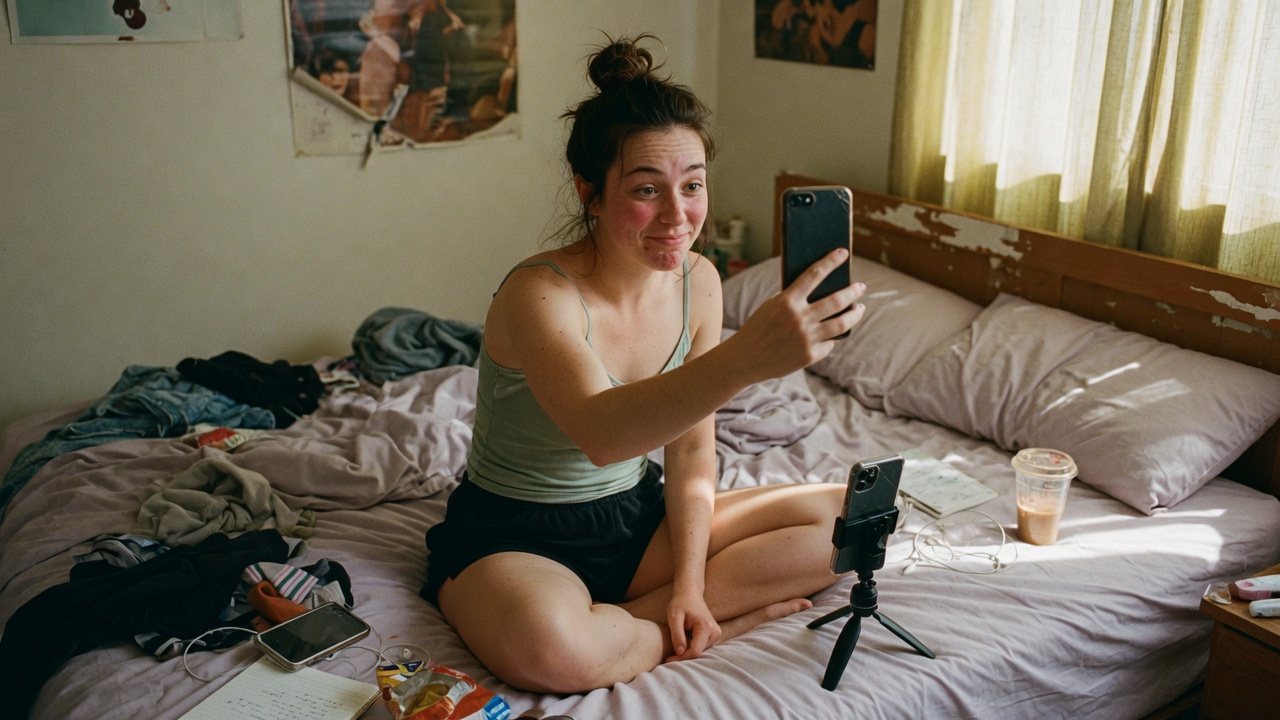
Your phone is enough. Professional gear is a distraction for most creators starting out. The iPhone footage that works on Instagram isn't the technically perfect footage — it's the authentic footage that feels real. Get good at telling stories with what you have before you buy equipment to make stories look shinier.
Consistency beats motivation. Motivation is unreliable. Showing up every day, even when you don't feel like it, is what builds the compounding effect that makes growth feel sudden in retrospect. The creators who blow up didn't do anything magical — they just didn't stop.
Level Up Your Content Game: The Strategy Layer
Once the fundamentals are in place, these are the moves that separate good accounts from growing ones.
Study viral formats daily. Not to copy them — to understand why they work. Spend 15 minutes a day looking at what's performing in your niche and dissecting what made people stop scrolling. Pattern recognition compounds over time.
Don't copy creators blindly. You can be inspired by formats without copying them wholesale. The creators who build sustainable accounts have original perspectives. If you're just repackaging someone else's angle, you have no defensible differentiation.
Build a personal brand. The account is you, not your brand name. People follow accounts that feel like a person they know, trust, and want to hear from. A brand account with a human voice grows faster than a personal account with a corporate voice.
Reply to every comment. Every reply is an engagement signal and an impression on the commenter's followers who see the interaction. It also builds the community connection that turns followers into fans. "Reply to every comment" sounds exhausting until you realize that early comments on a small account are rare enough that this is completely manageable.
Network with small creators. Not just accounts with huge followings — the creators in your niche who are slightly ahead of you and genuinely engaged. Collaborative energy between small creators creates compounding discovery. Bigger accounts notice when smaller accounts are creating good work.
Make content people save. Saves are the highest-intent engagement signal on Instagram. A post with lots of saves is Instagram's version of a bookmark — it tells the algorithm this content has lasting value and should be shown to more people over time. Ask yourself before every post: would someone save this?
Learn storytelling. Every piece of content is a story. Hook is the inciting incident. Body is rising action. Payoff is the climax. Content that follows a narrative structure holds attention because people want to know what happens next. Information dumps without story feel flat.
Focus on the first 3 seconds. On Reels especially, the first 3 seconds determine whether someone keeps watching. Start with something that demands attention — a bold statement, a visual surprise, a question that creates curiosity — not a slow introduction or logo animation.
Document more, flex less. The content that builds trust and connection is the behind-the-scenes, real-world, actual-experience kind. "Look how great this is" content performs worse than "here's what this actually looks like" content. Authenticity outperforms performance.
Stop deleting low-view posts. Deleting posts resets your account's posting rhythm signals. A low-view post doesn't hurt you — abandoning your cadence does. Keep posting through the low views. The posts that breakout exist in the context of the ones that didn't.
The Mindset Shift: What Separates Those Who Quit From Those Who Grow
The strategy is useless without the mental framework to sustain it.
Your first 100 posts are practice. No successful creator was good at 10 posts. The learning curve is real and the first 100 posts are where you develop your voice, test your formats, and build the consistency muscle. Treat them as tuition, not as a referendum on your potential.
Low views are normal. Early content performing poorly isn't a sign you're bad at this — it's the universal experience of everyone who starts. The creators who stick around were all at zero once. Low views are normal until they aren't.
Improvement compounds weekly. You're not going to see results in a week. But you will see results in three months if you're genuinely learning and adapting between posts. The compound effect of small weekly improvements is enormous — but only if you stay in the game long enough to see it.
Attention matters more than followers. 1,000 followers who engage deeply with your content outperform 100,000 followers who scroll past. Engagement rate per follower matters more than raw follower count for algorithmic distribution and for actual business outcomes.
Most creators quit too early. The dropout rate in content creation is extremely high — most creators who set out to build on Instagram stop posting within 90 days. The path to growth is mostly just not quitting. Every month you post is a month most of your competition gave up.
Patience is a growth skill. Being patient with the timeline isn't a personality trait — it's a strategic choice. Accounts that post consistently for 12 months almost always have better results than accounts that posted frantically for 3 months and quit. Patience is the entry fee for long-term growth.
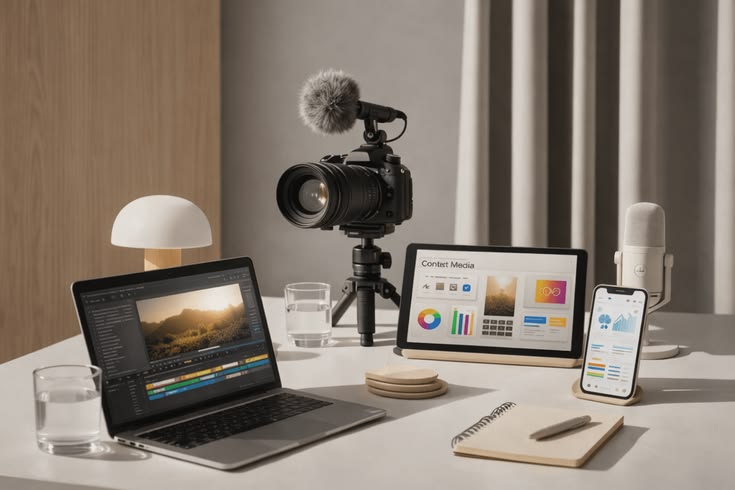
You don't need perfect equipment. The gear minimalists have been saying this for years and it's still true. Content that connects because it's authentic and relevant beats content that's technically perfect but emotionally inert. The best camera is the one you have with you when you have something real to say.
Start messy and learn publicly. The fear of looking unprepared is the biggest barrier to starting. But the creators who improve publicly — posting before they're fully polished — build audiences faster than the ones who wait until everything is perfect. Your messiness is someone's permission slip to start.
The best creators kept posting anyway. Every creator you follow who seems like an overnight success posted through the period where nobody was watching. The difference between creators who succeed and those who don't is rarely talent or运气 — it's the willingness to keep going when the views aren't validating yet.
The Thread That Runs Through All of It
These 30 principles have one thing in common: they all require action to matter. Reading them is easy. Implementing them consistently is what separates the accounts that grow from the ones that don't.
Pick one thing from this list to focus on this week. Not all 30 at once — one. Master that, move to the next. The compounding happens through repetition, not through understanding everything at once.
Next Steps and Related Content
Ready to put these principles into action? Here are the connected resources to help you build a solid Instagram foundation:
- Before you start: make sure you've mapped out your First 1000 Followers strategy — the growth system that actually compounds
- Understand the full Instagram Growth Strategy for 2026 — the algorithm blueprint to 10K followers
- Learn how to make your content discoverable with Instagram Keywords — Instagram is a search engine now
- Study the Viral Content Templates that generate 100k+ views
- Set up auto-DM on Instagram to handle incoming leads while you focus on content
- Protect your account: read the DM Limits & Rules guide before you start outreach
Source: https://www.instagram.com/p/DX_zck7CElQ/
Creator: @ajaysinghdigital
Watch: Instagram Starter Guide for 2026
- If I started on Instagram from 0, this is what I'd do... | T
- Steal my 2026 Instagram strategy | How to ACTUALLY grow on I
- Instagram Expert Explains How to Grow from Zero Followers in
- How to Grow on Instagram FAST Before 2026 (Beginner Friendly