
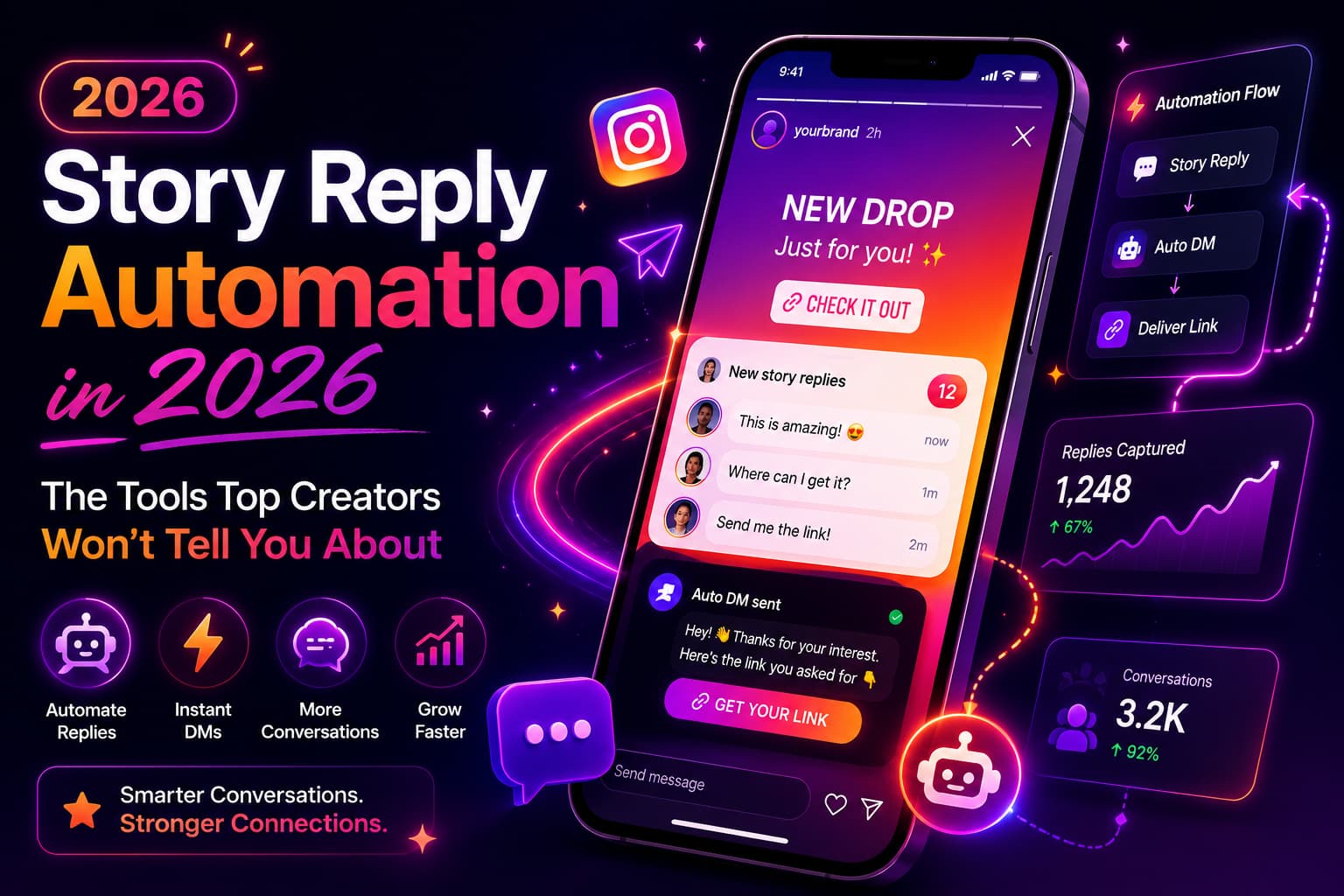
Quick Summary:
Story replies are one of the few places on Instagram where people actually want a conversation.
Replying late or missing them completely costs attention and trust.
This blog looks at the popular automation tools, where they work, and where they fall short.
It explains why using one safe, all-in-one tool like InstantDM makes replying easier without overcomplicating things.
Introduction
Instagram Stories don’t get talked about enough, but they’re one of the most powerful places to connect with people right now. When someone replies to your story, they’re not half-scrolling or killing time. They’re reacting in the moment. That’s real attention - and it’s usually short-lived.
That’s why creators, coaches, and brands looking for the best automation tools for Instagram story replies all care about the same thing: replying fast without sounding fake. Speed matters, but so does tone. If your reply feels robotic, you lose the moment just as fast as if you replied late.
In 2026, replying manually to every story message just isn’t realistic anymore. Most creators simply can’t keep up. Automation becomes necessary at that point - but choosing the wrong tool can cause more problems than it solves. Some tools feel clunky. Others push you into using three or four platforms just to get basic workflows running. This guide breaks down how story reply automation actually works, what’s worth paying attention to, where popular tools fall short, and why InstantDM ends up being the most complete option for most creators.
What Is Story Reply Automation and Why Does It Matter in 2026?
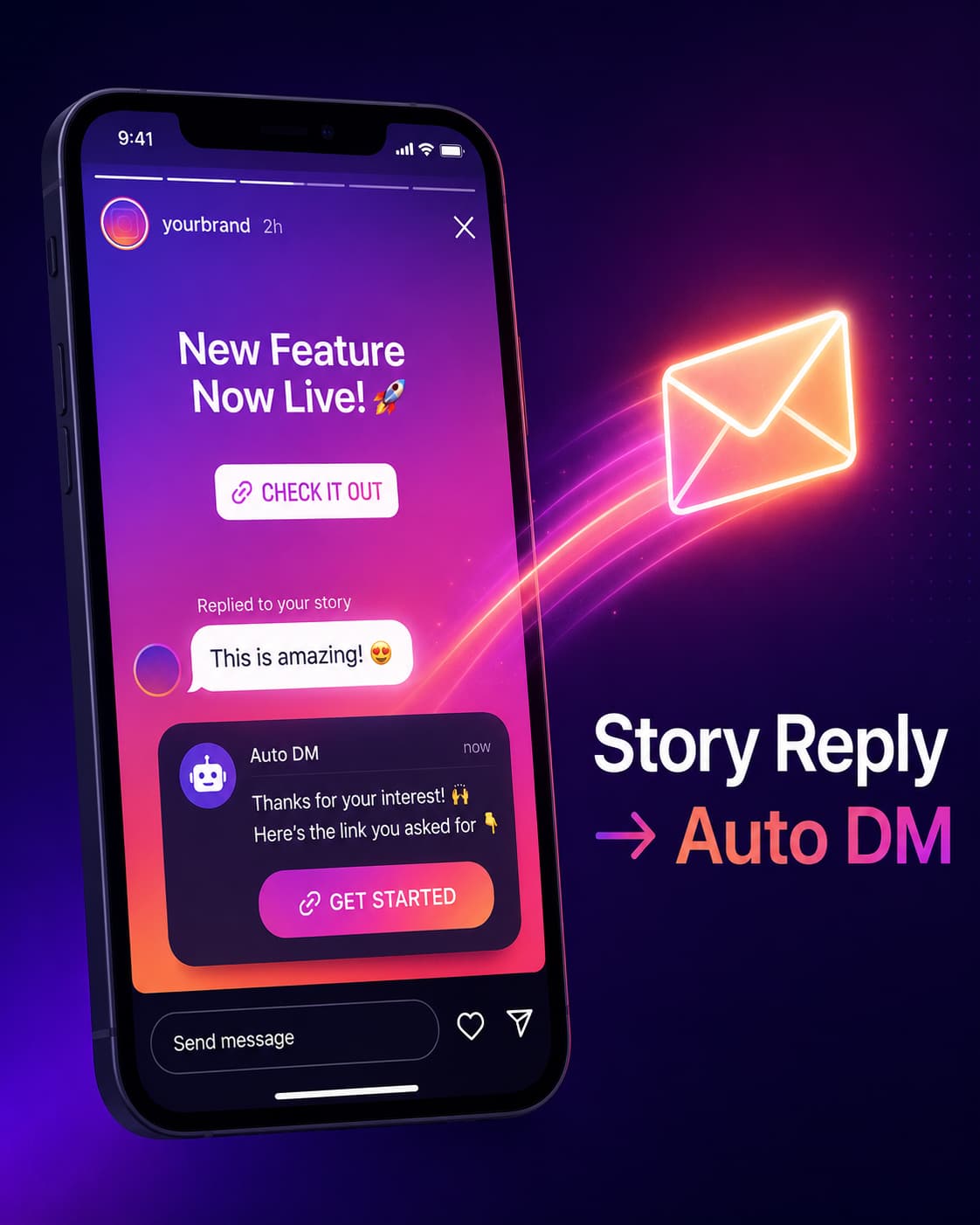
Story reply automation is the process of automatically sending a DM response when someone replies to your Instagram Story. Instead of manually typing replies to every story mention, an automation tool handles the first response for you — instantly, 24/7, while you sleep or focus on creating new content.
In 2026, story reply automation has become one of the most important Instagram automation strategies for content creators and businesses. Here is why: Instagram Stories generate more private conversations than any other content format. When someone replies to your Story, they are raising their hand and saying "I want to talk to you." If you respond within minutes, the conversation leads somewhere. If you respond hours later, they have already moved on.
Story reply automation closes that gap. It ensures every story mention gets a response while the person is still engaged. For content creators managing hundreds of story replies per day, this is not a luxury — it is the difference between growing an audience and losing one.
Why Instagram Story Replies Matter So Much Now
A story reply isn’t the same as a like or a view. It’s a private action. Someone is choosing to message you directly, and most of the time they expect a response pretty quickly. If they don’t hear back, they move on.
Related: learn how to automate Instagram story replies step by step
Automation helps in a few simple but important ways. It lets you respond while interest is still fresh. It can send links, resources, or a follow-up question without you being glued to your phone. And as your audience grows, it keeps your inbox from becoming overwhelming.
The problem is that not every automation tool treats story replies with that same level of care. And that difference shows up in how people respond to you.
The Real Cost of Ignoring Story Replies
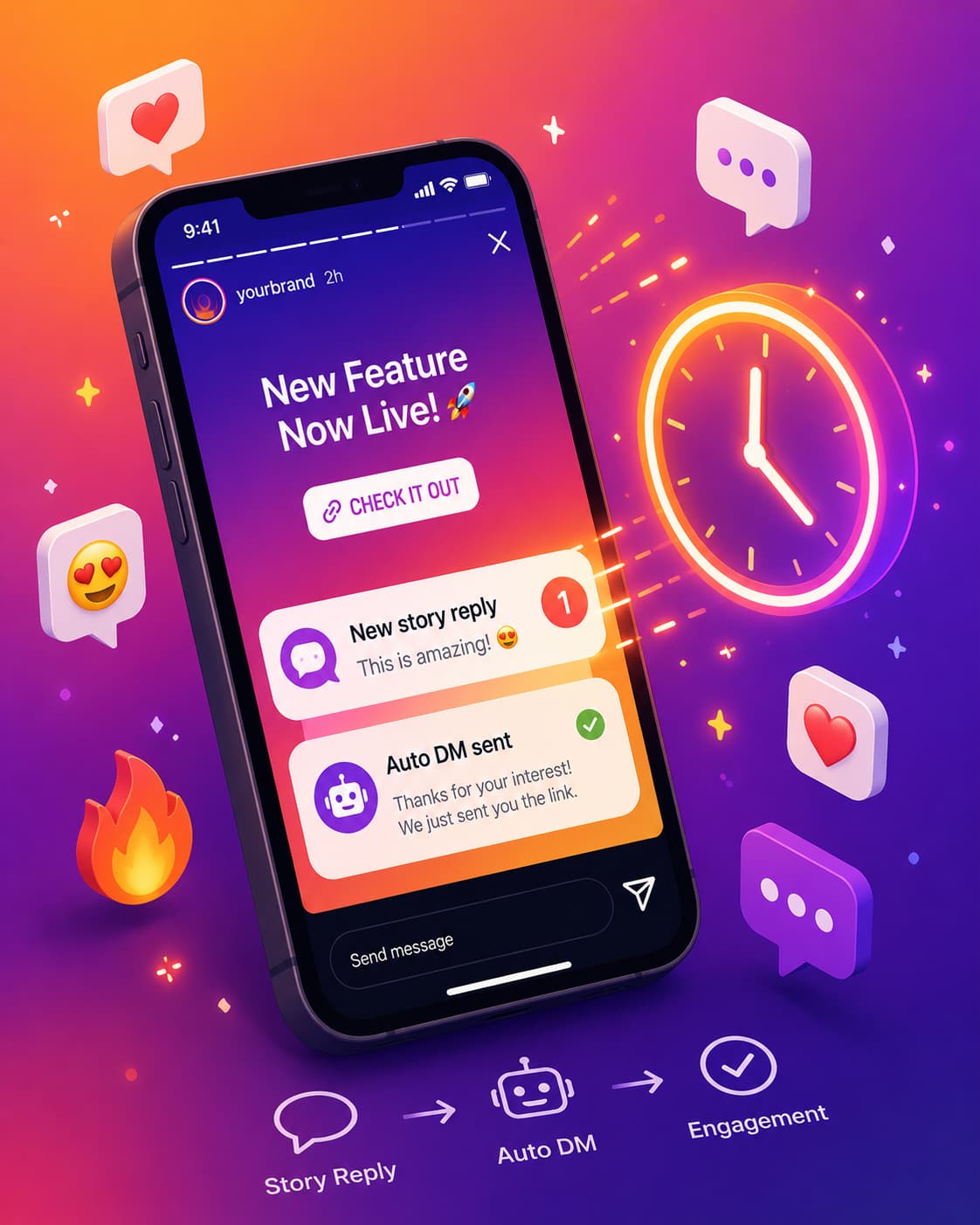
Most content creators and businesses underestimate how many story replies they actually receive. A creator with 10,000 followers might get 15 to 30 story replies per day. At 50,000 followers, that number can exceed 100. Without story reply automation, you face two bad options: spend 2 hours daily manually replying, or ignore most replies and lose potential customers and followers.
The data tells the story clearly. Instagram users who receive a reply to their story mention within 5 minutes are 4 times more likely to continue the conversation through DM. That continued conversation is where sales, partnerships, and loyal community members come from. Story reply automation makes that 5 minute response window achievable for every single reply, not just the ones you happen to catch.
Story Reply Automation vs Manual Replying: A Comparison
Manual replying works when you receive fewer than 10 story replies per day. Beyond that threshold, story reply automation becomes essential. Here is how the two approaches compare:
- Speed: Manual replying takes 2 to 5 minutes per response. Story reply automation responds in under 30 seconds.
- Consistency: Manual replies vary in quality depending on your mood and energy. Automated replies are consistent every time.
- Coverage: Manual replying misses replies that arrive while you are sleeping, creating content, or living your life. Story reply automation covers every hour of every day.
- Personalization: Modern story reply automation tools use the replier's name, reference the specific Story they replied to, and can include conditional logic based on keywords. This is not the generic auto-reply of 2022.
The goal of story reply automation is not to remove the human element. It is to handle the first touch so you can focus your time on the conversations that need your personal attention.
How Story Reply Automation Actually Works
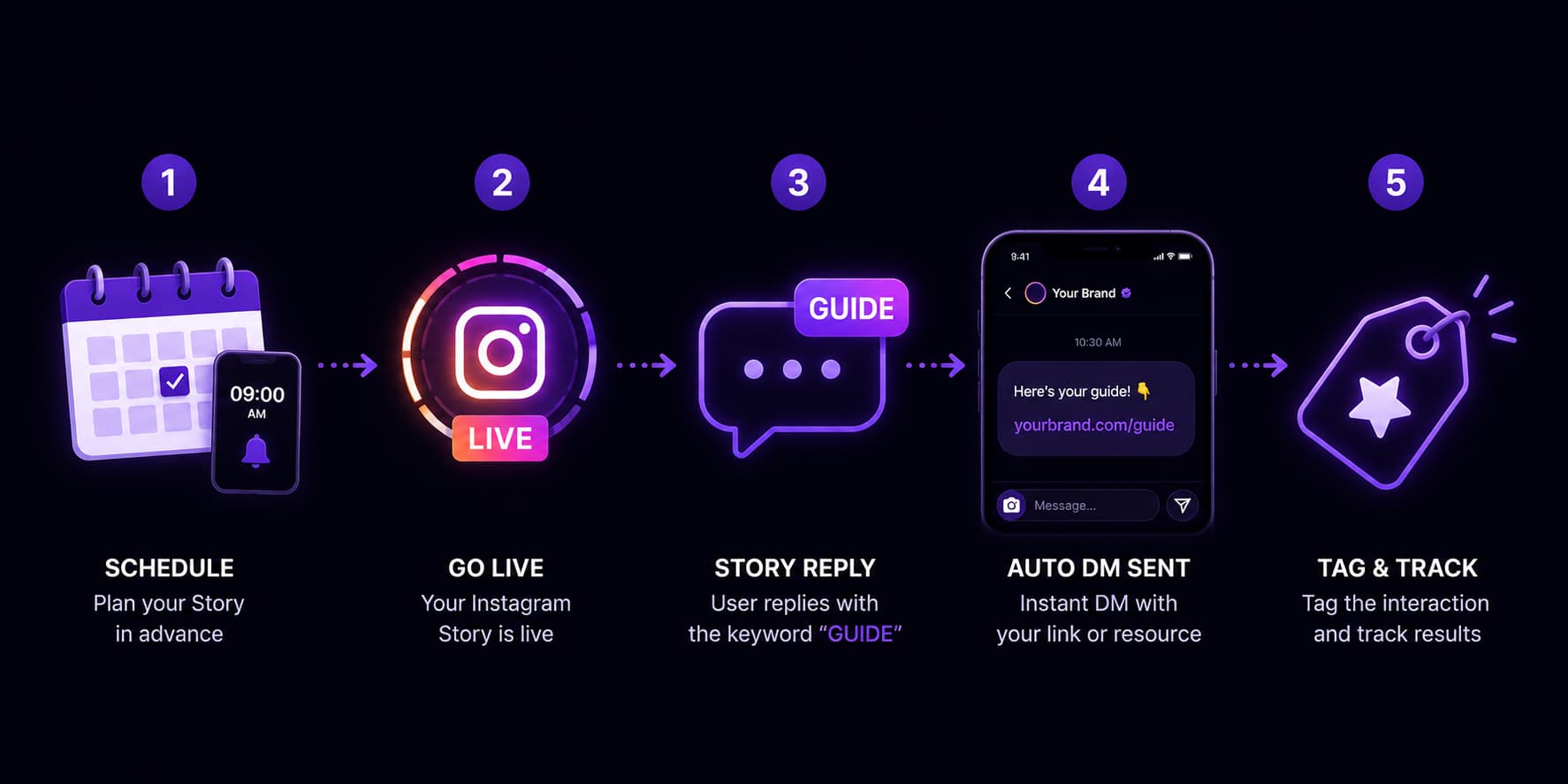
At its simplest, story reply automation sends a DM when someone replies to your story. That reply might include a keyword like “GUIDE” or “INFO,” or it could be any reply at all - even an emoji reaction. Some tools also let you trigger replies only on specific stories tied to a campaign.
Where tools really separate is in how they handle the follow-up. The better ones allow you to add delays, personalize messages, and decide what happens next based on how someone responds. That’s what keeps the conversation feeling human instead of like an instant, copy-paste bot reply.
Types of Story Reply Automation You Can Set Up in 2026
Not all story reply automation works the same way. Here are the main types available in 2026, and when to use each one:
Keyword trigger replies:
The most popular type of story reply automation. You post a Story asking people to reply with a specific word (like "GUIDE," "LINK," or "INFO"). When someone replies with that keyword, they automatically receive a DM with the relevant resource. This is the best starting point for content creators new to story reply automation.
Any reply triggers:
Every story reply gets an automatic response, regardless of the content. This works well for welcome messages, thank you replies, or directing people to a link in your bio. Use this type of story reply automation when you want to acknowledge every interaction.
Mention trigger replies:
When someone mentions your account in their own Story, you receive an automation that sends them a thank you DM or a special offer. This type of story reply automation is powerful for building relationships with other creators and brand advocates.
Conditional story reply automation:
Advanced tools let you set up if/then logic. If someone replies with a question mark, send an FAQ link. If they reply with a fire emoji, send a discount code. This level of story reply automation requires more setup but delivers the most personalized experience.
What Actually Matters When Choosing a Tool
If you strip away the marketing language, a few things matter more than anything else.
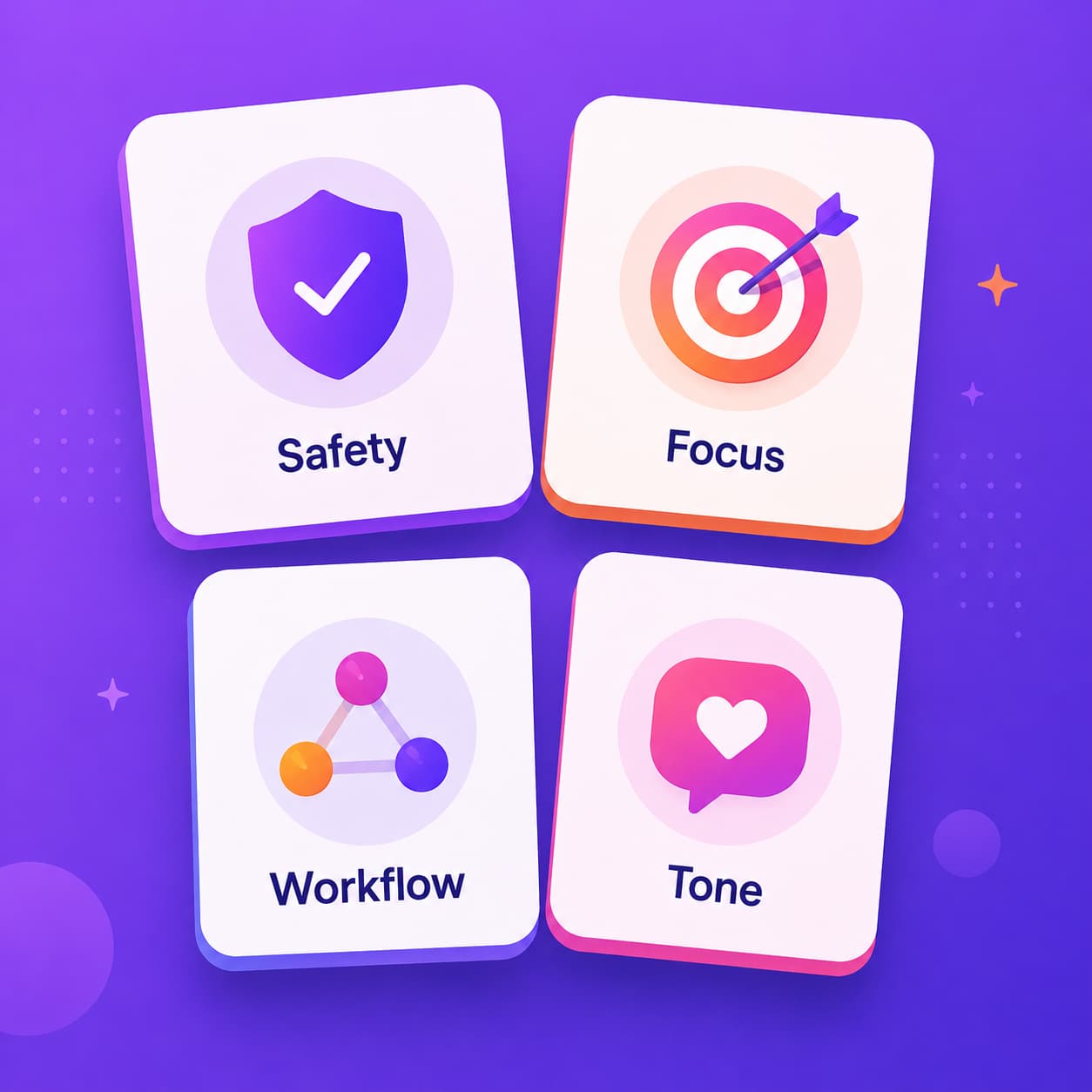
First is safety. Tools that aren’t built properly or don’t follow Meta’s rules can put your account at risk. That’s not a small issue - it’s a deal breaker.
Second is focus. Tools built for every platform under the sun often treat Instagram like an afterthought. That’s when you start seeing bugs, delays, or things not triggering when they should.
Third is workflow. Being able to schedule stories, reels, and posts and attach automation in the same place saves more time than most people realize. It removes a lot of friction and reduces mistakes.
And finally, tone matters. Delays, personalization, tagging, and simple follow-ups do far more for conversions than instant speed alone.
This is where InstantDM starts to stand out.
How to Choose the Best Story Reply Automation Tool for Your Needs
The best story reply automation tool depends on your specific situation. A solo creator with 5,000 followers has different needs than an agency managing 20 client accounts. Here is how to think about the decision:
For solo content creators:
You need a story reply automation tool that is simple to set up, does not require coding, and connects through Meta's official API. Look for tools that combine story reply automation with content scheduling so you manage everything in one place. InstantDM and LinkDM both fit this profile.
For businesses using Instagram for sales:
You need story reply automation that integrates with your CRM or at minimum tags and segments users based on their replies. The tool should support follow-up sequences, not just the initial auto-reply. InstantDM and Inrō both support this workflow.
For agencies managing multiple accounts:
You need story reply automation with team collaboration features, client reporting, and the ability to manage different automation rules per account. Inrō is the strongest option for this use case, though InstantDM's multi-account support covers most agency needs.
For creators on a budget:
Free story reply automation options exist but come with limits. LinkDM offers a free tier with basic story reply automation. Instagram's native quick replies are free but require manual triggering. The paid tools (15 to 50 dollars per month) offer true hands-off automation that saves significant time.
What to look for in a story-reply automation tool
InstantDM feels like it was built by people who actually use Instagram daily. Instead of focusing on one narrow automation feature, it combines posting, scheduling, and automation into a single workflow.
Related: set up automatic responses on Instagram
It’s Meta-verified and built around official APIs, which lowers the risk of spam flags or account issues. That alone puts it ahead of many tools creators hesitate to trust.
Scheduling and automation also live together. You can plan your stories, reels, or posts and attach the story-reply automation before anything goes live. Once the story is published, everything is already running. There’s no switching tools or turning things on manually.
The DMs themselves don’t feel rushed or robotic. Smart delays and personalization Make replies feel natural, which is important if you care about long-term trust with your audience.
And because everything lives in one dashboard, story replies can easily feed into comment automation, lead tagging, or follow-up campaigns without extra setup.
Where Other Tools Fall Short
Inrō is powerful, especially for larger teams, but for many creators it feels like overkill. There’s a lot to configure, and it’s not always the fastest option if you’re posting frequently.
Related: compare ManyChat alternatives
LinkDM works well for simple keyword replies and link delivery, but it’s mostly built around that use case. Without built-in scheduling, creators often end up stacking tools to fill the gaps.
ReplyRush is straightforward and affordable, but it stays fairly basic. Once you want deeper workflows or tighter control, you quickly run into limitations.
Story Reply Automation Tool Comparison: Features That Matter
Here is how the leading story reply automation tools compare on the features that actually matter for daily use:
InstantDM:
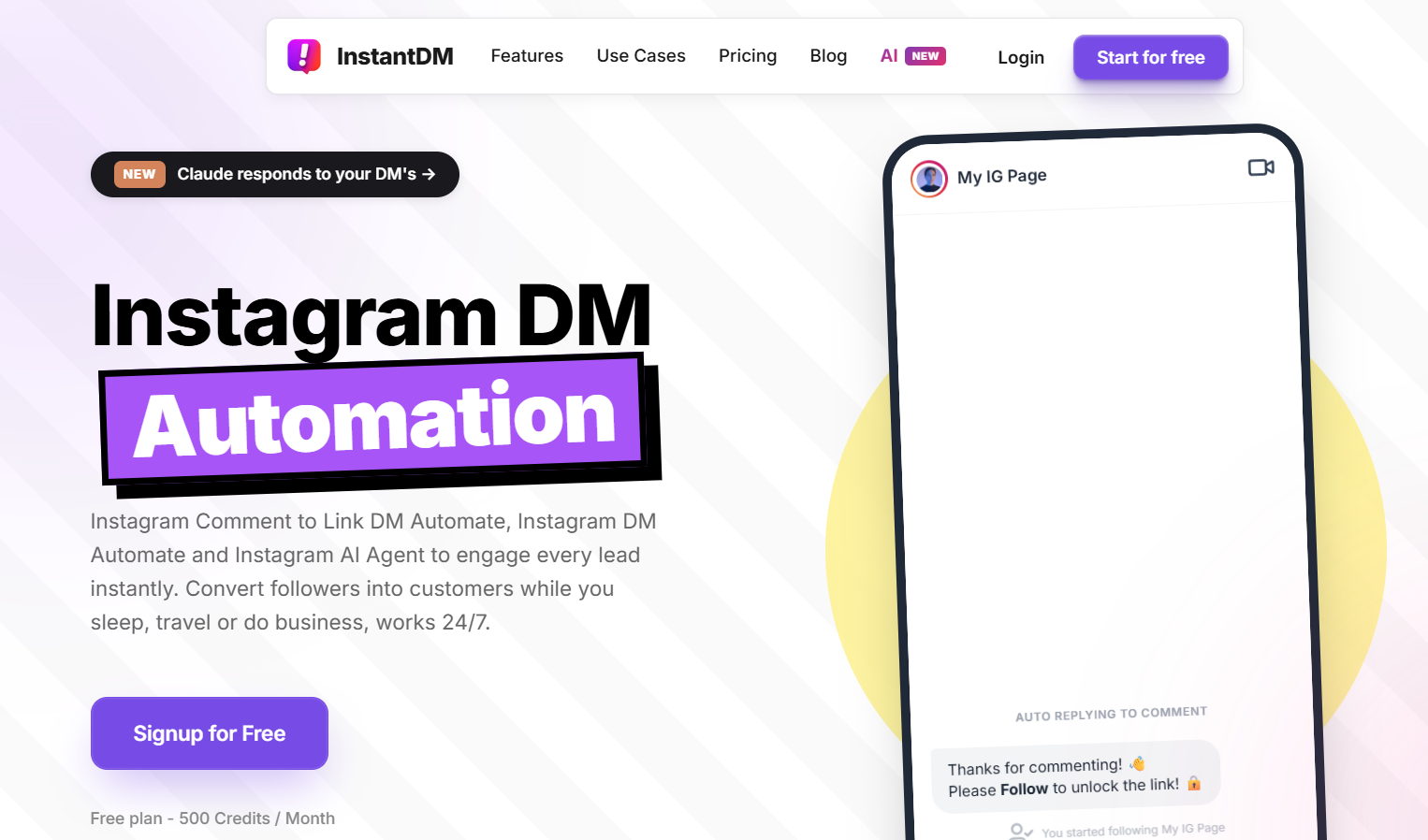
Full story reply automation with keyword triggers, any-reply triggers, and mention triggers. Connects through Meta's official Business API, which means your account stays safe. Combines story reply automation with content scheduling, comment-to-DM automation, and analytics in a single dashboard. Best for creators and businesses that want one tool for everything.
Inrō:
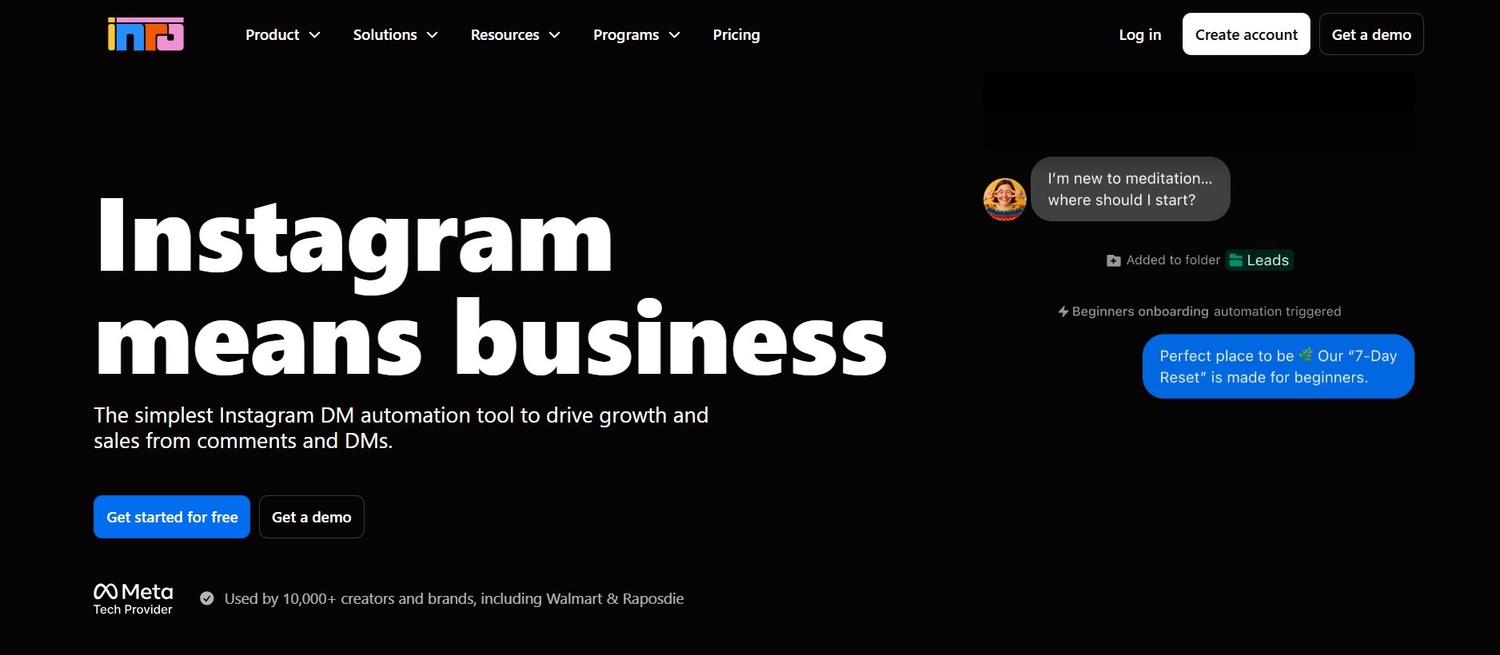
Strong story reply automation with advanced conditional logic and team collaboration. Better suited for agencies and larger teams. The learning curve is steeper, and the pricing reflects the enterprise focus.
LinkDM:
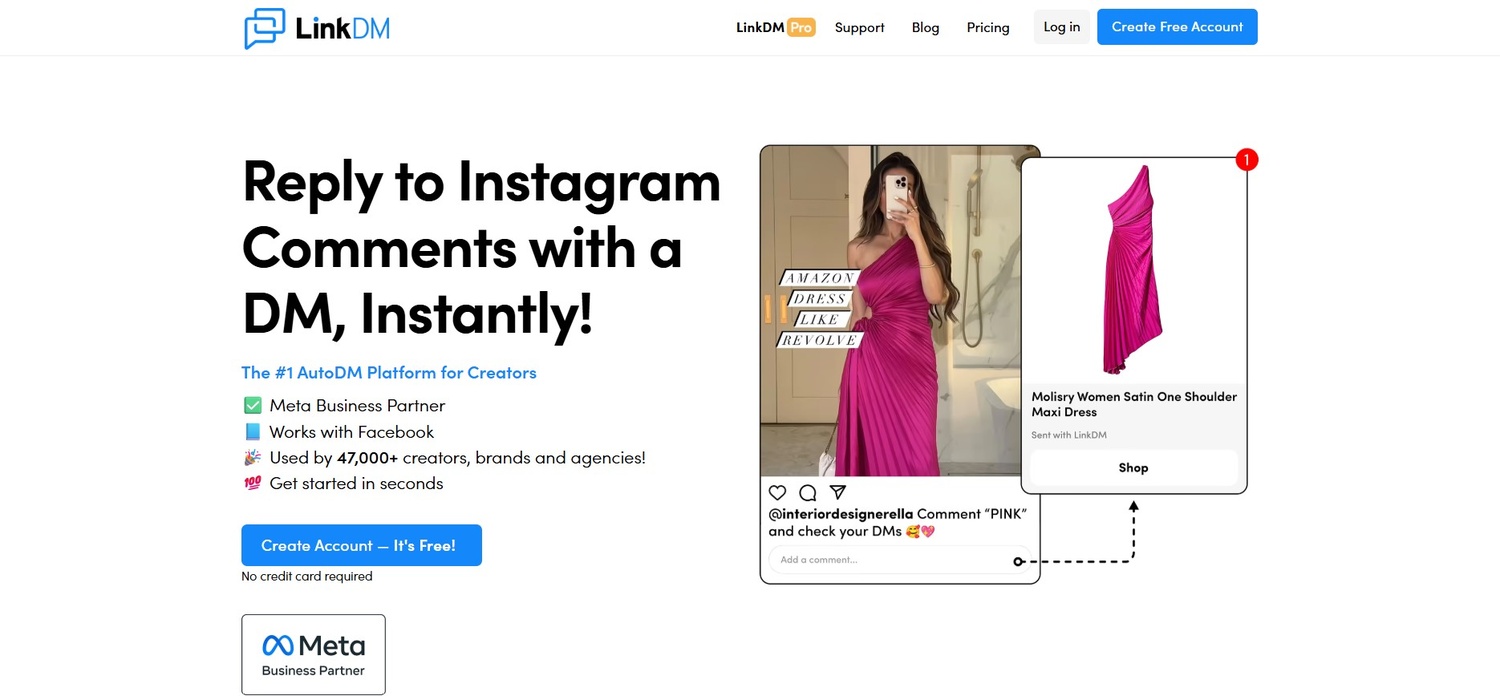
Free tier available with basic story reply automation. Good for creators just starting with automation. Limited features compared to paid tools, but the free tier is genuinely useful for accounts with low reply volume.
ReplyRush:
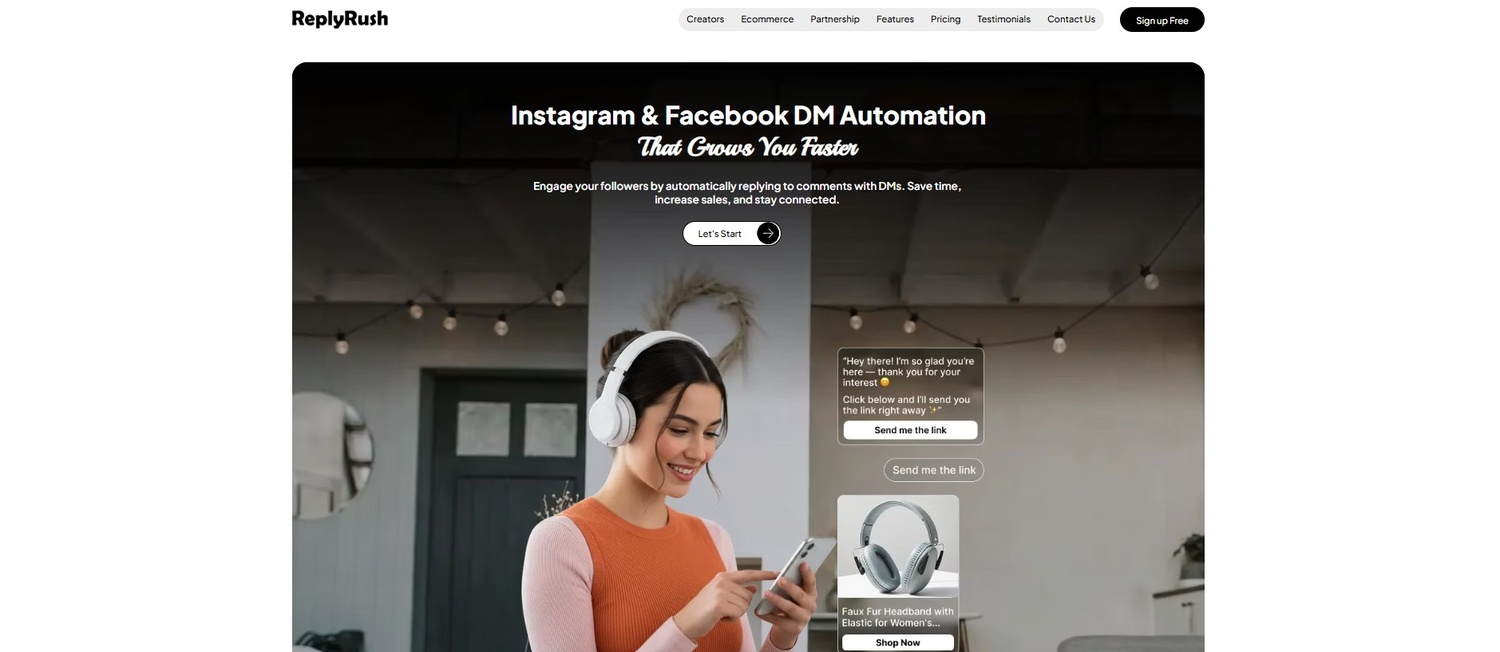
Focuses specifically on story reply automation with a clean, simple interface. Fewer features than InstantDM or Inrō, but the simplicity is an advantage for creators who only need story reply automation and nothing else.
A Simple Example Using InstantDM
Say you’re sharing a free guide. You schedule a story inside InstantDM and ask people to reply with “GUIDE.” As soon as someone replies, they get a personalized DM with the link. They’re tagged automatically, and you can follow up later if you want - all without doing anything manually.
From story to DM to follow-up, everything happens in one place.
A Quick Word on Safety and Scale
Automation only becomes a problem when it ignores the person on the other side. Clear value, reasonable pacing, and respectful messaging go a long way. InstantDM is built around that mindset, which makes it easier to scale without hurting trust or risking your account.
Common Story Reply Automation Mistakes to Avoid
Story reply automation is powerful, but mistakes can hurt your engagement or even put your account at risk. Here are the most common pitfalls:
- Sending generic responses. "Thanks for your reply!" feels robotic. Use the replier's name and reference their specific Story reply to make the automation feel personal.
- Over-automating follow-ups. The first touch should be automated. After that, switch to manual replies for the rest of the conversation. People can tell when they are talking to a bot.
- Ignoring reply quality. If your story reply automation sends the same message to everyone regardless of what they said, you will lose trust fast. Use conditional logic to match your response to their intent.
- Not testing before scaling. Start your story reply automation with a single Story and a small audience. Monitor the responses for a week before automating all your Stories.
- Using non-approved tools. Instagram permanently bans accounts that use automation tools connected through unofficial APIs. Always use story reply automation tools that connect through Meta's official Business API.
Story Reply Automation for Different Use Cases
For E-commerce and Product Sales
Story reply automation transforms Instagram Stories into a sales channel. Post a Story showcasing a product and ask people to reply with "SHOP" or "LINK." The automation sends them a direct link to purchase. This removes the friction of "link in bio" and puts the purchase link directly in their DMs where they are already engaged. Content creators selling digital products, merchandise, or services see the highest ROI from this type of story reply automation.
For Lead Generation and Email List Building
Use story reply automation to grow your email list. Post a Story offering a free resource — a guide, checklist, template, or discount code. When people reply with a keyword, the automation collects their information and sends the resource. This turns passive Story viewers into leads you can nurture through email marketing.
For Community Building and Engagement
Story reply automation is not just for sales. Use it to run polls, Q&A sessions, and interactive challenges through Stories. When someone replies with an answer, the automation acknowledges their response and encourages further engagement. This builds a sense of community and keeps your audience coming back to your Stories regularly.
Final Thoughts
There are plenty of tools that can automate Instagram story replies. Fewer tools do it in a way that feels natural, safe, and easy to manage long-term. While Inrō, LinkDM, and ReplyRush each solve part of the problem, InstantDM brings everything together in a way that actually fits how creators work.
If you want story reply automation that doesn’t feel like a mess of tools or a risk to your account, InstantDM is the clear choice.