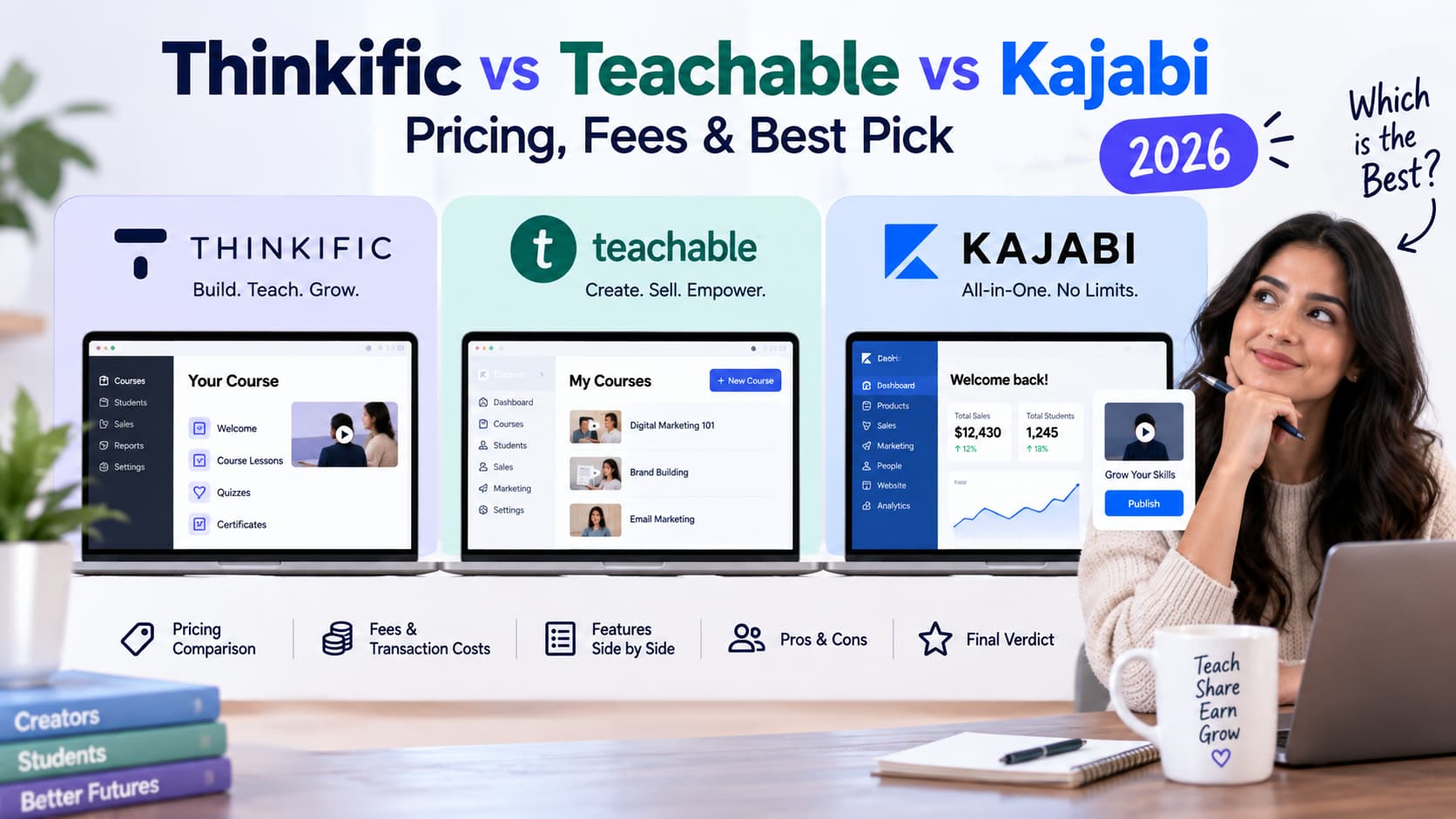

The best Udemy alternative for most course creators in 2026 is Thinkific. Paid plans start around $40–$54 per month, platform fees are 0% when you use Thinkific Payments, you set your own prices, and you own every student email. Teachable is the fastest way to launch if you need a course online this week. Kajabi is the all-in-one option when you want email, funnels, and a website in the same login. Systeme.io is the true $0 start: one course, 2,000 contacts, and no platform cut.
Udemy is a marketplace, not your school. On organic marketplace sales you keep 37% and Udemy keeps 63%. On Udemy Business and subscription viewing you keep 15% of the instructor pool. You keep 97% only when the student uses your coupon or referral link — which means you already brought the buyer. Coursera completed its combination with Udemy on 11 May 2026. The catalogs still run separately today, but marketplace rules can change. Owning checkout and the email list is how you stop renting your audience.
This guide compares the eight best platforms for creators who want to sell on their own terms in 2026.
Why sell on your own platform instead of Udemy
Udemy gives you discovery. It does not give you a business.
Udemy’s published instructor revenue share uses three different rates:
| How the sale happens | You keep | Udemy keeps |
| Organic marketplace, ads, or browse | 37% | 63% |
| Student uses your coupon or referral link | 97% | 3% |
| Udemy Business or subscription minutes (from January 2026) | 15% of the pool | 85% of the pool |
Those percentages still miss three marketplace costs:
- Udemy can discount your course in sitewide sales. 37% of a $9.99 promo is about $3.70.
- You do not get the student email list to launch the next offer.
- Competing courses sit next to your lessons inside the same player.
What 1,000 marketplace students are actually worth
Figures below assume a $50 course sold as an organic marketplace purchase at the 37% instructor rate.
| Students | You keep (37%) | Udemy keeps (63%) |
| 100 | $1,850 | $3,150 |
| 500 | $9,250 | $15,750 |
| 1,000 | $18,500 | $31,500 |
The same 1,000 students at $50 on your own platform, after typical card processing of about 2.9% + $0.30, leave you roughly $47,000 instead of $18,500. That gap pays for software, ads, and production several times over.
If you already send traffic with your own coupon, Udemy’s 97% split looks closer to self-hosting. At that point you do not need Udemy to own the checkout or the relationship.
What you control on your own platform
- Most of every sale, minus card processing and a flat monthly fee
- Any price: a $47 workshop, a $497 cohort, or a $2,000 mentorship
- Names, emails, progress, and tags you can market to later
- Your domain and brand, with no marketplace chrome
- A player that does not recommend a cheaper competitor under the video
- Room for memberships, coaching, downloads, and bundles beside the course
The trade-off is traffic. Udemy search does not follow you. You replace it with content, email, and direct social checkouts.
8 best Udemy alternatives for course creators
Prices change. Confirm the live page before you subscribe. Figures below reflect widely published rates as of September 2026.
| Platform | Typical paid start | Platform fee | Free plan or trial | Best for |
| Thinkific | $40–$54/month | 0% on Thinkific Payments | Trial only | Best overall branded school |
| Teachable | $29–$39/month (Starter) | About 7.5% on Starter; 0% from Builder | Short trial | Fastest first launch |
| Kajabi | $143/month annual, $179 month-to-month | 0% on Kajabi Payments | Trial only | Courses, email, funnels, and site in one app |
| Podia | $42–$49/month (Mover) | About 5% on Mover; 0% from Shaker | Trial | Simple shop for courses and downloads |
| Systeme.io | $0, then $17–$27/month | 0% on every tier | Yes — 1 course, 2,000 contacts | Lowest-cost start with funnels |
| LearnWorlds | $24–$29/month (Starter) | $5 per enrollment on Starter; 0% from Pro Trainer | Trial | Interactive video, exams, and certificates |
| Stan Store | $29/month (Creator) | 0% platform fee + Stripe or PayPal | Trial | Instagram and TikTok checkout |
| ThriveCart | About $47/month Standard, or a lifetime license | 0% platform fee | Trial | High-converting checkouts and upsells |
Skool, Circle, Whop, and LearnDash are worth a look if community or WordPress ownership is the product. They are not the default school platforms in this list.
1. Thinkific — best overall
Thinkific is the strongest default Udemy alternative in 2026 if you want a branded school, student emails, and 0% platform fees on Thinkific Payments. The permanent free plan is gone. After the 13 August 2026 price increase, Basic is about $40 per month on annual billing or $54 per month if you pay monthly.
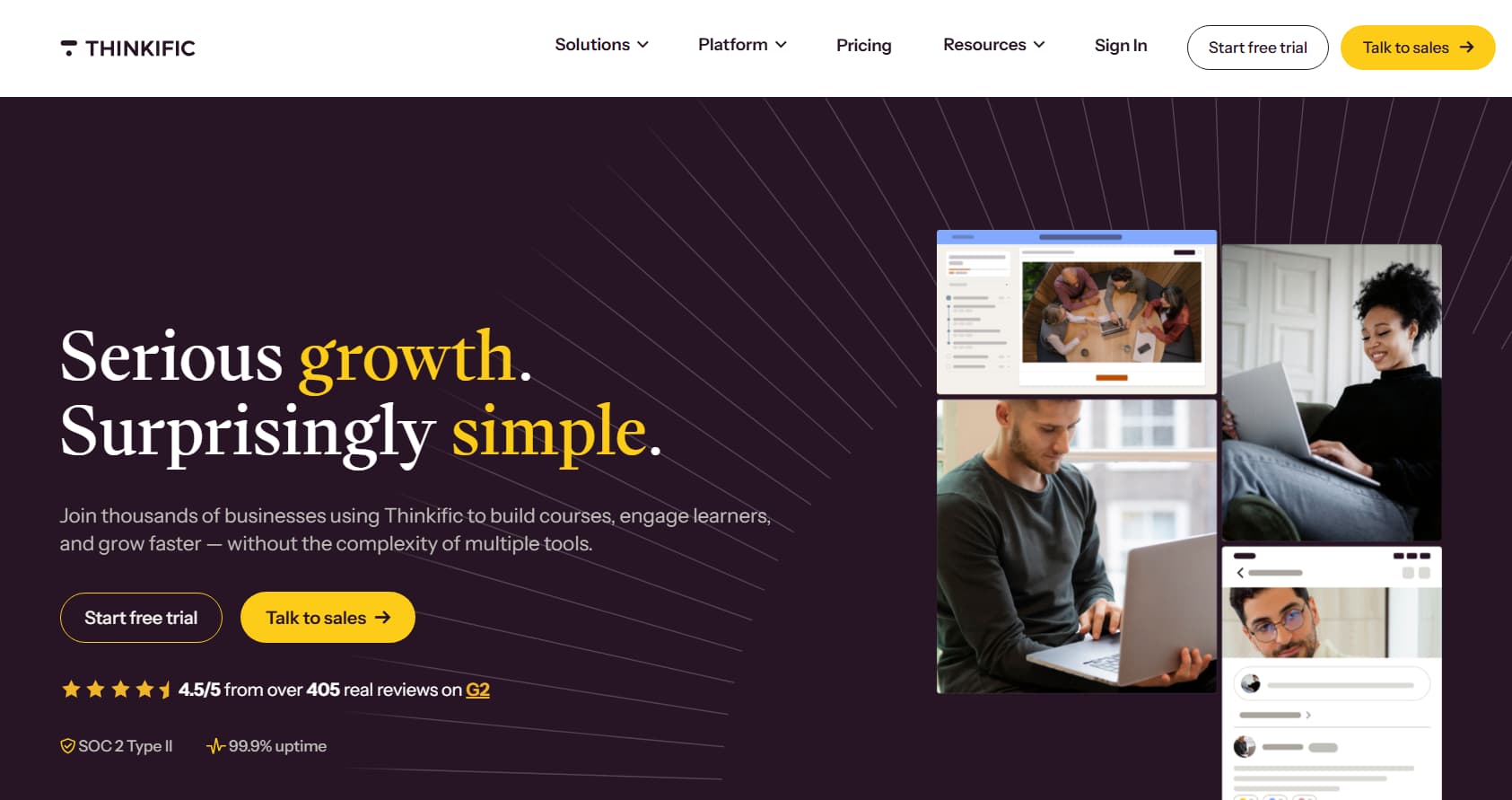
You get a drag-and-drop site, video hosting, quizzes, drip content, and exports into tools such as ConvertKit, ActiveCampaign, or MailerLite. Communities and API access sit on higher plans.
| Plan | Month-to-month | Annual (effective monthly) | What it unlocks |
| Trial | $0 for a limited window | — | Test the builder |
| Basic | About $54 | About $40 | Custom domain, coupons, drip |
| Start | About $109 | About $82 | Certificates, live lessons, payment plans |
| Grow | About $219 | About $164 | Communities, API, more seats |
0% platform fee applies when you use Thinkific Payments. Connecting your own Stripe or PayPal account can add a plan-based surcharge on lower tiers.
| Udemy | Thinkific | |
| Revenue | 37% organic, 97% referred, 15% subscription pool | About 97% after card processing |
| Pricing | Platform promotions | You set the price |
| Student data | Not yours to market | Exportable |
| Brand | Marketplace player | Your domain |
| Discovery | Built-in search | You market the school |
Thinkific is the right pick if you want one school you can still be running in five years. It is the wrong pick if you need native multi-step email funnels with no extra tools.
2. Teachable — best for a first course this month
Teachable is the easiest Udemy alternative if you need to upload videos, publish a checkout, and take a payment quickly. Students already recognize the interface. Paid plans handle a large share of international tax when you use Teachable Payments, and affiliates are built in on higher tiers.
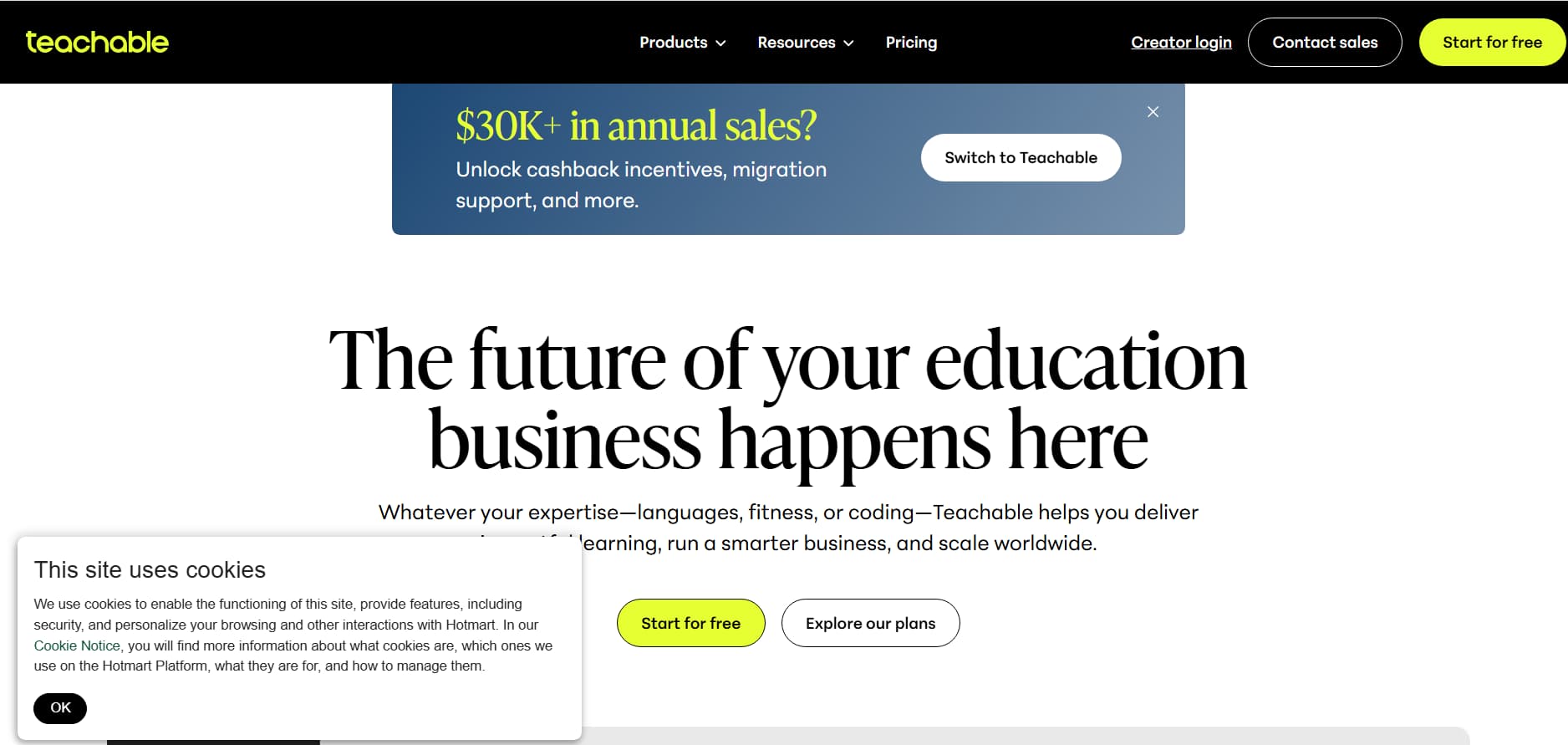
Starter is the cheap door. It adds about 7.5% per sale. Builder, at about $69–$89 per month, drops the platform fee to 0% and is the plan most serious creators should budget for.
| Plan | Typical price | Platform fee |
| Trial | Limited days | — |
| Starter | About $29/month annual, $39 month-to-month | About 7.5% |
| Builder | About $69/month annual, $89 month-to-month | 0% |
| Growth | About $189/month | 0% |
Choose Teachable when speed matters more than a custom academy theme. Move off Starter as soon as the 7.5% fee costs more than the upgrade.
3. Kajabi — best all-in-one
Kajabi is the Udemy alternative for creators who want courses, email, landing pages, pipelines, and community under one login. After the January 2026 plan change, entry is about $143 per month billed annually, or about $179 month-to-month. The old Kickstarter plan is gone.
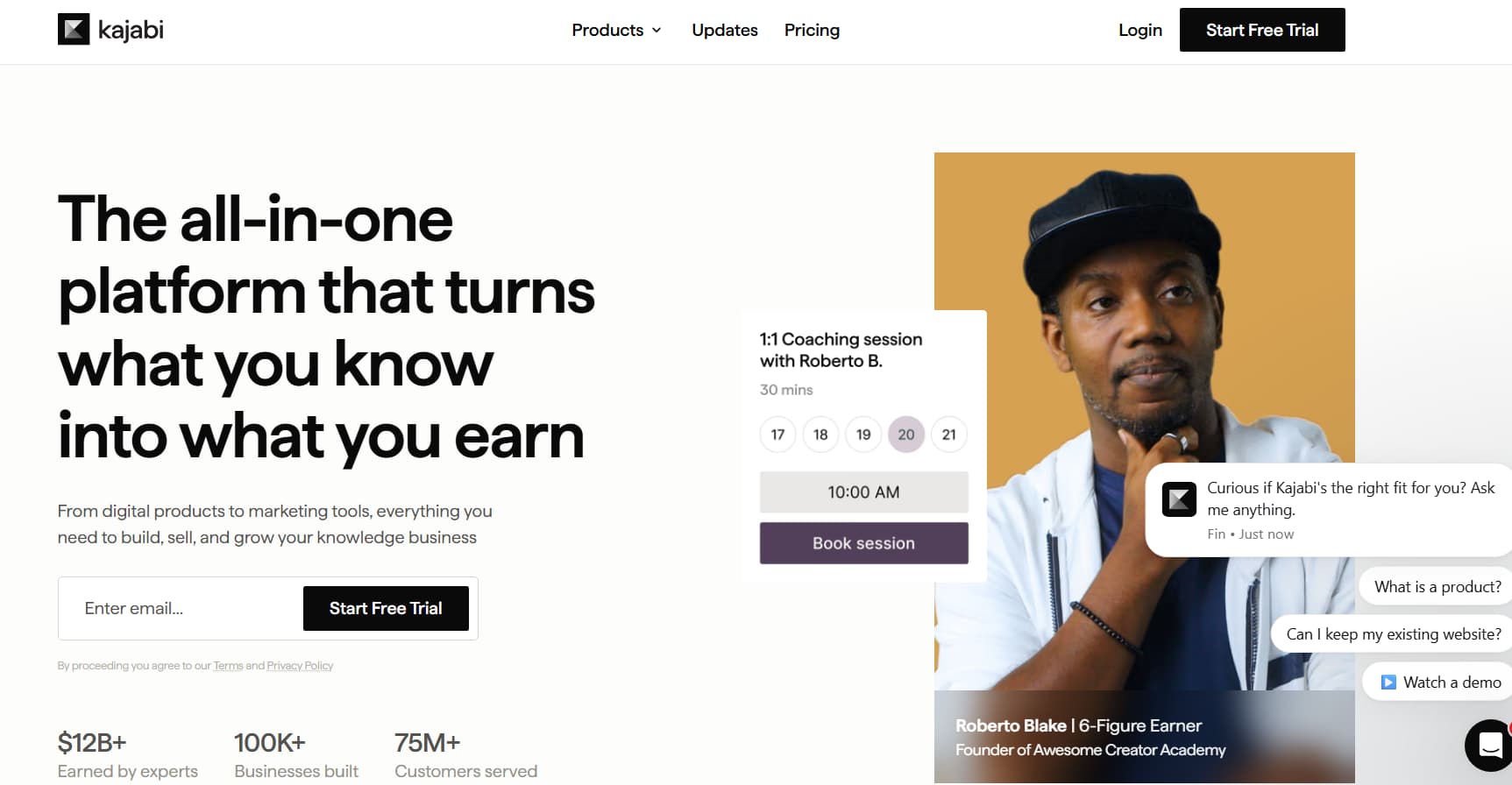
Kajabi only pays for itself if you actually run automations and funnels inside it. Basic contact caps, around 2,500, push a growing list onto Growth.
| Plan | Annual | Month-to-month | Typical caps |
| Basic | About $143/month | About $179/month | Few products, about 2,500 contacts |
| Growth | About $199/month | About $249/month | More products, about 25,000 contacts |
| Pro | About $399/month | About $499/month | High caps |
Choose Kajabi if you are replacing four tools and already have revenue. Skip it if you only need a course player.
4. Podia — simplest storefront
Podia is the cleanest shop if you sell a mix of courses, PDFs, and memberships and do not want Kajabi complexity. Mover is about $42–$49 per month with a 5% transaction fee. Shaker, at about $84–$99 per month, removes that fee and adds affiliates.
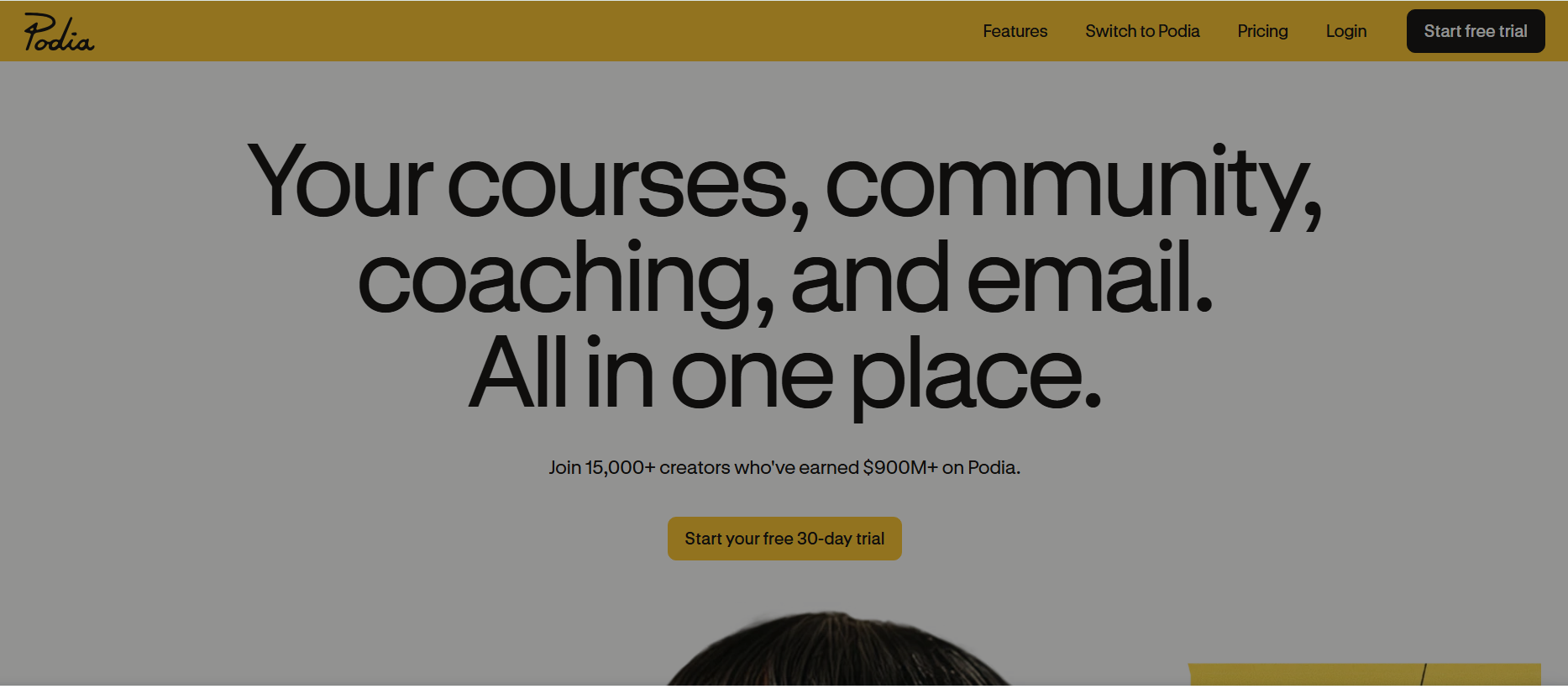
The admin is easy. Quizzes and page design are weaker than Thinkific or LearnWorlds. Choose Podia when you want a digital store, not a university.
5. Systeme.io — cheapest real free start
Systeme.io is the best $0 Udemy alternative that can still take a payment. The free plan includes one course, 2,000 contacts, sales funnels, and 0% platform fees. Startup is about $17–$27 per month depending on billing.
| Plan | Price | Useful limits |
| Free | $0 | 1 course, about 2,000 contacts, a few funnels |
| Startup | About $17–$27/month | More courses and contacts |
| Webinar | About $47/month | Evergreen webinars |
| Unlimited | About $97/month | Caps come off |
The course player is basic. Funnels and email are the reason to pick it. Choose Systeme.io when cash is tight and you need a funnel plus a course, not a polished LMS.
6. LearnWorlds — best for interactive lessons and certificates
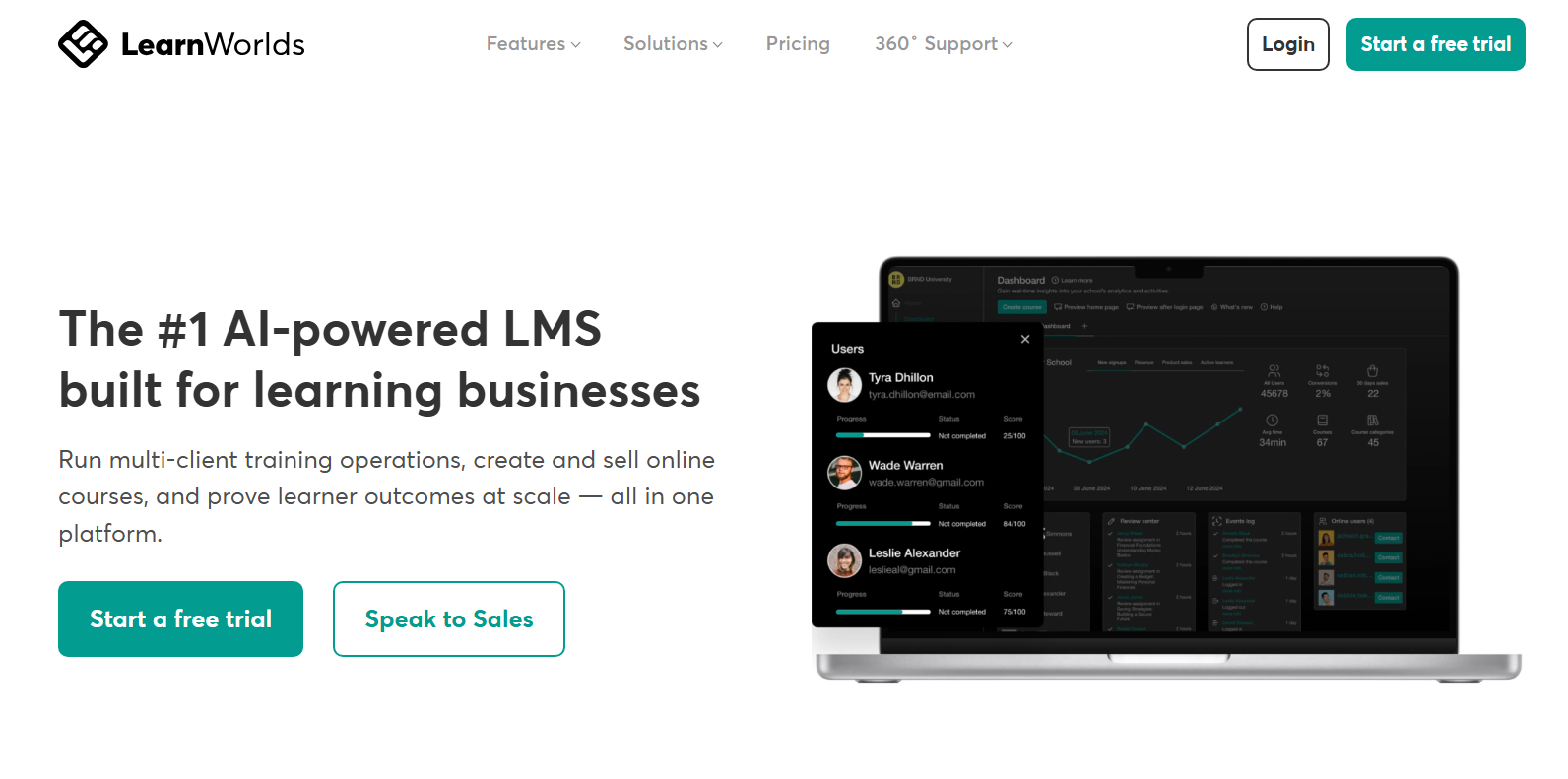
LearnWorlds is the Udemy alternative when the product is the learning experience: questions on the video timeline, formal assessments, certificates, and SCORM. Starter is about $24–$29 per month plus $5 per paid enrollment. Pro Trainer, at about $79–$99 per month, removes that per-sale fee.
Choose LearnWorlds if companies or certification-minded students will buy the training. The $5 Starter fee hurts low-priced courses.
7. Stan Store — best for Instagram and TikTok checkout
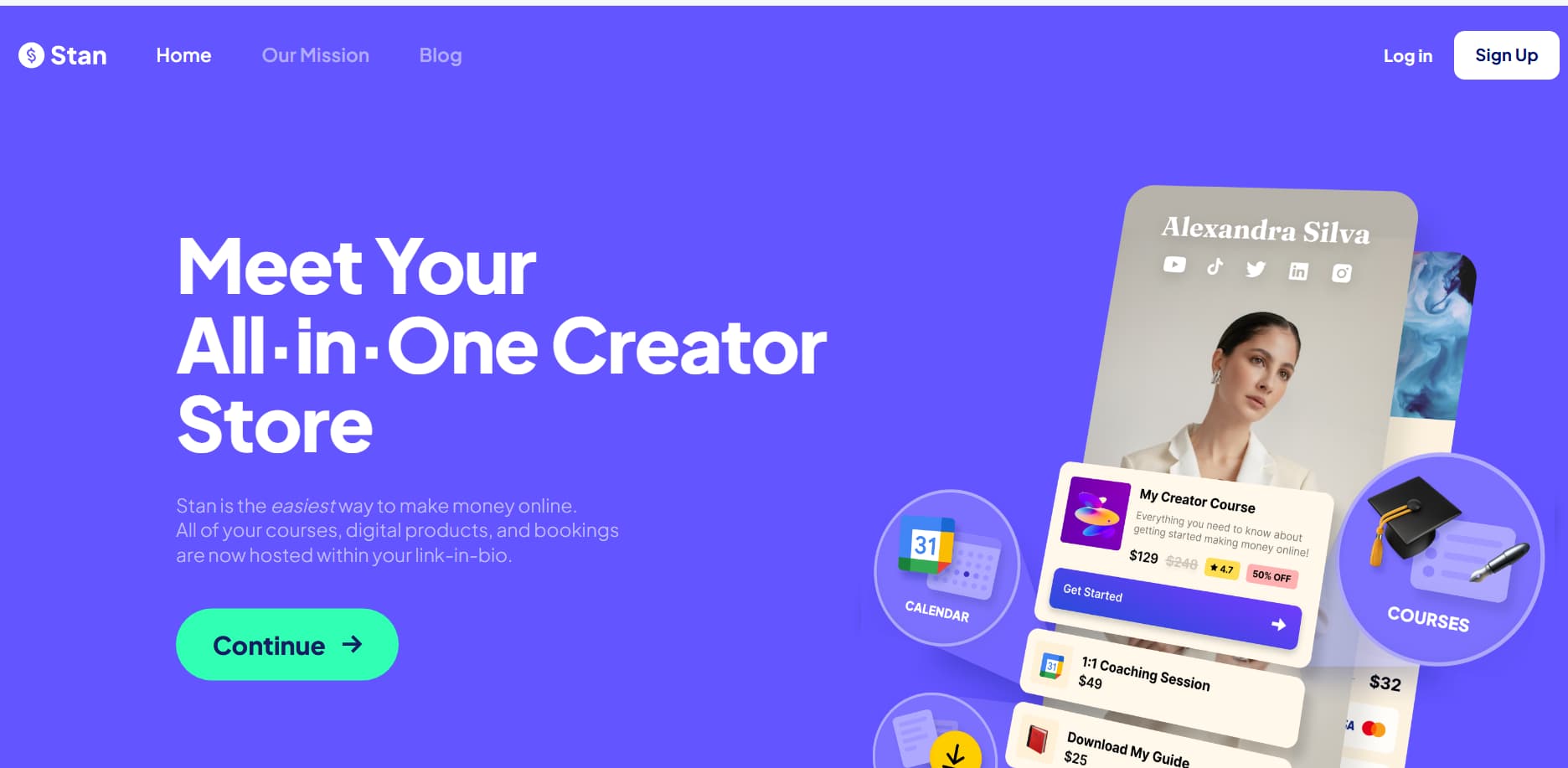
Stan Store is built for creators whose classroom is a social profile. Creator is $29 per month with a 0% platform fee. Stripe or PayPal processing sits on top. The bio link is the store: one-tap mobile checkout for courses, downloads, and bookings.
It is not a full desktop LMS. Community and assessments are thin next to Thinkific or LearnWorlds. Choose Stan Store when most sales start in a Reel, Story, or TikTok.
8. ThriveCart — best checkout and upsells
ThriveCart is for creators who already know the checkout is the bottleneck. It has sold a lifetime Standard license historically, and from mid-2026 it also offers monthly plans — about $47 for Standard and $87 for Pro+ — with Academy included for course delivery. Platform fee is 0%. Card processing is yours.
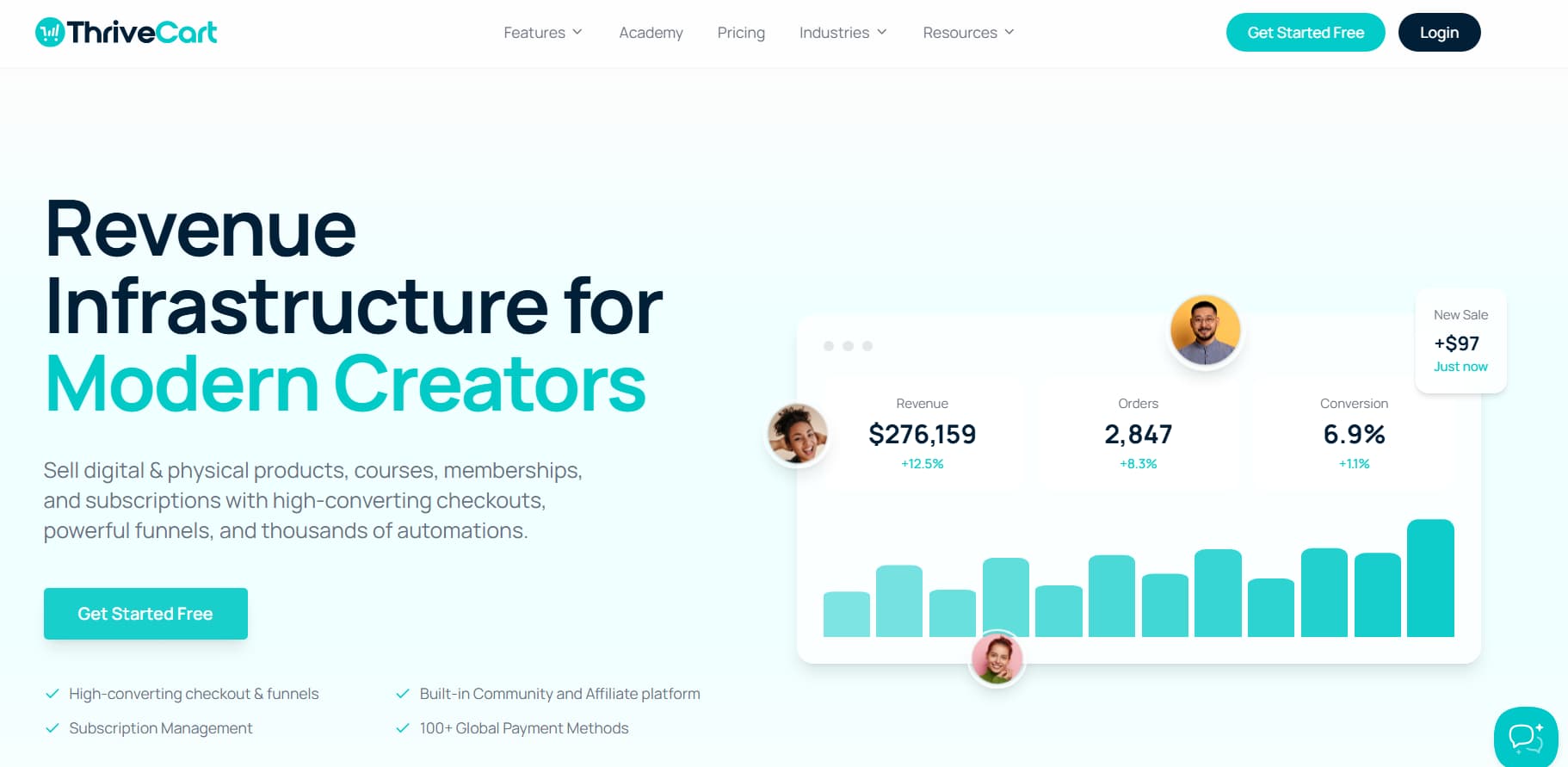
One-click upsells, order bumps, and payment plans are the strength. The lesson area is lighter than Thinkific, and email is not native. Choose ThriveCart when the sales path matters more than the classroom UI.
How to choose
| Your situation | Pick |
| Default long-term school | Thinkific |
| Launch this week | Teachable |
| Replace email, funnels, and a website | Kajabi |
| Need a $0 start with a funnel | Systeme.io |
| Courses plus downloads, no fuss | Podia |
| Quizzes, video overlays, certificates | LearnWorlds |
| Instagram or TikTok native selling | Stan Store |
| Checkout and upsells first | ThriveCart |
| Community is the product | Skool or Circle |
A hybrid still works: keep a low-priced Udemy version for discovery, sell the full-price cohort on your own platform, and give Udemy students a bonus that captures their email off the marketplace where policy allows.
How to sell a self-hosted course without Udemy search
Self-hosting fails when the only traffic plan is hope. Replace marketplace browse with four pieces:
- Host the curriculum on Thinkific, Teachable, Podia, LearnWorlds, or Systeme.io.
- Put checkout on that platform, Stan Store, ThriveCart, or a Stripe Payment Link.
- Publish useful content on Instagram, YouTube, LinkedIn, or X that teaches one idea and asks for a keyword comment or a click.
- Send the checkout to people who already raised their hand.
Selling on Instagram without a full website
Many creators never send cold traffic to a long sales page first.
- Publish a Reel or carousel.
- Ask people to comment a word such as COURSE.
- An official-platform automation sends the checkout or waitlist link in DMs.
- The buyer pays on mobile. The course platform emails login details.
Use official APIs and stay inside each platform’s messaging rules. Do not scrape comments or spam inboxes.
A cold sales page often converts in the 5–10% range. A checkout sent to someone who just commented usually converts higher because intent is already warm. Measure your own funnel rather than copying someone else’s percentage.
YouTube with a pinned checkout, a short free lesson as an email lead magnet, and a live workshop with a paid upgrade are the other owned channels that replace Udemy search.
| Udemy marketplace | Your own funnel | |
| Take-home | 37% on organic sales | About 97% after processing |
| Traffic | Platform search | Content, email, and DMs |
| Student data | Not yours | Yours |
| Brand | Shared shelf | Private school |
How we evaluated these tools
This list is for people who sell courses, not people who take them. Coursera, Skillshare, and LinkedIn Learning can be better places to learn. They are not better places to own a school. Every platform below was scored as a business tool first.
We used the same five tests on each product.
Take-home pay. The headline monthly fee is not the cost. We checked platform transaction fees, card processing, and the extra surcharge some tools add if you connect your own Stripe or PayPal. A $29 plan with a 7.5% cut can cost more than a $54 plan with 0% once you pass a few thousand dollars a month.
Ownership of the student. If you cannot export names, emails, and progress, you are still on a marketplace with nicer branding. We favoured platforms that let you leave with the list.
Pricing freedom. Udemy can push a $199 course to $9.99. A real alternative lets you charge $47, $497, or $2,000 and keep that price stable.
Course quality tools. Video hosting, drip, quizzes, certificates, mobile playback, and communities matter once students are inside. A pretty checkout with a weak classroom is only half a product.
Path to first sale. A tool that needs a designer, a developer, and a week of setup loses to one you can publish on a Sunday night. That is why Teachable and Systeme.io stay on a list even when Thinkific wins overall.
We also discarded anything that fails a basic 2026 freshness check: retired free plans, old Kajabi Kickstarter pricing, and the myth that Udemy takes one flat 63% on every sale. Where a vendor changed prices in 2026 — Thinkific in August, Kajabi in January, Udemy’s subscription pool in January — the newer number is the one in this guide.
No platform is “best” in every cell. Thinkific wins the default. Teachable wins speed. Kajabi wins the all-in-one stack. Systeme.io wins the $0 start. The table is a map, not a trophy.
Who should leave Udemy — and who should stay
Leaving Udemy because the revenue share looks ugly is the wrong reason if Udemy is still your only source of students.
Stay on Udemy, at least for now, if:
- You have no email list, no social audience, and no time to post every week.
- Most of your sales already come from your own coupon or referral link. You already keep 97% on those orders. Moving the file to Thinkific does not change the marketing job.
- The course is a discovery product: a $12–$20 intro that feeds a higher-ticket offer you sell elsewhere.
- You are testing a topic and need proof that strangers will pay before you build a school.
Move the main offer off Udemy if:
- Sitewide $9.99 sales are training your best students to wait for a discount.
- You cannot email those students about a cohort, a membership, or a live workshop.
- You want to charge $197 or more and keep that price.
- A real share of sales already comes from Instagram, YouTube, or your site. Those buyers do not need Udemy’s search box. They need a checkout you control.
A clean split works for many instructors in 2026. Keep a lower-priced Udemy version so the marketplace can still send strangers. Sell the full curriculum, community, and coaching on Thinkific, Teachable, Kajabi, or Stan Store. Give Udemy students a bonus or upgrade path that captures their email off the marketplace where policy allows.
Do not delete the Udemy course on day one. Run both for one launch cycle. Compare take-home per student, refund rate, and how many buyers join your list. If the owned checkout pays more after software and processing, shift the ad spend and the content toward that link. If it does not, Udemy is still doing the job the alternatives cannot do: finding people who have never heard your name.