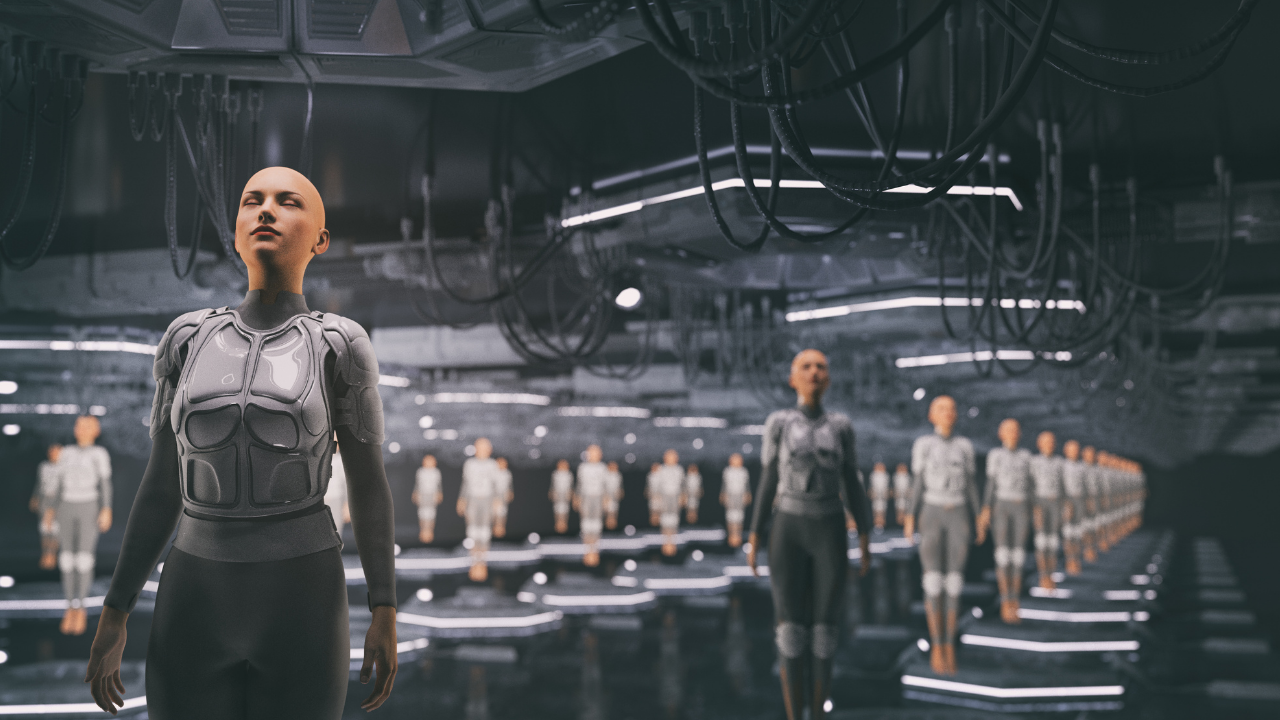
One creator built a fake influencer that sells products and lands brand deals. Another handed their Instagram page to Claude and got 1.5 million views in a week with $6,241 in revenue. A third reports $732 per day from digital products sold through an AI avatar.
AI influencers are not a trend. They are a business model. And in 2026, the tools are good enough, the audience is ready, and the monetization infrastructure is mature.
This guide breaks down exactly how to create an AI influencer from scratch in 8 steps. You will learn what an AI influencer is, which niches perform best, how to build a consistent character, and how to turn engagement into revenue through products, brand partnerships, and automated DM funnels.
For a deeper look at how AI is reshaping Instagram marketing, read our guide on AI influencers on Instagram: what creators must know.
What Is an AI Influencer?
An AI influencer is a digital character that does not exist in real life. It is created using AI image generation tools and maintained entirely through software. There are three main types:
- Completely fictional person: A character built from scratch with a unique name, backstory, and visual identity. Think Lil Miquela or Aitana Lopez.
- A clone of yourself: An AI-generated version of you that can produce content without you filming anything. Same face, same style, zero production time.
- A virtual creator: A brand mascot or stylized character designed to appeal to a specific audience demographic.
The core idea is simple. You build an audience around a personality without ever picking up a camera. The AI influencer posts content, engages with followers, and drives revenue while you focus on strategy and scaling.
Why Are AI Influencers So Popular in 2026?
Several factors have converged to make 2026 the breakout year for AI influencers:
Tool accessibility. Platforms like Midjourney, D-ID, HeyGen, and Runway now produce photorealistic images and video at a fraction of the cost from even a year ago. What once required a professional studio and photographer can now be done with a text prompt.
Audience acceptance. Studies from the Influencer Marketing Hub show that over 60 percent of consumers are comfortable engaging with AI-generated content on social media. The stigma around virtual creators has largely disappeared.
Monetization infrastructure. Instagram's native shopping features, DM automation tools like InstantDM, and creator fund programs give AI influencers the same monetization pathways as human creators.
Scalability. A single operator can run five, ten, or even twenty AI influencer accounts simultaneously. Each one operates in a different niche, targets a different audience, and generates independent revenue streams.
Step 1: Pick Your Niche
Before creating the influencer, you need to decide exactly which niche they will operate in. This decision shapes everything that follows: the visual style, the content strategy, the audience demographics, and the monetization approach.
The best-performing niches for AI influencers in 2026 are:
- Fitness: Workout routines, supplement recommendations, transformation content. High engagement rates and strong affiliate program availability.
- AI and tech: Meta but effective. An AI influencer talking about AI tools attracts a tech-savvy, high-spending audience.
- Beauty: Skincare routines, product reviews, makeup tutorials. Beauty brands are actively seeking virtual ambassadors.
- Lifestyle: Fashion, travel, home decor. Broad appeal and endless content possibilities.
- Travel: Stunning AI-generated destination photos, hotel reviews, travel tips. Works especially well for tourism brands.
- Personal development: Motivation, productivity, mindset content. High save rates and strong community building potential.
Once the niche is clear, everything else becomes easier. Your niche determines your content pillars, your hashtag strategy, and the brands you will eventually pitch to.
For tools that help with content creation across these niches, see our roundup of AI tools for social media content creation.
Step 2: Create the Base Character
This is the foundation of your entire AI influencer operation. You need a single, consistent base character that becomes the face of every post, story, and reel.
Define these attributes before generating your first image:
- Age: Pick a specific age range (e.g., mid-20s, early 30s). This affects styling, tone, and audience relatability.
- Style: Minimalist, streetwear, bohemian, athletic, corporate-casual. Choose one and stick with it.
- Hair: Color, length, texture, typical styling. Consistency here is what makes the character feel "real."
- Facial features: Eye shape, skin tone, distinctive features like freckles or dimples. Write these down as a reference prompt.
- Personality traits: Curious, ambitious, funny, educational, aspirational. This drives your caption voice.
- Overall vibe: Modern and clean? Edgy and bold? Warm and approachable? This is the emotional fingerprint.
The key insight: character consistency is what separates professional AI influencer operations from amateur experiments. Use the same detailed prompt template for every image generation session. Tools like Midjourney's character reference feature and consistent seed values make this significantly easier in 2026.
Step 3: Build a Content Calendar
An AI influencer needs the same content strategy as any Instagram account. Random posting does not work, even with perfect AI-generated images.
Structure your content around four pillars:
- Educational content (40 percent): Tips, tutorials, how-to guides related to your niche. This builds authority and drives saves.
- Lifestyle content (25 percent): Behind-the-scenes, day-in-the-life, casual moments. This builds parasocial connection.
- Promotional content (20 percent): Product features, affiliate recommendations, brand partnerships. This is where revenue comes from.
- Engagement content (15 percent): Polls, questions, controversial takes, carousel hooks. This drives comments and shares.
Post at least four to five times per week. Use Instagram Stories daily for lower-friction engagement. Reels should make up at least 30 percent of your feed posts to maximize reach through the algorithm.
Step 4: Generate Content at Scale
This is where AI tools shine. You are not limited by shooting schedules, lighting conditions, or physical location.
For static images: Use Midjourney, DALL-E 3, or Stable Diffusion with your character reference prompt. Generate batches of 20 to 30 images at once, then select the best five for that week's posts.
For video content: Tools like HeyGen, D-ID, and Synthesia can animate your AI character into talking-head videos, product demonstrations, and even full reels. Pair with ElevenLabs or similar voice cloning for realistic audio.
For captions: Use Claude or ChatGPT to generate captions in your character's voice. Feed it your brand guidelines and a few example captions for consistency. Our guide on 60 Claude AI prompts every creator needs provides ready-to-use prompt templates.
For carousel posts: Combine AI-generated images with text overlays using Canva or Figma templates. Carousels consistently outperform single-image posts for engagement and saves.
Step 5: Automate DM Engagement
This is where most AI influencer operators leave money on the table. Your AI character generates attention, but attention without a conversion funnel is just vanity metrics.
When someone comments on your post, that is a buying signal. When someone replies to your story, that is a qualified lead. The problem is that manually responding to hundreds of DMs per day is impossible.
This is exactly what InstantDM solves. It is an official Meta Business Partner that automates your Instagram DMs so every comment, story reply, and mention triggers an instant, personalized response.
Here is how it works in practice:
- Someone comments "INFO" on your AI influencer's product post. InstantDM automatically sends them a DM with the product link, pricing, and a personalized message.
- A follower replies to a story asking about a product. InstantDM responds instantly with the relevant information and a checkout link.
- Someone mentions your AI influencer in their story. InstantDM sends a thank-you DM with an exclusive discount code.
The result is that every piece of engagement becomes a potential sale, running 24/7 without manual intervention. At $9.99 per month with unlimited DMs, the ROI math is straightforward for any AI influencer generating meaningful engagement.
Learn more about automating Instagram DMs with AI using Claude for advanced workflow setups.
Step 6: Monetize Through Digital Products
The highest-margin monetization strategy for AI influencers is selling digital products. Here is why:
- Zero inventory costs: You create the product once and sell it infinitely.
- Instant delivery: The customer gets immediate value through DM automation.
- High perceived value: A well-packaged digital product (ebook, course, template pack, prompt library) can sell for $27 to $197.
Popular digital products for AI influencer niches:
- Fitness: 12-week workout PDF - $37
- AI/Tech: Prompt template pack - $47
- Beauty: Skincare routine guide - $27
- Travel: Destination photo presets - $19
- Personal Dev: Goal-setting workbook - $37
The sales funnel looks like this: AI influencer posts content with a CTA. Follower comments a keyword. InstantDM sends the product link and handles objections automatically. Follower purchases through the link.
Step 7: Land Brand Deals
Once your AI influencer reaches 10,000 to 50,000 followers with consistent engagement, brands will start reaching out. But do not wait for inbound. Proactive outreach accelerates the timeline.
How to pitch brands as an AI influencer:
- Create a media kit showcasing your AI character's best content, engagement metrics, and audience demographics.
- Target brands that have already worked with virtual influencers or are vocal about AI adoption.
- Offer a trial campaign at a reduced rate to prove ROI.
- Highlight your unique advantage: your "influencer" is always available, never has scheduling conflicts, and produces content on demand.
Typical rates for AI influencers in 2026:
- 10K followers: $100 to $300 per post
- 50K followers: $500 to $1,500 per post
- 100K+ followers: $2,000 to $5,000+ per post
These rates are comparable to human influencers because brands care about reach and conversion, not whether the face behind the account is real.
Step 8: Scale With Multiple Characters
Once you have one profitable AI influencer, the logical next step is to replicate the process across multiple niches. Each new character is an independent revenue stream.
Scaling checklist:
- Each character needs its own distinct visual identity and personality. Do not reuse prompts across accounts.
- Use different email addresses and phone numbers for each Instagram account to avoid platform linking.
- Automate DM responses for each account using InstantDM's multi-account support.
- Hire a virtual assistant to manage posting schedules while you focus on strategy and monetization.
Some operators run five to ten AI influencer accounts simultaneously, each generating $1,000 to $5,000 per month. The compounding effect is what makes this model powerful.
How Much Money Can an AI Influencer Make?
Earnings depend on niche, audience size, and monetization strategy. Here is a realistic breakdown:
Digital product sales: $500 to $10,000+ per month. This is the highest-margin channel. A single well-positioned digital product selling through automated DMs can generate $700 per day at scale.
Brand deals: $200 to $10,000+ per month depending on follower count and engagement rate. Rates are comparable to human influencers because brands care about reach and conversion.
Affiliate commissions: $100 to $3,000 per month. Works best in fitness, beauty, and tech niches where affiliate programs pay 10 to 30 percent commissions.
Combined revenue: A well-run AI influencer with 50K followers and multiple income streams can realistically generate $3,000 to $15,000 per month. Operators running multiple accounts report $20,000 to $50,000+ monthly.
The math gets interesting at scale. Five accounts each generating $3,000 per month is $15,000 monthly with minimal ongoing labor once the systems are in place.
Is It Legal to Create an AI Influencer?
Yes, creating an AI influencer is legal. Instagram's terms of service do not explicitly prohibit AI-generated content. But transparency matters. Best practices include:
- Disclose AI usage: Add "AI-generated content" to your bio or individual posts. Audiences appreciate honesty, and it actually increases trust.
- Avoid misleading claims: Do not present AI-generated people as real individuals making real testimonial claims about products.
- Respect intellectual property: Do not generate images that closely mimic real people, celebrities, or other creators without permission.
- Follow advertising regulations: If your AI influencer promotes products, follow FTC disclosure guidelines for sponsored content.
The brands that win long-term with AI influencers are the ones that are transparent about it. Audiences in 2026 are more interested in value and entertainment than in whether the face delivering it is real.
What Tools Do You Need to Get Started?
Here is a minimal toolkit for launching your first AI influencer:
- Image generation: Midjourney ($10/month) or DALL-E 3 (included with ChatGPT Plus)
- Video generation: HeyGen ($29/month) or D-ID ($26/month)
- Voice cloning: ElevenLabs ($5/month) or PlayHT ($31/month)
- Content scheduling: Later ($25/month) or Buffer ($6/month per channel)
- DM automation: InstantDM ($9.99/month, unlimited DMs, official Meta Business Partner)
- AI writing: Claude (free tier available) or ChatGPT Plus ($20/month)
Total startup cost: approximately $75 to $100 per month. Compare that to hiring a photographer, videographer, social media manager, and customer service rep.
For a full comparison of Instagram automation tools, see our guide on the best Instagram chatbots compared for 2026.
What Are the Most Common Mistakes to Avoid?
Inconsistent character appearance. If your AI influencer looks different in every post, the audience loses trust. Use the same base prompt with minor variations only.
No DM funnel. Generating engagement without a conversion path is wasted effort. Set up automated DM responses from day one.
Posting too infrequently. The Instagram algorithm rewards consistency. Three posts per week is the bare minimum; five or more is ideal.
Ignoring analytics. Track which content types drive the most engagement, saves, and DM triggers. Double down on what works.
Skipping the niche selection. A generic AI influencer that posts about "everything" appeals to no one. Specificity is what builds a loyal audience.
The Bottom Line
Creating an AI influencer in 2026 is not a gimmick. It is a legitimate business model with real revenue potential. The tools are accessible, the audience is receptive, and the monetization infrastructure is mature.
Pick a niche. Create a consistent character. Produce content at scale. Automate DM engagement with a tool like InstantDM. Monetize through digital products and brand deals. Then scale across multiple characters.
The creators who are winning right now are not the ones with the best prompts or the fanciest tools. They are the ones who treated this like a business from day one, with a clear niche, a consistent character, and an automated funnel that turns engagement into revenue.
Start with one character. Prove the model. Then scale.


