
TL;DR
Live chat for leads is a sales tool. Support chat is a ticket tool. Buy the first one if you want conversations that close.
- Website B2B meetings: Drift
- Website + product support that also sells: Intercom
- Small ecommerce widget: Tidio
- Already on HubSpot: HubSpot Chat
- Human-led website widget: LiveChat
- Ticket-first help desk: Zendesk
- Instagram, Facebook, Messenger ads: InstantDM
This is InstantDM's blog. InstantDM is in the Meta row, not the website-widget row. Weigh that accordingly. Pricing below is from public pages, August 2026.
Who this comparison is for
- Stores that lose buyers on mobile checkout and want a chat on the product page.
- B2B teams replacing a 13-field demo form.
- Operators whose "live chat" is actually Instagram comments and DMs, and a site widget will miss them.
How we evaluated the tools
- Job. Lead capture and sales vs ticket resolution. We kept support-first tools in the table so you can see the split.
- Where the visitor already is. Website, in-app, Instagram, Facebook, Messenger ads. A widget cannot catch a Reel comment.
- Lead-gen features. Proactive triggers, qualification, CRM sync, handover, follow-ups.
- Pricing model. Per seat, per contact, flat, or bundled. Public pages, August 2026.
- Official channels. InstantDM is an official Meta Business Partner on the Instagram Graph API. Browser-bot "seller chat" apps were excluded.
Quick snapshot
| Tool | Best for leads when… | Inbox | Pricing snapshot (Aug 2026) |
|---|---|---|---|
| Drift | You want meetings from the site | Website | Enterprise / custom (Salesloft Drift) |
| Intercom | You already support people in-product | Website, in-app, email | Per seat (intercom.com/pricing) |
| Tidio | You need a cheap store widget | Website, light social | SMB plans (tidio.com/pricing) |
| HubSpot Chat | The CRM already is HubSpot | Website | Bundled with HubSpot |
| LiveChat | Humans on a store widget, with a sales tracker | Website | From $19/person annual (livechat.com/pricing) |
| Zendesk | Tickets and SLAs matter more than pipeline | Help desk, Suite chat | Support from $19/agent; live chat on Suite from $55 (zendesk.com/pricing) |
| InstantDM | Leads comment or tap a Meta ad | Instagram, Facebook, Messenger ads | Free 500 automations/mo; $9.99 / $24.99 flat (instantdm.com/pricing) |

What to look for in a lead-gen chat platform
Support chat optimizes for time-to-resolve. Sales chat optimizes for conversations started and deals closed.
- A trigger that does not wait for "hi." Page visit, comment keyword, ad tap, story reply.
- First response in under a minute. Hours later is a different product.
- A real next step in message one. Link, calendar, code. Not "how can I help?"
- One or two questions, then the offer.
- CRM, email, or store sync, or the chat is a silo.
- Human handover for angry and high-ticket threads.
- Follow-ups. Abandoned conversation recovery.
- Official APIs if the inbox is Instagram or Messenger.
- Pricing that survives a good week. Per-contact and per-seat both punish success, in different ways.
- Analytics: time to reply, completion, chat-to-sale. Ignore "messages sent."
How live chat improves lead gen
The visitor already raised a hand. A form asks them to leave and come back. Chat stays in the moment.
HubSpot's 2026 State of Marketing report still has nearly 75% of marketers raising or holding messaging-app spend. 10.5% already call SMS, WhatsApp, and Messenger a top ROI channel. That is not a widget-only story. A lot of those conversations start on social.
If your store questions arrive as "SIZE?" under a Reel, a Tidio bubble on the website never sees them. That is why InstantDM is in this list even though it is not live chat software.
1. Drift — website meetings
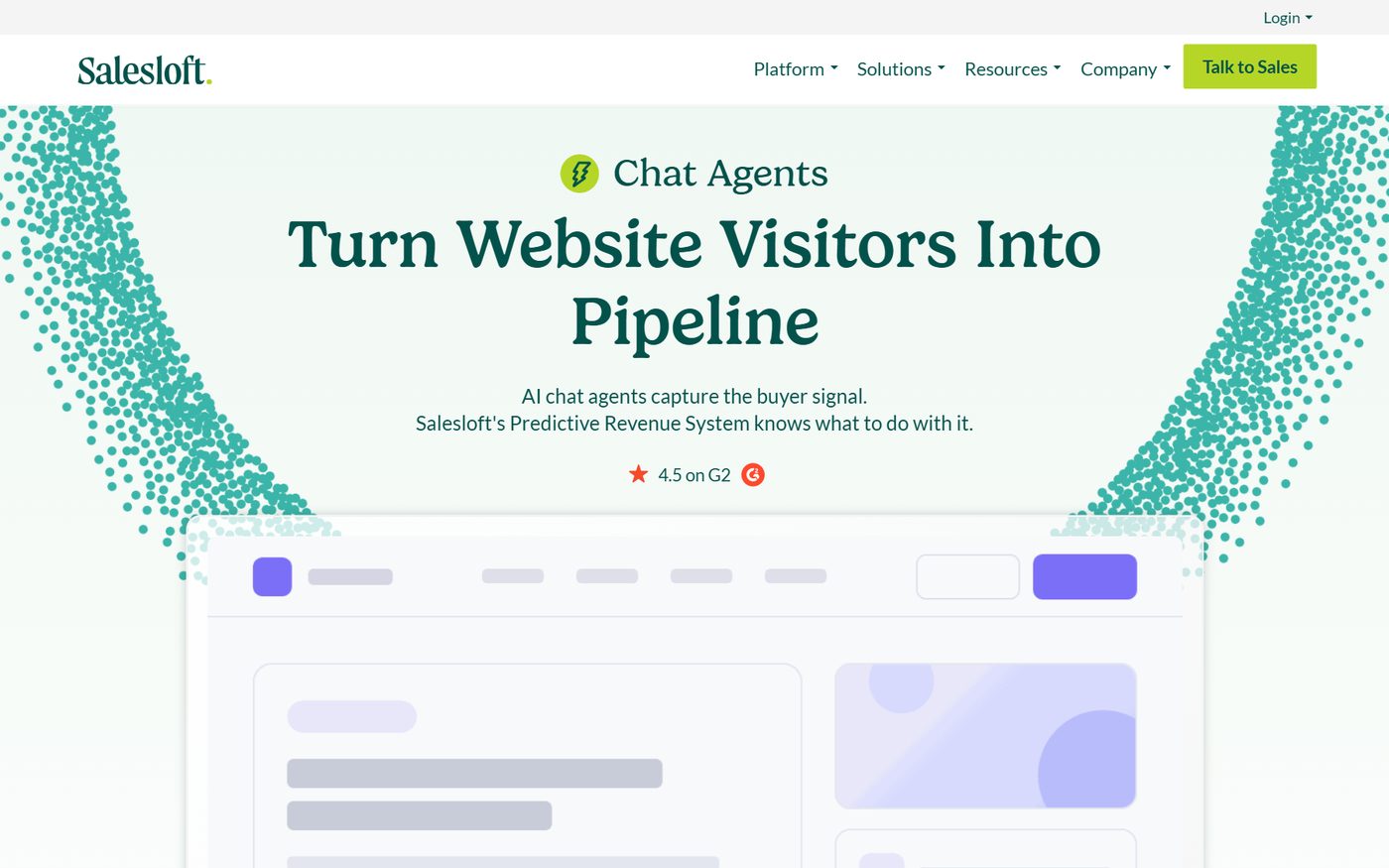
Best for: B2B teams routing pricing-page visitors to a calendar.
Drift is the name people still type for conversational marketing. The product now lives under Salesloft. Playbooks (and their newer Bionic chatbots) watch a URL, ask company size and timeline, then book a meeting. That is brief B in our test. Salesforce-shaped sales motion. Buying-signal routing if your reps already live in Salesloft.
We walked Salesloft's Drift page and the Drift product page on 16 August 2026. Pricing is sales-led. There is no Starter card you can screenshot and take to finance. If the only number you care about is meetings from /pricing, that sales call is the product. If you wanted a $24 widget this week, you are in the wrong aisle.
Brief A (product-page size question): Drift can chat, but it is overkill and the playbook is built for a demo, not a SKU. Brief C (Reel comment LINK): no. Drift cannot see Instagram comments. We did not invent a workaround and call it a feature.
What a lead looks like here: a held calendar slot, usually with a work email. A widget open is not a lead. Ask the demo to show the meeting on the contact, then show the bill if 80 people book this month. If the next slide is a case study, leave.
Choose Drift if sales lives on your site and someone will pay enterprise. Skip it if your leads live in DMs or you need a store bubble this week.
2. Intercom — product inbox that can sell
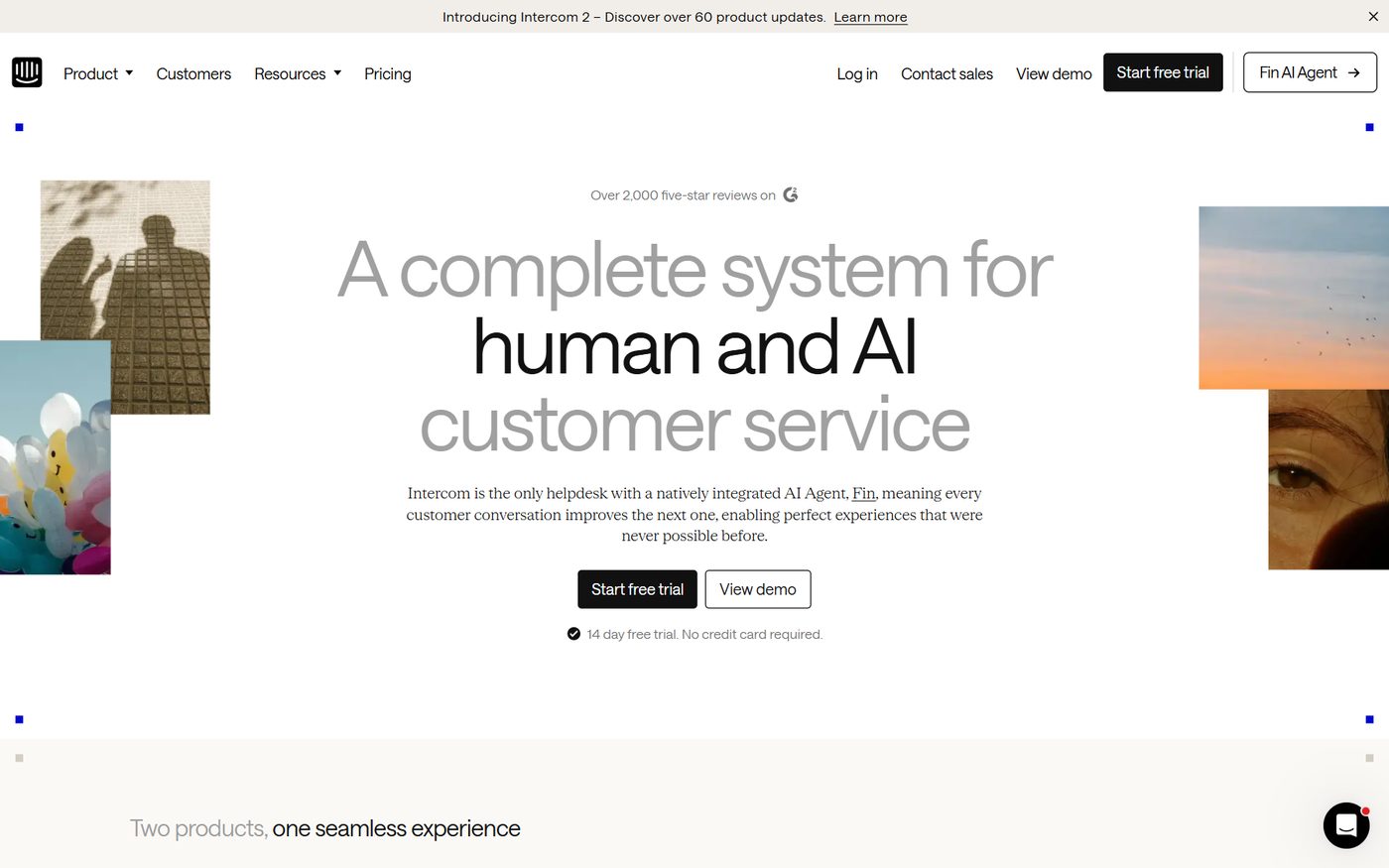
Best for: product-led teams that want site, app, and email in one inbox.
Intercom is Messenger (their widget), a shared inbox, a help center, and Fin. Essential starts at $29 per seat per month on the public page, plus Fin at $0.99 per outcome. Advanced is $85/seat. Expert is $132/seat. 14-day trial, no card (intercom.com/pricing, August 2026). Confirm before you model a year. Seat cost plus per-outcome Fin is a different math problem than Tidio's three sliders, not automatically a cheaper one.
Brief A: the widget can greet a product page, but Intercom is built for SaaS, not a Shopify size chart. Brief B: this is Intercom's home. Fin can answer "what's on Pro" from your help center, then a human or a workflow books the slot. Brief C: no. Instagram comment-to-DM is not the job. We scored Meta 2 on the campaign card in the platforms post on purpose.
What a lead looks like here: a user or a visitor tied to a conversation, ideally with an email and a Fin-or-human next step. "Fin resolved it" is a support metric. "They booked" is the lead-gen metric. Do not let the vendor swap those in the demo.
Strength: one vendor for in-app chat and site chat if the product already lives there. Limit: you will feel every new teammate on the invoice. You do not need Fin to answer "what's the shipping time?"
Choose Intercom if support and sales already share that inbox. Skip it if you are a two-person shop that needed a bubble and a keyword.
3. Tidio — small store widget
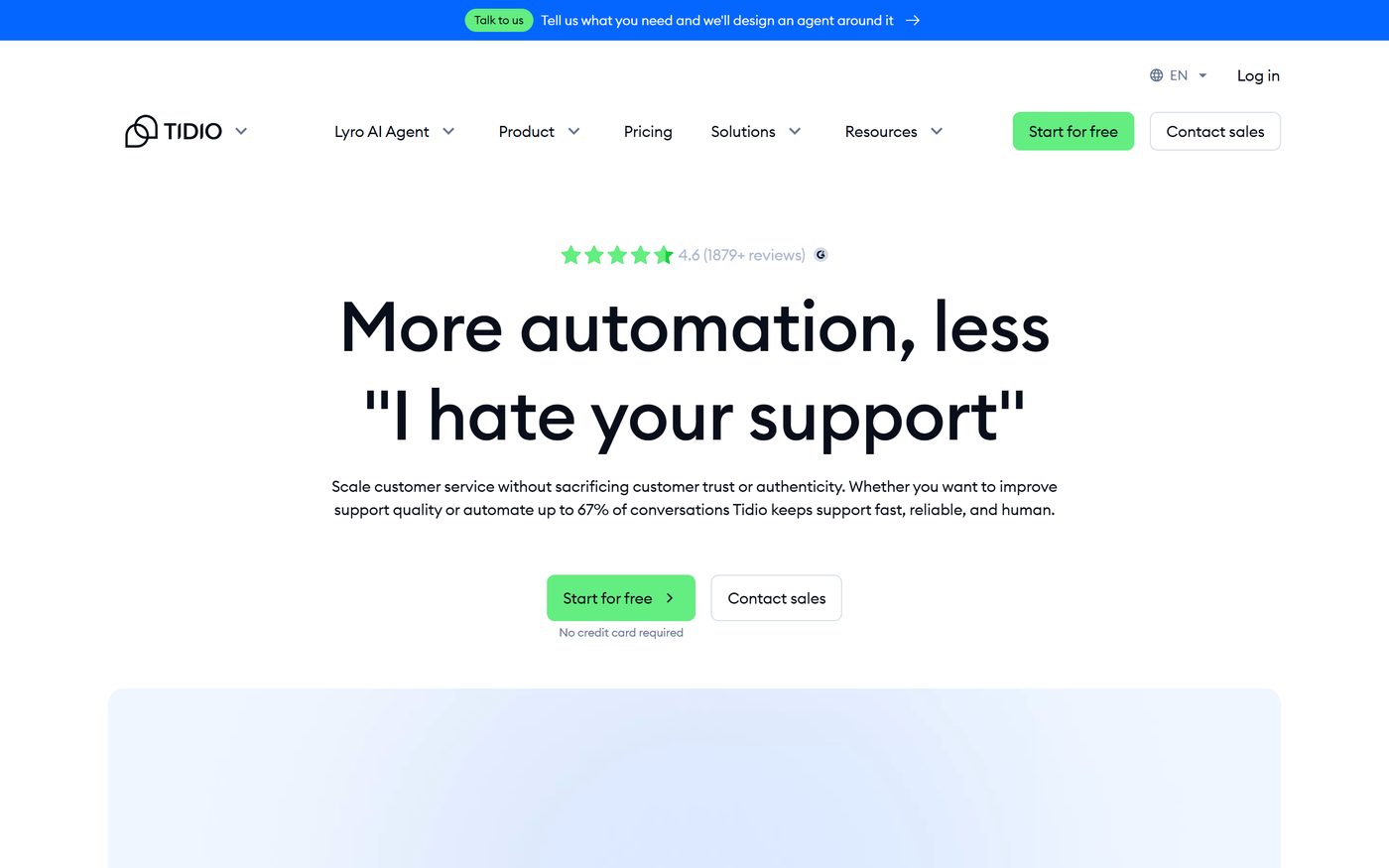
Best for: shops that need a cheap bubble on product, cart, and checkout this week.
Live chat, tickets, Flows, Lyro. Starter is $24.17/month billed annually for 100 billable human conversations. Growth from $49.17. Lyro standalone from $32.50 from 50 AI conversations (tidio.com/pricing, August 2026). Three meters. Model all three. The Starter card is a lie if Lyro and Flows are why you signed up.
Brief A is Tidio's job. Put the widget on the product page. First prompt names size or shipping. Connect Shopify so the agent sees the cart. Native Shopify actions start on Growth, not Starter. Brief B: Flows can start a chat on /pricing. It will not feel like Drift. Brief C: no. Tidio lists Instagram as an integration. We tested that against "comment LINK, get a DM." That is InstantDM. Tidio's Instagram row is a place those DMs can land after the fact. We scored that 5 in Tidio vs ManyChat. It is still 5.
What a lead looks like here: an email or a cart with a name, not a widget open. We once let a Tidio trial fill the CRM with "do you ship to Canada" chats. Useful for support. Not a lead list. Lyro's 50 lifetime chats on some older trials disappear fast. Staff hours, or buy Lyro as its own line, or the bubble is a form that types.
Full scored pair: Chatbase vs Tidio. Alternatives: 12 Tidio alternatives.
Choose Tidio if the campaign is a product-page bubble. Skip it if last month's leads were comments, or if you thought the Instagram row was comment-to-DM.
4. HubSpot Chat — CRM convenience
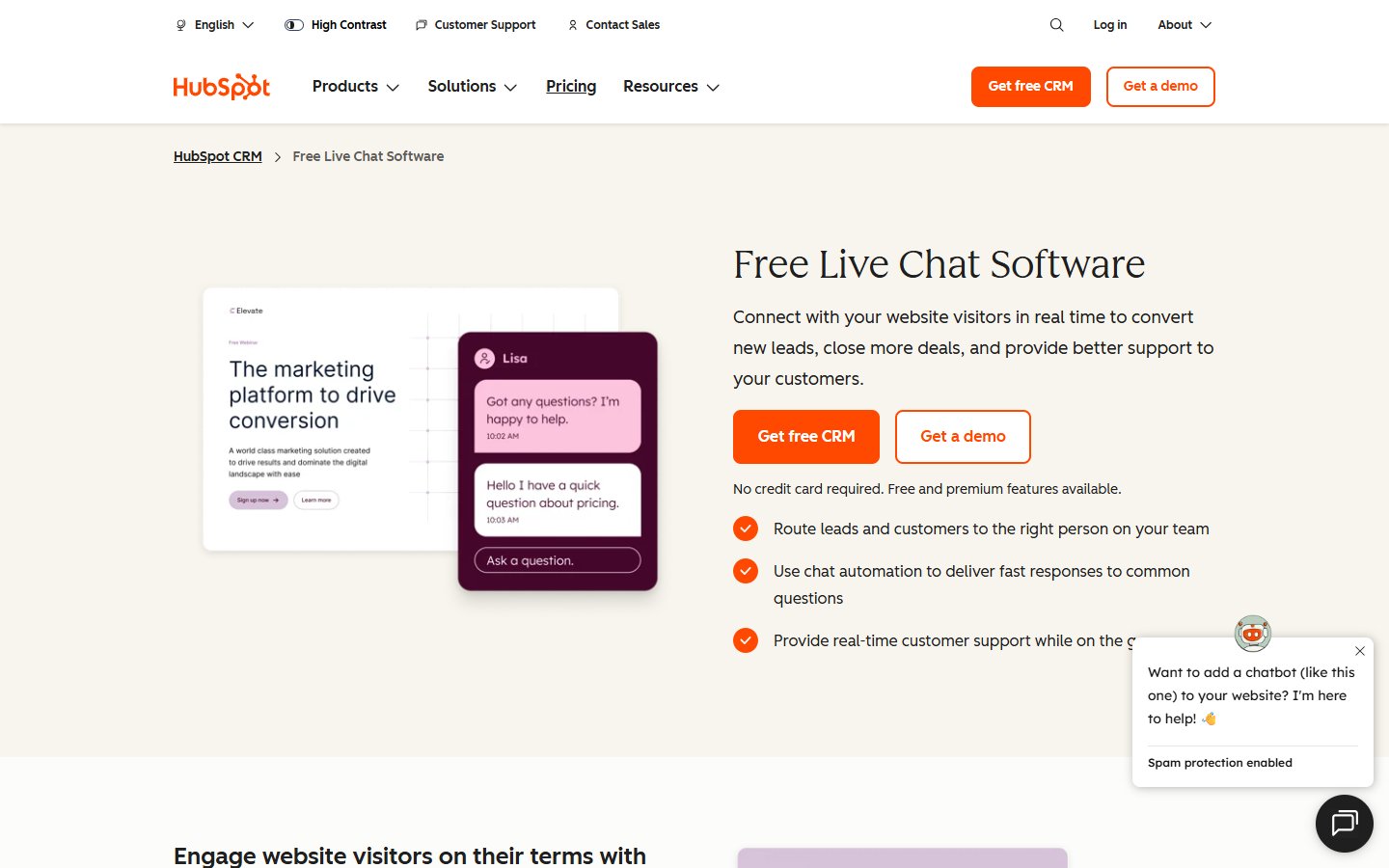
Best for: teams that already live in HubSpot and refuse a second vendor.
HubSpot's live chat and chatbot builder sit on the free CRM. No card required. Conversations land in the shared inbox and on the contact. You can route to sales or service, set office hours, capture an email if you miss the chat, and reply from Slack or the mobile app (hubspot.com/products/crm/live-chat, August 2026). The free widget keeps HubSpot branding. Paid Marketing Hub and Sales Hub plans remove branding and add more automation. Confirm the current Starter and Professional numbers on hubspot.com/pricing/marketing before you treat chat as "free forever." The chat is free. The CRM habit is the real bill.
Brief A: yes, if the widget is on the product page and the first message names size or shipping. Most HubSpot installs we see leave the default "How can I help?" on every URL. That is a support box. Brief B: a chatbot can qualify and pass a meeting link. It will not replace Drift's playbook or Intercom's product suite. Brief C: no. HubSpot is not comment-to-DM.
What a lead looks like here: a CRM contact with the transcript attached. That is the whole reason to stay. If you are not going to open that contact later, you paid for convenience you are not using. Shallow as a dedicated sales funnel. Strong as "the chat already wrote itself onto the record."
Choose HubSpot Chat if leaving HubSpot is the real cost. Skip it if you needed a specialist widget or a Meta inbox and you do not run HubSpot day to day.
5. LiveChat — human-led store widget
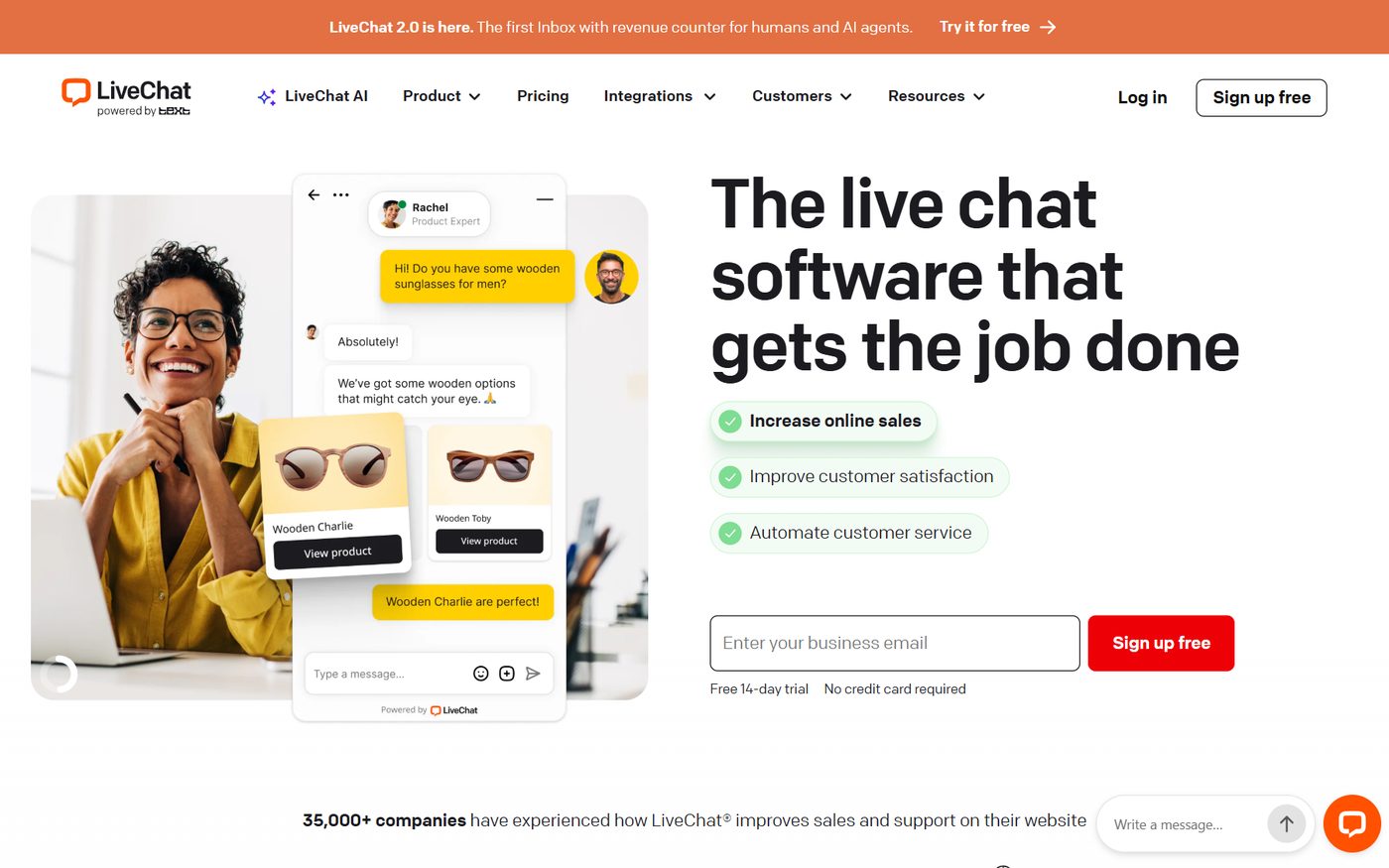
Best for: stores that want a person on the product page, with visitor monitoring and a sales tracker.
Starter is $19 per person per month billed annually ($25 monthly). Team is $49. Business is $79. 14-day trial, no card (livechat.com/pricing, August 2026). Starter tracks up to 100 visitors, one recurring campaign, 60-day history. Team unlocks unlimited campaigns and history. AI chatbots are a separate ChatBot.com add-on from $52/month billed annually. Do not buy LiveChat as a Lyro swap unless you add that product.
Brief A: this is the product. Proactive chat, canned replies, cart info via Shopify or WooCommerce, a sales tracker that ties a thread to an order. Brief B: you can greet /pricing. You will staff it like support unless you add ChatBot.com. Brief C: Instagram is a marketplace app, not comment-to-DM. Facebook Messenger can land in the same inbox. That is not a Reel keyword.
What a lead looks like here: a chat they tag as a goal, or a sale the tracker caught. Agent rating and response-time reports are support metrics. Use them after the sales tracker is on. A bouncing eye-catcher that covers the product photo is how you lose the add-to-cart button. Be useful, not loud.
Choose LiveChat if your complaint about Tidio was the agent console, not the AI bill. Skip it if you needed Lyro-class answers with no extra product, or if the brief was comments into checkout.
6. Zendesk — tickets, then chat
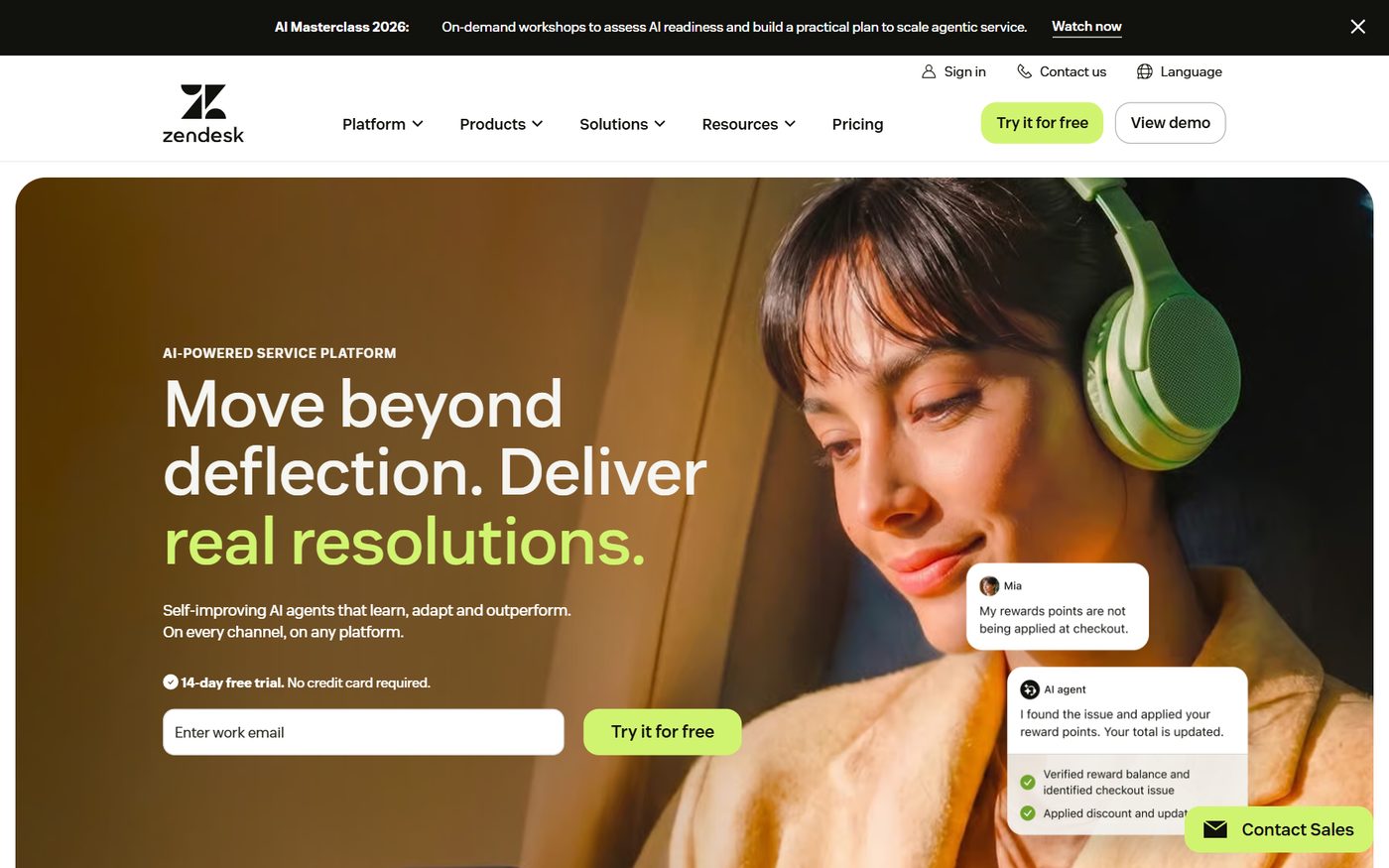
Best for: support orgs that need assignment, SLAs, and a ticket record more than a pipeline.
Support Team starts at $19 per agent per month paid yearly. That tier is email and ticketing. Messaging and live chat start on Suite Team at $55 per agent per month paid yearly. Suite Professional is $115. Copilot is a $50/agent add-on on Professional and up (zendesk.com/pricing, August 2026). AI agents bill on automated resolutions. Confirm before you model a year. Migration is a project. We put Zendesk on this list because people search "live chat" and land on a help desk. The query exists. Most InstantDM readers do not need it yet.
Brief A: Suite can put a widget on a product page. The default motion is still a ticket. Brief B: possible, wrong tool. Drift and Intercom book meetings. Zendesk closes tickets. Brief C: no. Social channels in Zendesk are tickets, not a comment keyword.
What a lead looks like here: usually a ticket. That is the tell. If your brief was "turn chats into checkout," you will spend the first month turning sales conversations into ticket types. Buy this when CSAT and assignment are the job. Do not buy it to replace Tidio on a two-person store.
Choose Zendesk if you outgrew a chat inbox and tickets are the system of record. Skip it if your brief was "turn comments into checkout" or you only needed a bubble.
7. InstantDM — when the lead is on Meta
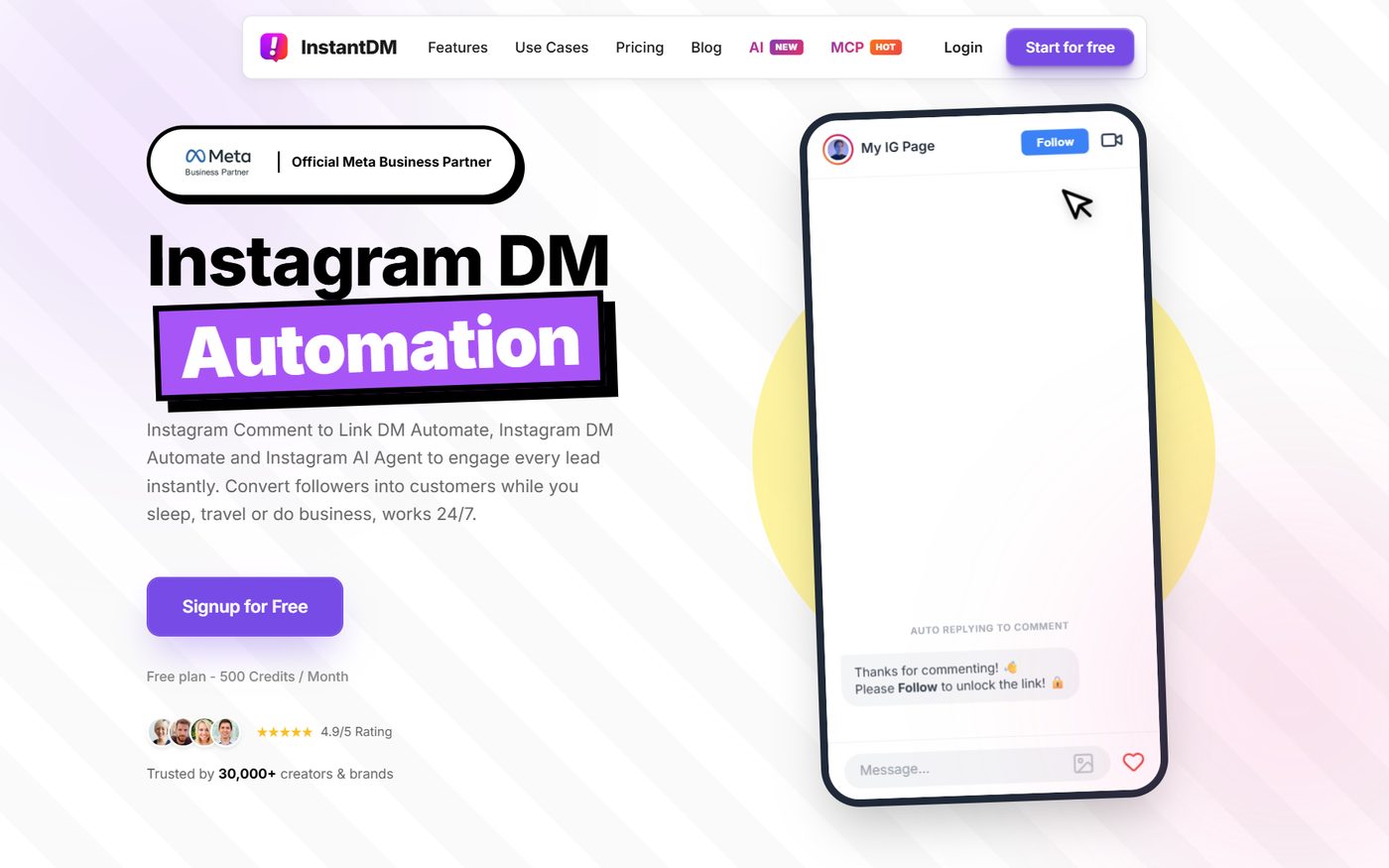
Best for: comment-to-DM, story replies, Live, Messenger, and Click-to-Message ads.
InstantDM is an official Meta Business Partner on the official Instagram Graph API. Free plan: 500 automations/month plus a 7-day full-feature trial. Legend Pro is $9.99/month flat, unlimited contacts, including AI comment replies. Trendsetter is $24.99/month and adds follow-ups, Viral Mode, ads automation, and API access (instantdm.com/pricing, August 2026). We publish this blog. Weigh that.
Brief A: InstantDM cannot put a bubble on checkout. We will not ship that. Add Tidio or Shopify Inbox. Brief B: InstantDM is idle on /pricing unless the demo also starts as an Instagram comment. Brief C: this is the product. Comment LINK, first DM is the checkout URL. Story reply JOIN, first DM is the calendar. Trendsetter covers the ad comments and the Click-to-Message opener so you are not paying for a tap into a silent inbox.
AI on InstantDM is AI comment replies. It is not a multi-turn AI agent. Keyword flows still own LINK and BOOK. The model mops leftovers. Safety suite, always on: DM Queue, Super Slow Mode, Rate Limit Controller, Flood Control. We do not write ban-proof. We do not write Meta-approved.
What a lead looks like here: a DM that collected an email or opened the link, after they commented or tapped. Do not make every Reel comment hand over a phone number before the gift. Shopify checkout and cart recovery live in the thread, not on the site widget. Different floor from Tidio Growth.
Choose InstantDM if last month's questions arrived as comments or DMs. Skip it if the only chat you need is on the pricing page.
Setting up seller chat on a store
- Put the widget on product, cart, and checkout. Not only the homepage.
- Write a first prompt that names a real objection: shipping, size, restock.
- Connect the store so the agent sees the cart.
- If Instagram is where people ask, run comment-to-DM in parallel. How to build that funnel.
What to measure
Time to first response. Conversation start rate. Chat-to-lead. Chat-to-sale. Human takeover rate. Cost per conversation if you paid for the click.
If you can't tie a thread to a contact or an order, you're decorating the inbox.
Next step
We tested and scored Tidio against Chatbase and ManyChat in later posts. This page is the lead-gen feature card, not the vs card. If you already know you need a widget, stay here. If you are choosing Tidio vs ManyChat vs InstantDM, use those scored pairs.
A live chat tool for leads is still the wrong buy if last month's questions were comments. The widget cannot see them. InstantDM can. Two tools if both inboxes are busy. That is the same conclusion as the platforms list.
Website-only? Start with Tidio or HubSpot Chat this week. Instagram and Facebook? Start InstantDM free. Broader context: what chat marketing is. Scored pairs: Chatbase vs Tidio, Tidio vs ManyChat.
How we tested lead-gen chat, not support chat
We gave each tool the same three briefs. A: product-page size question. B: pricing-page meeting. C: Reel comment LINK. Tools that could not accept C were not called live chat for Instagram. They are website tools. InstantDM could not accept A or B. We said so.
That is the whole method. It is the same eight-criterion habit as the vs posts, shortened to the lead-gen job. We did not run a 10,000-ticket bake-off. We did walk pricing pages on 16 August 2026.
Tidio Starter is $24.17/month billed annually for 100 billable human chats. Growth from $49.17. Lyro from $32.50 from 50 AI conversations (tidio.com/pricing). Intercom from about $29/seat plus Fin per outcome. InstantDM $9.99 or $24.99 flat. Drift is sales-led. Confirm before you buy.
Lead-gen mistakes that look like a tool problem
The widget is on the homepage only. The first message is "How can I help?" Nobody is on shift and Lyro's 50 lifetime chats are gone. Instagram comments pile up because you thought Tidio's Instagram row was comment-to-DM. We scored that 5 in Tidio vs ManyChat. It is still 5.
The opposite mistake: buying InstantDM and expecting a bubble on checkout. We will not ship that. Add Tidio or Shopify Inbox.
A third mistake: measuring messages sent. Measure conversations that produced an email, a booking, or an order. Support teams measure tickets closed. You are not shopping as a support team if this headline is what you searched.
When two tools is the honest stack
Site questions and Reel comments in the same month. Tidio or HubSpot on the site. InstantDM on Meta. ManyChat only if WhatsApp is also real. Chatbase if the site questions are already in a help doc and you do not want to staff a bubble. That stack is in top chatbot platforms.
One logo that claims every inbox is how you fail brief C or brief A. We would rather you pay two clear bills.
A week to stand up seller chat
Monday: put the widget on product and checkout, not the blog. Tuesday: write a first prompt that names shipping or size. Wednesday: connect the store so the agent sees the cart. Thursday: if comments are the other inbox, connect InstantDM and a keyword. Friday: test both from a phone. Read five threads. Do not buy ads.
Week two: add one follow-up on the site or on Trendsetter. Kill any greeting that does not contain a next step.
ManyChat, Tidio, Intercom, Drift, LiveChat, Zendesk, and HubSpot are trademarks of their owners. InstantDM is not affiliated with them.
Drift, Intercom, Tidio: what we would actually buy
Drift if the only number you care about is meetings from /pricing and someone will pay enterprise. Intercom if the product already lives there and Fin can eat FAQs. Tidio if you are a store and need a bubble this week at Starter or Growth money. HubSpot Chat if leaving HubSpot is the real cost. LiveChat if you want a human console and a sales tracker. Zendesk if the brief quietly became tickets. InstantDM if the brief is comments and ads.
We scored Tidio 55 vs Chatbase 50 on a website card, and Tidio 55 vs ManyChat 45 on that same card. InstantDM won Meta. Those numbers are in the vs posts. Do not reuse them as a live-chat ranking. This page is the job split, not a single 80-point table.
Lead-gen chat on mobile
Most store chat happens on a phone. Test the widget on a small screen. Test InstantDM DMs in the Instagram app, not in a desktop preview. In-app browsers break calendars and checkouts. If the next step fails on a phone, you do not have a lead-gen tool. You have a demo.
Proactive chat that covers the product photo is how you lose the add-to-cart button. Be useful, not loud. Size and shipping prompts beat a bouncing bubble.
What we would not call live chat for leads
A help center. A ticket queue with no proactive trigger. A social inbox with no keyword. An AI that answers docs but cannot send a checkout link. Those products are fine. They are not this headline. Chatbase belongs in the docs-AI aisle. Zendesk Support Team belongs in tickets. LiveChat belongs on a staffed product page. InstantDM belongs in Meta. Tidio belongs on the product page when you want cheaper setup than LiveChat.
Pricing at lead-gen volume, worked
Quiet week, 80 site chats: Tidio Starter $24.17 annual can hold if humans reply to 80 or fewer billable chats. InstantDM free if Instagram automations stay under 500. Chatbase Hobby if you only needed docs AI and 700 credits.
Busy week, 400 site chats plus a viral Reel: Tidio Growth plus Lyro. InstantDM $9.99 or $24.99 for the Reel. Do not ask Tidio to eat the Reel. Do not ask InstantDM to eat the site. ManyChat only if WhatsApp is in that week and you have modeled contacts.
B2B, 40 demo chats: Intercom or Drift. Seat math and Fin outcomes on Intercom. Sales-led on Drift. InstantDM only if those demos also start as Instagram comments.
These are illustrations from public rates, August 2026, not invoices. Recheck the vendor pages.
Staffing the widget
A lead-gen widget with nobody behind it is a form that types. Either staff hours you publish, or put Lyro / Chatbase in front with a hard handover. "We are back at 9" is a first message. Silence is not. InstantDM on Instagram can cover nights for comment keywords without a person awake. That is a reason to run both, not a reason to skip the site tool.
Store setup, spelled out
Install Tidio or HubSpot or Shopify Inbox. Product, cart, checkout. First prompt names shipping or size. Connect the catalog so the agent sees the SKU. Macros for the three repeats. Hours on the widget. If comments are the other lead source, InstantDM keyword on the same offer. Test both from a phone. That is seller chat. A homepage-only bubble is a decoration.
Shopify native actions on Tidio start on Growth. InstantDM's Shopify app is for DMs, cart recovery, and checkout in the thread. Different floors. Both can be right in the same week.
What counts as a lead in the vendor demo
Ask them to define a lead on the screen. An email. A booking. A cart with a name. "A conversation started" is not a lead. Vendors will count widget opens and call it pipeline. We did that once in a Tidio trial and the CRM filled with people who asked if we shipped to Canada and then left. Useful for support. Not a lead list.
InstantDM can collect an email or phone in the DM after the gift. Use that when you actually need the address. Do not make every Reel comment hand over a phone number before the link. Drift will try to book the meeting. That is a lead if the calendar holds. Chatbase will answer the doc. That is not a lead unless you added a capture step on purpose.
Write your definition on the same page as the tool choice. Ours for this post: a lead is a person plus a way to reach them later plus a next step they accepted. Everything else is traffic.
When the widget should stay off
Blog posts that are not selling. A homepage that already has a form people finish. A store whose questions arrive as Instagram comments. A team that will not staff 9 to 5 and has not bought Lyro or Chatbase yet. A bouncing bubble on the product photo. Off is a setting. Use it.
Turn it on for product, cart, checkout, and pricing. Write a first line that names size, shipping, or a tour. Then leave the rest of the site quiet. A widget on every URL is how you train people to ignore you.
A two-week test if you already have a bubble
Week one: move it off the homepage and onto product and checkout only. Change the greeting so it contains a next step. Connect the store if you have not. Count chat-to-email or chat-to-cart. Week two: if comments are the other inbox, add InstantDM with one keyword on the same offer. Compare which inbox produced the contact. Keep both only if both produced one.
If week one produced nothing, the tool is probably not the problem. The page or the offer is. Switching from Tidio to Intercom will not fix a product page that does not say the price.
Questions we would ask Drift and Tidio before we pay
Drift: show a playbook on our /pricing URL, live. Show the bill if 80 people book this month. Show what happens when the meeting is a refund complaint. If the next slide is a case study, we leave.
Tidio: show Starter vs Growth on our last month's human chat count, not on a round number from the homepage. Show Lyro as its own line. Show whether Instagram in the left nav can reply to a comment keyword the way InstantDM does. We already scored that a 5 in Tidio vs ManyChat. We still ask, in case they shipped something. Then we test it.
InstantDM: we would ask ourselves the same thing. Show the keyword. Show Trendsetter follow-up at $24.99. Show that there is no site bubble. If we needed the bubble, we would buy Tidio or HubSpot and stop pretending.