

TL;DR: Growing Your Mental Health Platform
- Shift from Expert to Guide: Transition from a formal "clinical expert" to a "relatable guide" by using a specific niche to attract the right audience and build genuine connection.
- Create Value-Driven Content: Use educational Carousels and Reels to simplify complex psychological concepts into digestible, shareable "micro-learning" moments.
- Prioritize Ethics & Community: Focus on psychoeducation rather than therapy to maintain professional boundaries, using Stories to foster a safe and interactive community space.
- Automate to Avoid Burnout: Use InstantDM, an official Meta Business Partner, to safely automate repetitive resource requests and FAQs, ensuring followers get instant help without draining your personal time.
- Strategize for Growth: Maintain a consistent posting schedule and ethically guide your engaged community toward workshops, newsletters, or clinical services.
Introduction:
In the modern digital landscape, the couch is no longer the only place where healing begins. For years, the barrier between mental health professionals and the general public was built of high costs, social stigma, and clinical mystery. Today, that wall is crumbling, thanks in large part to social media. Instagram, once a platform reserved for filtered travel photos and latte art, has evolved into a powerhouse for psychoeducation, community building, and professional growth.
For therapists and mental health educators, Instagram represents a unique opportunity to democratize wellness. It is a place where a single infographic can validate someone’s trauma, and a 15-second Reel can provide a grounding technique to someone in the middle of a panic attack. But growing an impactful presence as a professional requires more than just "posting." it requires a strategic blend of clinical ethics, relatable storytelling, and smart engagement.
1. Why Instagram Matters for Therapists and Mental Health Educators

Growth of mental health awareness on social media: We are living in an era of "The Great Un-tabooing." Over the last decade, the global conversation around mental health has shifted from hushed whispers to loud, proud advocacy. Users are no longer just looking for entertainment; they are looking for answers. They want to understand why they feel "stuck," how to set boundaries with their parents, and what "gaslighting" actually looks like in practice. Instagram has become the primary classroom for this new wave of self-awareness.
Why Instagram works well for education and community building Instagram’s architecture is built for connection. Unlike a static website or a formal LinkedIn profile, Instagram allows for a "lived-in" feeling. Through Stories, Lives, and DMs, therapists can show the human side of the profession. This humanization is vital. It reduces the "power dynamic" often felt in clinical settings, making the prospect of seeking help feel less intimidating and more like a natural step in self-care. It’s about building a community where people feel seen before they ever book a consultation.
To know how to grow audience on instagram watch this video below:
Visual storytelling and short-form education Mental health concepts can be dense. Terms like "anxious-avoidant attachment" or "neuroplasticity" can feel overwhelming in a textbook. Instagram allows educators to break these down into "micro-learning" moments. By using visual storytelling—colors, fonts, and simple imagery—you can translate complex psychological theories into digestible bites that stick with the viewer long after they’ve finished scrolling.
2. How Do Therapists Choose the Right Niche on Instagram?
Anxiety, trauma recovery, relationship therapy, self-growth, etc. The biggest mistake many professionals Make is trying to talk to everyone. On Instagram, if you speak to everyone, you speak to no one. Defining a niche is not about limiting your expertise; it’s about signaling to a specific group of people that you truly "get" them. Whether you focus on postpartum depression, ADHD in adult women, or high-functioning anxiety in corporate professionals, your niche is your lighthouse.
Why focusing on a niche can help you find the right audience The algorithm on Instagram is like a matchmaker. It looks for patterns in your content to figure out who to show it to. If you regularly post about a certain topic, like narcissistic abuse recovery, the algorithm will start to find users who are looking for or interacting with that content. This gets you better followers: people who are really interested in what you have to offer, not just a bunch of people who want to follow you for no reason.
Putting yourself in a position to be a trusted voice Your audience will see you as a "specialist" if you narrow your focus. Trust is the most important thing in the world of mental health. People see you as a much more credible authority on grief when they see that your whole feed is about helping people deal with it. Specificity builds trust faster than a general approach ever could.
Watch: why therapists don't need 10,000 followers to be successfull.
3. What Type of Content Should Therapists Post on Instagram?

Carousel posts explaining psychological concepts Carousels are the "whiteboards" of Instagram. They allow you to take a reader on a journey. Slide one captures the attention with a hook (e.g., "3 signs you’re people-pleasing"), and the subsequent slides break down the "why" and "how." This format is excellent for "saving"—and on Instagram, saves are a huge signal of value.
Short educational reels Reels are the primary engine for discovery. While carousels nurture your existing followers, Reels introduce you to strangers. A therapist might use a Reel to demonstrate a breathing technique or to act out a common boundary-setting conversation. The key here isn’t "dancing"—it’s delivery. Use captions and trending (but appropriate) audio to make your professional insights feel modern and accessible.
Infographics and simple mental health tips Sometimes, the most profound impact comes from simplicity. A simple graphic that says "Your worth is not tied to your productivity" can be the exact reminder someone needs at 2:00 PM on a Tuesday. These tips are highly shareable, often ending up on people’s private Stories, which exponentially increases your reach.
Using storytelling to explain therapy concepts People don’t remember data; they remember stories. Instead of explaining the theory of "inner child work," describe a hypothetical scenario of a person reacting to a modern-day trigger. When you frame clinical concepts within the context of daily life, you move the education from the head to the heart.
4. How Can Therapists Maintain Ethical Authority on Instagram?
Sharing insights without giving personal therapy online This is the golden rule for therapists on social media. There is a very fine line between "psychoeducation" and "providing therapy." Your content should always remain in the realm of education. It’s important to clarify that your posts are not a substitute for a clinical relationship. You are providing tools for the toolbox, not performing the construction yourself.
Maintaining professional boundaries As your account grows, followers may treat you like their personal therapist. They might leave long, trauma-filled comments or send heavy DMs. It is your responsibility to maintain boundaries. This might mean having a disclaimer in your bio or a pinned post explaining that you cannot give clinical advice in the comments. Protecting your energy is essential to preventing burnout.
Using evidence-based information The internet is full of "pop psychology" that isn't always accurate. As a mental health educator, your value lies in your commitment to science and evidence-based practice. Cite your sources when necessary and be wary of oversimplifying concepts to the point of inaccuracy. Your audience relies on you to be the filter for the noise.
Transparency about qualifications In a world of "life coaches" and "wellness gurus," your credentials matter. Be proud of your degrees, your licensure, and your years of experience. Highlighting your background isn't bragging; it’s providing safety for your audience. They need to know that the person giving them mental health advice is actually qualified to do so.
5. How Do Reels and Carousels Increase Instagram Reach for Therapists?

Why reels get more discovery on Instagram Instagram’s current priority is short-form video. The "Reels" tab is designed to show people content from accounts they don't follow yet. This is why a therapist with 500 followers can suddenly have a video with 50,000 views. To grow, you must embrace video. It allows the audience to hear your voice, see your expressions, and feel your empathy in a way that text simply can’t replicate.
Structuring engaging carousel posts A good carousel is like a mini-book.
- Slide 1: The Hook. (Why should they swipe?)
- Slides 2-5: The Meat. (The actual education.)
- Slide 6: The "Aha!" Moment. (A summarizing thought.)
- Slide 7: Call to Action. (What should they do next?)
Hook → value → takeaway format This is the magic formula for Instagram success.
- The Hook: "Stop doing this if you have anxiety."
- The Value: Explain the biological reason why a certain habit makes anxiety worse.
- The Takeaway: Give them one small, actionable thing to do differently today.
How Do Instagram Carousels Improve Engagement and Retention?
One content format that consistently performs well on Instagram is the carousel post. A carousel allows creators to share multiple images or videos in a single swipeable post, giving more space to educate, tell stories, or break down complex ideas.
For therapists and mental health educators, this format is particularly effective because it allows information to be delivered in structured, easy-to-digest slides. Instead of explaining everything in a single caption, creators can guide followers step-by-step through a topic.
Why Carousels Work So Well
Carousels often generate higher engagement because users spend more time swiping through the content compared to a single image post.
Some practical ways therapists and mental health educators can use carousels include:
- Educational mini-guides
- Example: “5 Signs of Burnout” or “3 Ways to Handle Anxiety at Work.”
- Step-by-step mental health tips
- Each slide explains one actionable strategy.
- Story-based learning
- Share a scenario, explanation, and coping strategy across multiple slides.
- Myth vs fact posts
- Use slides to clarify common mental health misconceptions.
How to Design Carousels That Retain Attention
When creating carousel posts, the first slide acts like a book cover. It should clearly communicate the value of the content and motivate users to swipe.
Effective carousel design usually includes:
- A strong hook on the first slide
- Clean and readable text
- One idea per slide
- A final slide with a call-to-action (save, share, or comment)
For a detailed walkthrough of how to design effective carousel posts, you can refer to this guide from Hootsuite:
How to create and use Instagram carousel posts effectively
6. How Can Therapists Build Engagement Through Instagram Conversations?
Asking reflective questions in captions The "comment section" is where the community is built. Instead of just lecturing, invite the audience in. End your captions with a question: "Which of these three signs resonated with you most?" or "How do you practice self-compassion when you make a mistake?" These questions transform a monologue into a dialogue.
Using polls and question stickers in stories Stories are the best place for "real-time" interaction. Use the "Poll" sticker to gauge how your audience is feeling. Use the "Question" sticker to host a weekly "General Mental Health Q&A." These tools not only increase engagement but also give you incredible insight into what your audience is struggling with, which informs your future content.
Creating a safe space for discussion Moderation is key. For a mental health educator, the comment section must remain a safe, respectful environment. Don't be afraid to delete toxic comments or block users who are being harmful. By curating the environment, you show your community that you care about their safety.
7. How Can Therapists Use Instagram DMs to Build Deeper Connections?

Followers often prefer private conversations Mental health is deeply personal. While some people are comfortable commenting, many more will take their thoughts to your DMs. The Direct Message is where the "real" connection happens. It’s where a follower tells you that your post changed their life, or asks for a recommendation for a specific type of therapy.
Handling common questions about mental health resources As you grow, you will start to see the same questions over and over: "Do you take insurance?" "How do I find a therapist in my state?" "What books do you recommend for trauma?" These DMs are a sign that you are a trusted resource, but they can also be time-consuming to answer.
Direct messages as a relationship-building channel The DM is the bottom of your "marketing funnel." It’s where a follower becomes a client or a student. When you respond to a DM with kindness and a helpful resource, you are moving that person one step closer to a transformative relationship with you or your work.
8. How Can Therapists Manage High Volumes of Instagram Messages Efficiently?
The challenge therapists face when accounts grow Growth is a double-edged sword. You want to reach more people, but reaching more people means more messages. For a therapist who is already spending hours in clinical sessions, spending another three hours in Instagram DMs is simply not sustainable.
Repetitive questions about resources, sessions, or programs It can be frustrating to answer the same question for the 50th time in a day. However, for the person asking, it’s the first time they’ve reached out to you. They deserve a helpful response, but you deserve a life outside of your phone.
Time management while maintaining meaningful responses The goal is to provide value without sacrificing your own mental health. You need a system that allows you to be helpful at scale—responding to the "frequently asked questions" quickly so you can save your energy for the deeper, more complex interactions.
9. How Can Automation Tools Help Therapists Manage Instagram Communication?
Introducing tools that streamline Instagram conversations This is where technology meets empathy. Automation doesn't have to be cold or robotic; it can actually be a way to ensure that no one who reaches out for help is ignored. By using smart tools, specifically an official meta Business partner tool, you can ensure that every person who asks for a resource gets it instantly.
Automatically sending helpful resources, guides, or links Imagine a follower comments "RESOURCES" on your post about depression. Instead of you manually typing out a response and sending a link to 200 different people, an automation tool can do it for you. This ensures the user gets the help they need the moment they ask for it, which is often when they are most motivated to seek help.
Top 5 Mental Health Educators on Instagram
Scaling Your Impact Without the Burnout with InstantDM
Observing these top-tier educators reveals a common challenge: as your influence expands, so does the noise in your inbox. When you reach a following of thousands—or millions—it becomes physically impossible to provide a manual, thoughtful response to every individual seeking resources.
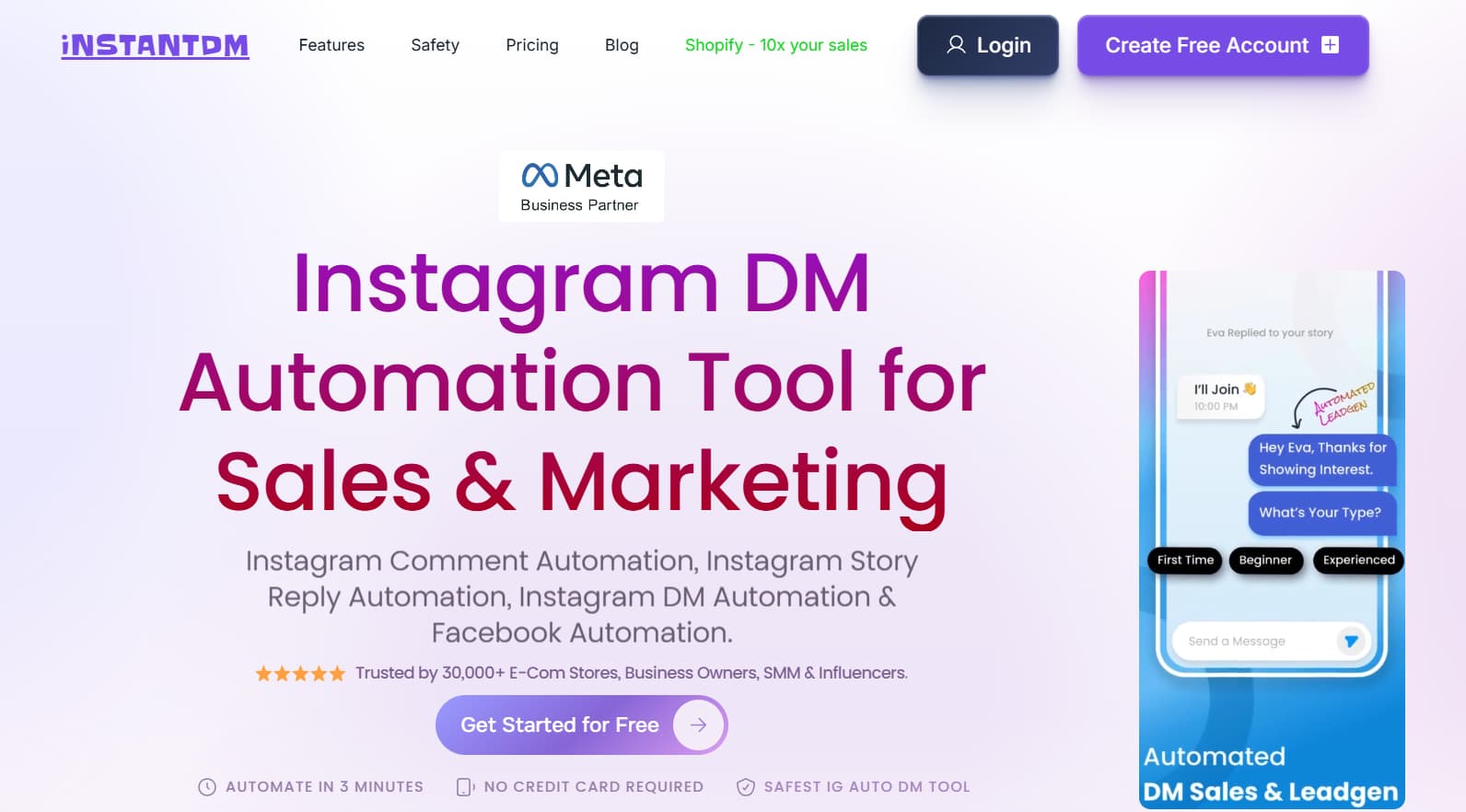
For the modern therapist or mental health educator, maintaining this level of growth requires moving from manual labor to smart systems. Utilizing an official Meta Business Partner tool like InstantDMallows you to automate the delivery of guides, booking links, and crisis resources. By setting up keyword triggers for common inquiries, you ensure that your audience feels heard and supported instantly, while you protect your clinical hours and personal well-being. This is how the most successful professionals scale their reach while staying grounded in their practice.
"For a practical walkthrough on setting this up, watch this step-by-step tutorial on automating Instagram comments and DMs using Instantdm.
10. How Can Therapists Convert Instagram Followers into Clients or Students?
Linking to workshops, newsletters, or programs Instagram is a "top of funnel" platform. The goal is often to move people from the app to a space you own, like an email list or a website. Use your DMs and your bio link to guide people toward your deeper offerings—whether that’s a digital course on boundaries or a monthly support group.
Using DMs to guide people toward resources Often, a follower doesn't know what they need. They just know they are hurting. You can use your DMs to play "concierge," directing them to a specific blog post you wrote or a YouTube video you made that addresses their exact concern. This builds immense value.
Ethical ways to promote services Promotion in the mental health space should always feel like an invitation, not a "hard sell." Use language like "If you're looking for more support in this area, I have a few openings in my practice" or "I created this workbook specifically for those of you struggling with this concept." It’s about offering a solution to a problem you’ve already helped them identify.
11. What Is the Best Long-Term Instagram Growth Strategy for Therapists?
Posting schedules You don’t need to post every day to grow, but you do need to be consistent. Whether it’s three times a week or five, pick a rhythm that you can maintain for a year, not just a week. Growth on Instagram is a marathon, not a sprint.
Content planning B
atching your content can save your sanity. Spend one day a month filming your Reels and another day writing your captions. This allows you to stay "in the zone" and ensures that you aren't scrambling for an idea at the last minute.
Tracking engagement and feedback Pay attention to your "insights." Which posts are getting the most saves? Which Reels are getting the most shares? This isn't just about "numbers"—it’s your audience telling you what they need more of. Listen to them.
12. Final Thoughts: Instagram as a Mental Health Education Platform

Impact of accessible mental health content The work you do on Instagram carries significant weight. For many individuals, your profile might be the only form of "therapy" or mental health support they can afford or access right now. By showing up authentically and sharing your expertise, you aren’t just building a brand; you are actively contributing to a more emotionally intelligent and resilient world.
Importance of responsible communication With a wide reach comes an even greater responsibility. As a professional, you must always prioritise the well-being of your audience. This means being mindful of trigger warnings, staying strictly within your scope of practice, and leading every interaction with empathy. Responsible communication ensures that your platform remains a source of healing rather than confusion.
Building supportive digital communities At its best, Instagram functions as a global support group. It is a space where people realize they aren’t alone, where shame dissolves in the light of shared experience, and where healing becomes a collective journey. As a therapist or educator, you are the architect of this digital sanctuary.
To maintain this space effectively without sacrificing your own mental health, it is vital to use the right technology. Tools like InstantDM, an official Meta Business Partner, allow you to build these communities ethically and efficiently. By automating responses to common questions and resource requests, you ensure that your message reaches the people who need it most, even when you are off-duty. Build your platform well, stay grounded in your ethics, and use these tools to make professional support more accessible than ever before.
Sources
https://salusphereglobal.com/promoting-mental-wellbeing-insights-from-deloittes-2024-report
How Business Coaches Use Instagram to Generate High-Quality