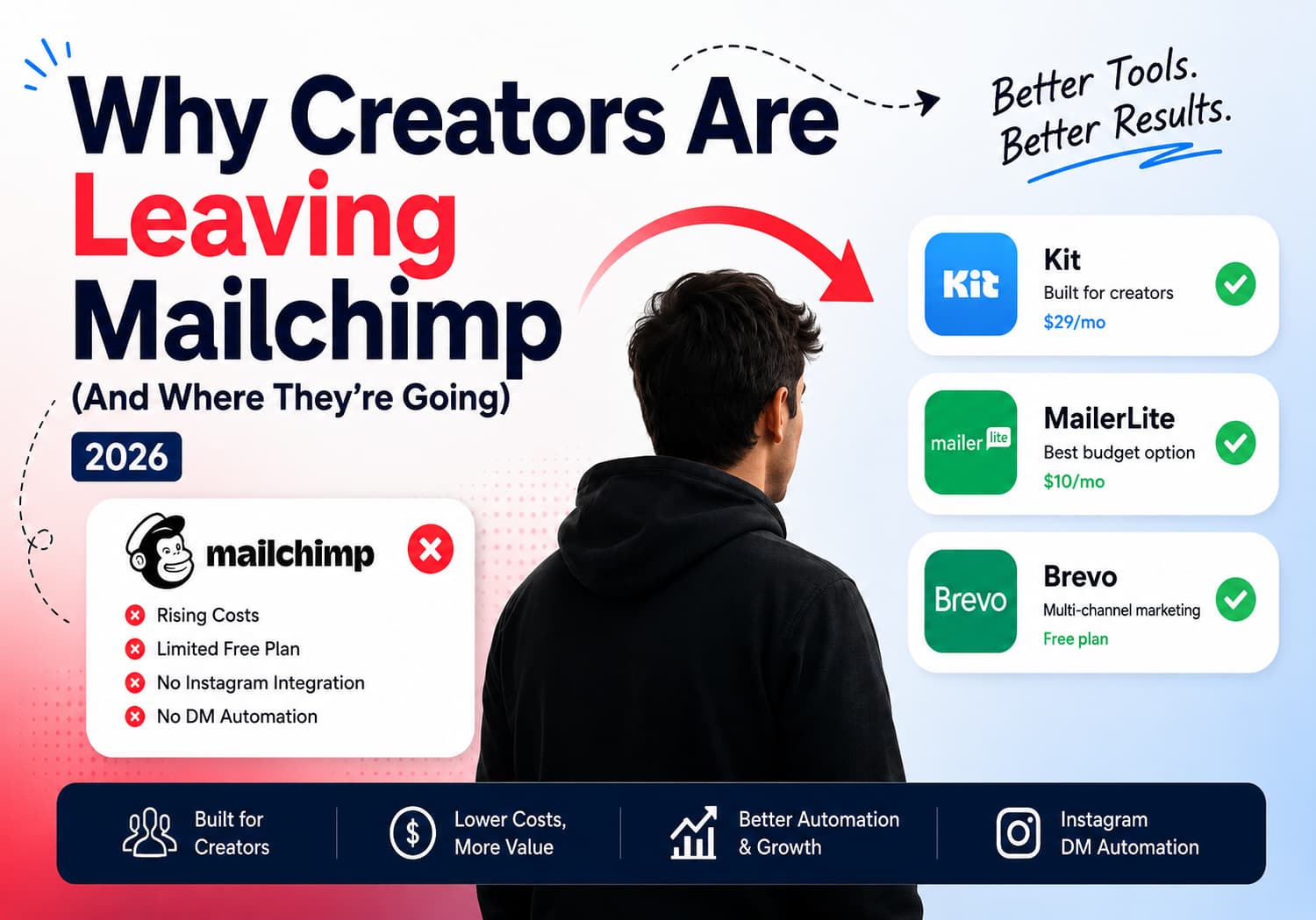

The best substack alternatives are Beehiiv for an owned audience and growth tools, Ghost if you want to self-host and keep 0% platform fees, and Kit if you sell courses or digital products next to the newsletter. MailerLite and Buttondown fit if you want cheap automation or a quiet Markdown editor. Patreon, Medium, and WordPress show up in this search too, but they are membership, discovery, or a full site, not a Substack clone.
Substack still wins on simplicity and its reader network. It takes 10% of paid revenue plus Stripe. Once you are making real money, that cut is why people leave. Pick the host that matches why you are leaving. last updated : 17 October 2026
The quick version:
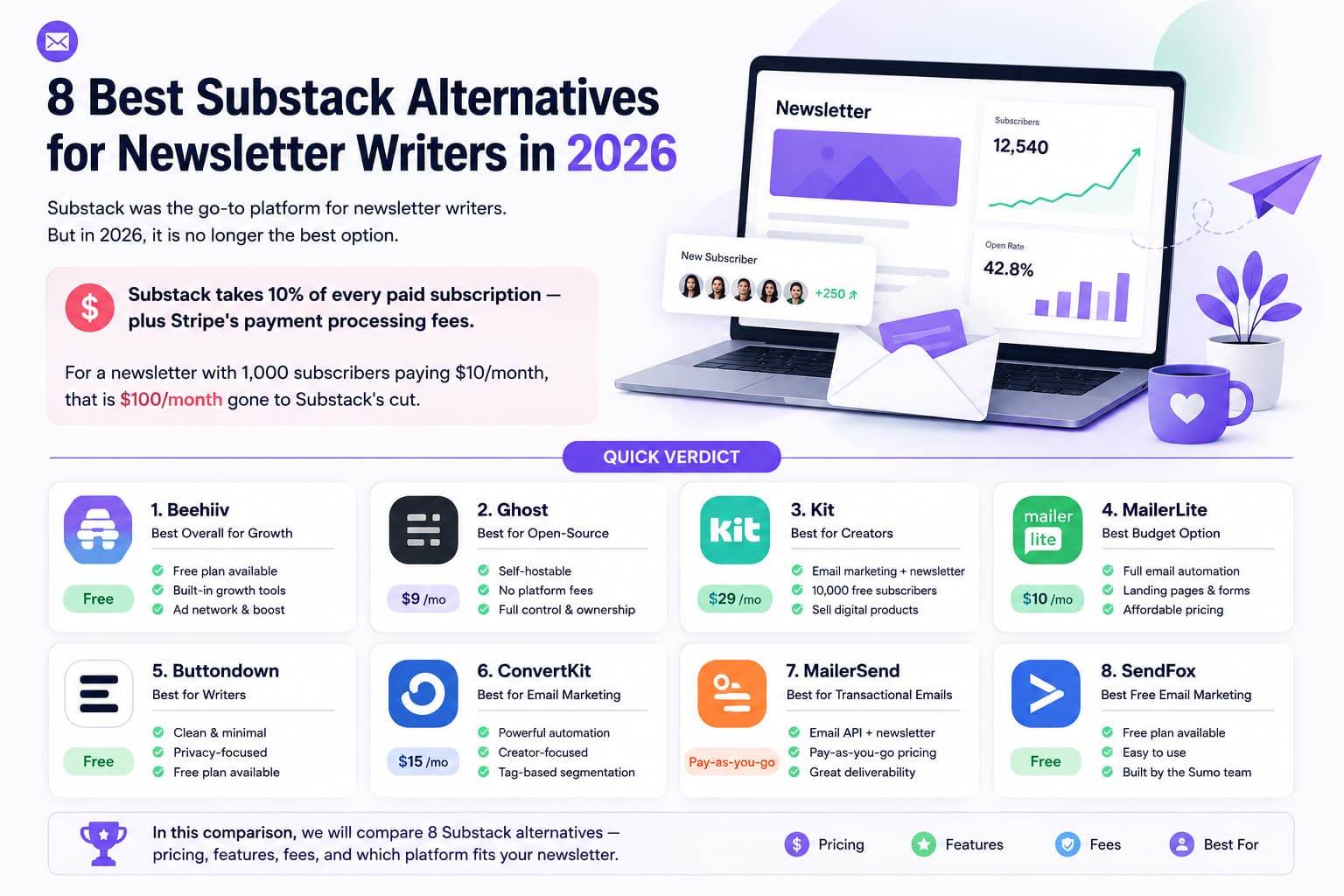
- Beehiiv – Best all-around Substack alternative with generous free plan, built-in referral programs, and native ad network.
- Ghost – Best for open source + independence – self-hosted, $9/mo managed, 0% platform cuts.
- Kit – Kit is the way to go if you have multiple products. It provides visual email funnels and newsletter publishing for $29/month.
- MailerLite – Best for budget – $10/mo with full visual drag & drop automation.
- Buttondown – The best option for pure writers – clean distraction free Markdown with a solid free tier.
An honest, feature-by-feature comparison of the 8 best Substack alternatives to help you select the right platform for your editorial workflow and revenue goals.
Substack Alternatives: The Comparison
Platform | Monthly Price | Subscription Price | Free Plan | Best For |
Substack | Free | 10% + Stripe fees | ✅ | Simple, casual newsletters |
Beehiiv | Free | 0% (ad network) | ✅ | Growth-focused media brands |
Ghost | $9/mo | 0% | ❌ | Open-source publishing & control |
Kit | $29/mo | 0% (Stripe fees) | ✅ | Multi-product sales funnels for creators |
MailerLite | $10/mo | 0% (Stripe fees) | ✅ | Low cost automation |
Buttondown | Free | 0% (Stripe fees) | ✅ | Minimalist & tech writers ✅ |
ConvertKit | $29/mo | 0% (Stripe fees) | ✅ | Creators (formerly Kit) |
Moosend | $9/month | 0% (Stripe fees) | ✅ | Affordable e-commerce builders |
Verified July 2026. Substack’s 10% recurring take rate is hands down the most expensive scale. Beehiiv, Ghost and Kit charge 0% in platform fees. The difference between percentage cuts and fixed software pricing is key if you want to protect your margins. Substack feels cheap because you don’t have a bill to pay every month but the second your publication starts to take off that 10% cut becomes your largest operating expense.
Dedicated SaaS options like Ghost, Beehiiv, Kit or MailerLite charge predictable flat fees. If your publication is making $2,000 a month or $25,000 a month, the software bill is the same. Every new subscriber you convert goes directly into your pocket rather than subsidising the host platform.
Substack Alternatives Pros and Cons Overview
Platform | Advantages | Disadvantages |
Beehiiv | Built-in ad network, viral referral engine, advanced analytics | No open source self hosting, $39/mo to unlock full growth tools |
Ghost | 100% open source, 0% fees, total brand control, ultra fast web speeds | Technical skills required to self-host; managed plans start at $9/mo |
Kit | $0 for 10,000 subscribers, 0% fees, visual funnel builder, product sales | $29/month for automated sequences; steeper initial learning curve |
MailerLite | Cheap ($10/mo), 0% fees, easy visual builder, good landing pages | No built-in ad network for sponsors or native referral system |
Buttondown | Minimalist Markdown editor, zero fees, lightweight emails, great developer API | No visual layouts; small community; modest free tier |
Moosend | Cheap ($9/month), no fees, automated sequences, ecommerce triggers | 30-day trial only (no permanent free tier), dated UI feel |
Every one of the platforms on this list solves a specific pain point. If you want to run your publication as a digital magazine with built-in sponsor monetisation then Beehiiv is the way to go. Ghost is the best in the business if you want full code control and custom web themes without a middleman. If you’re selling courses and digital templates along with your writing, Kit is your best bet for your marketing funnels. MailerLite is powerful enough for a budget-conscious writer. If you’re a purist who wants to write plain text with Markdown, then Buttondown is your answer.
Why newsletter writers are leaving Substack in 2026
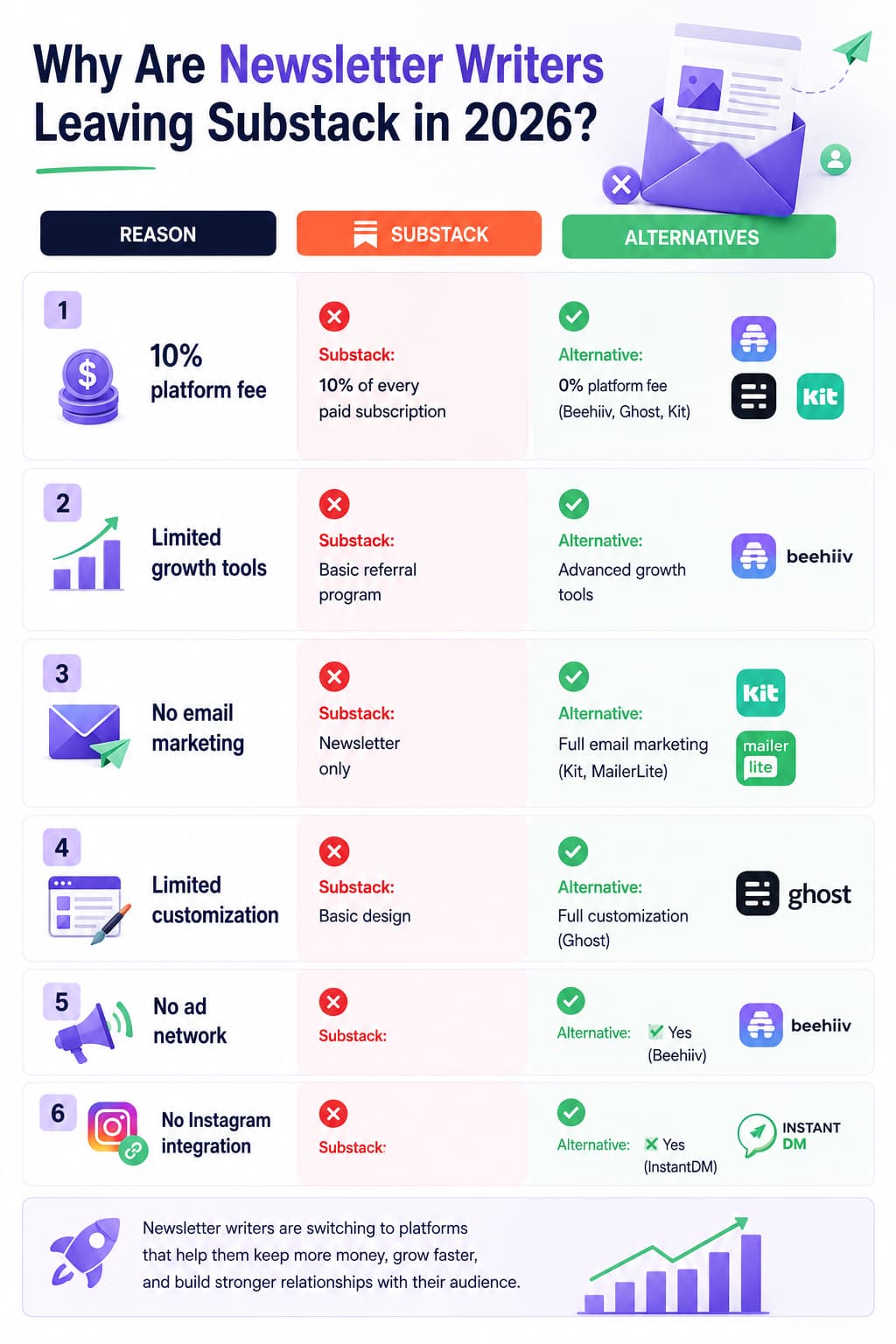
- 10% platform fee: Substack charges a very simple 10% fee on all paid subscriptions. That's roughly $1.50 lost revenues on every $10 in subscribers. And not to mention the processing fee (2.9% + $0.30) that Stripe adds on top of all that.
- Other options: Beehiiv, Ghost, Kit with no cuts to the platform. You control your Stripe account and get to keep 100% of your net subscription revenue.
- Tools that limit growth:
- Substack: Predominantly uses internal Notes feed, and basic Substack blog to Substack blog cross-recommendations.
- Alternative: Or, target growth features that work like Beehiiv’s automated referral rewards, native sponsor marketplace and co-registration Boosts that actually bring verified subscribers to your list.
- Substack takes 10% of every dollar your paying subscribers send you. On $5,000/month, that is $500 walking out the door every 30 days.
- No email marketing:
- Substack: You do the plain one-to-many broadcasts to your whole list, no conditional branching.
- Alternative: Kit and MailerLite visual trigger-based marketing funnels. Send welcome series customised to your needs, tag readers on link clicks, segment your audience by interests, set up automated re-engagement flows to re-engage cold subscribers.
- The only options for customisation are:
- Substack: Identical fonts, identical layouts, identical centred headers, identical generic homepage grid for each publication.
- Ghost & Beehiiv: Full control of your brand. Make custom themes, custom landing pages, multi-author editorial mastheads, embed interactive web widgets or custom code.
- No ad network:
- Substack: ❌ No native support or partnerships to help you monetise free readers with brand sponsorships.
- Alternative: ✅ Native programmatic ad networks (such as Beehiiv’s) that get you paid sponsors and place ads directly in your drafts, no contract wrangling required.
- Instagram Integration:
- Substack: ❌ No native short-form video or social integrations. This means you’re stuck with bad converting, useless link in bio buttons.
1. Beehiiv – Top Overall Substack Competitor
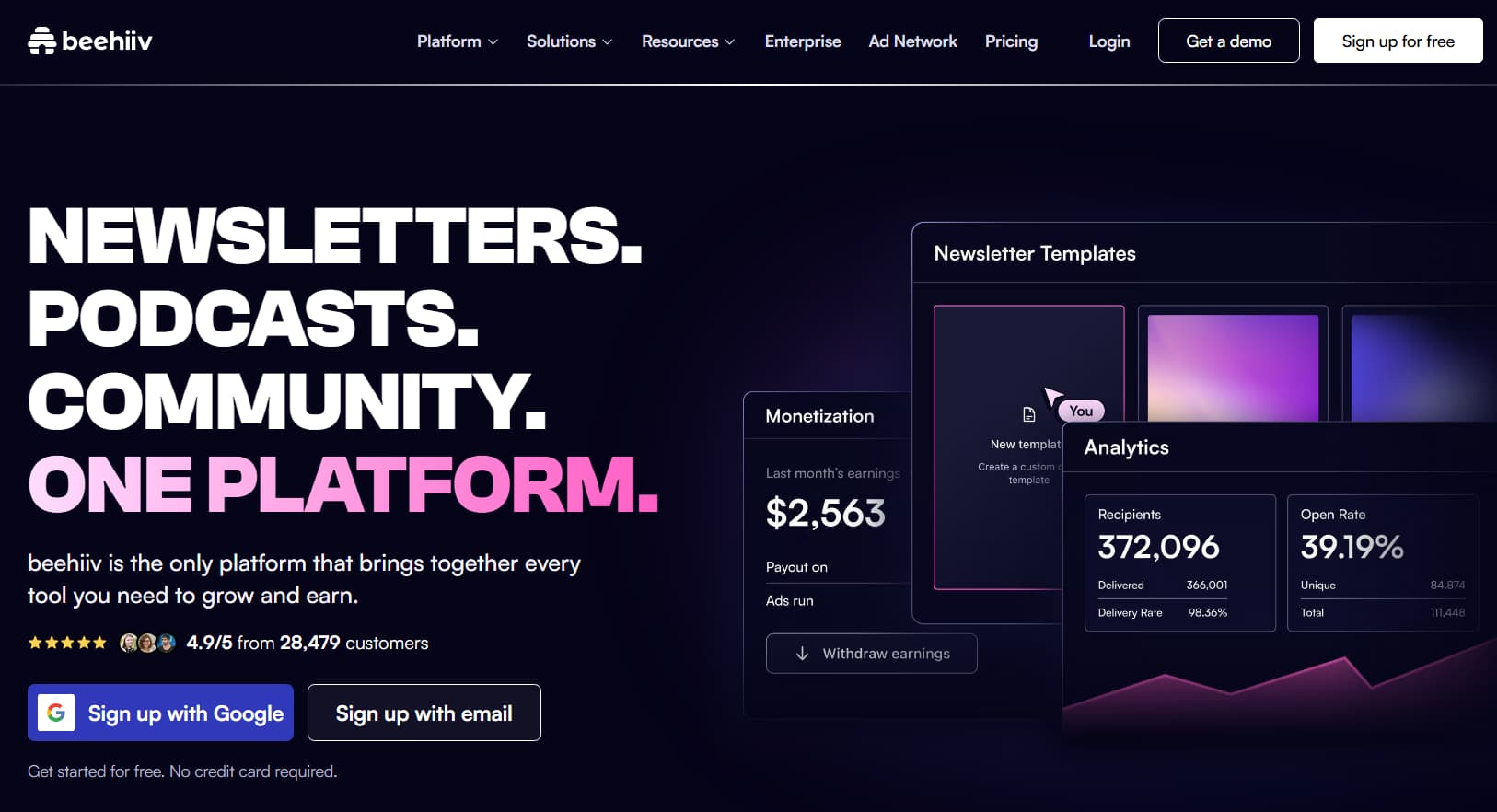
Price: Free Plan (beehiiv.com, July 2026) | Starting at $39/month.
If you're a newsletter writer looking for serious tools to grow and monetise, Beehiiv is the best Substack alternative. The team behind the publishing tech behind Morning Brew built Beehiiv to help newsletters run like real media businesses, not side-hobby blogs. It bundles slick editorial tools with audience acquisition and monetisation features that you'd normally have to buy as four separate SaaS subscriptions.
Beehiiv vs Substack: What Beehiiv does better
- No platform fees: Keep all your subscription revenue. Substack takes 10% on each billing cycle.
- Native ad network: Monetise your entire audience, including free readers, with one-click sponsorship deals with vetted brands.
- Built-in referral program: Reward your readers automatically for referring friends with swag, digital downloads or private access using custom links built right into your email footers.
- Free plan upgrades: Up to 2,500 subscribers, no cuts from the platform, unlimited sends, and custom domain setup.
- Advanced Analytics: Know where your readers come from, how many times links were opened, survey responses and detailed 3D cohort retention data.
Beehiiv pricing:
Plan | Price | Features |
Free | $0 | Up to 2,500 subscribers, unlimited email sends, web archive hosting |
Pricing | $39/mo | Up to 10,000 subscribers, ad network, referral program, custom domain |
Enterprise | Custom | High volume lists, dedicated sending IPs, priority support, full API |
Beehiiv vs Substack cost:
Revenue | Substack (10%) | Beehiiv (0%) | Reserve |
$1,000 a month | $100 | $0 | $100 a month |
$5,000/mo | $500 | $0 | $500/mo |
$10,000/mo | $1,000 | $0 | $1,000/mo |
Beehiiv vs Substack Save $500/mo subscription revenue $5,000/mo. That’s $6,000 a year sitting in your bank account.
- Beehiiv benefits: No % revenue platform fees, native sponsor ad network, automatic referral incentives, advanced subscriber analytics, versatile website builder and dynamic audience surveys.
- Cons: Advanced monetisation features start at $39/mo; not open source; visual themes for the free plan are a little limited; can feel like overkill if you just want to post occasional personal essays.
2. Ghost – Best for publishing open source
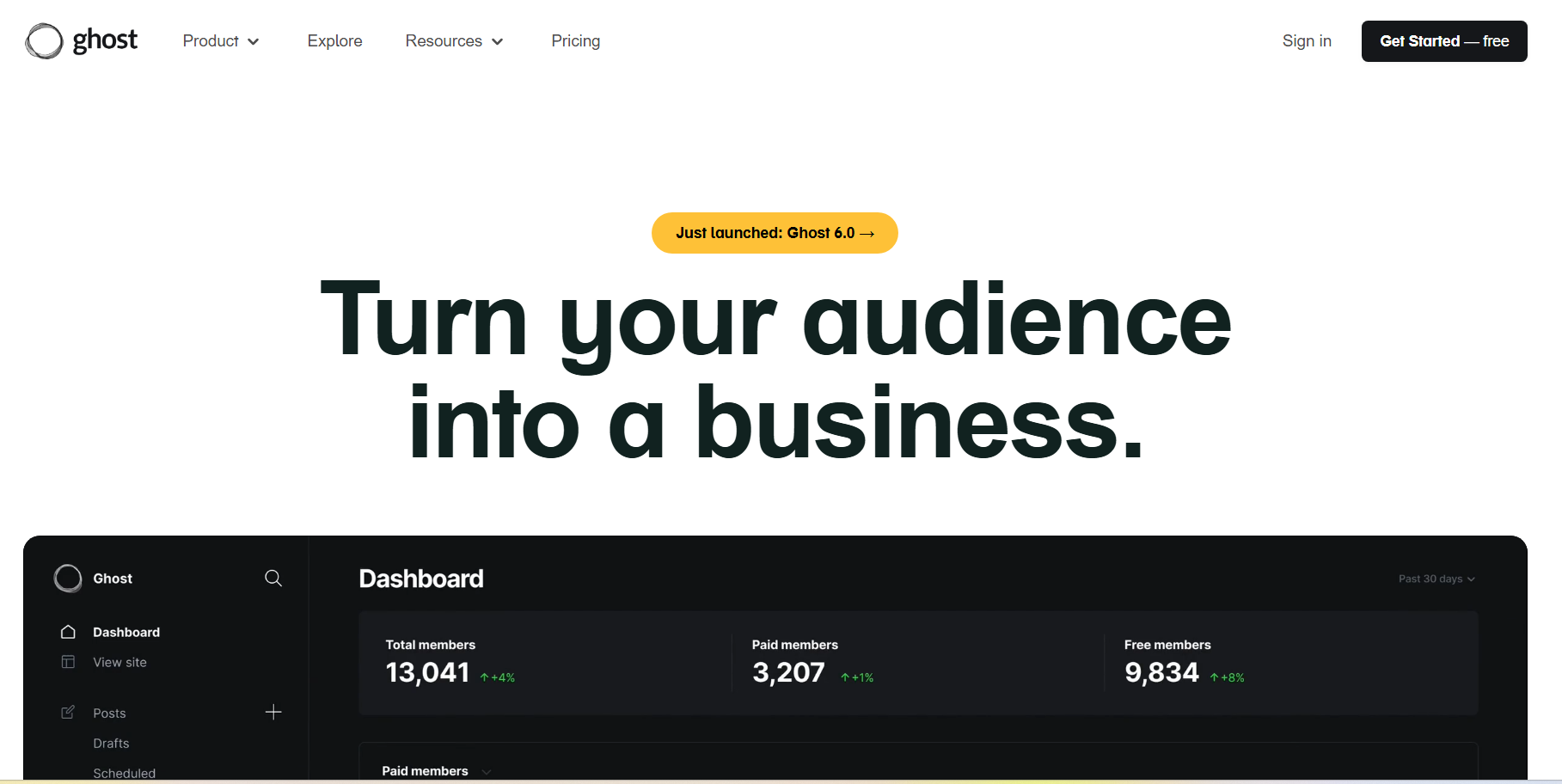
Price: $9/month (ghost.org, July 2026) | Self-hosted: free
Ghost is the top Substack alternative for independent writers, journalists and media teams who want complete ownership of their data and full creative control. Ghost is a non-profit foundation, independent and owned by its users, not venture capitalists. It offers a no-compromise publishing setup where you own your code, your content archives and your member database with no risk of platform de-platforming or arbitrary policy changes.
Which Ghost is better than Substack
- Open source, open to all: The core Ghost software is 100% free to download, inspect, and host on your own cloud server with no platform fees, ever.
- Full branding rights: Create custom layouts, unique member portals and custom navigation without watermarks from the platform.
- No 10% cut: Ghost doesn’t take any transaction fees from paid subscriptions, irrespective of which tier you choose.
- Better SEO & speed: Ghost sites are built on Node.js, load in milliseconds, automatically generate clean structured data and consistently outrank Substack on Google search.
- Beautiful theme marketplace: Choose from hundreds of modern, magazine-quality themes or code your own custom front-end with clean Handlebars templates.
Ghost Pricing:
Plan | Price | Features |
Self hosted | Free | 100% open source, no license fee, unlimited users |
Ghost(Pro) | $9/mo | Fully managed cloud hosting, automated backups, integrated email delivery |
Ghost(Pro) Team | $25/month | Multiple authors, 5 team members, upload custom theme |
How Ghost and Substack price:
Revenue | Substack (10%) | Ghost ($9/month) | Total Savings |
$1,000/mo | $100 | $9/mo | $91/mo |
$5,000/mo | $500 | $9 | $491/mo |
$10,000/mo | $1,000 | $9 | $991/month |
Ghost $5,000/mo: Ghost saves you $491/mo vs Substack. Ghost ($10,000/mo) Saves $991/mo ($11,892/yr).
- Ghost pros: 100% open source code, 0% platform cuts, best-in-class web performance, strong SEO optimisation, full theme customisation, fine-grained paywall controls.
- Ghost cons: You have to be willing to learn Linux server commands and setup an email relay (Mailgun, etc) for self hosting. Managed Ghost(Pro) starts at $9/mo and has no free tier forever. No native sponsor market place.
3. Kit — Great for Creators
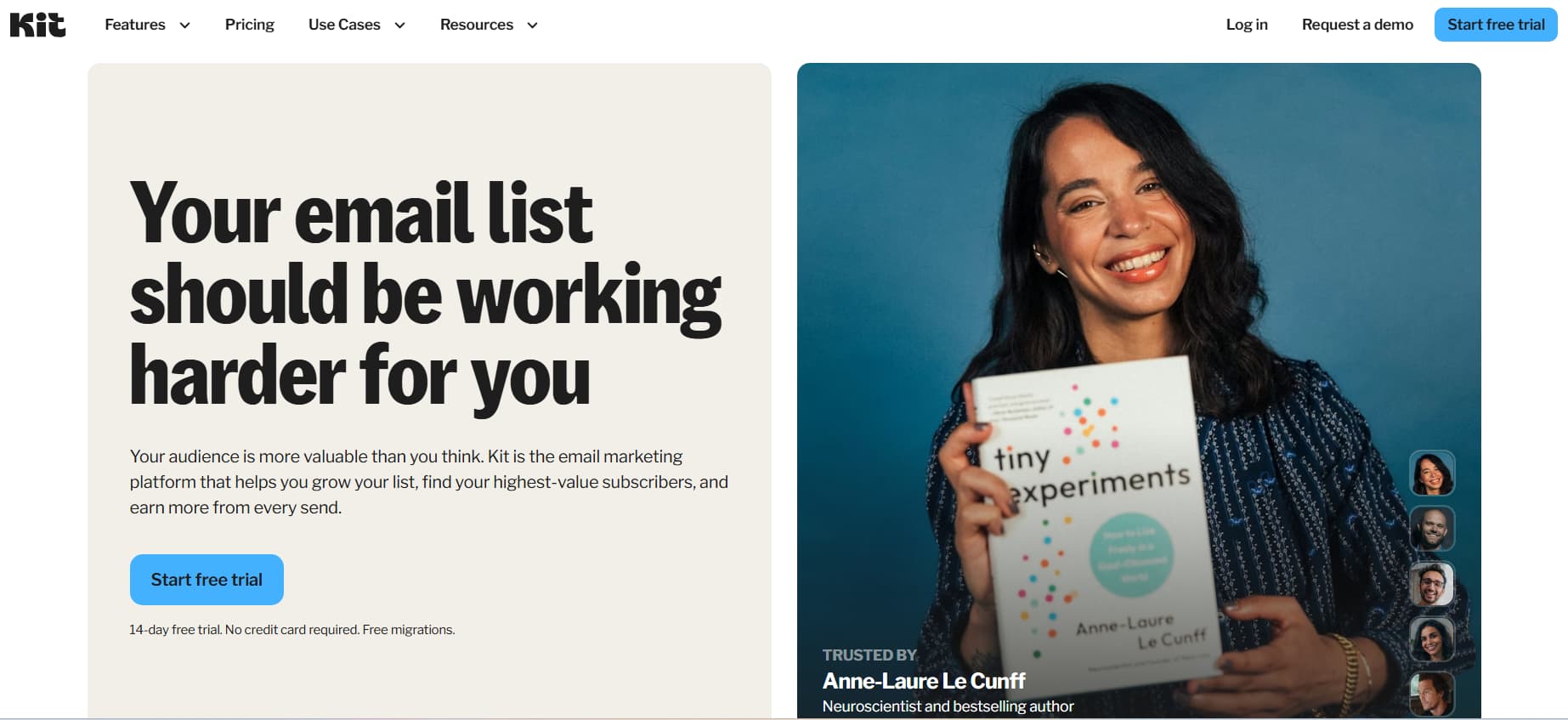
Price: $29/month (kit.com, July 2026) | Free plan for up to 10,000 subscribers.
If you have a newsletter and sell digital products, coaching, courses, or podcasts, Kit (formerly ConvertKit) is the best Substack alternative for creators. Substack is a simple, paywalled blog. Kit is your email list, the engine of a whole digital business. Automate complex customer journeys, tag subscribers by their behaviour, and sell digital downloads directly, without any extra checkout tools.
The things that Kit does better than Substack:
- 0% platform fees: Keep 100% of your recurring subscription revenue - no 10% royalty lost.
- 10,000 free subscribers: The most generous free broadcast tier in the email industry by far for growing creators.
- Visual automation funnels: Design multi-branch welcome sequences, automated product recommendations and dynamic tagging depending on the links your readers click.
- Native Digital Commerce: Sell ebooks, video courses, consulting calls, and paid memberships from native checkout pages.
- Creator Network: Get cross-promoted with thousands of other creators who share your newsletter with new subscribers as soon as they subscribe.
Kit Price:
Plan | Price | Benefits |
Free | $0 | Up to 10,000 subscribers, unlimited email campaigns, basic ecommerce checkout |
Creator | $29/month | Unlimited visual automations, subscriber tagging automation, custom domains |
Pro | $59/mo | Advanced subscriber scoring, newsletter referral tracking, priority support |
Substack Pricing vs Kit:
Revenue | Substack (10%) | Kit ($0-$29/mo) | Savings |
$1,000/mo | $100 | $0-$29 | $71-$100/mo |
$5,000/month | $500 | $0-$29 | $471-$500/month |
- Pros: 10,000 subscribers free tier, 0% fees, visual marketing funnels, built-in checkout for digital products, strong creator referral network.
- Cons: Visual funnels are expensive at $29/mo Creator tier; web archive pages aren’t as sophisticated as Ghost or Beehiiv; user interface is more marketing than long-form blogging.
4. MailerLite - Best Bang for Buck
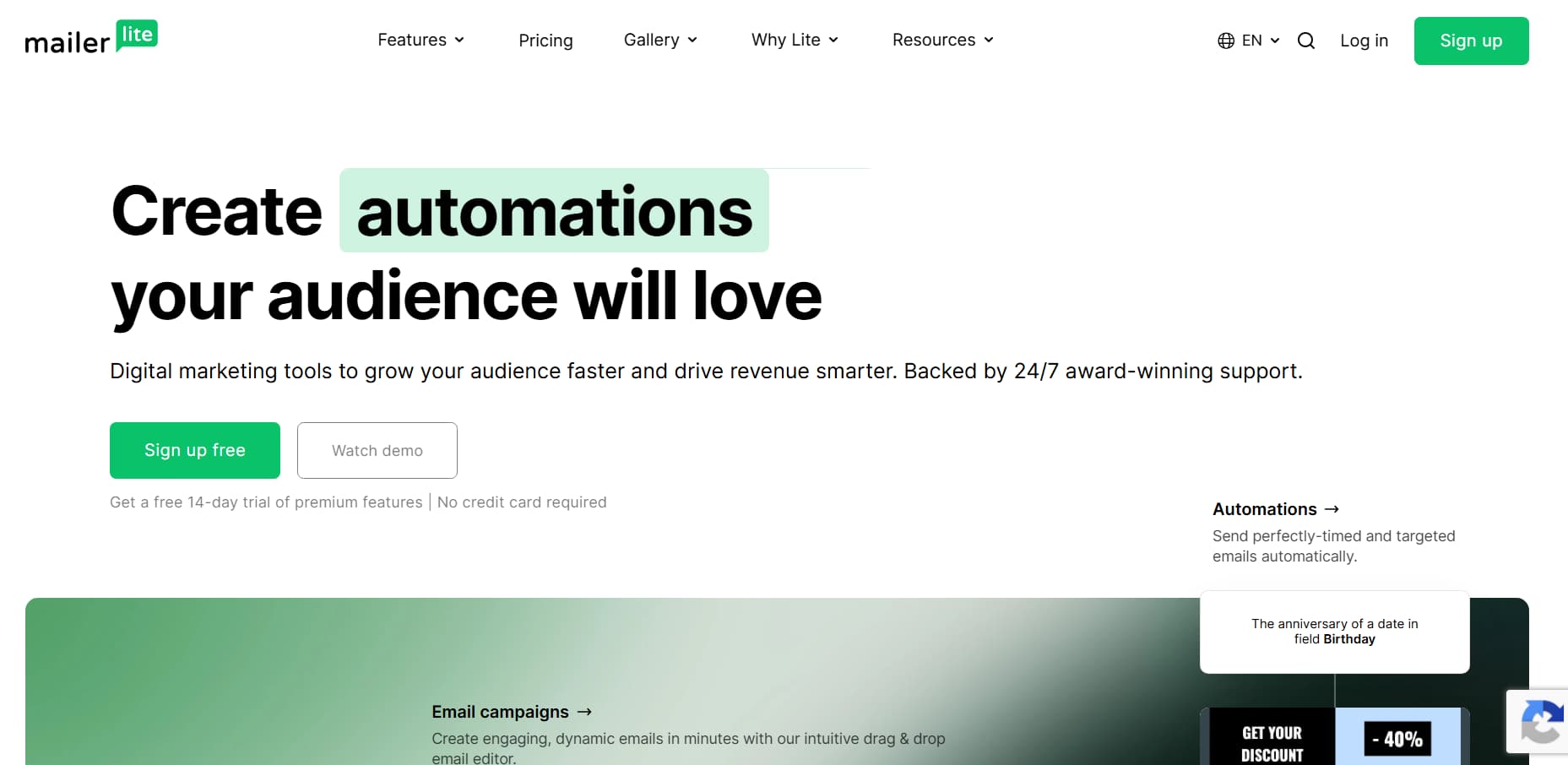
Cost: $10/mo (mailerlite.com, July 2026)
Best low-cost Substack alternative for writers who want clean design, reliable automations and landing pages without the high software prices | Free plan: 1,000 subscribers.
MailerLite strips the fat out of enterprise email tools and provides you with a simple, intuitive user experience that makes it easy to create beautiful newsletters and automated subscriber sequences in minutes.
Where MailerLite wins over Substack:
- All the bells and whistles: Marketing automation with all the bells and whistles for $10/mo – cheapest plan under 10% Substack revenue tax.
- 0% platform fees: Sell newsletter subscriptions on Stripe and keep 100 percent of the revenue.
- Visual Automation: Create automated welcome sequences, birthday emails and link-trigger workflows with an easy drag & drop builder.
- Pre Built Landing Pages Builder: Create beautiful landing pages and pop-up forms with countdown timers to quickly grow your subscriber base.
- Website builder: Create a complete multi-page website inside MailerLite without having to pay for additional web hosting.
MailerLite prices:
Plan | Price | Features |
Free | $0 | 1,000 contacts, 12,000 emails/month, drag & drop editor |
Business Growth | $10/month | 1,000 subscribers, unlimited emails, 3 landing pages, unbranded email |
Premium | $39 per month | 5,000 subscribers, all features, 24/7 priority live chat support |
Pro | $49/month | 10,000 subscribers, advanced automation, custom HTML editor |
MailerLite vs Substack: Pricing
Revenue | Substack (10%) | MailerLite ($10 per month) | Savings |
$1,000/mo | $100 | $10 | $90/month |
$5,000/mo | $500 | $10 | $490/mos |
- Pros of MailerLite: Cheap prices, full visual editor, simple landing pages, no cuts from the platform.
- Cons of MailerLite: No built-in sponsor marketplace, no native viral referral system, and the segmentation of subscribers isn’t as sophisticated as Kit’s complex product funnels.
5. Buttondown — Best for Writers
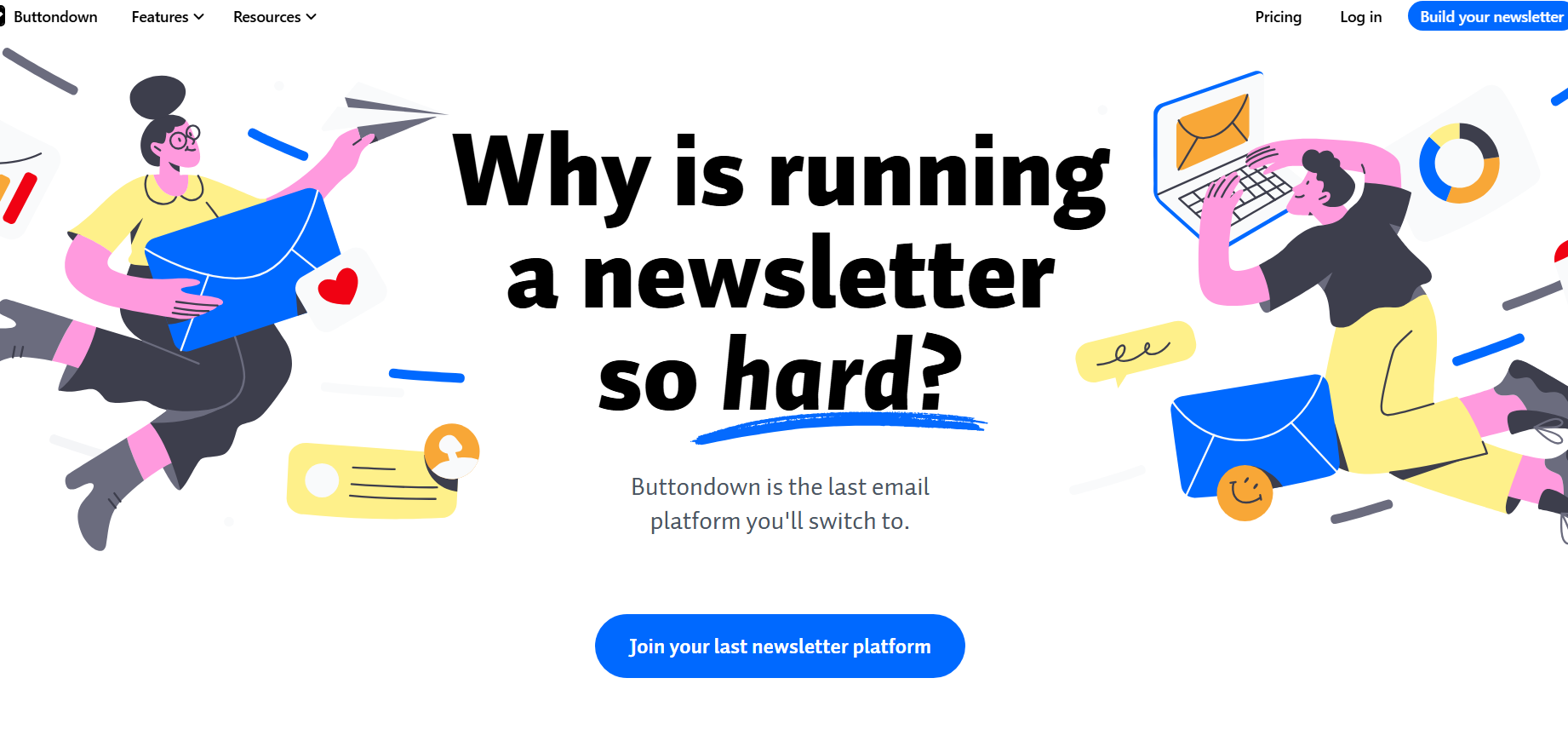
Pricing: Free Plan (buttondown.com, July 2026) | Paid Plan $9/mo
Buttondown is the best Substack alternative for writers who want to write fast, write simple, and write distraction-free. Buttondown is built by an indie dev, so no corporate marketing fluff, noisy popups, or fancy funnel builders. It gives a clean Markdown editor that creates lightweight, beautifully-rendered plain-text emails in your readers’ inbox.
Why Buttondown does it better than Substack:
- Clean, minimal design: A distraction free writing environment to showcase your prose.
- 0% platform fees: Get to keep 100% of your paid subscription revenue with direct Stripe integration.
- First-class Markdown & LaTeX: Native syntax highlighting for code blocks, clean footnote support, and full LaTeX math rendering for technical or academic writing.
- Privacy-first: Disable tracking pixels and open-rate monitoring to respect the privacy of readers.
- Powerful developer API: Draft posts, manage subscribers, and trigger sends programmatically with a clean, modern REST API.
Buttondown pricing:
Plan | Price | Features |
Free | $0 | Up to 100 subscribers, basic Markdown editor, web archive |
Pro | $9/month | Up to 1,000 subscribers, custom sending domain, detailed analytics, full API access |
- Buttondown Pros: Write without distractions, 0% fees, Native Markdown & LaTeX, Privacy-first analytics, Developer-friendly API.
- Buttondown Cons: Basic visual styling; Free plan limited to 100 subscribers; No built-in ad network or automated subscriber recommendation loops.
6. Moosend – Great for budget-conscious makers
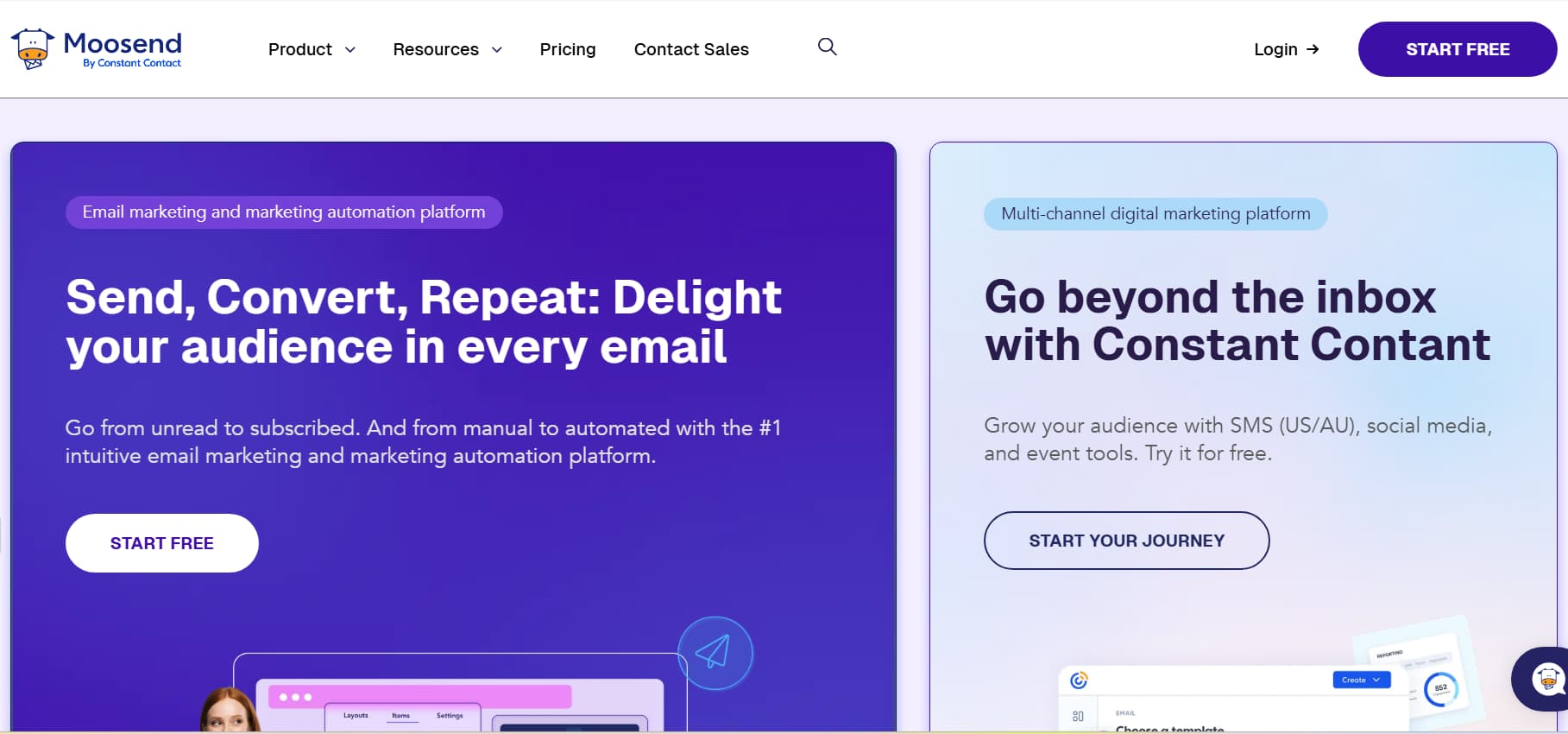
Price: $9 per month (moosend.com, July 2026) | Free plan: 30-day trial.
Moosend is a more affordable alternative to Substack for creators and small businesses looking for reliable visual email sequences, ecommerce triggers and lead capture forms without the hefty monthly price tag.
Moosend vs. Substack: Why Moosend is Better
- Low entry price: Full email marketing and automation for $9/mo.
- Keep 100% of your revenue: Run paid subscriber lists & product promotions with 0% platform fees.
- Visual sequence builder: Drag and drop automation canvas with onboarding, dynamic tagging and engagement tracking templates.
- Landing Pages & Forms: Create mobile ready opt-in pages with countdown timers and engaging form fields.
- Ecommerce integrations: Connect directly to Shopify, WooCommerce or a custom shopfront to trigger emails based on previous purchases.
Moosend Pricing:
Plan | Cost | Specs |
Pro | $9/mo | Up to 500 contacts, full visual automations, landing pages, SMTP relay |
Enterprise | Custom | SSO, Priority Phone Support, Dedicated IP, Moosend+ Enterprise Features |
- Moosend Pros: Low cost to start ($9/mo), 0% fees, Visual workflow builder, Solid ecommerce triggers, Reliable inbox deliverability.
- Moosend Cons: 30 day trial only (No free tier), Interface more like typical corporate email software than a stylish writing publication, Smaller community.
The Automation Add-On: Substack + InstantDM for Instagram Lead Gen
Price: Substack (free, 10% fee) + InstantDM ($9.99/mo) = $9.99/mo + 10% fee
The biggest problem if you stick with Substack because it’s easy to write on is getting new readers regularly. “Link in bio” is a tried and tested growth hack to get Instagram users to follow through. It’s friction, pulls users away from their feeds and generally leads to bad 3%-8% conversion rates.
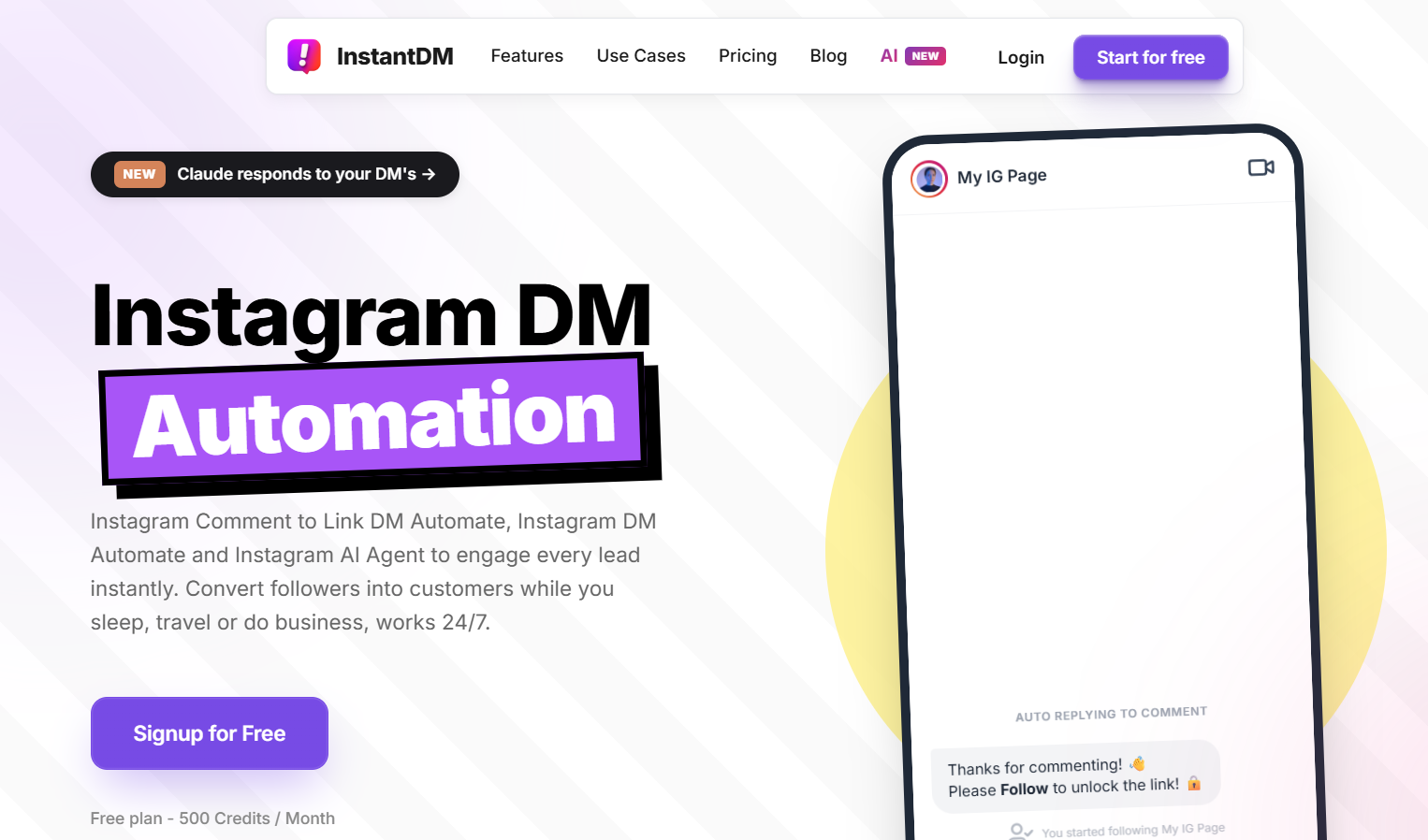
Automate your top-of-funnel discovery and turn social engagement into brand new email subscribers with Substack + InstantDM.
How it works:
- Create your Substack newsletter issue.
- Create a comment to DM automation trigger in minutes.
- Create an Instagram Reel or Carousel with a strong CTA: "Comment 'NEWSLETTER' and I'll DM you the full issue."
- When a user comments, tool will reply to the comment and automatically drop your signup link right in their Instagram DMs.
- The reader is instantly subscribed to their direct messages stream.
Why is Substack+Better than Substack?
- Higher conversion rates: Automated comment-to-DM funnels convert 15-30% better than traditional link-in-bio pages.
- No additional site overhead: Drive readers straight to your Substack link, no need for separate landing pages.
- Instant delivery to readers, where they are: Subscribers receive your content instantly.
- Automated list building: Grow your audience predictably with every post you publish on Instagram.
How to choose the best Substack alternatives?
Writer Type | Best Alternative | Why |
Growth-focused writer | Beehiiv (free) | Built-in referral program, ad network, 0% platform fee |
Open source lover | Ghost ($9/month) | Self-hosted, no fees, full control of your brand, fast website speeds |
Creator Selling Products | Kit ($29/mo) | 10,000 free subscribers, visual funnels, digital product checkouts |
Budget writer | MailerLite ($10/mo) | Low-cost ($10/mo), visual automations, landing page creation |
Minimalist writer | Buttondown (gratis) | Clean Markdown, 0% fees, lightweight emails, LaTeX support |
Beehiiv saves you $500/month on $5,000 revenue. Ghost saves you $491/month. Kit saves you $471-$500/month. All three charge 0% platform fees.
You can export your subscriber list from Substack as a CSV and import to Beehiiv, Ghost, Kit, or MailerLite in minutes. Paid billing migrates through Stripe without subscribers re-entering card details.
Adjust your business model to select the appropriate one:
- If you’re looking to build a modern ad-monetized publication with built-in referral rewards, then Beehiiv is the way to go.
- If you want total freedom, custom web design and an open source codebase then Ghost is your choice.
- Kit is the choice for visual funnels for those selling coaching, courses or digital resources.
- MailerLite is an easy to use email automation tool that is very affordable.
- Buttondown, if you write technical essays in Markdown, and hate visual bloat.
How We Rated These Alternatives
We compared six Substack alternatives using four simple criteria:
Platform fees We looked at both the monthly pricing and any transaction fees. Substack takes 10% plus Stripe fees. Ghost, Beehiiv, Kit, and Buttondown all charge 0% platform fees.
Feature depth We checked what each platform offers beyond basic newsletter publishing — things like email automation, ad networks, referral programs, course hosting, and custom themes.
Migration ease We tested how straightforward it is to leave Substack. Every platform accepts CSV exports. Ghost and Kit make it even easier by letting you migrate existing Stripe billing so subscribers don’t have to re-enter their card details.
Growth tools We looked at the built-in growth features each platform provides, including referral programs, ad networks, SEO performance, and landing page builders.
All pricing was double-checked on the companies’ websites and reflects rates as of July 2026.
Reviewed: August 2026
Redditors recommend alternatives to Substack
You’ll see the same themes in discussions around r/newsletters, r/writers and r/creators.
- Beehiiv: The Best Tool for Growing Your Audience. Redditors are likely to blame the native ad network and referral system for early monetisation of free listings. Biggest problem is the $39/mo fee to unlock all the growth tools.
- Ghost: For the purist and open source developer. The self hosting freedom, clean aesthetics and no fees are loved by users. Standard caveat, tech comfort required for self hosting.
- Kit: The creator’s essential for multi-product funnel operations. The web archive is called plain but the generous free plan of 10,000 subscribers and the visual sequence builder get a lot of love from users.
- MailerLite: The cheapest email service for creators who want clean visual sequences. Frequently praised, starting at $10/mo without all the bloat.
What does Reddit say? Loud and clear. When you start making money the 10% cut from Substack is way too expensive. Move to Beehiiv, Ghost or Kit. Save your margins and get much better publishing tools.
Create Your News Letter Now
If you want to grow your publication without losing 10% of your hard earned revenue, leaving Substack is the smartest thing you can do this year:
- For growth & sponsorships: Switch to Beehiiv (free up to 2,500 subs)
- For open source & complete ownership: Build on Ghost ($9/mo managed or free self-hosted)
- For digital products & automated funnels: Build on Kit (free for up to 10,000 subscribers)
- Visual automation (cheap): MailerLite ($10/mo)
- Simple Markdown Writing: Buttondown (free plan) Easy
About the Author
Aravindh Kumar is an ecommerce and Instagram growth expert with 8+ years of experience in online selling. He has worked with 500+ brands — including Forbes-listed companies - He has helped 200+ Instagram businesses grow their online presence.