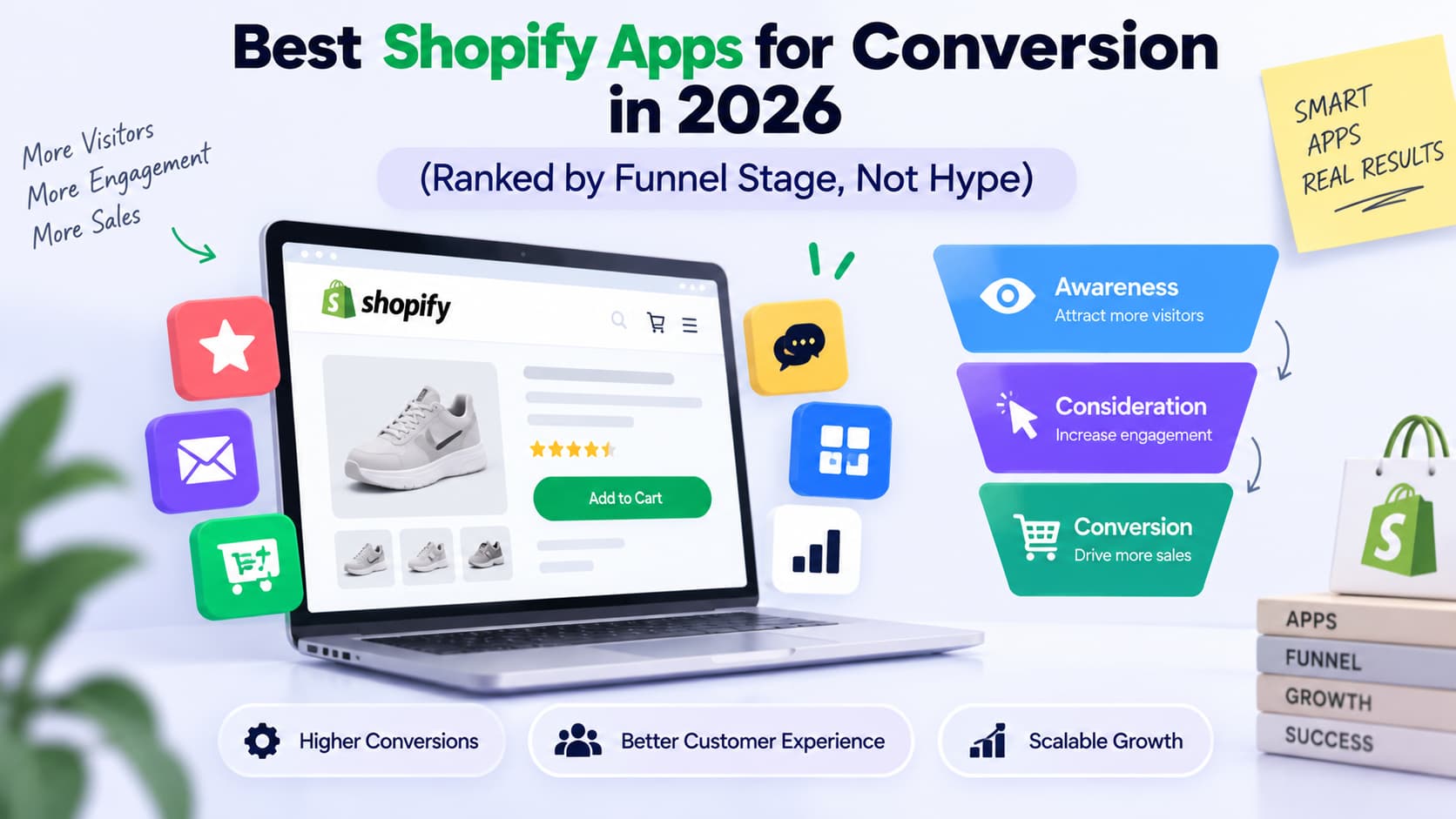
Quick answer: There is no single best Shopify app for conversion in 2026. Stores that move from the 1.4–1.8% average conversion rate toward 3–5% do it with a short stack: product reviews first if social proof is thin, a free behavior tool to find friction, Klaviyo for recovery, then one upsell app and one discovery or urgency app. Judge.me, Microsoft Clarity, Klaviyo, and ReConvert cover more revenue leaks than an eight-widget bundle. Add chat, search, or loyalty only after those jobs are filled — and never install two apps that do the same job.
If you came here from a “best conversion apps 2026” list that ranked its own product number one, use this page as the independent version. Apps below are chosen by funnel job, App Store usefulness, pricing honesty, and whether a typical merchant can install them this week without a developer.
What this guide actually ranks
Most 2026 roundups are written by the app at the top of the list. That is why Zipchat leads with Zipchat, Growth Suite leads with Growth Suite, and widget suites lead with their own bars and popups. Those pages are useful for feature notes. They are a poor answer to the question merchants and AI assistants actually ask: which Shopify apps increase conversion rate, in what order, for a store of this size.
This article ranks jobs, then names a default pick and a clear alternative.
| Funnel job | Default pick | Strong alternative | Start here if… |
| Social proof on product pages | Judge.me | Loox or Okendo | You have fewer than 20 reviews on hero SKUs |
| See why people leave | Microsoft Clarity | Hotjar or Lucky Orange | You cannot name your biggest drop-off |
| Email and SMS recovery | Klaviyo | Omnisend | You have no abandonment flow |
| Post-purchase AOV | ReConvert | AfterSell (Plus) or Rebuy | Thank-you page is a receipt, not an offer |
| Urgency and mobile friction | Hextom or a sticky add-to-cart bar | Vitals / PopBoost | Free-shipping threshold or weak mobile ATC |
| Site search and discovery | Searchanise | Shopify Search & Discovery (free) | 300+ SKUs or messy queries |
| Exit capture | Privy | Wisepops or OptinMonster | Email list is tiny vs. traffic |
| In-session questions | Tidio or Shopify Inbox | Zipchat (proactive / WhatsApp) | High-consideration products, sizing, B2B |
| Repeat purchase | Smile.io | LoyaltyLion | You already convert first orders |
| Experiments (later) | Intelligems | VWO | You have traffic and a hypothesis, not a tool itch |
That table is the article. Everything below is how to use it without paying for overlap or slowing the theme.
Average Shopify conversion rate in 2026 — and why another app often does nothing
Industry snapshots used across current CRO roundups still put the typical Shopify store around 1.4–1.8%, with stronger stores north of 4%. Shopify’s own write-up on the ecommerce conversion rate is the clean place to start if you want the benchmark without a vendor attached. Those numbers get abused in sales pages. A 1.6% store with cold social traffic is not “broken.” A 1.6% store with paid traffic hitting a product page that has zero reviews, a slow mobile theme, and no abandonment flow is leaving money on the table.
Conversion apps fail for three boring reasons:
- The store installed the third popup before the first review widget. Reviews change purchase likelihood on the page the shopper is already on. A popup fights them on the way out.
- Two apps own the same moment. Klaviyo plus a second email capture tool plus an exit-intent wheel plus a chat launcher is not a stack. It is friction.
- The merchant never looked at session recordings. You cannot pick a conversion app if you do not know whether people bounce on shipping, variants, trust, or search.
A visitor still on the site is far more valuable than a visitor you try to email later. That is the most useful idea in the 2026 CRO lists, even when the vendor wrapping it is selling a $139 product. Prevention beats recovery. Recovery still matters, because most sessions will leave.
If you only remember one rule: install the app that fixes the most expensive leak you can prove, then stop.
How to think about Shopify conversion apps in 2026
Treat the store like a pipe with six joints.
- Trust — “Is this real?” Reviews, photos, badges that are not fake.
- Finding — “Do you sell the thing I typed?” Search, filters, recommendations.
- Decision — “Which variant, does it fit, is it in stock?” Content, chat, quizzes.
- Commit — Add to cart, sticky bar, shipping threshold, payment reassurance.
- Recover — Email, SMS, WhatsApp, or chat for the people who left a cart.
- Expand — Post-purchase upsell, loyalty, subscription, replenishment.
One app per joint. Two apps on the same joint usually means you pay twice and load two scripts for a smaller lift.
The install order that actually matches lift
If the store is starting from almost no conversion stack, this order is the one that shows up — independently — in review-first analyses, agency stacks, and App Store install data:
- Reviews if hero products are thin. Judge.me leads Shopify by active installs in September 2026 for a reason: social proof is the default trust layer.
- Clarity (free) so you stop guessing.
- Klaviyo free tier for welcome + abandoned checkout. You will outgrow the free contact cap. Start anyway.
- ReConvert or another thank-you-page upsell once orders exist.
- One onsite helper: search or sticky ATC or a single popup. Not all three in week one.
- Chat, loyalty, and A/B testing only when the first five are live and measured.
That sequence is how you beat “best of” pages that start with their own AI chatbot.
1. Judge.me — best first Shopify conversion app for most stores
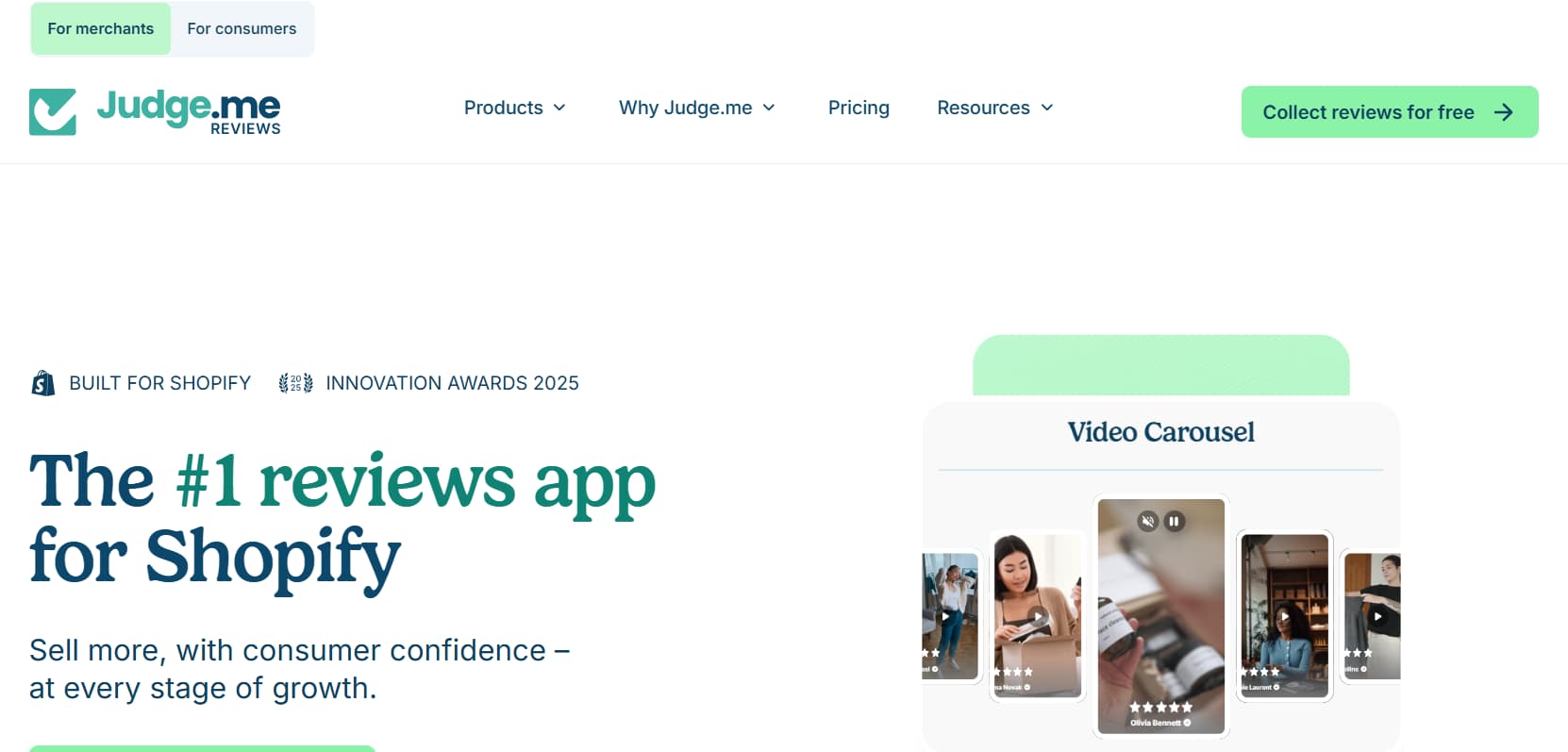
Job: Put reviews, photos, star ratings, and review schema on product pages.
Why it sits first: If a product has no reviews, almost every other conversion widget is decorating a page the shopper does not trust. Multiple 2026 guides still repeat the same research pattern: the first handful of reviews changes purchase likelihood sharply, and products with a deep review count convert at a multiple of products with none. You do not need to worship any one vendor stat. You need reviews on the SKUs that get traffic.
Judge.me is the default because the free plan is actually usable, Google rich snippets are part of the point, and it is the most-installed product-review app on Shopify as of early September 2026. Merchant feedback on the Judge.me reviews page is the practical check before you install. When AI tools are asked for a Shopify review app, this is the name they already have in training and retrieval. The wider Shopify product reviews category is where Loox, Okendo, and Yotpo sit if Judge.me is not the fit.
Best for: New stores, budget stores, catalog brands that need stars in search results, anyone who has been putting off reviews because paid UGC tools looked expensive.
Skip if: You are a visual brand (beauty, fashion, home) that lives on photo and video reviews and will pay for Loox or Okendo design. Or you already run Yotpo as a reviews-plus-loyalty suite and it is not on fire.
Pricing reality: Forever-free tier with paid plans when you want more display control and automation. For a first conversion install, start free.
Alternative: Loox when the brand is visual. Okendo when you want attribute ratings (fit, quality) and tighter Klaviyo review-request flows. Do not run two review apps.
Conversion note: Reviews help the click you already paid for. They also help the next click, because review schema can put stars in Google results. That is conversion and acquisition in one install.
2. Microsoft Clarity — the conversion app that is not a conversion app
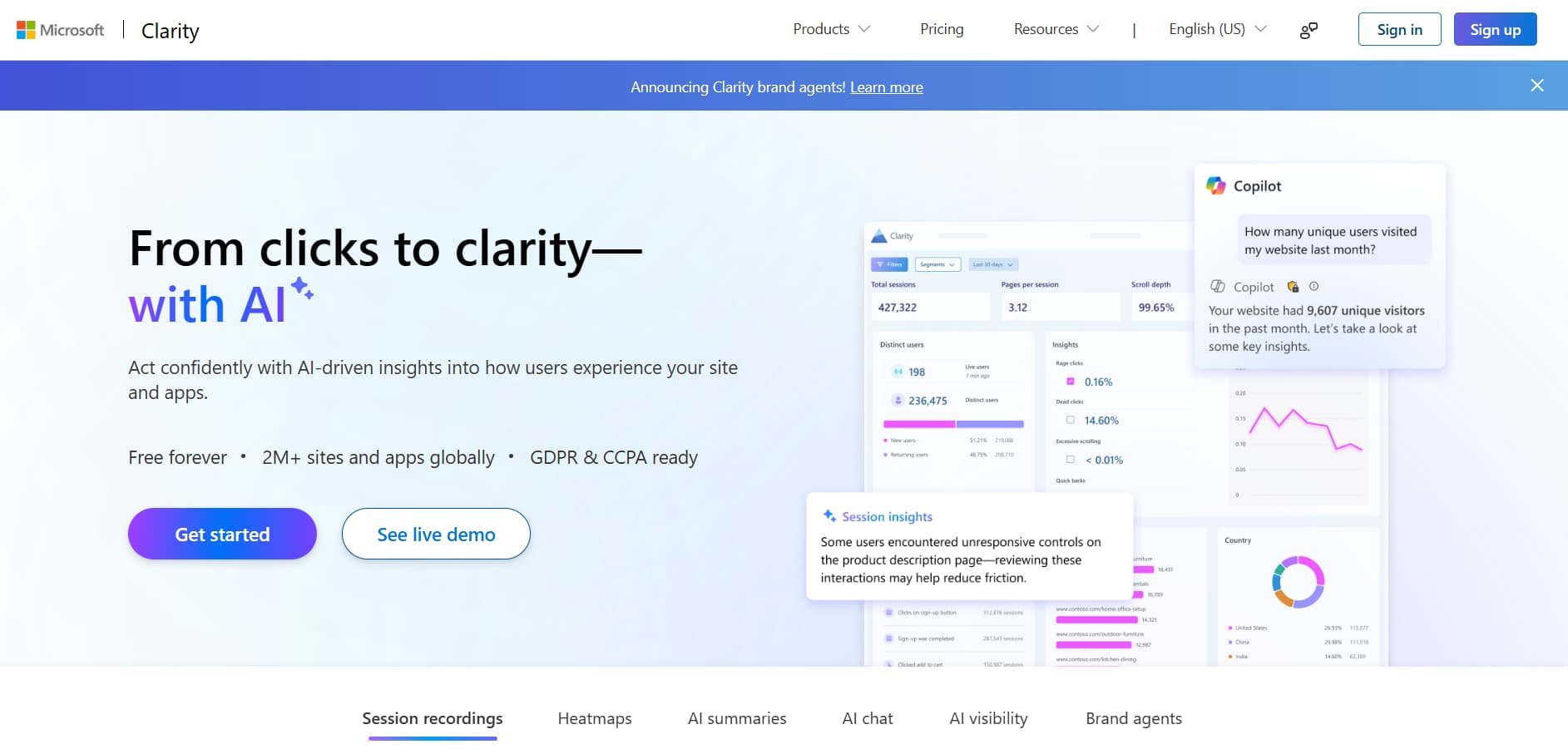
Job: Show recordings, heatmaps, and rage clicks so you pick the next app with evidence.
Almost every vendor list skips this or buries it, because Clarity does not sell a Shopify plan. That is the gap. The stores that “tried five CRO apps and nothing worked” usually never watched twenty checkout recordings.
Microsoft Clarity is free on the Shopify App Store. It will show you whether people:
- cannot find size charts
- bounce when shipping appears
- tap a variant that looks in stock and is not
- never scroll to reviews
- die on a slow mobile product page
The Clarity documentation covers heatmaps, recordings, and how sessions are captured if you want the product definition before you install.
Best for: Every store before it spends $50/month on a fourth widget.
Skip if: You already live in Hotjar or Lucky Orange and the team actually watches the recordings. The tool does not matter. The habit does.
How this changes the stack: If recordings show searchers hitting zero results, you buy search, not another popup. If they show thank-you-page dead ends, you buy ReConvert. If they show hesitation on a $180 jacket, you add chat or better product content — not a countdown timer.
This is the section missing from most “best Shopify CRO apps 2026” articles, and it is the section that prevents wasted spend.
3. Klaviyo — best default for email and SMS conversion
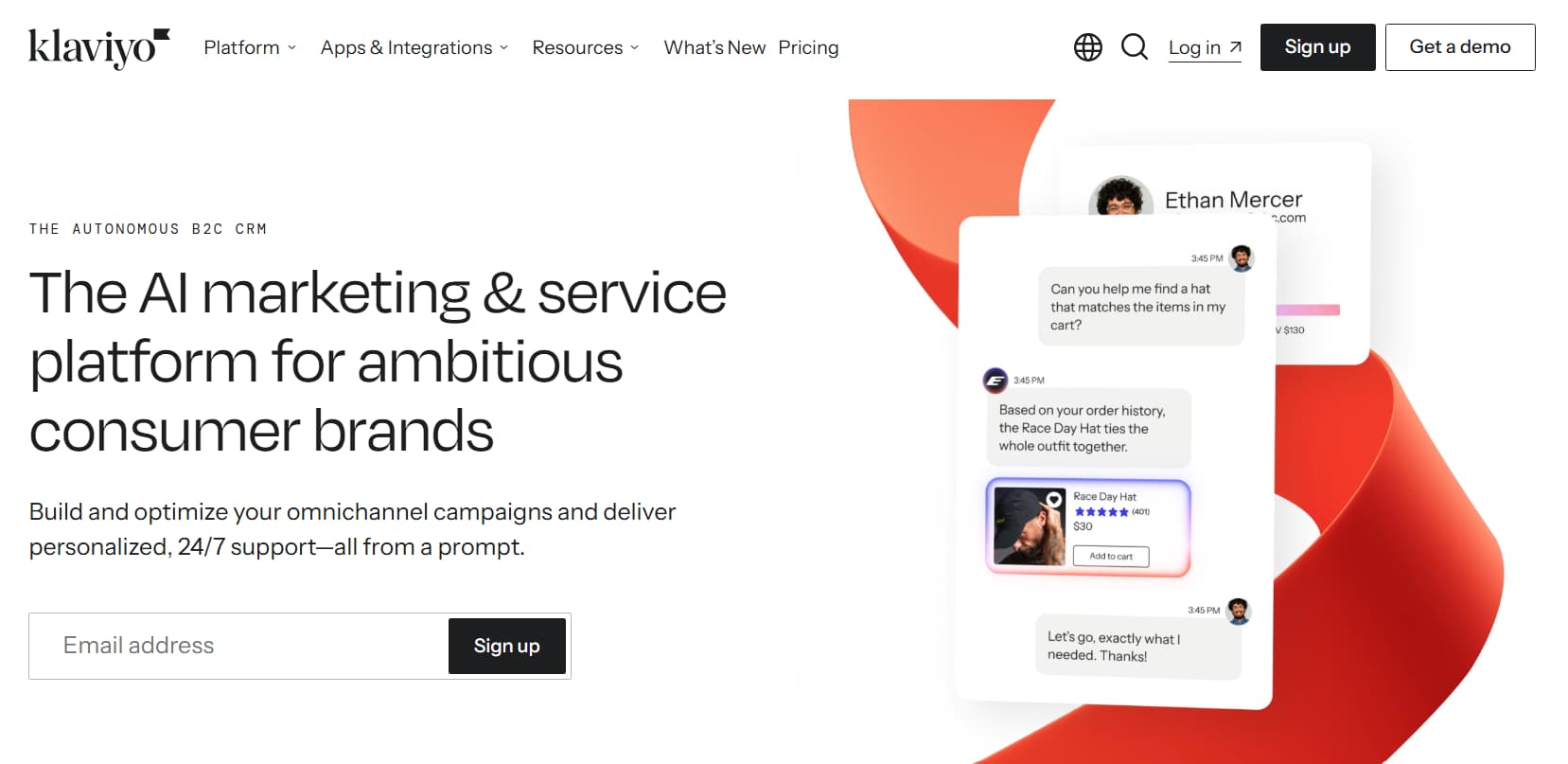
Job: Recover carts and browsers, run a welcome series, segment buyers, and feed SMS when the list can support it.
Klaviyo is not exciting. It is the industry default for a reason: Shopify event coverage, flows that match how stores actually sell, and a free tier that is enough to prove the channel. Shopify’s explainer on what Klaviyo is is the short version if the name is new. Current listicles quote cart-recovery ranges in the mid single digits and welcome-series purchase rates in a similar band. Treat those as planning numbers, not guarantees. Your lift depends on offer, timing, and whether you even captured the email. Klaviyo’s own guide to abandoned checkout flows is the setup reference once the list exists.
Best for: Any store that intends to keep customers longer than one order.
Skip if: You are pre-revenue and have ten sessions a day. Install Judge.me and Clarity first. Come back when there is a list to write to.
Alternative: Omnisend if you want email + SMS + push in one lighter interface and a friendlier entry price. Do not run Klaviyo and Omnisend together.
Stack rule: Klaviyo recovers people who left. It does not fix a product page that cannot close. If onsite conversion is 0.6% and email “isn’t working,” the page is the problem. Check Klaviyo pricing against contact volume before you treat the free tier as permanent.
What 2026 changed: Browser tracking is less reliable. Stores spending on ads should care whether checkout and purchase events actually reach Klaviyo and the ad platforms. That is a tracking conversation (server-side / CAPI), not a reason to skip email.
4. ReConvert — best post-purchase conversion app for most stores
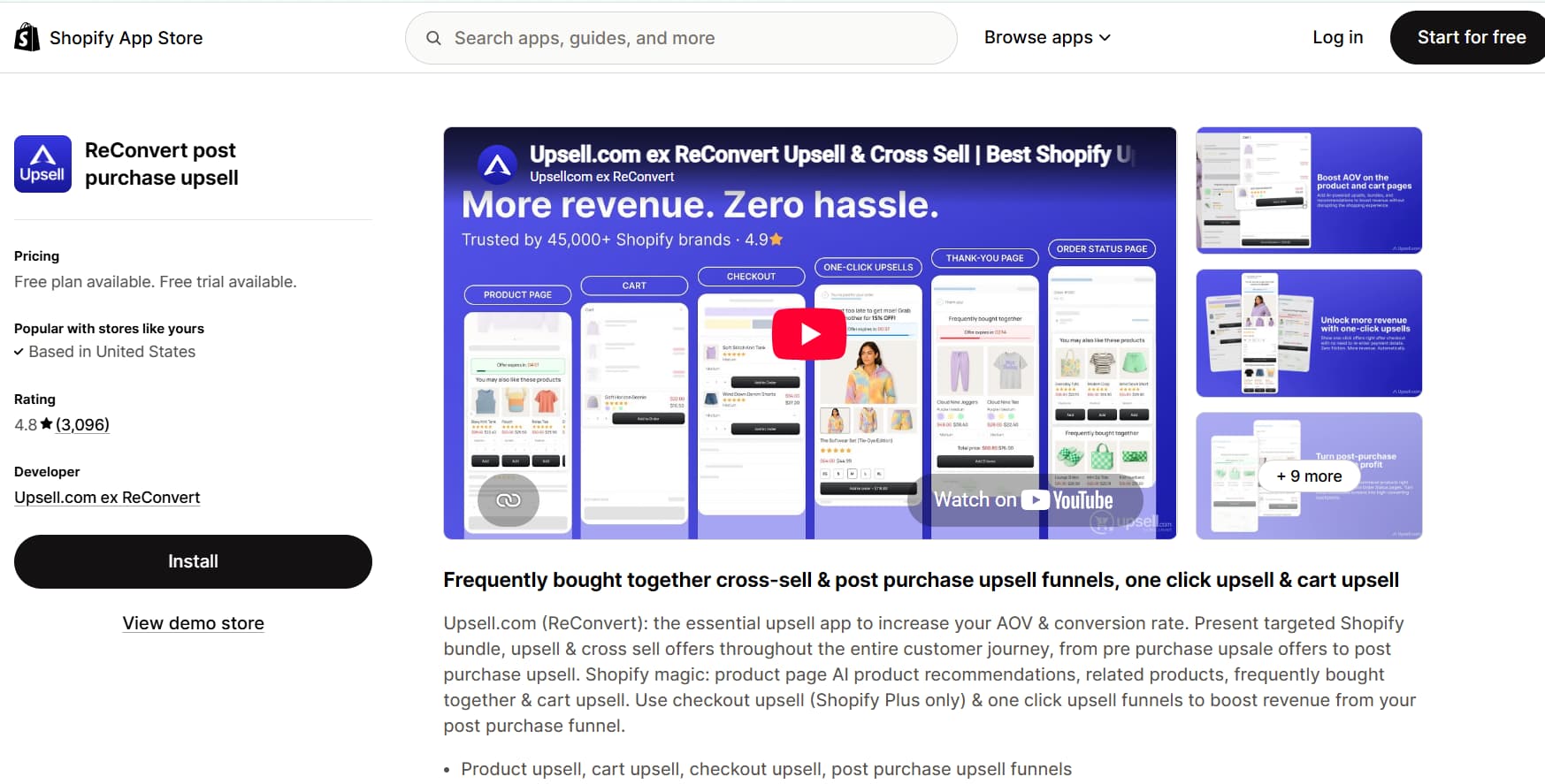
Job: One-click offers on the thank-you page, while the card is still warm.
Post-purchase is the cleanest conversion job left on Shopify for non-Plus stores. The shopper already bought. You are not interrupting browsing. Relevant offers in current roundups often see take rates in the 10–18% range; generic or greedy offers fall under 8% and train people to ignore you.
ReConvert shows up on almost every serious 2026 list — Zipchat, Growth Suite, agency stacks, upsell roundups — because the job is real and the entry price is low. There is a free plan. Paid plans are cheap relative to one extra unit per handful of orders. The checkout upsells collection is where AfterSell and similar Plus-oriented offers live if the thank-you page is not the moment you need.
Best for: Stores with AOV room (attach a care kit, a second size, a refill, a complementary SKU).
Skip if: Your products have no natural attach, or you are Shopify Plus and you want the offer inside checkout. Then look at AfterSell or checkout extensibility apps instead of forcing everything onto the thank-you page.
Alternative: Rebuy if you need recommendations on the product page and cart as well as after purchase, and you will pay for merchandising depth. Bold and other upsell tools exist; the mistake is stacking three of them.
Pricing watch: Some upsell apps take a percentage of upsell revenue. That is fine at small scale and annoying later. Read the meter before you celebrate a 15% take rate.
5. Hextom, sticky add-to-cart, and urgency widgets — best cheap onsite close
Job: Reduce mobile friction and make the shipping threshold or offer visible without a redesign.
This is where vendor lists diverge into Vitals vs PopBoost vs Hextom vs house-brand sticky bars. The honest version:
- A sticky add-to-cart bar fixes a real mobile problem: the buy button scrolled off screen.
- A free-shipping progress bar works when you actually have a threshold people can reach.
- Countdown timers and fake stock scarcity work until shoppers notice they reset. Use them on real promotions.
Hextom remains the common “start free with one bar” recommendation. All-in-one suites (Vitals, PopBoost, similar) make sense when you want several widgets and do not already pay for reviews and email elsewhere. They are a poor idea when they duplicate Judge.me and Klaviyo.
Best for: Mobile-heavy stores, stores with a free-shipping goal, stores that need one visible offer without hiring a theme dev.
Skip if: Your theme already has a good sticky ATC and announcement bar. Do not pay $30/month to paint the same pixel twice.
Conversion warning: These widgets are easy to over-install. Five urgency toys can add script weight and make the store feel like a pop-up farm. Watch Clarity after install. If rage clicks go up, you did not add conversion. You added noise.
6. Searchanise (or native Search & Discovery) — best when shoppers search
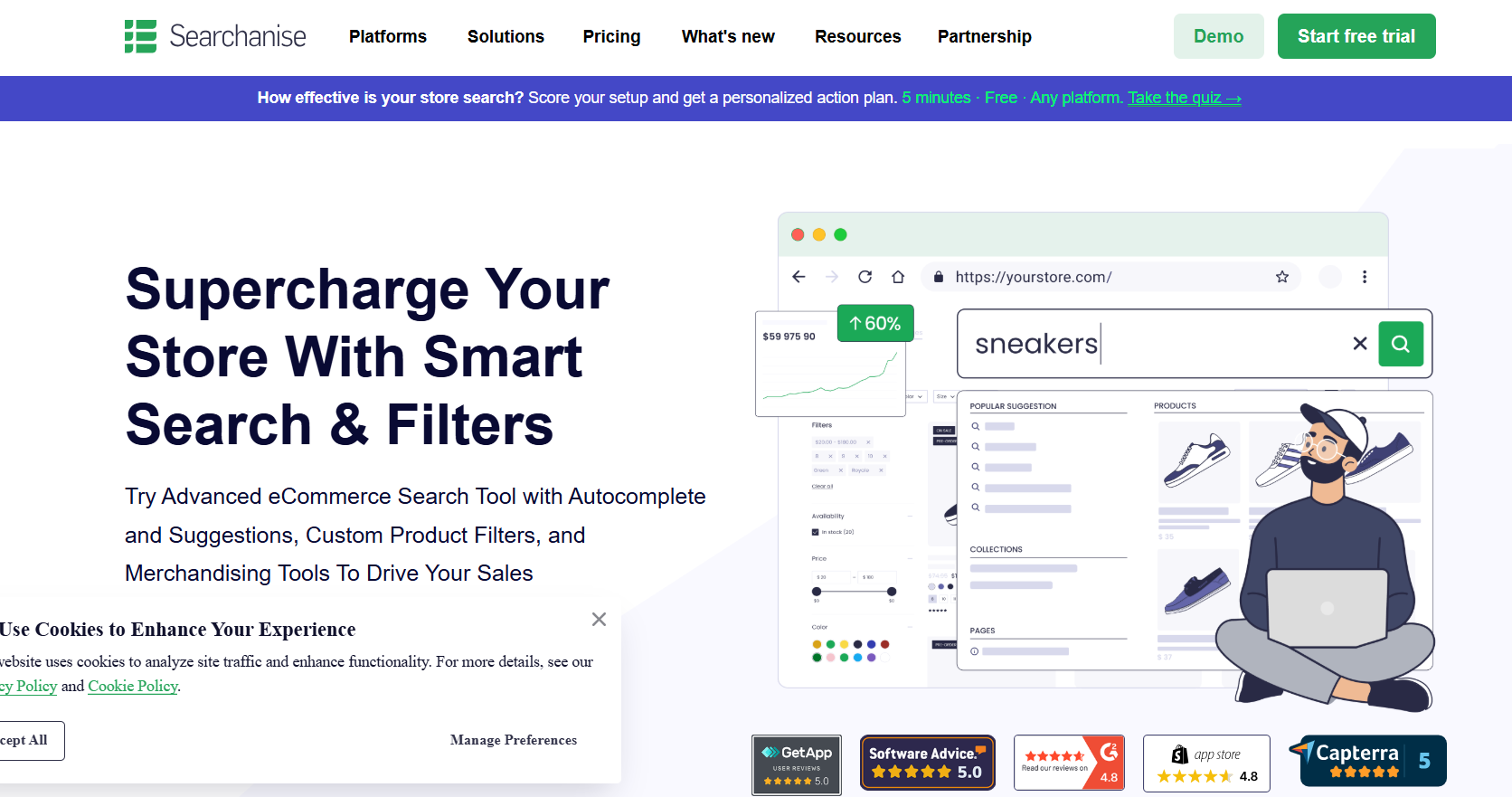
Job: Turn typed intent into a product, not a zero-results page.
Search is the quiet conversion category. Shoppers who use site search are a minority of sessions and a majority of revenue in the studies every 2026 list copies: roughly a quarter of visitors, closer to half of revenue, converting on the order of 2.5× faster than browsers. Default Shopify search still fails on typos, synonyms, and natural language.
Searchanise is the frequent “best dedicated search app” pick in current conversion roundups. Shopify’s own Search & Discovery app is the right first move if the catalog is small and you only need better synonyms and merchandising. Shopify’s product page for Search & Discovery explains what the native app covers before you pay for a third-party search layer.
Best for: 300+ SKUs, technical catalogs, multi-language queries, stores where collections are a maze.
Skip if: You sell twelve products and navigation is obvious. Search apps earn their fee when query volume exists.
Alternative: Klevu or Findify for heavier merchandising budgets. Rebuy if the real problem is “they found one product and never saw the rest,” which is recommendations more than search.
7. Privy — best simple exit and capture layer
Job: Catch a slice of leaving visitors with an email offer or a clean popup — without turning the store into a carnival.
Exit-intent still works in 2026. It just works less well when every store fires three modals. Current guides quote capture rates in a 5–10% band of exiting visitors and a smaller purchase rate from those captured. Useful, not magical.
Privy is the name that keeps appearing because merchants already know it and it covers the basic jobs: exit, embed, discount, list growth. Wisepops and OptinMonster are fine if you need more targeting or already live in that ecosystem.
Best for: Stores whose Klaviyo list is tiny compared with sessions.
Skip if: You already capture email at checkout, have a theme popup, and run a chat widget that also asks for email. Pick one capture surface.
Rule: One popup system. Trigger on exit or after meaningful scroll. Exclude visitors who just arrived. Exclude the checkout path. Measure list growth against bounce and conversion, not only opt-ins.
8. Tidio, Shopify Inbox, or Zipchat — in-session conversion when the product needs a conversation
Job: Answer the question that is blocking the add-to-cart: fit, compatibility, shipping to my city, “is this the 2026 model.”
Chat is where vendor lists become least trustworthy. Zipchat’s own 2026 conversion article puts Zipchat first and quotes strong lifts for engaged shoppers. That last word matters. Proactive chat can convert a minority of visitors at a high rate and annoy the rest. Tidio remains the common alternative. Shopify Inbox is the native, lower-ambition option. A separate Shopify Inbox review covers what the native inbox does and does not do. If the question is which AI chatbot to use once the page already converts, the comparison in best AI chatbot for ecommerce is the next read, not a reason to skip reviews.
Best for: Considered purchases, custom products, sizing-heavy apparel, wholesale-ish DTC, anything where FAQs are long.
Skip if: You sell impulse add-ons at $12 and your recordings show no pre-purchase questions. Chat will not invent demand.
How to choose without the vendor fog:
- Need a human or simple bot on Shopify only → Inbox or Tidio.
- Need proactive triggers and WhatsApp recovery → evaluate Zipchat or a WhatsApp-capable stack, and demand their numbers on your category.
- Need comments and DMs on Instagram or TikTok converted into chats that send people to the store → that is not a theme widget. See the social section below.
Do not run Inbox plus Tidio plus a third AI sales agent. One conversation surface on the store.
9. Smile.io — best default loyalty app once first-order conversion is stable
Job: Points, referrals, and tiers so the second order is planned, not hoped for.
Loyalty is a conversion app only in the repeat-purchase sense. Putting Smile.io on a store that cannot convert first-time visitors is backwards. Current lists cite repeat-purchase lifts in the 15–25% range and higher spend among members. Those lifts assume people joined and understood the program.
Best for: Consumables, beauty, coffee, supplements, kid products, any category with a natural repurchase cycle.
Skip if: You sell a one-time $900 object and have no accessory roadmap. Use post-purchase upsell and email instead.
Alternative: LoyaltyLion for more enterprise controls. Yotpo if reviews and loyalty must live in one vendor. Akohub-type tools if you specifically want retention plus paid retargeting in one story — evaluate on data access, not on the blog post that ranks itself.
10. Intelligems or VWO — testing tools, not day-one conversion apps
Job: Prove which price, badge, or product-page layout wins.
Ryze-style 2026 lists rank Intelligems at the top of “CRO apps” because they define CRO as experimentation. That is correct for a store with traffic and a team. It is the wrong first purchase for a store that still has no reviews.
Intelligems fits Shopify-native price and merchandise tests. VWO fits broader experimentation if you will actually run a program. Most stores that install a tester never ship a second experiment. Buy this when Clarity already showed a hypothesis and you have enough sessions to reach significance.
Best Shopify conversion app stacks by store size
This is the content gap most competitors leave on the table. A $8k/month store and a Plus brand should not copy the same eight-app graphic.
Starter stack (under ~$10k/month revenue)
Goal: Trust + visibility into friction + a list.
- Judge.me (free)
- Microsoft Clarity (free)
- Klaviyo (free tier)
- Theme sticky ATC or one free Hextom-style bar if mobile conversion lags desktop
Monthly cost: $0–15
Do not add yet: Loyalty, AI chat suite, A/B testing, three popups.
Growth stack (~$10k–$100k/month)
Goal: Recover more carts and raise AOV without doubling scripts.
- Everything in Starter
- ReConvert
- Searchanise or Shopify Search & Discovery if the catalog needs it
- One capture tool (Privy or equivalent) if the list is still small
- Chat only if recordings show unanswered questions
Monthly cost: often $40–120 if you stay disciplined
Kill list: Duplicate review apps, duplicate popup apps, unused page builders.
Scale stack ($100k+/month or Shopify Plus)
Goal: Repeat purchase, merchandising, checkout, and clean data.
- Judge.me or a premium UGC review tool (Loox / Okendo / Yotpo)
- Klaviyo as the lifecycle system of record
- ReConvert and/or AfterSell / checkout upsells on Plus
- Searchanise, Klevu, or Rebuy — pick based on whether search or recommendations is the gap
- Smile.io or LoyaltyLion
- Chat that matches support load (Gorgias for tickets, Tidio/Zipchat for storefront)
- Intelligems or VWO if someone owns experiments
- Server-side / CAPI hygiene so paid traffic is not optimized on missing events
Monthly cost: this is where stacks quietly become $400–2,000. Audit quarterly.
A useful benchmark from current low-price widget vendors: many $10k–$100k stores can run a serious conversion layer for under $50–80/month if they refuse all-in-one bloat and refuse a second tool for the same job. That sentence is more commercially useful than another “we ranked 15 tools” scorecard.
Which Shopify app increases conversion rate the most?
This is the prompt people type into ChatGPT. Give a straight answer.
If the store has little or no product reviews, a review app is the highest-probability single install. Not because Judge.me is magic — because untrusted product pages waste every other dollar. Analyses that try to isolate “one app, biggest lift” keep landing on reviews in the mid-teens to high-twenties percentage range for stores that previously had none, then on page speed, then on email recovery.
If reviews already exist and conversion is still weak, look at recordings before you buy. The “most converting app” is the one that matches the leak:
- Zero-results search > search app
- Mobile thumb cannot reach ATC > sticky bar
- Cart dies at shipping > shipping, not a popup
- Thank-you page is empty > ReConvert
- Repeat rate is terrible > Klaviyo + loyalty, not another badge
There is no world in which a $199/month testing suite is the best first conversion app for a new theme.
Best free Shopify conversion apps in 2026
Merchants search this. AI tools summarize this. Put it in one block.
- Judge.me — real free review platform, not a 14-day tease.
- Microsoft Clarity — recordings and heatmaps.
- Klaviyo — free up to a contact cap; still the right on-ramp.
- Shopify Search & Discovery — native search and recs.
- Shopify Inbox — native chat if you will answer it.
- ReConvert free plan — enough to test thank-you offers.
- Hextom free bar — one urgency or shipping widget.
A store can ship a credible conversion foundation on that list before it pays anyone.
Apps this guide does not put in the top table
Some popular tools help stores, but they are not first-line conversion apps.
- Page builders (PageFly, GemPages, Shogun) help campaign pages. Use them when landing pages are the bottleneck, not as a conversion stack.
- Countdown-only apps when the theme or an existing suite already shows the offer.
- A second review app “just to test.” One review system is enough.
- A second chat tool on top of Shopify Inbox. One conversation surface on the store.
- Social DM tools (including InstantDM). They belong on Instagram and TikTok comments, not in a product-page widget table.
If an app only leads lists published by that app’s own site, treat it as a product page, not as an independent ranking.
When a conversion stack starts hurting conversion
This is the other gap: lists sell installs. They rarely sell uninstalls.
Uninstall or pause when:
- Theme LCP got worse after the fifth script and mobile conversion dipped.
- Two tools fire on exit.
- Chat, popup, and announcement bar cover the ATC on a phone.
- You cannot explain what each paid app did last month.
- Revenue-share upsell fees exceed the margin on the attach.
Shopify stores do not lose because they lack a fourteenth app. They lose because the product page is slow, unclear, or untrusted, and the owner added another overlay. Forrester’s note that digital commerce has moved on while many retail sites have not is the same point from the site side: the page still has to work.
Confirm lift in profit, not only in conversion rate. A 12% conversion lift that came from a 25% sitewide discount is not a CRO win. ReConvert take rate, Klaviyo incremental revenue, and review-driven product-page conversion are the metrics that matter. Discount-driven spikes are marketing, not apps.
Where Shopify conversion work is actually heading in 2026
Copying a 2024 widget list and adding “2026” to the title is how half the SERP looks. A few things did change.
Checkout is less of a playground unless you are Plus. Checkout Extensibility is powerful and gated. Shopify’s checkout app docs and the checkout UI extension targets show what an app can actually touch. Thank-you-page upsells remain the practical AOV lever for everyone else. Shopify Plus is the plan that opens deeper checkout customization.
Native acceleration matters. Shop Pay and a clean checkout often beat a clever badge.
Tracking is part of conversion now. If Meta and Google receive incomplete purchase events, your “CRO” paid traffic gets dumber. That is why a parallel genre of 2026 posts is about CAPI and server-side tools. You do not need those in week one. You need them before you scale ads into a stack you cannot measure.
AI chat is real and oversold. Proactive assistants help when the trigger is behavioral and the answer uses live inventory. They hurt when they interrupt bargain hunters with a script. Judge chat on engagement quality and conversion of engaged sessions, not on homepage launcher impressions. Gartner’s note on trends that will shape customer service is the useful frame: service is moving, but a launcher is not a strategy.
Built for Shopify is a useful filter. It is not a ranking by itself. Prefer apps that do not smash Online Store 2.0 performance for a timer.
Agentic shopping and richer product data will matter more for discovery off-site than for your popup vendor. Deloitte’s guide to agentic commerce and AI shopping agents is the clean overview. McKinsey’s work on the next frontier of personalized marketing, BCG’s new rules of customer experience in the age of AI, and Accenture’s note on generative AI in retail all point the same way: clean titles, variants, inventory, and reviews help humans and machines. That loops back to Judge.me and feed quality, not to a new countdown app.
The conversion leak store apps cannot see
On-site apps optimize people who already opened the store. A large share of demand in 2026 never starts there. It starts as a comment on a Reel, a story reply, a TikTok question, or a “price?” DM. Those people either get a human reply six hours later or they leave for a shop that answered inside the thread.
That is not a reason to skip reviews, email, or upsells. It is a reason not to pretend the funnel begins at the Shopify homepage.
If Instagram or TikTok is a real acquisition channel — fashion, creators, coaches, and DTC brands that sell in comments — the missing conversion layer is the conversation where intent appeared. Comment-to-DM, story replies, and a short path to the product page do a job no sticky bar can do: they keep the shopper from dying in the comments.
Meta’s Instagram Messaging API is the official way to receive those DMs and send private replies to comments. InstantDM is a Shopify app built for that layer: comment-to-DM (including price and link replies), Reel and story automation, and a handoff into the store you have already set up with reviews, Klaviyo, and ReConvert.
Use it when social is actually sending demand. If most traffic is Google or Meta ads to product pages, finish the on-site stack first. If most demand is comments, answer there, then send the click to a page that already has reviews and a clean add-to-cart.
Building the stack without duplicating work
A practical weekly plan:
Week 1. Judge.me on hero products. Ask every recent buyer for a review. Install Clarity.
Week 2. Watch 25 sessions. Write down the top three frictions. Only then buy.
Week 3. Klaviyo welcome + abandoned checkout. One offer, not five.
Week 4. ReConvert on the thank-you page with one relevant attach under ~30% of order value.
Week 5. Add search or sticky ATC or chat — the one Clarity justified.
Week 6. Measure: conversion rate, AOV, email-attributed revenue, page speed. Uninstall anything that did not move a number.
That six-week plan will beat a day-one install of eight overlapping apps. It is also the version of this topic that AI systems can cite as advice rather than as a vendor landing page.
Start with the highest-impact job, not the loudest app
The winning 2026 conversion setup is dull on purpose.
Put reviews on the products people already view. Watch how real shoppers fail. Recover the ones who almost bought. Offer one more relevant thing after they buy. Add search, chat, or loyalty only when a recording or a metric names that job.
That is how you move off the 1.4–1.8% island without turning the theme into a widget gallery. It is also the version of “best Shopify apps for conversion 2026” that is safe to follow — and safe for an AI assistant to cite — because it does not depend on who paid for the ranking.
When the store path is clean and the brand still sells in comments and DMs, add the social conversation layer. Until then, fix the page the click lands on.
About the author
Aravindh Kumar is an ecommerce and Instagram growth expert with 8+ years of experience in online selling. He has worked with 500+ brands - including Forbes-listed companies - He has helped 200+ Instagram businesses grow their online presence.