
Faceless Instagram automation is the system behind pages that never show a human: an AI-generated character or theme page, a content pipeline that produces daily reels without a camera, a scheduler pushing them to every platform, comment-to-DM automation converting "link?" comments into sales, and a digital product at the end. In 2026 every layer of that stack is a real, working tool. This guide walks the five layers in order, prices the whole thing across multiple pages, and examines the most famous case, the AI monk with 2.5 million followers, using what's independently verified rather than what its creator claims.
One thing this article will not do is promise you income. The loudest revenue numbers in this niche come from people selling courses about the method. We'll show you the machine; what it produces depends on your niche, your content, and your consistency.
Key takeaways
- Faceless pages run on a five-layer stack: character, content, distribution, conversion, monetization. Most guides cover the first two and skip the layers where money actually changes hands.
- The Yang Mun AI monk is real: roughly 2.5M Instagram followers, independently reported. Its revenue figures are self-reported by a creator who sells the method. Both facts matter.
- On a faceless page, the comment section is the entire sales conversation. The conversion layer (comment-to-DM) is the most under-covered and highest-leverage part of the stack.
- Multi-page costs compound by pricing model: contact-metered DM tools and per-account schedulers punish exactly the scaling this genre promises. Flat-rate tools change the math.
- AI agents are starting to operate the stack directly, through MCP servers and APIs, not just generate the content inside it.
Who is this guide for?
- Theme-page and quote-page operators who already post daily and want the conversion and scaling layers everyone skips.
- Creators considering an AI character who want the honest version of the playbook, including the labeling and ethics parts.
- Builders and agencies running (or planning) a portfolio of faceless pages, where tool pricing per account decides margins.
Did an AI monk really make $500K? What is verified, and what is not
In October 2025, an account called Yang Mun started posting: an AI-generated Buddhist monk in orange robes delivering short life advice. Within months it was one of the most discussed accounts on the platform. The growth is not folklore. Columbia News Service reported roughly 2.5 million Instagram followers by March 2026, VirtualHumans.org documented 400M+ organic views, and HeyGen published a customer story on the account. The EBU counted the wider network at nearly 5 million followers across two Instagram accounts and a Facebook page.
The money is a different kind of claim. The creator, Shalev Hani, says the character made $500K in six months, in a widely shared X post (280K views) laying out his five-step system. He also sells a course teaching that system, charges by the hour to explain it, and declined interviews with the journalists who covered him. So: follower counts, independently verified; revenue, self-reported marketing. Hold both at once.
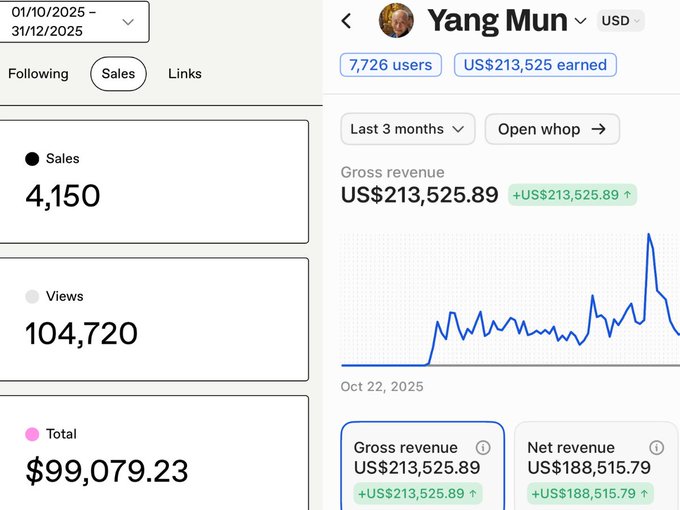
The playbook in his post is worth studying anyway, because the mechanics are observable in the account itself: a character that looks nothing like the rest of the feed and carries built-in authority ("if your character could blend into a crowd, pick again"), a two-mode script formula (empathize, then hand over one usable idea), one consistent AI voice forever, three posts a day uploaded natively to four platforms, and digital products as the only revenue stream. And one more detail from the coverage that most retellings skip: Buddhist scholars called the project exploitative, and the EBU found AI labels applied inconsistently while a website claimed the monk was real. The playbook works; the trust debt is real. We'll come back to that in the compliance section.
What does a faceless Instagram automation stack look like?
| Layer | Job | Tools commonly used (July 2026) |
|---|---|---|
| 1. Character | A face (or aesthetic) that stops the scroll and carries authority | Nano Banana (Google's Gemini image models), Midjourney, ComfyUI |
| 2. Content | Daily short videos: script, voice, lip-synced delivery | Claude/ChatGPT for scripts, ElevenLabs for voice, HeyGen or Kling for video |
| 3. Distribution | Publishing at volume, natively, on every platform | Social by IDM, Buffer, Metricool; n8n/Make for custom pipelines |
| 4. Conversion | Turning "link?" comments into DMs, emails, and clicks | InstantDM, ManyChat |
| 5. Monetization | The offer: digital products, affiliate links, subscriptions | Checkout links and lead magnets delivered in the DM |
Most ranking guides cover layers 1–2 in depth, wave at layer 3, and skip 4–5 almost entirely. The money lives in the layers nobody writes about, so that's where this guide spends its depth.
Layer 1: what makes a faceless character work?
The faceless genre splits into two families. Theme pages (quotes, niches, curated b-roll) need an aesthetic, not a face. AI characters need both a face and a reason to be trusted. The Yang Mun formula for the second family is simple and observable: visually distinct from everything else in the feed, plus borrowed authority: a monk for mindset content, where the robes do the credibility work a stranger in a t-shirt can't.
The tools here are the mature part of the stack. Google's Nano Banana (the Gemini image model family — yes, that's really the name) and Midjourney generate the character; ComfyUI pipelines keep the same face consistent across hundreds of images. Consistency is the actual skill: same face, same wardrobe, same voice, every post. Audiences forgive a synthetic character; they don't forgive an inconsistent one.
One decision to make on day one, because it's hard to reverse: is the character openly synthetic, or pretending to be human? The Yang Mun coverage shows how the second path ends — investigations, scholars calling it a lie, and a labeling mess. The durable version of this business is an openly AI character with a real message. More in the compliance section below.
Layer 2: what content formula do faceless pages use?
Shalev's script structure, from his own post, is a compact version of what most successful short-form advice content does: open with empathy, not judgment ("If you're going to overthink… then overthink the positive", which he credits with 24M views); or open with a specific solution to a 2am problem ("How to fall asleep fast in two minutes"). Then teach exactly one thing. Then close by tying it to identity. Two seconds of empathy, three seconds of promise, twenty to forty seconds of substance, three seconds of who-you-become.
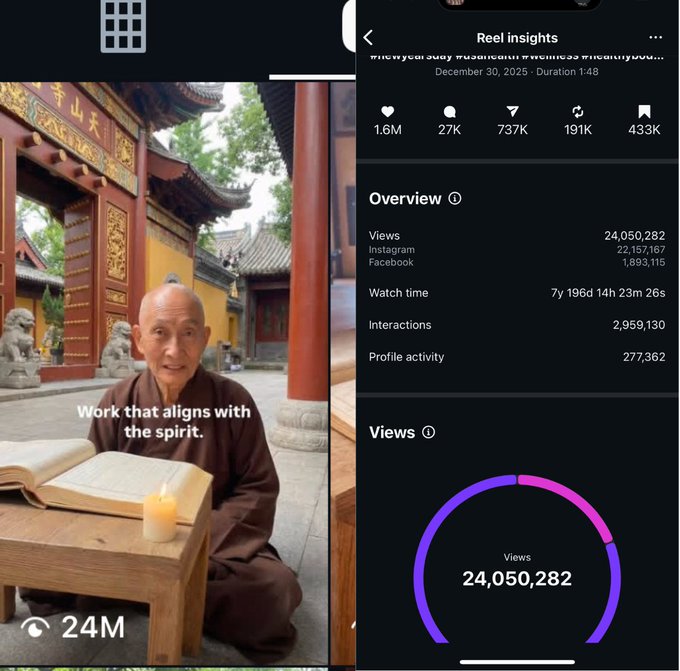
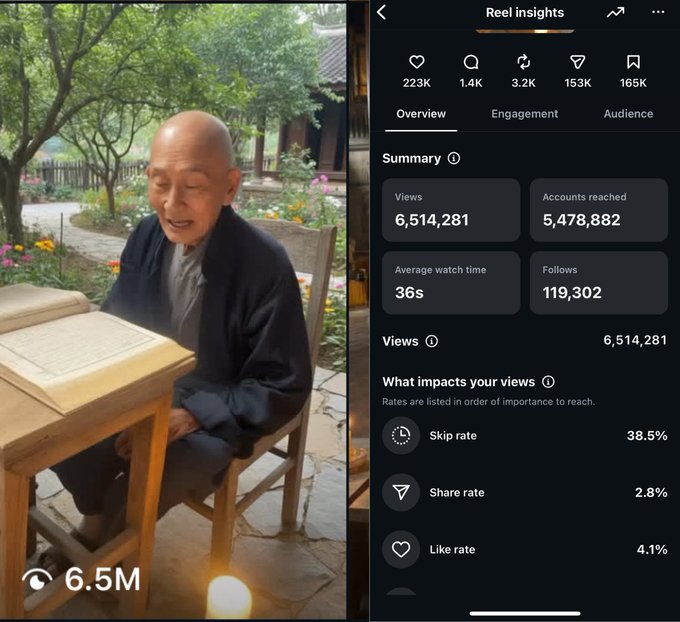
The production pipeline: a language model drafts scripts in the character's voice, ElevenLabs renders the same voice every time, and HeyGen or Kling produces the lip-synced video. The per-video marginal cost is minutes, which is exactly what makes the next layer's math possible. It's also why the voice rule matters so much: changing voices between videos is the fastest way to break the one asset a faceless page has, the feeling that this is a someone.
Layer 3: how do you post three times a day across four platforms?
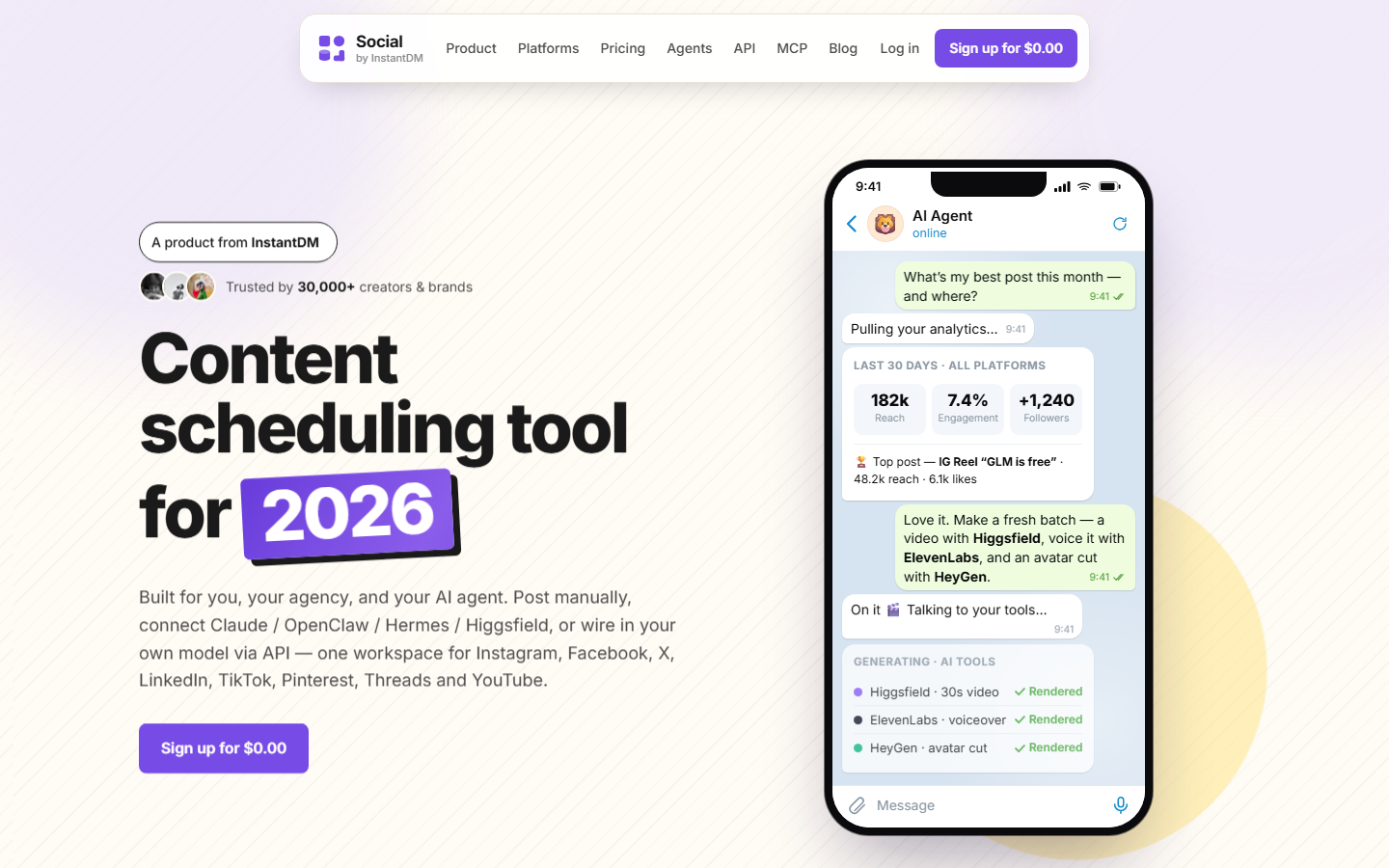
The claimed cadence in the Yang Mun playbook is three posts per day, per character, uploaded natively to TikTok, Instagram Reels, YouTube Shorts, and Facebook Reels. Whether or not you match that number, do the arithmetic on the genre's core promise — multiple pages: three characters at that cadence is over 250 uploads a month across 12 platform destinations. Nobody does that by hand. This is a scheduling problem first and a content problem second.
A Reddit thread from January 2026 captures the operator mindset better than any guide: a creator described treating his faceless pages "like a CI/CD pipeline", and the top reply agreed: "Most people get stuck in the 'content creator mindset' when they should be thinking like a sysadmin."
Tooling for the sysadmin mindset, briefly (our full social media management tools comparison covers this in depth): Social by IDM, built by InstantDM, is the fit-for-purpose option for portfolios. Its $19/month plan covers 15 pooled connected accounts with unlimited scheduled posts and unlimited team members, across all 8 platforms this genre uses (socialbyidm.com/pricing, July 2026). Buffer works per channel ($5–6/channel/month) and gets expensive exactly as your platform count grows. Metricool prices per brand and includes analytics. Custom builders wire n8n or Make pipelines, and a public n8n community workflow already demonstrates an agent generating and posting AI-influencer content end to end.

That n8n thread points at where this layer is going: the scheduler operated by the agent, not just the human. Social by IDM ships an MCP server and REST API on every plan, which means a Claude-based agent can draft captions, schedule the day's posts, and pull yesterday's analytics without anyone opening a dashboard. For a stack whose content is already machine-generated, machine-operated distribution is the obvious next step. The human stays on taste and strategy.
Layer 4: how do faceless pages turn comments into sales?
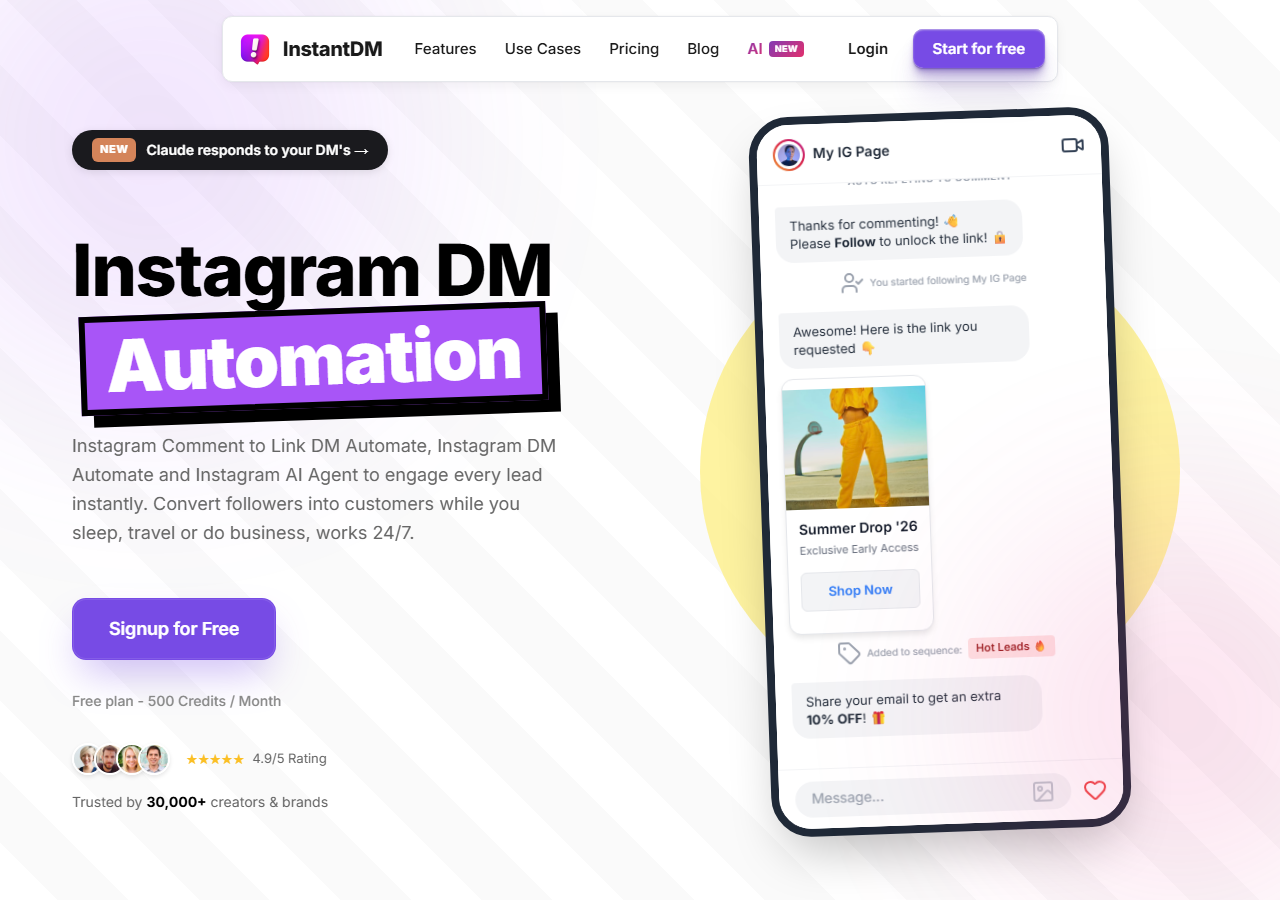
Here's the part the popular guides get wrong, and it's worth being direct about. The top-ranking faceless guides tell you to send everyone to a link in bio, and one explicitly warns against DMs as a channel. That advice misses what's structurally different about a faceless page: there is no person on camera building rapport, so the comment section is the entire sales conversation. When a reel goes viral and pulls three hundred "link?" comments, a bio link asks each of those people to leave the post, visit your profile, and navigate a menu. Most won't. Reply four hours later by hand and the moment is gone entirely.
Comment-to-DM automation closes that gap: someone comments the keyword, the tool replies publicly (which feeds the algorithm another engagement signal) and sends the link in a DM within seconds. The fair half of the anti-DM argument is that you shouldn't build your business on a channel Instagram controls — which is true, and it's why the modern flow captures the email inside the DM: comment → DM with the resource → one-tap email capture → your list. The DM isn't the destination; it's the bridge to owning the relationship. Setup mechanics are in our comment-to-DM guide and DM templates.
Keep your account safe: automated DMs may only go to people who acted first — a comment, story reply, or message. That's Meta's rule for the official API (Instagram platform documentation), and it's the line between automation that scales and automation that gets a page restricted. Cold mass-DM tools are how faceless portfolios die.
What does the DM layer cost across multiple pages?
The default tool here is ManyChat, and the faceless community's complaint about it is consistent and public: "Manychat feels very expensive if I want to handle more than 2500 comments a month," as one r/InstagramMarketing thread put it — with a reply noting it "was never really built to manage actual comment sections at scale." The structural issue is contact metering: ManyChat's Pro plan runs $29/month for 2,500 contacts, with the Business plan at $69/month for 7,500 — and costs climb with every contact past your tier. Our ManyChat pricing breakdown walks the full math, hidden fees included. A viral reel on a faceless page is precisely the event that floods the meter, and every additional page carries its own meter.
Computed at July 2026 list prices for a three-page portfolio with real engagement:
| DM tool | Pricing model | 3 pages, quiet month | 3 pages, one viral reel each |
|---|---|---|---|
| InstantDM | $9.99/month per account, flat — no per-contact billing | ~$30 | ~$30 (sends paced at 750 DMs/hour) |
| ManyChat | $29/month per account incl. 2,500 contacts, then tier jumps ($69 for 7,500) | ~$87 | $120–200+ as each page's contacts climb tiers |
InstantDM's fit for this audience is specific: flat pricing that ignores viral months, keyword triggers with comment replies and in-DM email capture, AI comment replies that can be tuned to the character's voice, and an always-on safety suite (DM Queue, Super Slow Mode, Rate Limit Controller, Flood Control) for exactly the engagement spikes faceless pages chase. There's a free plan (500 automations/month) plus a 7-day full trial to test it on one page. Where ManyChat stays the right call: flows spanning WhatsApp, Messenger, SMS, and email — channels most faceless operators never touch. Our ManyChat alternatives comparison has the full field.
Layer 5: how do faceless pages actually make money?
The practitioner consensus is unusually aligned here. Shalev's playbook is digital products only ("Content builds trust. Product delivers the solution."), and the Reddit record matches: in a thread asking whether faceless pages actually earn, the top answers were digital products ("I have one that I make $197 each time it's purchased") and affiliate offers (a weight-loss page owner in another thread reports Canva-made reels promoting a high-commission supplement). Guides, toolkits, templates: things a character can teach, deliver instantly, and never ship.

The delivery mechanics are where layers 4 and 5 fuse: the comment keyword triggers the DM, the DM delivers a checkout link or the lead magnet, and the email capture happens in the same thread. For product-delivery flows see automated PDF delivery via DM and selling digital products on autopilot.
Results disclaimer, and it matters double in this niche: the numbers above are individual reports from specific accounts and time periods, not typical outcomes. Nothing here is promised or guaranteed. And be appropriately skeptical of anyone whose income proof doubles as an ad for their course.
What does it cost to run multiple faceless pages?
The genre's pitch is "no face means you can run five of these." True — and no ranking guide prices it. Here's the per-page, per-layer cost structure at July 2026 list prices, so the decision is arithmetic instead of vibes:
| Layer | How cost scales per added page | The trap |
|---|---|---|
| Content generation | Mostly flat (same AI subscriptions serve all pages) | Voice/character consistency work grows per character |
| Scheduling | Pooled-account tools stay flat (Social by IDM: 15 accounts on one $19 plan); per-channel tools grow linearly | Per-channel pricing × 4 platforms × N pages compounds fastest |
| DM conversion | Flat-rate: ~$10 per page. Contact-metered: ~$39+ per page, spiking with engagement | Metered tools charge most in your best months |
| Your attention | Grows with every page, automation or not | Quality control and community replies don't automate cleanly |
Practical notes: Instagram's app supports up to five linked accounts per device, and our multiple-accounts guide covers the operational setup. The honest scaling rule from operators who've done it: don't add page two until page one runs a full month on its systems without you firefighting.
Is faceless Instagram automation compliant? Rules, labels, and the trust debt
- Automation rules: official-API tools only; DMs only to people who acted first; respect rate limits. Our compliance guide covers the full rulebook.
- AI labeling: Meta labels synthetic content, and platform leadership has been explicit about the direction: Instagram head Adam Mosseri's year-end memo described an era of "infinite synthetic content" where fingerprinting real media becomes more practical than flagging fake (Engadget, Dec 2025). Build assuming your content will be identifiable as AI, because it will be.
- The Yang Mun lesson: the EBU documented SynthID watermarks alongside inconsistent AI labels and a site claiming the character was real. That's the boundary between a creative format and a deception story with your name in it. Openly synthetic wins long-term.
- Money disclosures: affiliate links and sponsorships on a faceless page carry the same FTC disclosure obligations as anywhere else. A character can say "this is an affiliate link" as easily as a human.
Does this actually work? The honest reality check
Three things every faceless-automation pitch leaves out. First, the survivorship math: you hear about the monk with 2.5M followers, not the thousands of theme pages that plateaued at 400. Second, the incentive structure: nearly every big income claim in this niche is made by someone selling the method, including the biggest one. Third, the work doesn't disappear; it changes shape, from filming to system-tending and the conversations automation can't have. The Reddit operator had it right: this is a sysadmin job wearing a creator costume. Build it like one, price the stack like one, and let the results be whatever your niche and consistency earn.
The verdict
Faceless Instagram automation in 2026 is a real, assembled stack: Nano Banana or Midjourney for the character, ElevenLabs and HeyGen for the content, a pooled-account scheduler for distribution at volume, comment-to-DM automation as the conversion layer the popular guides skip, and digital products at the end. Start with one page. Wire the conversion layer before you chase virality, because reach without delivery is vanity metrics. Price the stack flat where you can; scheduling and DMs are the two layers where metered pricing punishes success. And keep the character honest about being synthetic; the account you don't lose is worth more than the illusion.
Sources and disclaimer
The Yang Mun case:
- Columbia News Service — "Millions found comfort in a Buddhist monk. But he was never real." (March 2026)
- EBU Spotlight — investigation of the Yang Mun account and its AI labeling (January 2026)
- VirtualHumans.org — "Who is Yang Mun?" (January 2026)
- HeyGen — Yang Mun customer story
- Shalev (@shalevhvs) on X — the playbook post (April 2026; all revenue figures are the creator's own claims and are unverified)
Community threads quoted:
- r/Entrepreneur — "I treated my faceless Instagram pages like a CI/CD pipeline" (January 2026)
- r/InstagramMarketing — "Tools to automate comments & DMs other than Manychat?" (March 2026)
- r/InstagramMarketing — "Do you actually make money from faceless pages" (May 2024)
- r/InstagramMarketing — "Any Faceless Instagramers in here?" (June 2024)
- n8n community — AI Instagram influencer automation workflow (July 2025)
Tools, platform, and pricing:
- Google — Nano Banana (Gemini image models)
- CNBC — ElevenLabs at $11B valuation (February 2026)
- Kuaishou — Kling 3.0 launch (February 2026)
- Engadget — Adam Mosseri's year-end memo on synthetic content (December 2025)
- Meta — Instagram platform documentation (automation and messaging rules)
- Vendor pricing as of July 2026: socialbyidm.com/pricing, instantdm.com/pricing; ManyChat figures per our ManyChat pricing breakdown (July 2026)
Results shown anywhere in this article are from specific accounts and time periods and are not typical, promised, or guaranteed.
ManyChat, HeyGen, ElevenLabs, Midjourney, Kling, Buffer, Metricool, and all other product names are trademarks of their respective owners. Social by IDM is a product of InstantDM. Screenshots were current when captured (July 2026).