

Digital product sales remain the most scalable business model in the modern knowledge economy. Core economics are unbeatable: create an asset once (a specialised notion workspace, a Figma UI library, an industry standard operating procedure (SOP), an ebook, an end-to-end masterclass, etc.) and sell it tens of thousands of times over.
No supply chain bottlenecks. No physical inventory to store. No shipping carrier fees. And virtually zero unit manufacturing costs. Every new transaction is basically just pure margin.
However, even with these benefits, the vast majority of creators do not earn significant income. It almost always comes down to platform mismatch and conversion friction. The problem rarely is the product quality.
Picking the wrong infrastructure can bleed your margins silently via high percentage take-rates or kill your conversions via clunky, multi-step mobile checkout pages.
This guide breaks down the entire platform landscape, the exact math of platform fee breakevens, and the modern distribution methods of leading digital earners to turn social attention into direct revenue.
Platform Executive Summary
- Gumroad: The frictionless launching pad for newbies. Free to start, 5 minute setup, no website required, 10% flat fee on each sale.
- Stan Store: The best option for Instagram and TikTok creators. Designed as a sleek mobile-native link-in-bio checkout that converts in 2 taps for $29/mo with 0% platform take-rates.
- Payhip: The best free alternative to Gumroad. Has a fully customisable shopfront builder, PDF security stamping and takes only a 5% cut.
- Sellfy: The best hybrid engine for creators who want to sell digital files with print-on-demand merchandise without handling physical inventory ($22/mo, 0% platform fee).
- Shopify: The industry standard for full scale e-commerce brands managing large catalogues, deep team permissions and complex app integrations ($39/month).
- Lemon Squeezy: A complete Merchant of Record for SaaS, scripts, and software assets for developers, to handle global VAT/tax compliance ($0/mo, 5% + $0.50).
- ThriveCart: The direct response marketers dream. High converting sales funnels, dynamic order bumps and 1-click upsells ($495 one-time lifetime license).
- Teachable: The leading platform for building structured video courses, cohort learning paths, graded quizzes and automated completion certificates ($0-$39+/mo).
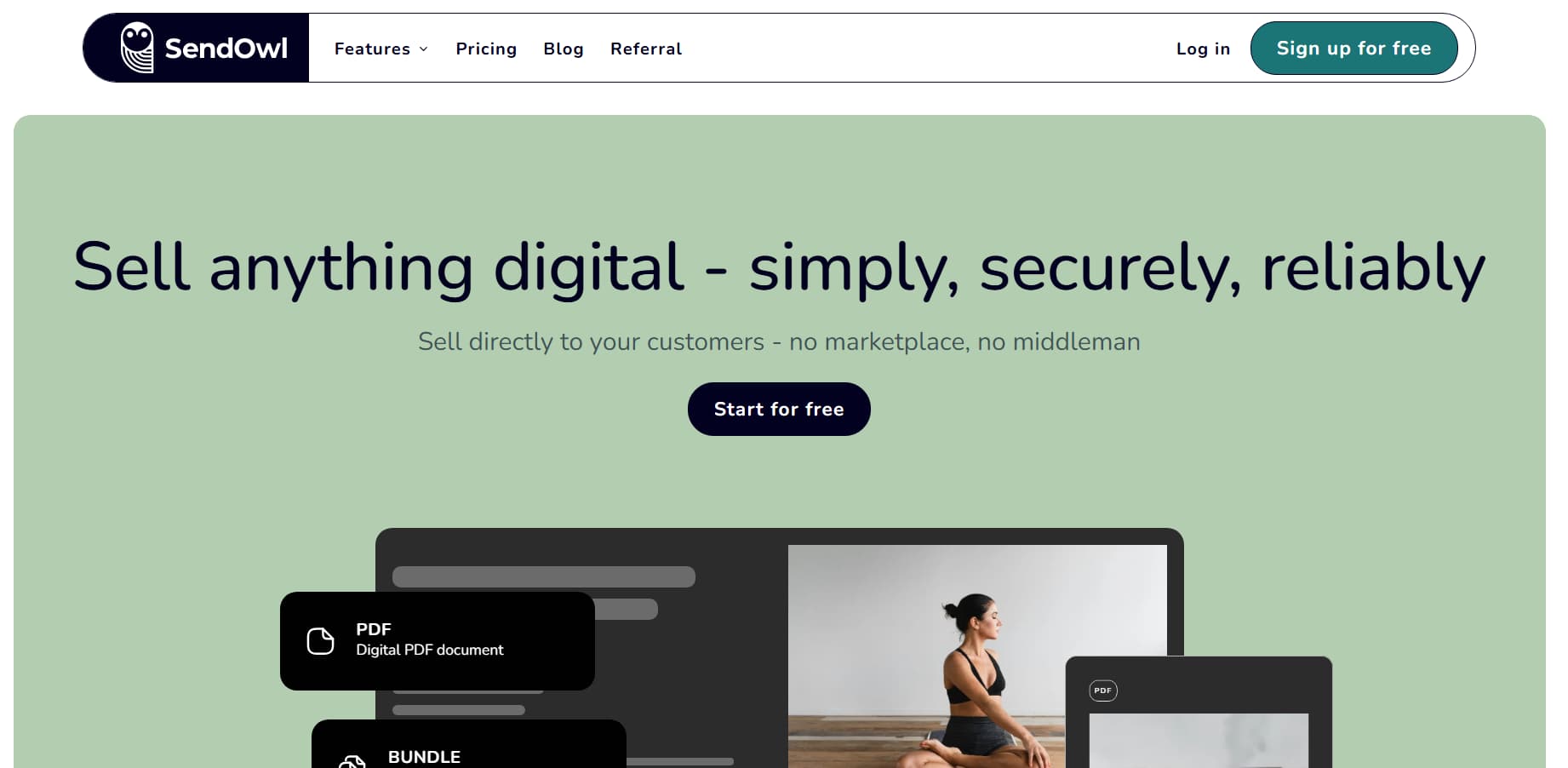
- SendOwl: Headless checkout & digital delivery engine you can plug directly into any existing website or custom CMS ($9/mo).
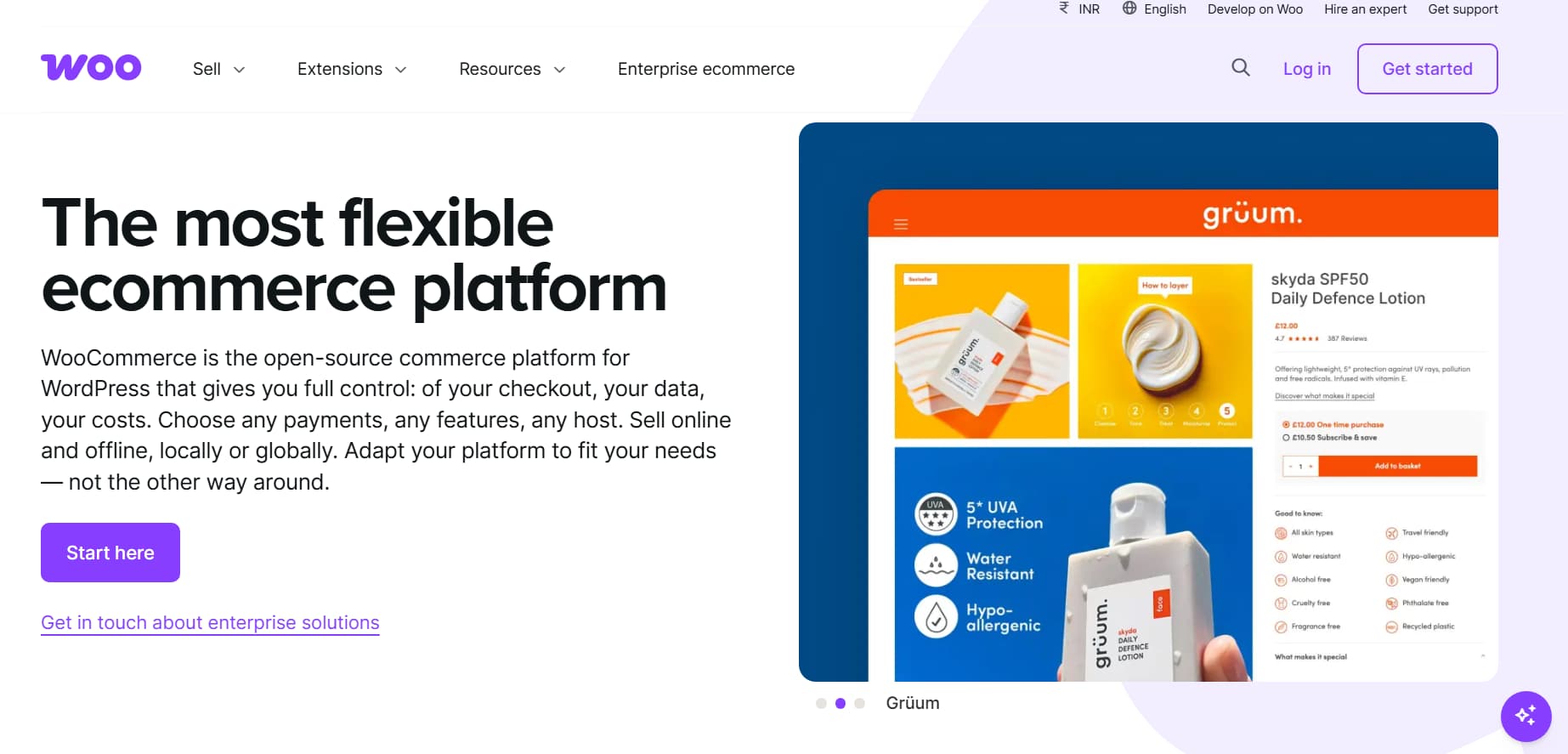
- WooCommerce: The open source behemoth for WordPress creators who want 100% data ownership, unlimited customisation, and no middle man fees ($0 software + hosting).
In Depth Platforms Comparison Matrix
Platform | Monthly Base Fee | Platform Transaction Fee | Free Plan Availability | Main Purpose |
Gumroad | $0 | 10% flat + gateway | Yes | Fast, risk-free MVP validation |
Stan Store | $29/mo | 0% (Stripe rates apply) | 14-day trial | Social bio links + 1-tap checkout |
Payhip | $0 | 5% flat + gateway | Yes | Fully branded shopfront on a budget |
Sellfy | $22/mo | 0% (Gateway only) | 14-day trial | Digital files + print on demand merch |
Shopify | $39/month | 2.9% + $0.30 | Paid trial | Large catalogues and multi-channel brands |
Lemon Squeezy | $0 | 5% + $0.50 | Yes | Software/SaaS & global tax compliance |
ThriveCart | $495 Lifetime | 0% (Gateway only) | Paid Lifetime | High converting multi-step funnels |
Teachable | $0-$39+/mo | 5%–10% (0% on Pro) | Yes (1 product) | Structured video courses and coaching |
SendOwl | $9/mo | 0% (Gateway only) | 30-day trial | Deliver files from pre-existing website |
WooCommerce | $0 + hosting | 0% (Gateway only) | Yes (Self-hosted) | Full open-source WordPress control |
The Platform Fee Breakeven Equation: Percentage or Flat Rate
It's easy to pick the math milestone: a percentage-based platform (like Gumroad or Payhip) vs. a flat monthly subscription (like Stan Store, Sellfy or Shopify).
If you don’t have an audience, a percentage based model is perfect. You have no monthly overhead. But once your sales start to climb, a 10% platform cut quickly becomes your largest operating expense.
Real-World Cost Analysis
Let's see what the numbers look like on a $30 digital product:
Monthly Units Sold | Monthly Gross Revenue | Gumroad Cut (10%) | Payhip Free Cut (5%) | Flat Subscription (Stan Store $29/mo) | Flat Subscription (Sellfy $22/mo) |
10 sales | $300 | $30.00 | $15.00 | $29.00 | $22.00 |
25 sales | $750 | $75.00 | $37.50 | $29.00 | $22.00 |
50 sales | $1,500 | $150.00 | $75.00 | $29.00 | $22.00 |
100 sales | $3,000 | $300.00 | $150.00 | $29.00 | $22.00 |
250 sales | $7,500 | $750.00 | $375.00 | $29.00 | $22.00 |
500 sales | $15,000 | $1,500.00 | $750.00 | $29.00 | $22.00 |
The Point of No Return
- Vs Gumroad (10%): A flat-rate tool of $29/mo pays for itself the moment you hit $290 per month in revenue. Gumroad charges an additional $121 every 30 days instead of a flat subscription for $1,500/month and up. If you make more than $5,000 a month, you're literally spending hundreds of dollars a month for basic checkout functionality.
- Payhip Free (5%): $29/mo tool makes break even at $580/mo in sales.
Golden Rule of Platform Scaling: Test your product idea on a free-tier percentage platform. As soon as you are consistently selling over $500 a month, switch your checkout to a flat-rate infrastructure immediately to protect your profit margins.
Deep Dive: Analysing the Top 10 Platforms
1. Gumroad – The Effortless MVP Launcher
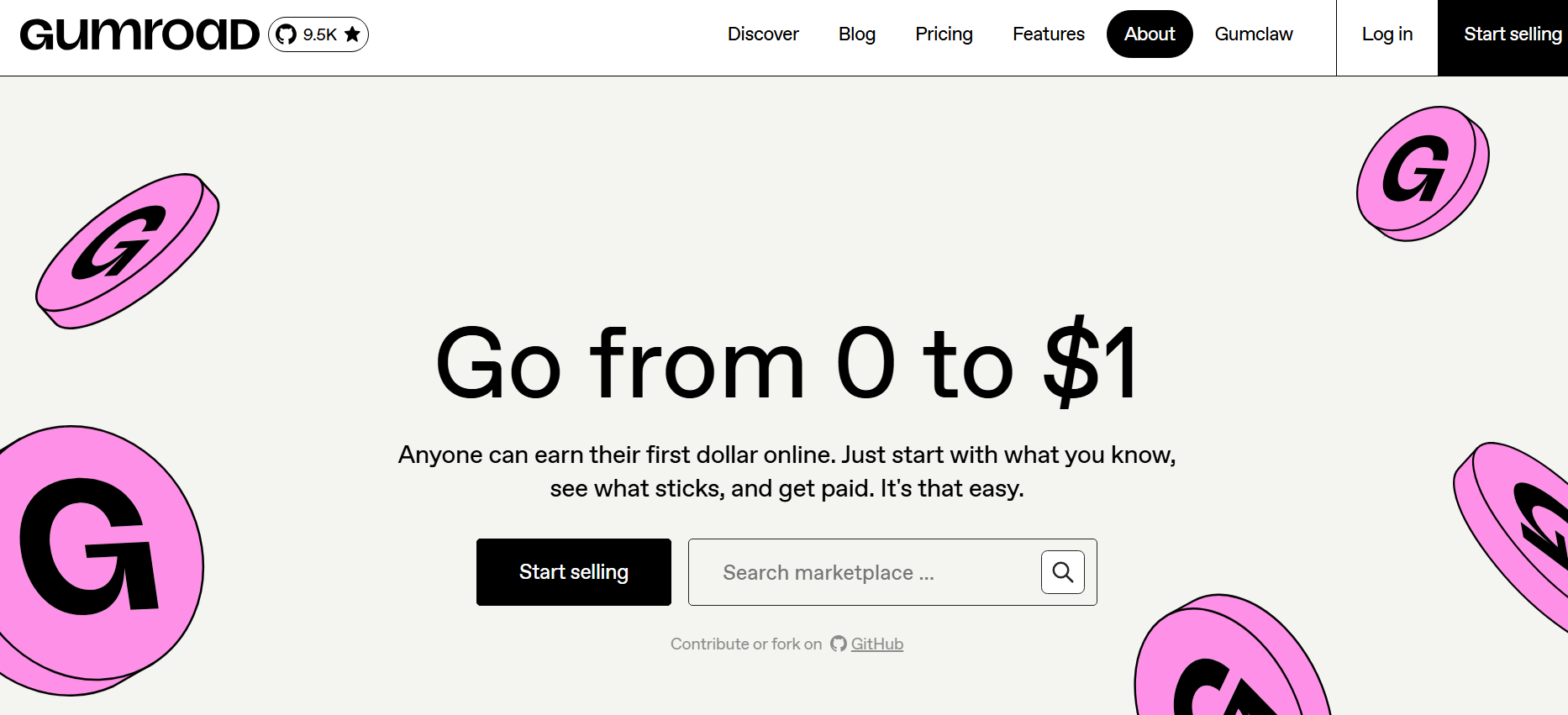
- Best For: Total beginners validating an offer in less than 15 minutes
- Cost Structure: $0/mo + 10% per transaction (plus standard payment processing fees).
Gumroad forever changed creator commerce by showing that you don’t need a custom domain, a hosting account, or complicated cart software to monetise knowledge. There is one single principle: make selling as easy as sharing a URL.
Your customer sees a single-column, streamlined checkout flow when they arrive at your Gumroad link. Once payment clears, Gumroad automatically manages licence key generation, asset delivery and storing customer accounts. Gumroad also functions as a Merchant of Record, meaning they automatically collect and remit international value-added tax (VAT) on digital sales.
Core Competencies:
- No overhead on a monthly basis to validate ideas.
- No design or coding skills needed and fast to set up.
- Built-in affiliate tracking and payment tools
- Automatic processing of complex European and international digital tax laws.
Key Weaknesses:
- Scaling revenues are eaten heavily by steep 10% take-rate.
- Limited branding and layout options.
- Basic email marketing capabilities vs dedicated autoresponders.
2. Stan Store – The High Converting Mobile Link-in-Bio
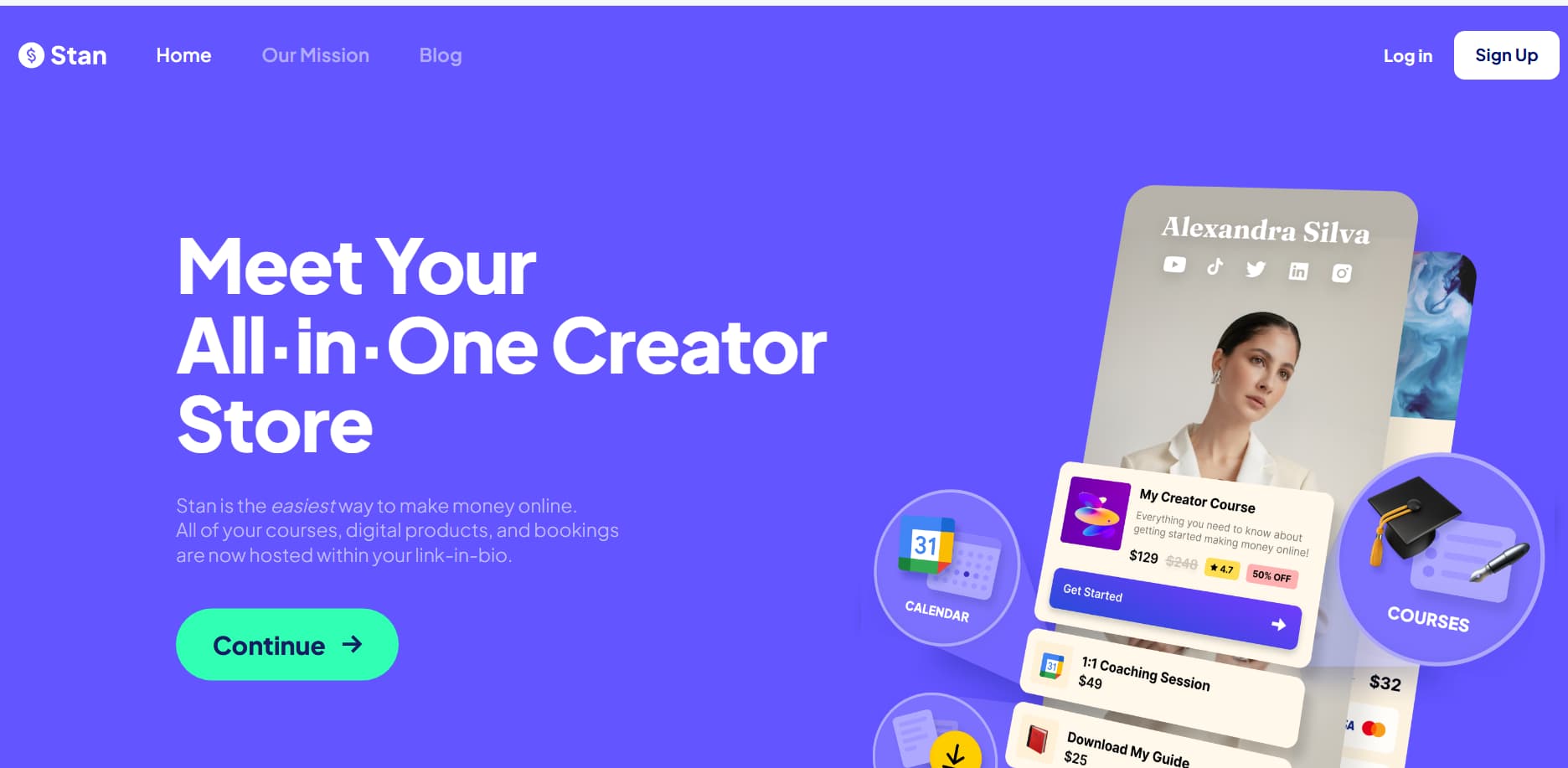
- Best For: Instagram, TikTok and YouTube Shorts Creators.
- Pricing: Creator Plan: $29/month | Creator Pro: $99/month | 0% platform transaction fees
Traditional ecommerce stores don’t work on social media because there’s a big drop off when you send users outside the app to an external web browser. Stan Store solves this with a lightweight, mobile-first checkout drawer that functions natively inside social app browsers.
A visitor can tap your bio link and an interactive drawer will slide up – no external tab to load. Visitors can purchase a PDF, subscribe to a newsletter, join a recurring membership, or book a 1-on-1 coaching call on your linked Google Calendar in just two taps using Apple Pay or Google Pay.
Strengths:
- Industry’s best mobile checkout conversion rates.
- Calendar booking integration with automatic timezone sync and video link generation.
- Native one-tap integrations with mobile wallets (Apple Pay, Google Pay).
- Built-in email broadcast builder and auto lead nurturing series.
Key Shortcomings:
- No free tier, only a 14 day trial.
- This is not for big desktop-oriented stores with large multi-category catalogues.
3. Payhip – The Free, Fully Customisable Shopfront
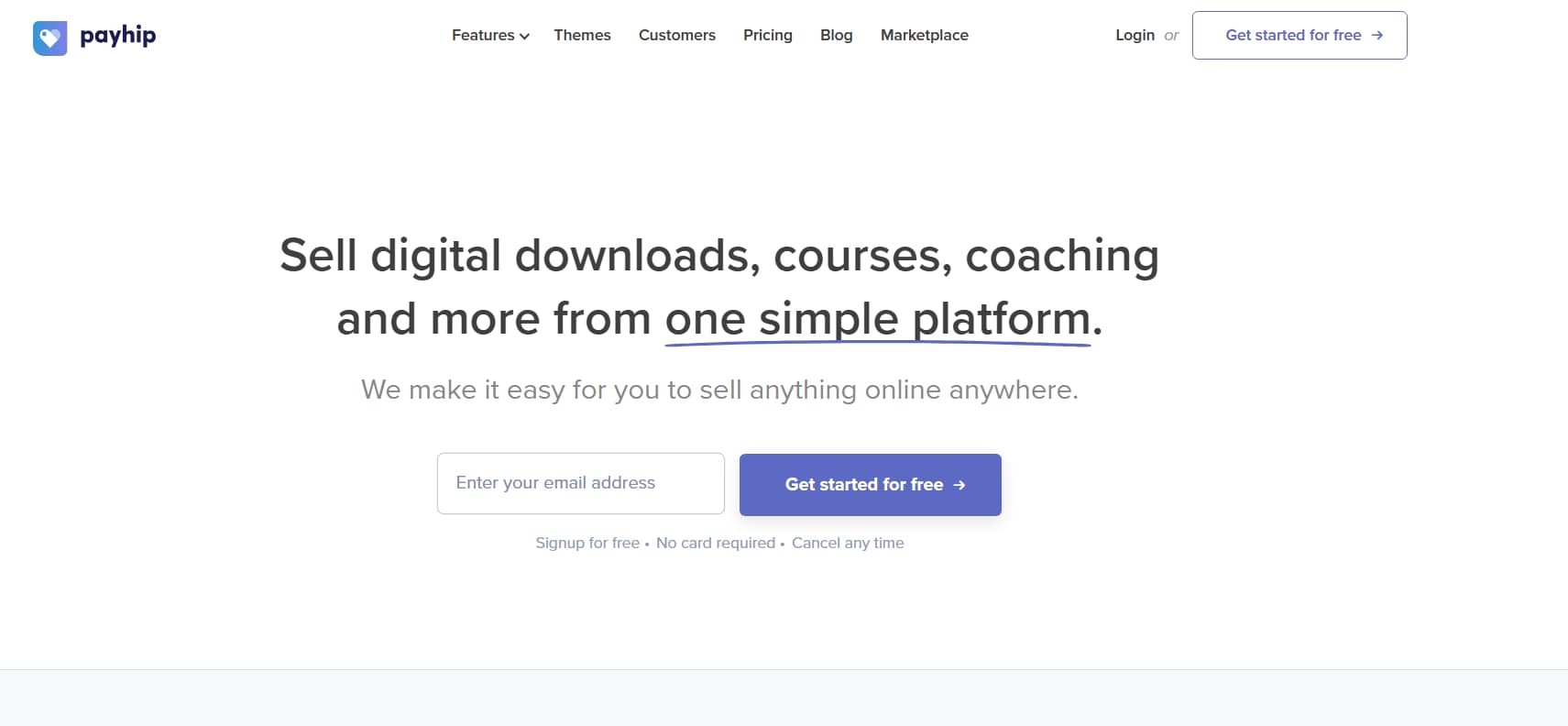
- Best for: Budget-conscious creators who need a professional, branded site without monthly software fees.
- Pricing: Free Forever (5% fee) | Plus ($29/month + 2% fee) | Pro ($99/month + 0% fee).
Payhip is one of the most generous creator platforms out there. Other free solutions restrict the core functionality to paid plans . Payhip offers the complete feature set in the free plan and takes 5 % cut on transactions , which is half the rate Gumroad takes .
Payhip has a real drag-and-drop website builder so you can build custom pages, header navigation, blogs and customer login portals. It also allows dynamic PDF watermarking: when a customer buys a document, Payhip automatically watermarks the buyer’s full name, email address, and purchase date across the footer of every page, discouraging unauthorised distribution.
Core Strengths:
- Full access to all features with a free generous plan.
- Visual Page Builder + Custom Domain Support
- Sophisticated anti-piracy protection (PDF stamping, download rate limiting).
- Multi-format support: sell downloads, courses, coaching, memberships, and physical items.
Main weaknesses:
- Smaller selection of 3rd party plugins compared to Shopify.
- There’s a 5% fee for the free tier, and you’ll need to upgrade to the Pro plan ($99/mo) at higher sales volumes.
4. Sellfy – The Hybrid Digital and Print-on-Demand Solution
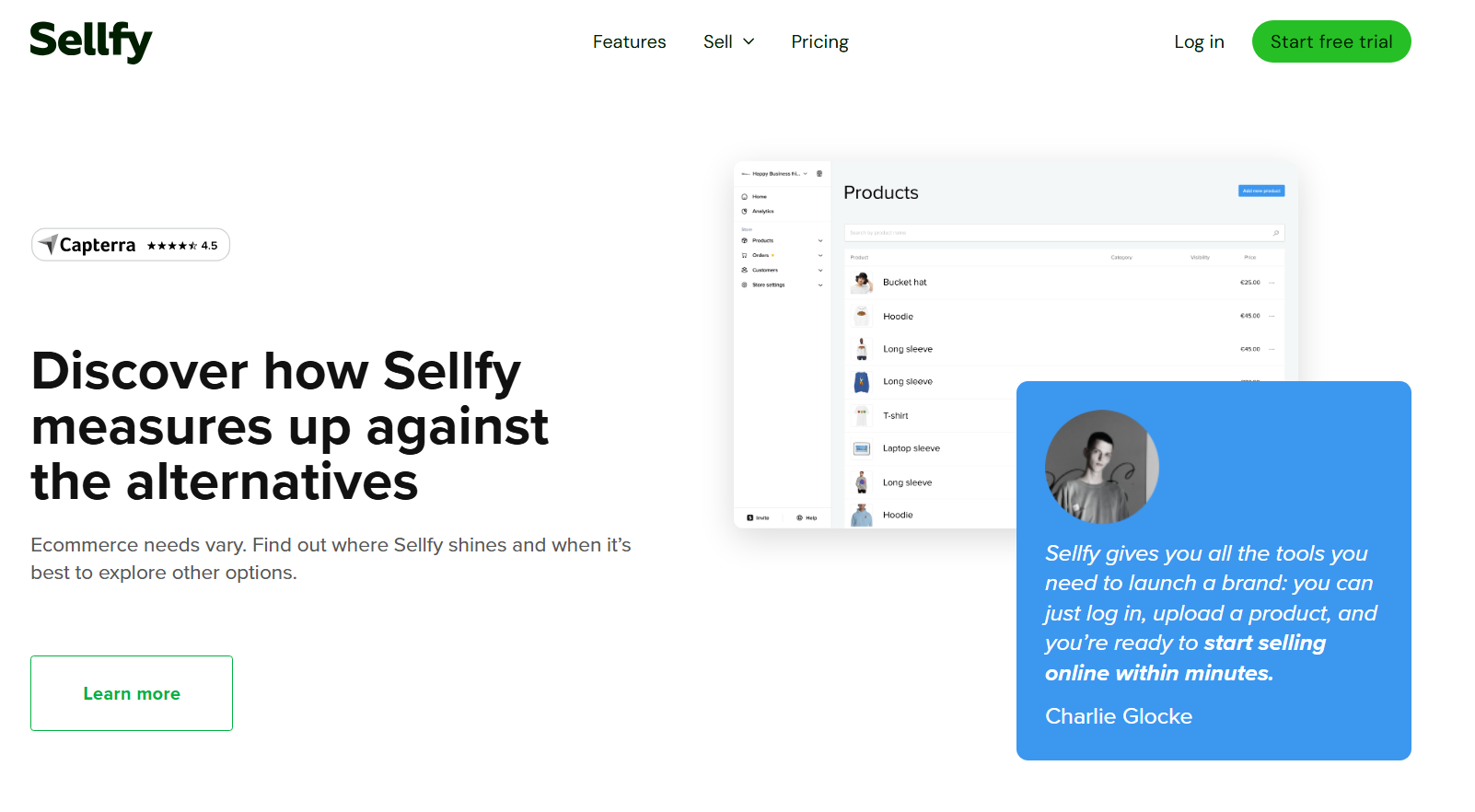
- Best For: Creators who sell digital content, and physical apparel and branded merchandise.
- Pricing Model: Starter ($22/mo annual or $29/mo monthly) | Business ($59/mo) | Premium ($119/mo) | 0% platform fees
Many creators begin with digital files (graphic templates, fitness guides, etc.) and hope to eventually sell physical merchandise. Typically this involves running two completely different platforms.
This is where Sellfy comes in, with its native print-on-demand (POD) integration. Just add your artwork on items from Sellfy’s apparel and accessories catalogue. Once an order is placed, Sellfy will automatically print, pack and ship the item. If the customer adds a digital download to the same cart, Sellfy delivers the file instantly and handles the physical fulfilment behind the scenes.
Core Competencies:
- 0% flat monthly fee, no cuts on platform transactions.
- Zero upfront inventory costs with native print on demand manufacturing.
- One click upsells after purchase and automated discount triggers.
- Integrated video streaming engine so that video courses can not be downloaded.
Primary Weaknesses:
- Revenue caps per year that are tied to pricing tiers ($10k/year on Starter, $50k/year on Business).
- no free tier for good.
5. Shopify: The Enterprise Powerhouse for Massive Catalogues
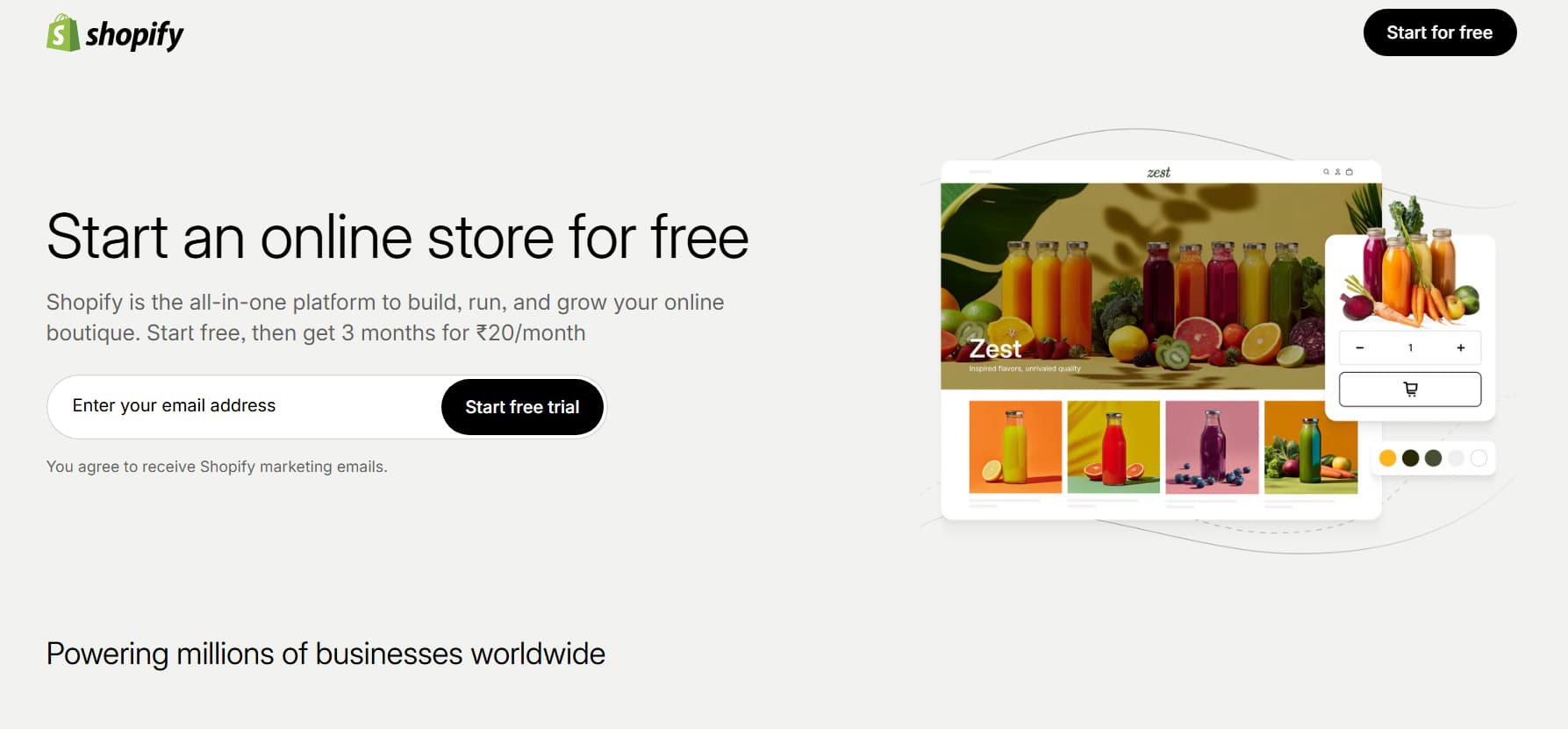
- Best for: Digital brands with high volume, multi-category catalogues, and growing businesses.
- Cost Structure: Basic Shopify ($39/mo) | Shopify ($105/mo) | Advanced ($399/mo) | 2.9% + $0.30 per transaction
Shopify is the world's #1 most scalable ecommerce platform. When your catalogue goes from a handful of stand-alone files to hundreds of SKUs, bundles and multi-tier offerings, specialised creator tools can be a hindrance.
Shopify scales easily with an ecosystem of more than 8,000 apps. Filemonk or Digital Downloads will let you distribute files securely with physical goods. You also get access to Shop Pay, the highest converting 1 click accelerated checkout engine on the internet that stores billing information for millions of consumers worldwide.
Strengths:
- Unlimited scalability of the technology and reliability of the infrastructure.
- Shop Pay’s accelerated checkout converts at higher rates.
- Huge app marketplace for advanced subscriptions, affiliate networks and accounting.
- Granular inventory management, reporting and staff account permissions
Major Weaknesses:
- $39/mo base fee + cost of 3rd party digital delivery apps.
- Higher learning curve for solo creators. Only need a simple link.
6. Lemon Squeezy – The International Tax & Developer Solution
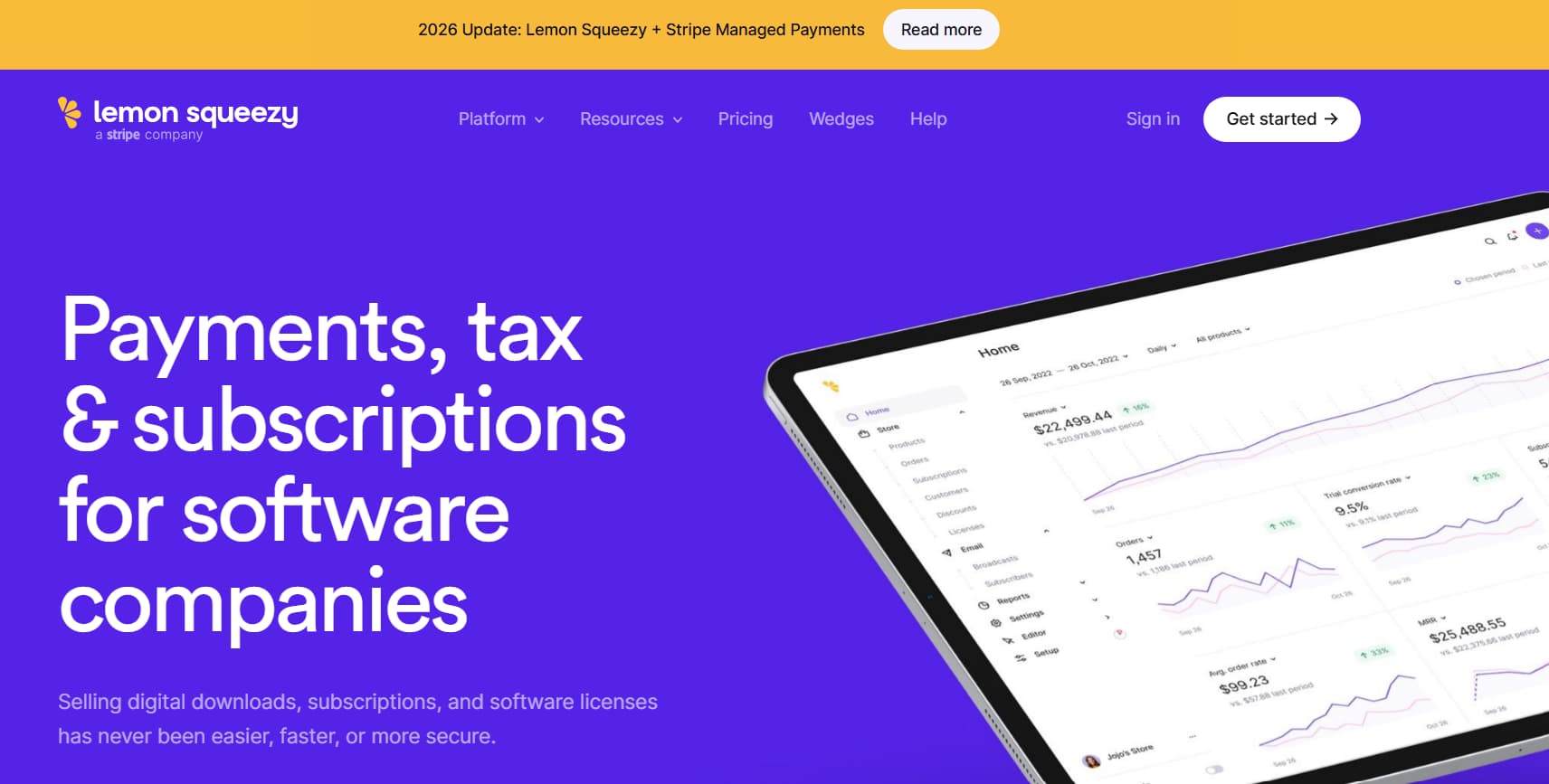
- Best for: Software developers, SaaS founders, script writers and global digital asset sellers.
- Pricing Model: Free ($0/mo) + 5% + $0.50/transaction
Lemon Squeezy is built for technical creators, developers and SaaS founders. Built on Stripe, it merges developer-friendly tools with financial compliance infrastructure.
The big upside is that it's set up to operate as a Merchant of Record (MoR). When selling digital files internationally you have a legal obligation to calculate, collect and file digital sales taxes and VAT in hundreds of jurisdictions. Lemon Squeezy is the legal merchant, handling all tax liabilities, filings, and foreign exchange conversions on your behalf.
Core Strengths:
- Global sales tax, GST and VAT Merchant of Record compliance is fully automated.
- Tracking of activation and device management for native software licenses. Generation
- Native Next.js/React SDKs for developers REST APIs Webhooks.
- Native subscription management for recurring SaaS products & usage billing.
Major Weaknesses:
- The fixed $0.50 per-transaction fee helps make it unprofitable to sell low-cost ($1-$3) items.
- Limited visual customisation of the native shopfront.
7. ThriveCart – The funnel and high AOV engine
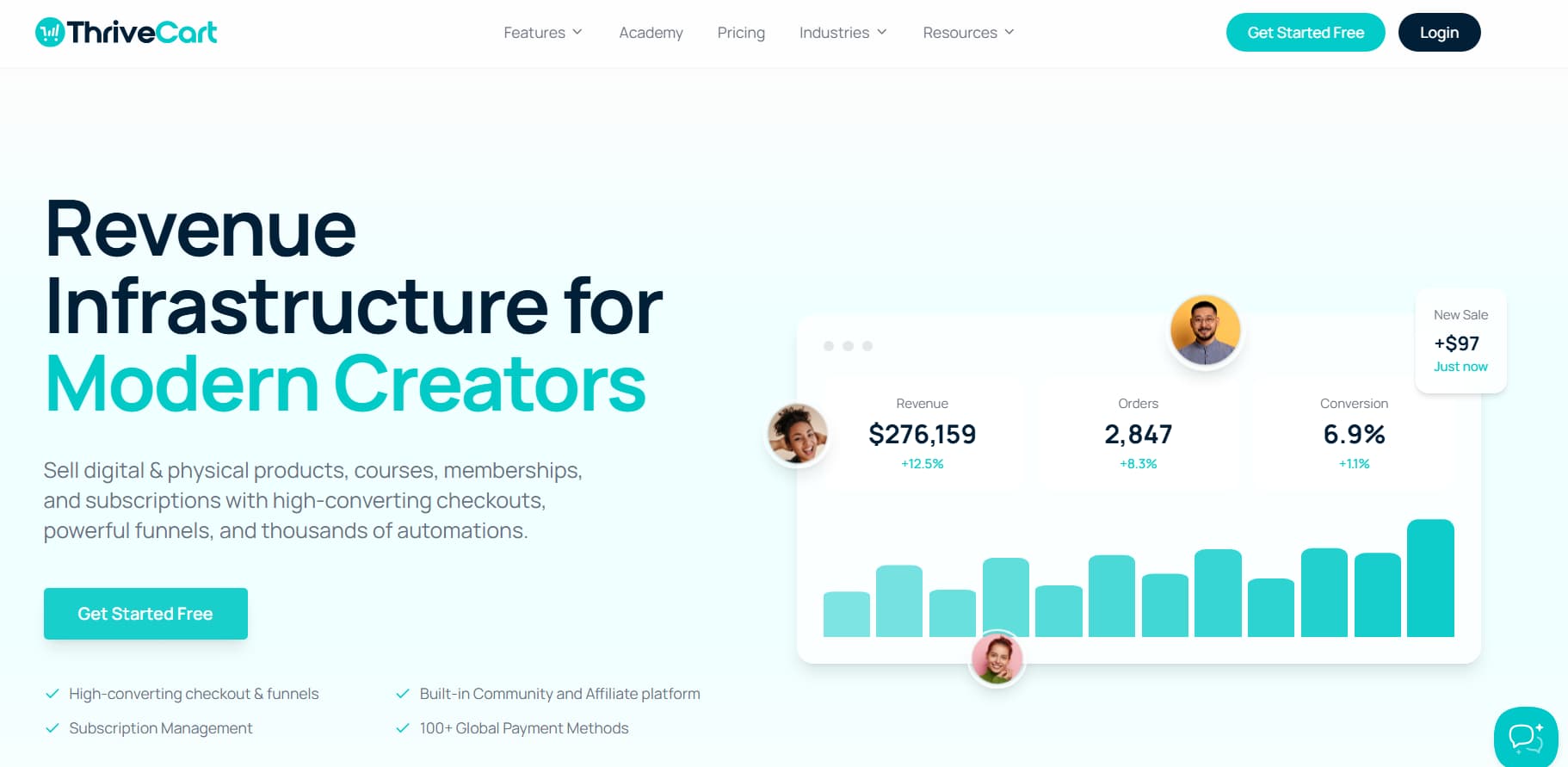
- Who It’s Best For: Direct-response marketers who want to increase cart value and avoid monthly SaaS fees.
- Pricing: Standard – $495 One Time Payment for Lifetime Access | Pro Plan with Affiliate Hub – $690 Lifetime | 0% Platform Fees.
ThriveCart is built around direct-response conversion architecture. In a traditional shopfront, people passively browse through a catalogue. In ThriveCart, every transaction is based on a high converting, optimised funnel.
ThriveCart is great for Order Bumps and 1-Click Upsells. An order bump lets the buyer add a complementary checklist or audio guide to their purchase with one checkbox right inside the checkout field. ThriveCart can provide you with instant 1-click upsells just before the last receipt page loads after purchase, increasing your Average Order Value (AOV) exponentially.
Core Strengths:
- Lifetime license model removes all monthly SaaS overhead.
- Industry Leading Order Bump & 1-Click Post Purchase Upsell Mechanics
- Added ThriveCart Learn platform to host and deliver video courses at no extra cost.
- Built-in A/B split testing for checkout templates, copy and pricing.
Major weaknesses:
- $495 Upfront Fee. $495 Capital Commitment.
- Designed for single product sales funnels not browsing for multi item stores.
8. Teachable, The Academy for Structured Video Courses
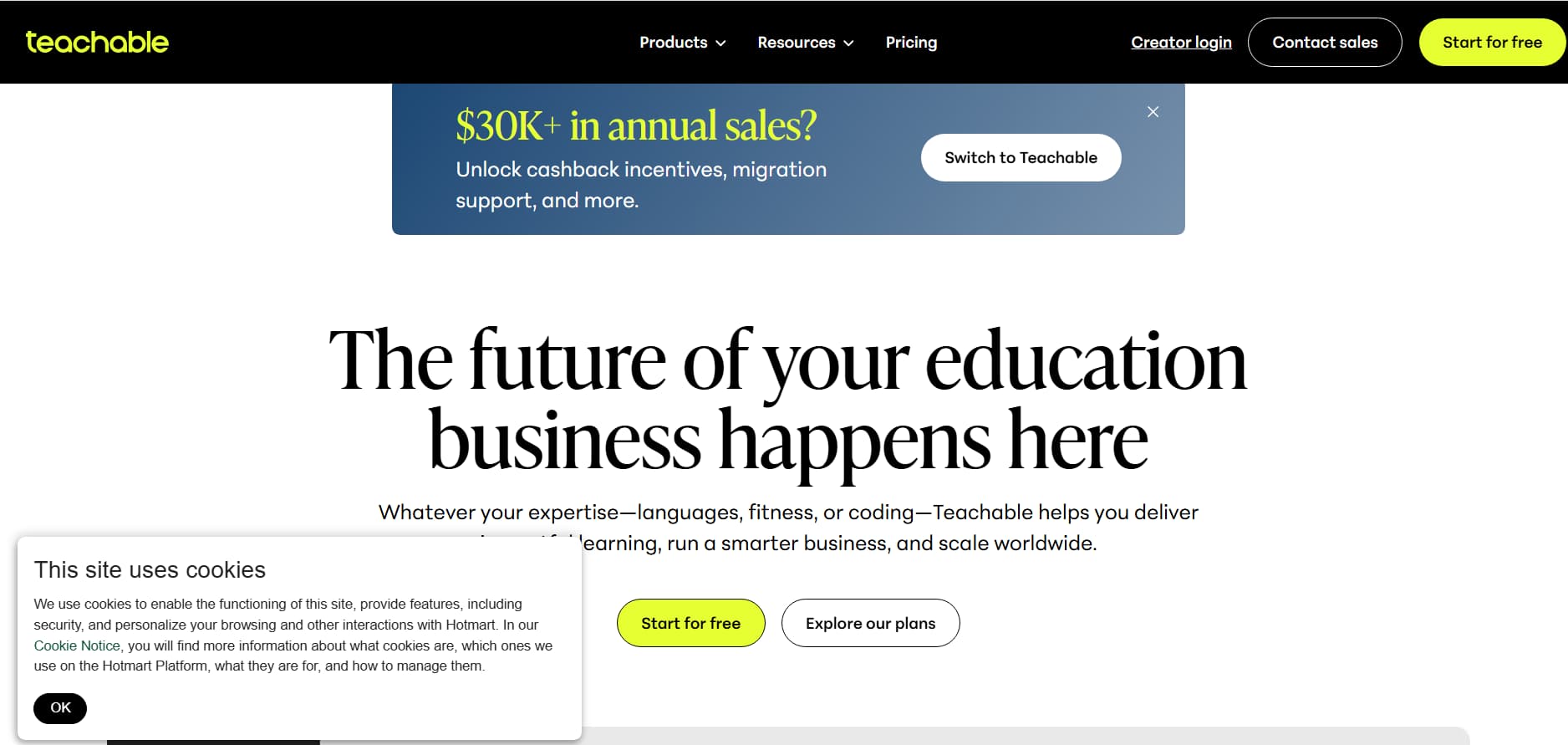
- Best For: Teachers, coaches and consultants with a defined curriculum.
- Pricing: Free Plan (10% fee) | Basic ($39/mo + 5% fee) | Pro ($119/mo + 0% fee).
If your digital product is an educational curriculum, then sending out standard file download links will lead to poor student retention. Teachable is a full-featured Learning Management System (LMS) built to host and organise in-depth video programs.
We provide students with their own login portals where they can watch HD video lessons, take quizzes, track progress and receive customised verified completion certificates. Teachable also has native iOS and Android apps so students can access your course on the go.
Core Competencies:
- All-in-one video hosting with student progress tracking built right in.
- Interactive learning features like quizzes, student comments and course completion certificates.
- Native mobile apps for smooth student learning on iOS and Android
- Tax reporting, EU VAT, and auto-payouts are all handled by Teachable Pay.
Major Weaknesses:
- 10% on Free, 5% on Basic. Heavy transaction fees on lower tiers.
- Not for basic file downloads or standalone design assets.
9. SendOwl – Headless Delivery For Custom Websites
- Best For: Creators with a website already on Webflow, Squarespace, Ghost, or WordPress.
- Cost Structure: Starter ($9/mo) | Growth ($15/mo) | Pro ($39/mo) | 0% platform fees
SendOwl is the backend engine for creators who don’t want to be locked into an all-in-one shopfront. SendOwl allows you to add secure digital ecommerce functionality without changing your tech stack, if you have built an established website on Webflow, Squarespace or a custom CMS.
You just create SendOwl payment buttons or embedded widgets and copy and paste them in your existing web-pages. SendOwl handles the backend checkout, creates expiring download links to stop link sharing, stamps PDFs with buyer information and automatically provisions software keys.
Strengths:
- Affordable flat-rate pricing from $9/mo.
- Integrates cleanly with any website framework or CMS.
- Strong digital security with expiring download links and PDF watermarking.
- Support for recurring memberships and drip content delivery.
Major Weaknesses:
- It doesn’t offer a standalone website or visual shopfront builder.
- Entry-level subscription plans have limits on the number of orders per month.
10. WooCommerce – Open Source Freedom and Data Ownership
- Best For: Tech-savvy WordPress users who want complete control over their platform, and do not want to pay any middlemen fees.
- Cost Structure: Free open source software (Hosting $5-$30/mo) | Gateway fees only (2.9% + $0.30)
WooCommerce powers over 30% of all ecommerce websites worldwide and gives you full ownership of your business assets. If you’re already on WordPress, WooCommerce gives you full control with no platform take-rates, no random policy changes, and no subscription tiers.
You own your server and database, so you’re the sole owner of your customer details, purchase histories and content assets. You can also use the vast WordPress directory of over 50,000 plugins to add subscriptions, memberships, affiliate programs, and custom payment processors with no enterprise software costs.
Core Strengths:
- Complete ownership of customer data and 100% data sovereignty.
- There are no platform transaction fees, other than the standard merchant gateway rates.
- Unlimited flexibility Thousands of themes and plugins to choose from.
- No artificial limitations on products, traffic volume or monthly sales revenue.
Major Weaknesses:
- Technical comfort with WordPress maintenance and server configuration required.
- You are responsible for web hosting performance, caching, security patches and backups.
Social Commerce: Selling Directly Through Direct Messages (DMs)
The biggest change in selling digital products is the move away from traditional bio links to conversational Direct Message (DM) checkout flows.
Why Bio Links Fail For Today's MobileAudiences
When a creator tells social media followers to “click the link in my bio” they set up several conversion-killing hurdles:
- The user will have to leave the post and visit the profile page of the creator.
- They tap on an external link, which requires the mobile device to open an in-app browser tab.
- The visitor is dropped into the middle of a busy link tree or shopfront catalogue, and has to dig through dozens of items.
You are left with a conversion rate of only 5-10% as 90-95% of users get distracted by a notification on their phone or a slow loading page and leave.
The 4-Step Direct Message Automation Model
Direct Message automation eliminates all intermediate browsing steps, providing direct checkout links at the peak of user intent:
- Host the Product: Upload your asset to your delivery engine (Payhip, Gumroad, or SendOwl) and generate a direct checkout link that takes you straight to payment.
- Publish Focused Content: Share an educational Reel, Carousel or short-form video that focuses on a particular result. Now you can download the exact template I used to create this video thumbnail and many more just like it. Comment “SYSTEM” below and I’ll send you the exact template.
- Trigger Instant DM Delivery: Use an automated social tool (like InstantDM for $9.99/mo) to monitor post comments. As soon as a user comments the trigger keyword, the system automatically sends a personalised DM with the direct checkout URL within 5 seconds.
- Frictionless Mobile Checkout: Taps the link in their chat inbox and buys in seconds with Apple Pay or Google Pay and gets the download directly in their email.
DM checkout workflows consistently convert at 15% to 30% because they engage followers at the peak of their interest and bypass catalogue browsing altogether—two to three times higher than static shopfront links.
The Value-Based Pricing Blueprint
Digital products don’t have manufacturing or marginal delivery costs, which causes many creators to underprice their work. Healthy profit margins require value-based pricing — pricing based on the outcome and time saved for the buyer, not the time it took to produce the file.
Pricing Levels by Product Modality
- Impulse Resources ($9-$49)
- Formats: Notion templates, swipe files, spreadsheets, mini-guides, presets.
- Strategy: Low-friction entry points to convert casual social followers into paying customers.
- Specialised Toolkits & Frameworks ($49-$149):
- Formats: full stack design systems, full stack workflow kits, legal contract templates and industry SOPs
- Strategy: For the business and the professional. The pricing is based on the time saved for the buyer, ranging from 10 to 40 hours of manual work.
- Transformational Courses & Academies ($149 – $999):
- Formats: Multi-module video masterclasses Technical bootcamps Cohort learning programs
- Strategy: High-ticket educational assets that clearly deliver a financial, professional or personal transformation
- Memberships Recurring ($19 – $99/month):
- Formats: Private resource libraries, template-of-the-month clubs, and active community discussion boards.
- Strategy: Provides ongoing tools, updates and direct support to generate steady revenue.
The ROI Framework
In writing sales copy, anchor your price to the alternative costs of achieving the same result:
Perceived Value=Cost of Alternative (Hiring an Agency or lost time)−Product Price
For instance, if your standard operating procedure pack saves the owner of a digital agency 30 hours of project setup time ($75/hour = $2,250 in billable labour), then selling your templates for $197 is a no-brainer. Align your product with these outcomes and you remove purchase friction.
5 Playbooks to Maximise Your Digital Sales
1. Start Building an Owned Email List from Day One
Social media algorithms are always changing. Your account reach drops shouldn’t make your revenue go away. You can offer a free checklist, workflow template or resource pack to convert social followers into an owned email list you can reach out to directly without platform gatekeepers.
2. Add 1-Click Order Bumps to checkout
An order bump is an add-on offer that’s targeted and placed directly inside the checkout screen before the purchase button. If a customer is buying a $27 ebook on content marketing, add a simple checkbox offering a Notion content calendar with it for $17. A well-aligned bump will typically convert 25% to 40% of buyers, increasing your average cart value without additional traffic.
3. Post Purchase 1 Click Upsells Implementation
Once customers enter payment info and place an initial order, present them with a one-time upgrade offer before the confirmation page loads. For example, give a full video walkthrough or do a private Q&A for a special price. They can accept the offer with one tap because their payment details are already verified.
4. Offer Visual Social Proof At All Touchpoints
Trust is essential for selling digital products. Add authentic screenshots of user testimonials, direct message conversations, star ratings and measurable results to your landing pages, emails and social content. Real proof comforts buyers and lowers cart abandonment.
5. Keep a Consistent Content Flywheel
Publish actionable problem-solving content 3-5 times a week. The more value you give up front on social channels, the more qualified buyers you’ll feed into your automated DM workflows and checkout funnels.
How We Evaluated These Digital Product Platforms
We tested ten platforms against six practical criteria that matter when you are actually selling digital products, not just reading feature lists.
What criteria did we use?
1.Cost to start
Can you launch without paying monthly fees? Gumroad, Payhip, and WooCommerce let you start for free. Stan Store and Shopify require upfront investment.
2.Transaction fees
What percentage does the platform take from each sale? Gumroad takes 10%. Payhip takes 5%. Stan Store, Sellfy, and Shopify take 0% platform fees but charge monthly.
3.Time to first sale
How long until you can accept a payment? Gumroad takes about 5 minutes. Shopify takes 30+ minutes. Stan Store takes 15 minutes.
4.Mobile experience
Most social traffic comes from phones. Stan Store's mobile-first checkout loads faster inside social apps than traditional websites.
5.Product type support
Can the platform handle digital downloads, courses, memberships, and physical products? Sellfy and Shopify handle everything. Gumroad focuses on digital.
6.Scaling economics
At what revenue level does a flat monthly plan become cheaper than percentage fees? Gumroad's 10% becomes expensive above $290/mo in sales. Stan Store's $29/mo flat rate becomes cheaper at that point.
Summary & Action Plan:
- Validate With Zero Overhead: Launching your very first digital product with no audience to support it? Use a free tier like Payhip (5% fee) or Gumroad (10% fee) to validate people want your offer before paying monthly software costs.
- Breakeven point migration: If you’re making more than $500/month in sales, migrate to a flat-rate platform like Stan Store ($29/mo), Sellfy ($22/mo), or WooCommerce and keep 100% of your net profits.
- Match Infrastructure to Asset Type: Lemon Squeezy (software licensing and tax compliance), Teachable (multi-module video courses), ThriveCart (direct response funnels and lifetime savings).
- Cut the Path to Purchase: Say goodbye to multi-page website browsing with high-value social content paired with automated Direct Message delivery and 1-tap mobile checkouts.