TL;DR
Instagram Click-to-DM ads are one of the most underused and highest-converting ad formats available to ecommerce brands in 2026. Instead of sending paid traffic to a landing page where most visitors bounce, Click-to-DM ads open a direct message conversation the moment someone taps the ad. When paired with automation, that conversation can deliver product links, promo codes, lead magnets, or booking flows instantly, around the clock, without any manual involvement. This playbook covers everything: what Click-to-DM ads are, how they differ from standard formats, how to set them up, what to automate inside the conversation, how to measure performance, and how tools like InstantDM Make the whole system work at scale. If your ecommerce brand is running Instagram ads and not using DM automation alongside them, you are leaving significant revenue on the table.
Introduction
Every ecommerce brand running Instagram ads in 2026 faces the same core challenge: the gap between ad impression and completed purchase is filled with friction, distraction, and drop-off. A user sees your product ad, taps it, lands on a website, gets distracted, closes the tab, and never comes back. That is the standard journey for most paid Instagram traffic, and it explains why so many brands pour budget into Instagram ads and see mediocre returns.
Click-to-DM ads exist to solve exactly that problem. When someone taps a Click-to-DM ad, instead of going to a website, they land inside a direct message conversation with your brand on Instagram. That conversation can be automated to deliver exactly what the person needs, whether that is a product link, a discount code, a product recommendation quiz, or a booking link, within seconds of them clicking.
This playbook is built for ecommerce operators, brand managers, and marketing teams who want to understand how to build a complete Click-to-DM ads system from the ground up. We cover the mechanics, the strategy, the setup process, the automation layer, and the measurement framework that turns this ad format from an experiment into a reliable, scalable revenue channel.
Instagram Click-to-DM Ads: How It Functions
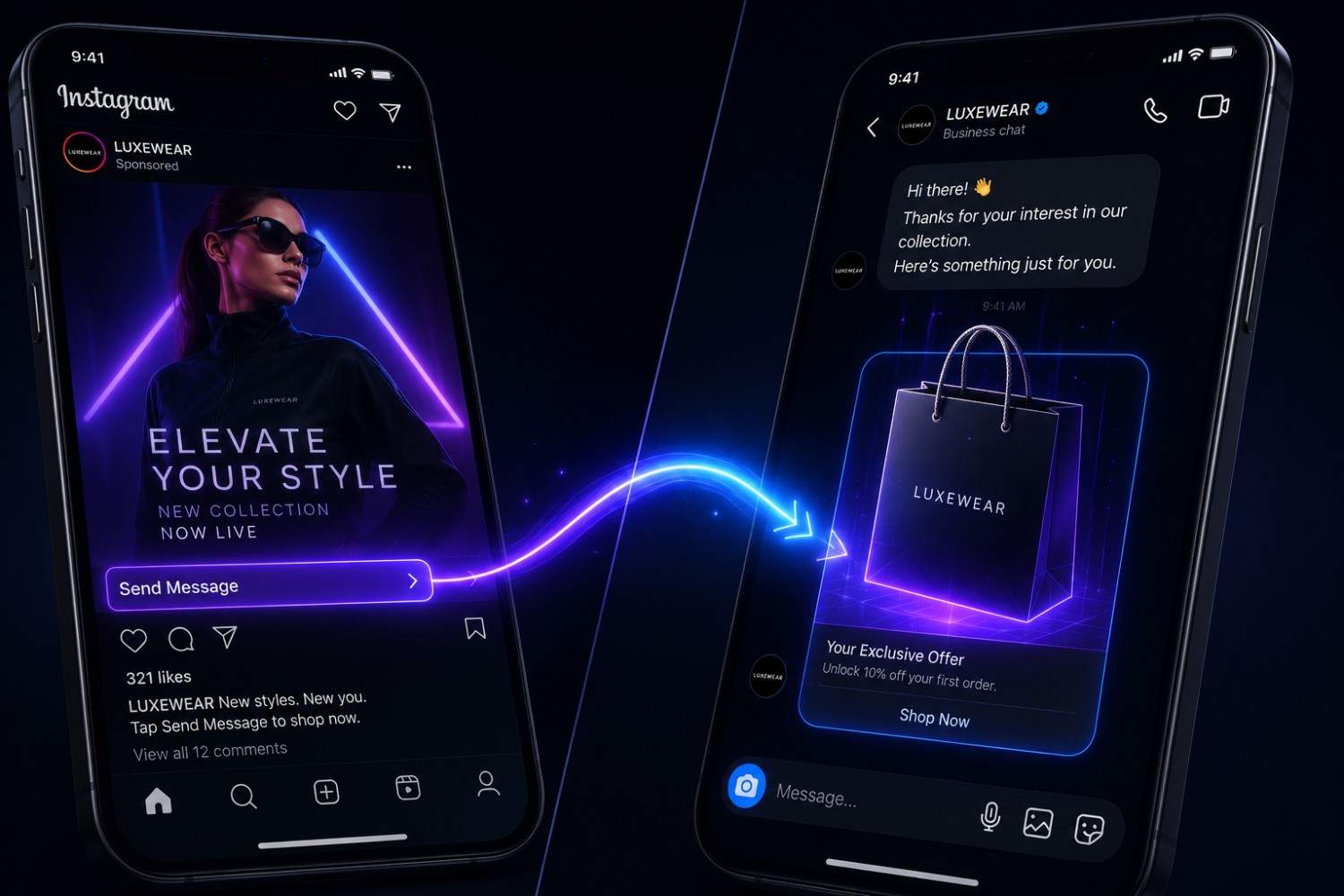
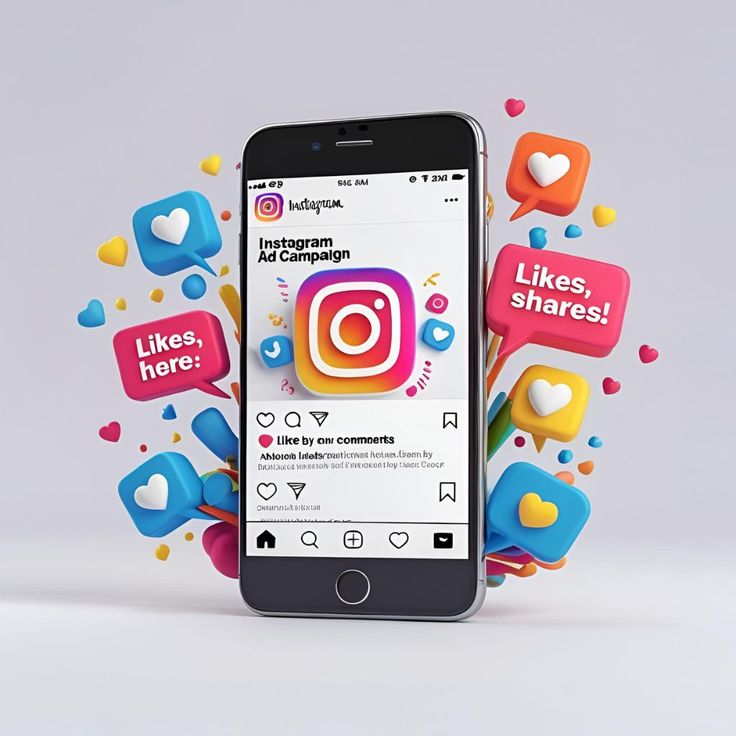
Instagram Click-to-DM ads (or Click-to-Message ads as Meta calls them) are a paid ad format that uses a call-to-action button that opens up a direct message conversation instead of a link to an outside URL.
The mechanics are simple: You set up an ad in Meta Ads Manager, select the messaging goal, and link it to your Instagram page. The call to action button will say “Send Message” or similar when the user sees the ad in their feed, stories or reels. Clicking that button will open the Instagram DM interface with a pre-filled opening message. Then the conversation is taken over by a human or an automated system.
By 2026 this format has evolved considerably in terms of automation. Any platform integrated with Meta’s official Business API can intercept that inbound message, detect that it’s coming from a Click-to-DM ad and immediately start a custom automated response flow. That flow can be product carousels, discount codes, qualifying questions, email capture, follow up sequences etc....
The format works really well for e-commerce, because of the intent and immediacy. A person who clicked on a Click-to-DM ad and began a message conversation has far more intent than someone who merely scrolls past a normal ad. They did things. What turns that intent into action and ultimately into purchase at a rate that a website landing page can’t usually compete with is the timely, relevant, personalised response to that action.
Click-to-DM Ads vs. Regular Instagram Ads
Standard Instagram ads drive traffic to a destination outside of Instagram, usually a product. Click-to-DM Ads vs Regular Instagram Ads This happens after the click, and most ecommerce brands struggle with the fact that website conversion rates on mobile are low.
Click-to-DM ads keep the whole interaction within Instagram. This is important because Instagram users are already in a browsing and engaging mindset when they are on the platform. Taking them off to a website takes away that context. Keeping them in a DM conversation keeps it.
There are also algorithmic advantages. Meta's ad algorithm values high engagement signals, and a message initiation is one of the strongest engagement signals available. Ads that generate message starts tend to see improved delivery over time because the algorithm recognizes them as generating genuine user interaction rather than just clicks that immediately bounce.
For retargeting specifically, Click-to-DM ads have an additional advantage: anyone who sends a message becomes a contact in your DM system. That contact can receive follow-up messages, be tagged and segmented, and be nurtured through an automated sequence without requiring a pixel-tracked retargeting audience. The contact lives inside Instagram itself.
Why Ecommerce Brands Are Shifting Budget to DM Ads in 2026
Several converging trends in 2026 explain why ecommerce brands are allocating increasing portions of their Instagram ad budgets to Click-to-DM formats.
Mobile web performance has plateaued. Despite years of investment in mobile optimization, checkout abandonment rates on mobile remain stubbornly high. Customers who are willing to buy inside a native app experience like Instagram often hesitate when directed to a mobile website.
Privacy changes have weakened pixel-based tracking. The targeting and retargeting infrastructure that many ecommerce brands depended on for precise ad optimization has been eroded by operating system privacy updates and browser restrictions. Click-to-DM ads sidestep some of this by building a first-party contact base inside Instagram rather than relying on third-party tracking signals.
Conversational commerce is becoming mainstream. Customers in 2026 are comfortable buying through messaging interfaces. The expectation that a brand will respond instantly in a DM is now standard. Click-to-DM ads meet that expectation by design.
Header image for RedTrack's comprehensive guide on effective e-commerce marketing strategies.
Setting Up Your First Instagram Click-to-DM Ad Campaign
The setup process for a Click-to-DM ad campaign in Meta Ads Manager is more involved than a standard traffic campaign, but the additional steps are straightforward once you understand the structure.
Choosing the Right Campaign Objective
In Meta Ads Manager, Click-to-DM ads live under the Engagement or Leads objective categories, depending on whether you want to optimize for message starts or for specific conversions within the conversation.
For most ecommerce brands starting with this format, the Engagement objective with the Messages optimization is a good starting point. This tells Meta's algorithm to show your ad to people who are most likely to initiate a message conversation. Once you have accumulated enough data, you can test the Leads objective with conversion optimization if you are collecting emails or phone numbers through the automated conversation.
Setting Up the Message Destination
When you create your ad, you’ll select Instagram DM as the place people will send messages. This is the context that would make the ad open up a direct message conversation instead of a website link.
You can also set a greeting message to auto-open in the DM thread when the conversation opens. The user sees this greeting first and it sets the tone for the rest of the interaction. Just a quick question about the ad. Best way to contact you?
Once you’ve Connected an automation platform like InstantDM, the automated response flow takes this greeting and runs with it, without any manual intervention.
Click-to-DM Ad Creative Best Practices
The creative for a Click-to-DM ad has one job to do: generate enough interest for a person to start a conversation. This is a different aim than an ad creative that needs to generate a click to a website.
Video creative usually performs better than static images in this format as it offers more context and engagement before the call-to-action appears. A 15-30 second video showing the product in use, communicating the core value proposition and ending with a clear invitation to message converts better than a product image alone.
The call-to-action text in the ad caption is more important for Click-to-DM than for regular ads. The user knows what will happen when they do it and what’s in it for them, using phrases like: “Message us for your exclusive code,” or “Tap Send Message to get the details.” Ambiguous calls to action lower rates of message initiation.
Using Offer-specific creatives always outperforms Generic brand awareness creatives in Click-to-DM. An ad saying “Comment for 20% off your first order” gives the user a concrete reason to take the action of starting a message.
How to Build the Perfect Automated Conversation Flow for Ecommerce
The real conversion work is done in the automated conversation that follows a Click-to-DM ad click. Getting this right is the difference between an ad format that generates leads, and one that generates sales.
The Anatomy of a High Converting DM Conversation Flow
A solid DM conversation flow for ecommerce is a logical progression of recognise, deliver, qualify, convert, and follow-up.
The acknowledge step is the first automated message that confirms the person’s action and prepares them for what’s next. Thanks so much for reaching out about our summer collection! "Here's what we have for you" is better than a generic welcome message.
The deliver step is delivering on the core value the ad promised So if the ad promised you a discount code, this is where you'll get it. If the ad promised a product catalogue, this is where the product links or carousels show up. The promised value is to be delivered immediately – no negotiation. The more hoops the user has to jump through or delay before getting what was advertised, the more drop-off.
The qualify step is optional, but good for brands with lots of product categories or price points. Automation can lead the user to the most relevant products with a simple question like “Are you looking for something for yourself or as a gift?” or “What is your budget range?”. This customisation increases conversion rates by reducing the number of irrelevant options the user has to sift through.
The convert step is where the actual purchase link comes in. This should be as direct as possible, ie, a link to the specific product or category that matches what the user just told you about themselves, not to a homepage link that takes a user to more navigation.
The next step is automated messages that are sent to users who got the link but didn't buy hours or days after the initial chat. This alone can be a big help in recapturing a large percentage of conversations that stall before converting.
DM Qualifying Leads: What Questions Work Best
The questions you ask in an automated DM flow should not sound like a survey. When users feel questioned, they will disengage. The best qualifying questions are asked as helpful navigation assistance.
“Are you shopping women's or men's styles?” is a natural question for an apparel brand that directs the user to the right product area. For a beauty brand, “What skin type are you working with?” allows the automation to recommend the right product category. A fitness equipment brand: “Looking to build a home gym or just one piece of equipment?” Segments users by intent and purchase size.
Limit your qualifying questions to two, then give your product recommendation. After two questions, the drop-off becomes dramatic as it feels like work instead of a helpful conversation.
Automated Flash Sales and Direct Message Promotion Code Delivery
One of the best uses of Click-to-DM ads for ecommerce is automated promo code delivery. This works because it plays on two powerful psychological drivers: exclusivity and immediacy.
When a user sees an ad that says “Tap to get your exclusive 20% off code,” and they tap it, they receive a one-of-a-kind or time-limited code inside the DM within seconds. The code is provided in a personal setting, as if the brand sent it to them personally. The deadline creates an urgency that a generic coupon code for all traffic cannot create.
This is next level with flash sale automation. A brand running a 24-hour flash sale could create a Click-to-DM ad campaign so that every time someone starts a message with the brand they get an automated DM with the sale code, a direct link to the product and a countdown reminder. If the user hasn’t purchased, a follow-up message at 12 hours and 2 hours reminds them the sale is ending.
This kind of time-sensitive, personalised campaign through DMs always beats email campaigns for the same flash sale promo — simply because DM open rates are far higher than email open rates. A message in someone’s Instagram DM gets seen almost right away. An email can go unread for days.
Configuring time-sensitive offer flows
The automation logic in a time sensitive offer flow must address users who respond at different points in the offer window. If someone taps the ad at 9AM, for example, they should get a different urgency message on follow-up than someone who taps at 10PM on the last day of the sale.
The easiest way to do this is to use sequences of follow-up messages with fixed time delays from the time of first contact, rather than fixed calendar times. A sequence that delivers the first follow-up 6 hours after first contact, the second 18 hours after that, and the third 30 minutes before the code expires creates urgency that’s specific to when each user entered the flow.
How to Use DM Ads for Product Launches and New Collection Drops
Product launches and new collection drops are ideal use cases for Click-to-DM ads because the combination of novelty and limited availability naturally generates the kind of engaged interest that converts in DMs.
Pre-Launch Warm-Up Strategy
Before the launch ad goes live, run a warm-up Click-to-DM campaign that builds a subscriber list of people who want to be notified first. An ad that says "Tap to get early access before we go live" captures highly motivated potential buyers into your DM contact list at a lower cost per message than a launch-day ad.
When the product drops, you send a broadcast-style message to everyone who opted into early access. This message arrives in their DMs as a direct first notification. Because they opted in specifically for this, open rates and conversion rates on these early access DMs are dramatically higher than standard ad traffic.
Launch Day Automation Sequence
On launch day, the Click-to-DM ad should deliver the product link immediately. The follow-up sequence should address common pre-purchase questions that your customer service team regularly handles: shipping times, sizing or compatibility information, return policy, and bundle options. Answering these automatically in the DM conversation removes the friction that causes users to leave without purchasing to "think about it" and never return.
Social proof delivered inside the DM flow also increases conversion on launch day. An automated message that includes a short testimonial or a note about sell-out speed from previous launches activates both social proof and scarcity in a channel with near-perfect attention.
Header image for AskNeedle's guide on Instagram advertising trends, formats, and strategies for 2026.

Abandoned Conversation Recovery: The DM Equivalent of Cart Abandonment Emails
In standard ecommerce, cart abandonment emails are one of the highest-return automated campaigns available. In the Click-to-DM ecommerce system, the equivalent is abandoned conversation recovery: follow-up messages sent to users who started a DM conversation, received the product link, but did not complete a purchase.
The advantage of DM-based recovery over email-based recovery is immediacy and read rates. DMs are read. Most people have notifications enabled for Instagram, and a message in their DMs typically gets attention within minutes rather than sitting in an inbox.
A simple abandoned conversation recovery sequence works like this: a user clicks the ad, receives the automated flow, clicks the product link, but does not purchase. Two to four hours later, they receive a follow-up DM asking if they had any questions or needed help deciding. This message alone can recover a meaningful percentage of stalled conversations because it invites engagement rather than just repeating the original offer.
A second follow-up 24 hours later can contain a time-limited sweetener such as free shipping or an additional discount not present in the original offer. Personal attention, incremental incentive converts interested but hesitant users.
Audience Targeting Strategies That Work for DM Ad Campaigns
The audience targeting approach for Click-to-DM ads shares some elements with standard e-commerce ad targeting but has important differences because you are optimising for message initiation rather than website visits.
Cold Audiences (Top of Funnel) DM Campaigns
Interest and behavioural audiences based on your product category tend to work well for cold audience targeting in Click-to-DM. The trick is to match the offer in the advertisement with what the audience is likely to be intending. A free resource, quiz or sample-eligible product is a lower-risk offer made to a broad interest audience rather than a purchase offer.
Lookalike audiences based on your existing DM contact list, or your Shopify customer list, work really well for Click-to-DM campaigns because the algorithm can find people similar to your current buyers based on platform behaviour, not just demographics.
Warm DM Retargeting Audience
Click-to-DM retargeting audiences include people who have interacted with your Instagram content, visited your website or interacted with your previous ads. These audiences already know your brand, so they require less convincing and the conversion focused automation flow is better than an awareness orientated one.
One underutilised retargeting audience for Click-to-DM is anyone who has sent you a DM before but didn’t convert. Running a Click-to-DM retargeting ad to this audience with a new offer, or a new reason to re-engage often converts a segment that got lost in the original conversation.
Metrics That Matter: Measuring Click-to-DM Ad Performance
Click-to-DM campaigns are different than standard e-commerce ads, so standard metrics like click-through rate and cost per click are not as useful since the click destination is a DM, not a website. You need a different way of measuring.
Take a look at the table below for key metrics on Click-to-DM ad performance, their standard ad equivalents, and what each metric measures:
| Metric | Click-to-DM Context | What It Tells You | Benchmark Goal |
|---|---|---|---|
| Cost per Message Start | Primary cost metric replacing cost per click | How much you pay for each conversation initiated | Varies by niche; aim below your average cost per lead |
| Message Start Rate | Percentage of ad impressions that result in a message | Ad creative and offer relevance quality | 2 to 5 percent is strong for cold audiences |
| Conversation Completion Rate | Percentage of started conversations that reach the product link step | Automation flow quality and message copy | 60 to 80 percent for warm audiences |
| DM to Purchase Conversion Rate | Percentage of conversations that result in a completed order | Offer strength and follow-up sequence quality | 5 to 20 percent depending on product price point |
| Cost per DM Conversion | Total ad spend divided by number of purchases | True ROI metric for the campaign | Should be below your product margin threshold |
| Follow-up Response Rate | Percentage of follow-up messages that generate a reply | Quality of follow-up message copy | 15 to 35 percent for well-written sequences |
| Lead Capture Rate | Percentage of conversations where email or phone is collected | Value of lead magnet or offer in the flow | 30 to 60 percent with a compelling incentive |
| Revenue per Conversation | Total revenue divided by total conversations initiated | Overall efficiency of the DM sales system | Set this target based on your average order value |
Tracking these metrics requires your DM automation platform to provide conversation-level analytics, not just message send counts. Platforms that only show how many DMs were sent give you a fraction of the data you need to optimize your Click-to-DM campaigns effectively.
Setting Up Tracking That Connects Ad Spend to Revenue
Connecting your Click-to-DM ad spend to actual revenue requires a few specific setup steps. First, your automation platform needs to tag each conversation with the source ad or campaign. This allows you to attribute purchases to specific ads rather than aggregating all DM traffic together.
Second, if you are using a Shopify integration, the product links sent inside your DM flows should include UTM parameters or unique tracking codes that your Shopify analytics can capture. This creates a direct data bridge between the DM conversation and the purchase record.
Third, the lead data collected inside your DM conversations, including email addresses, should sync to your CRM or email platform so you can attribute subsequent purchases made through email marketing back to the original Click-to-DM ad that acquired the contact.
InstantDM for Click-to-DM Ecommerce Campaigns: What It Does and Why It Matters
At this stage in the playbook, it is worth focusing specifically on what happens inside the automation layer after someone clicks your Click-to-DM ad, because this is where most of the conversion work occurs, and not all automation platforms handle it equally well.
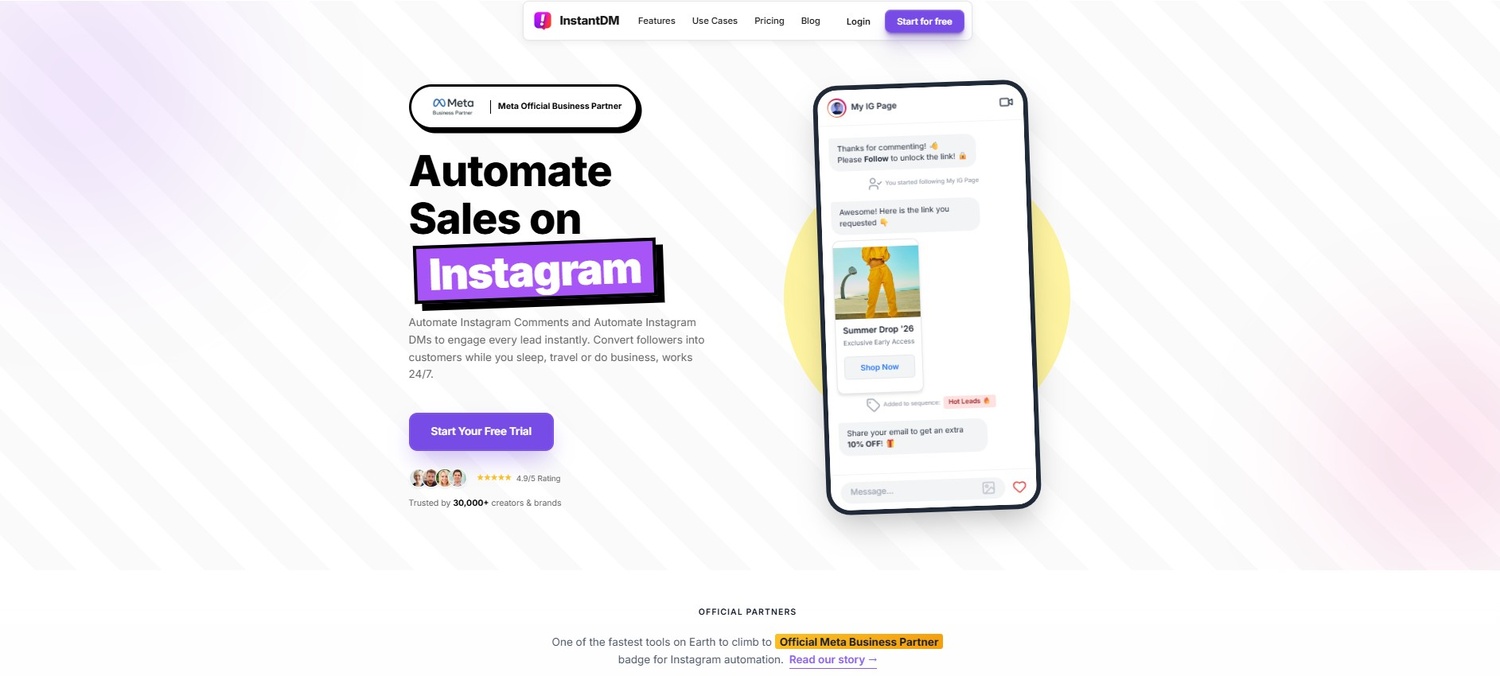
InstantDM is an official Meta Business Partner that specializes in Instagram and Facebook DM automation, including the automation of Click-to-Message ad responses. It is trusted by over 30,000 creators and brands globally and is built specifically to handle the volume, speed, and safety requirements that serious ecommerce Click-to-DM campaigns demand.
How InstantDM Handles Click-to-Message Ad Automation
When someone clicks a Click-to-DM ad connected to InstantDM, the platform detects the incoming message and triggers the pre-built automated conversation flow within seconds. There is no delay, no manual review required, and no limit to how many simultaneous conversations it can handle.
The automation flows in InstantDM support rich message formats including text with personalization variables, product links, image carousels, interactive buttons, and lead collection forms for email and phone number capture. You can build flows that branch based on what the user selects, which is the functionality needed for product recommendation quizzes and audience segmentation inside the DM.
For ecommerce brands running multiple ad campaigns simultaneously, InstantDM allows different automation flows to be connected to different ads. A summer collection ad can trigger one flow, a flash sale ad can trigger a completely separate flow, and a retargeting ad can trigger a recovery-focused flow, all from the same dashboard without any crossover or confusion.
Ecommerce Recovery Follow-up Message System
If you’re on the Trendsetter plan on InstantDM, you get the feature that helps you recover abandoned conversations, which is automated follow-up message sequences. You can create timed sequences to send a series of follow-up messages to users who haven’t responded or taken action since the first conversation.
For a typical ecommerce Click-to-DM flow, a three-part follow-up sequence could look like this: A first message sent 4 hours after the initial conversation asking if the user has questions A second message sent 24 hours later with a reminder about the offer or a small additional incentive A third message sent 48 hours later with a final urgency prompt Each step in the sequence can be customised with different copy, different calls-to-action.
Under the Trendsetter plan, the analytics layer provides data on the performance of each step in the follow-up sequence by open rate, response rate and conversion. With this data you can see which message in the sequence is losing people and optimise accordingly.
Product Link Delivery & Shopify Integration
InstantDM offers a dedicated Shopify integration that links your Instagram DM automation directly to your Shopify store. Automated DM flows can send product links that directly link to specific product pages, collection pages or checkout URLs with pre-populated cart items.
This integration translates to a one-stop seamless experience for ecommerce brands covering the entire journey from tap on the ad to purchase of the product – user taps the ad, gets a DM with the product link, taps the link and checks out on Shopify. That journey is a significantly fewer steps than the standard ad to website to product page to cart to checkout path and that’s why conversion rates tend to be higher.
Pricing That Makes Sense for Ecommerce Scale
One concern ecommerce brands often have about DM automation platforms is cost at scale. When a campaign goes viral or a flash sale generates thousands of message initiations in a short period, per-contact or per-message pricing models can generate surprise bills that make the campaign economically unviable.
InstantDM uses flat pricing. The Legend Pro plan at $9.99 per month covers unlimited automation and unlimited contacts. The Trendsetter plan at $24.99 per month adds follow-up sequences, advanced analytics, and priority support. Neither plan charges extra when your ad campaign generates high message volumes.
To illustrate the real-world significance: when one brand's content received over 300,000 message interactions, the cost with InstantDM at its flat pricing was approximately $9. Competing platforms with per-contact pricing would have charged hundreds or thousands of dollars for the same volume. For ecommerce brands running high-volume Click-to-DM campaigns, this pricing model is not a minor convenience. It is a fundamental business model requirement.
The platform also offers a free plan that allows up to 500 DMs per month, which is enough to test a Click-to-DM campaign and validate the flow before upgrading to a paid plan.
Header image for Kirnani Technologies' Ultimate Guide to Instagram Ads for E-commerce in 2026.
Click-to-DM: Strategies to Increase Ecommerce Revenue
Once you have a basic Click-to-DM system up and running and you’ve validated that the core flow converts, there are a variety of advanced strategies that can multiply results.
Run Facebook & Instagram DM Ads in One Dashboard
Meta Click-to-Message ads can be used on Instagram and Facebook and if your brand has audiences on both platforms, running concurrent campaigns feeding into the same automation system increases reach without doubling your management work.
InstantDM automates your DMs on Facebook and Instagram from one dashboard. You can build one automation flow and link it to your Instagram ads and your Facebook Page ads at the same time. Any flow updates are applied to both platforms simultaneously. This unified approach is much more efficient for brands that have audiences that are engaged on both Meta platforms than managing separate tools or separate setups.
DM Surveys: An Aid to Better Product Development
The conversations Click-to-DM ads create are a gold mine of qualitative data that most ecommerce brands completely ignore. By adding one or two open-ended questions to your automation flow, you can collect customer feedback, understand objections, and identify product gaps at scale.
A question like “What almost prevented you from trying out our product?” that follows the purchase link step gathers responses from users who have interacted enough to respond but not yet bought. These responses often elicit specific objections that you can address through product enhancements, FAQ content or additional automation steps such as price, shipping speed, size uncertainty or ingredient concerns.
Segmenting DM Contacts for Targeted Follow-up Campaigns
Every user who initiates a conversation through your Click-to-DM ads enters your DM contact database. With tag-based segmentation available in platforms like InstantDM, you can organize these contacts by product interest, purchase stage, and response behavior.
This segmentation enables targeted re-engagement campaigns. If someone looked at your summer collection ads but didn’t make a purchase, you can serve them a targeted follow-up when your summer sale goes live. Send reminder campaigns to users who collected a discount code but haven’t used it yet, in line with a restocking announcement. These campaigns are dramatically more effective than broad retargeting approaches because they are based on real behaviour data from the DM conversations.
Click-to-DM Ads and Organic Comment Automation
Click-to-DM ads are not standalone. They work best as part of a more extensive Instagram automation strategy that also includes organic content.
If your ad grabs the attention of a user and they click over to your profile to find out more, they’ll see your organic posts and reels. For instance, if those posts have comment-to-DM automation enabled, then a user commenting on an organic post while considering your brand from an ad will be immediately DM’d by you to reinforce that brand experience and push them further down the conversion path.
The type of coordinated automation where both paid and organic touchpoints are set up to capture and convert interested users creates a much tighter conversion funnel than running paid and organic Instagram strategies separately.
Ecommerce Brands’ Common Mistakes: Click-to-DM Ads
Knowing what goes wrong with Click-to-DM campaigns helps you avoid costly mistakes and reduces the learning curve for new campaigns.
Sending generic first messages
The most common mistake is to create the first automated response as a generic greeting that does not take into account the context of the ad that triggered the conversation. "Hello! "Thanks for reaching out to us" is not an acceptable opening when a user tapped an ad for a flash sale. The initial message should be directly related to the offer or product in the ad.
Generic opening messages increase drop-off rates immediately because they signal to the user that the conversation they are entering is not specifically relevant to what they just tapped.
Failing to Test the Flow Before the Campaign Goes Live
Running a Click-to-DM campaign without testing the automation flow end to end is a frequent and costly mistake. Errors in the flow, such as broken links, wrong product pages, incorrect discount codes, or branching logic that sends users to the wrong message, are invisible until they start costing you conversions and ad spend.
Always send a test message through the exact flow that the automation will trigger before activating the ad campaign. Follow every branch, click every link, and verify every piece of content that will be delivered to a real user.
Ignoring Follow-up Sequences
Brands that set up Click-to-DM automation and rely entirely on the initial conversation to convert are missing the majority of the potential revenue. Most users who engage with a DM but do not purchase immediately are not gone. They are delayed. A well-timed follow-up sequence retrieves a significant portion of those delayed conversions.
Setting up at least a basic two-step follow-up sequence should be considered a minimum viable setup for any ecommerce Click-to-DM campaign.
Not Using Account Safety Features
Running high-volume DM campaigns without a platform that has proper account safety features can put your Instagram account at risk. When an ad generates a surge in message initiations, a tool that does not manage sending pacing can trigger Instagram's spam detection, leading to action blocks or delivery restrictions.
Only use automation platforms that are official Meta Business Partners and that have explicit safety mechanisms for high-volume events. This is a non-negotiable requirement for any ecommerce brand running serious Click-to-DM ad campaigns.
Comparing Click-to-DM Ad Automation Platforms for Ecommerce
| Capability | InstantDM | ManyChat | LinkDM | Direct Manual |
|---|---|---|---|---|
| Official Meta Business Partner | Yes | Yes | No | N/A |
| Click-to-Message Ad Automation | Yes | Yes | Limited | Manual only |
| Shopify Integration | Yes | Yes | No | No |
| Follow-up Message Sequences | Yes (Trendsetter) | Yes | No | Manual only |
| Flat Pricing at Scale | Yes | No (per-contact) | No (per-message) | N/A |
| Advanced Analytics Dashboard | Yes (Trendsetter) | Yes | Basic | No |
| Facebook Messenger Sync | Yes | Yes | No | Separate |
| Email Collection in DM | Yes | Yes | No | No |
| Instagram AI Agent | Yes | No | No | No |
| Free Plan Available | Yes (500 DMs) | Limited | No | N/A |
| 24/7 WhatsApp Support | Yes (Trendsetter) | No | No | N/A |
| Visual Flow Builder | Yes | Yes | Basic | N/A |
| API for Custom Integrations | Yes (Trendsetter) | Yes | No | No |
| Viral Safety Queue | Yes | Limited | No | N/A |
This comparison shows that for ecommerce brands specifically, InstantDM covers the full feature set needed for effective Click-to-DM campaigns at a price point that remains viable at scale. The per-contact pricing model used by ManyChat becomes a significant liability when Click-to-DM ad campaigns are designed to generate high message volumes, which they typically are when the creative and targeting are working correctly.
Building a Full-Funnel Ecommerce System Around Instagram DM Ads
A Click-to-DM ad is most powerful when it sits inside a larger funnel rather than operating as a standalone campaign.
The top of that funnel is Instagram content, both organic posts and reels, that builds brand awareness and audience trust. Comment-to-DM automation on organic content converts engaged followers into DM contacts without any ad spend.
Next is the middle of the funnel: Click-to-DM ads for warm audiences (people who have already engaged with your organic content or visited your website). These ads turn awareness into intent by offering a concrete, compelling offer in a DM conversation.
The bottom of the funnel is DM contacts that have not yet purchased, automated follow-up sequences for those contacts, and retargeting ads for website visitors that didn't convert through the DM flow.
All of that is bolstered by the email list grown through in-DM lead collection, which supports a parallel email marketing programme for long-term retention and repeat purchase campaigns.
When these things work together, your Instagram presence becomes a complete customer acquisition and retention system, not just a content channel. The engine driving that system is click-to-DM ads, which turn paid attention into direct conversations that close into sales.
Conclusion
Instagram click-to-DM ads are not a crazy tactic for ecommerce brands willing to experiment. They will be one of the clearest pathways from paid Instagram traffic to direct revenue in 2026, especially for brands frustrated by the limitations of mobile website-based conversion funnels.
The playbook is simple. Use compelling creative with a specific offer. Set up an automation flow that delivers immediate value and qualifies the buyer naturally. Add a follow-up sequence that recovers stalled conversations. Measure the right metrics and use the data to iterate quickly.
The infrastructure layer for this system is just as clear. You want an automation platform that leverages Meta’s official API, has flat pricing that doesn’t penalise success, delivers real analytics at the conversation level, and integrates with your ecommerce stack. Those need platforms like InstantDM, built specifically for this kind of work and trusted by over 30,000 ecommerce brands and creators to run just these campaigns at scale.
If you’ve been running ads on Instagram (the normal kind) and traffic doesn’t convert on mobile websites, Click-to-DM ads with automation is the structural fix that solves that problem at the core. Start with one campaign, validate the flow, measure the results and build on it.”
The next customer you want to serve is one tap away from engaging with your brand.