TL;DR: The Creator Marketplace Survival Guide
Short on time? Here is the executive summary of what you need to know to dominate the Instagram Creator Marketplace in 2026:
- Optimise for Discovery: Brands use certain filters to find creators. Make sure your in-app portfolio has clear niche tags, audience demographics, and a list of past successful partnerships so that people can find you when they search.
- Master the "Projects" Tab: Don't just wait for offers to come to you. Go to the "Projects" tab and actively look for open brand briefs that you can pitch yourself with highly customised, value-driven proposals.
- Charge What You Are Worth: Get past flat posting fees. Always charge extra for link-in-bio placements, content usage rights, and brand whitelisting.
- Automate Your Campaign Conversions: Use Meta-verified tools like InstantDM to deal with the extra traffic that comes from sponsored posts. Automating the delivery of comment-to-DM affiliate links will help you get the most out of your brand and your commission checks.
- Prioritise Account Safety: Never use unauthorised bots during high-traffic brand campaigns. Rely on tools with "human-like" randomised reply delays to avoid triggering Instagram's strict 2026 spam filter and shadow ban.
Introduction: Navigating the 2026 Creator Economy
The Instagram Creator Marketplace is Meta’s official, built-in matchmaking destination designed to connect brands and creators directly for sponsored content, affiliate partnerships, and paid campaigns. In 2026, this platform will be the main place for creators to find open brand briefs, negotiate rates, keep track of project deliverables, and get paid without ever leaving the Instagram app. This guide will provide you with a step-by-step approach to becoming an expert in the marketplace, enhancing your creator portfolio to ensure it appears in brand search results, and utilising the latest DM automation tools to maximise your income.
The Instagram Creator Marketplace is no longer optional for digital entrepreneurs who want to streamline their brand deal workflow or micro-influencers who want to find their first paid collaboration. It is the foundation of a modern creator business.
1. Could you please explain what the Instagram Creator Marketplace is?
The influencer marketing industry has been working in a chaotic and unregulated environment for a long time. Brands had to pay a lot of money to use third-party agency databases to find talent, and creators had to sort through messy email inboxes, hoping that a real sponsorship offer wasn't just a phishing scam.
Meta saw this huge problem and started the Instagram Creator Marketplace. But what is it, really?
At its core, the Creator Marketplace is a separate ecosystem that lives inside the Instagram app and can also be accessed through the Meta Business Suite desktop dashboard. It is a central place where all the steps of a brand deal happen. Brands can look through a verified list of creators and narrow it down by very specific criteria, such as the age, location, interests, and past performance of their followers.
It serves as a digital shopfront for creators. Your profile on the marketplace does the hard work instead of sending out cold emails with PDF media kits attached. Brands can easily see your engagement stats, audience makeup, and portfolio. Once a brand finds a creator they like, they can send them a project brief, work out the details, sign digital contracts, and even make payments safely through Meta's system. By skipping over the old-fashioned, clunky influencer marketing agencies, creators can keep more of their money, and brands can get straight to the people who can make a difference.
Landing high-value partnerships in 2026 requires more than just a large following; it demands a professional infrastructure that signals you are open for business. As detailed in this guide to getting brand deals on Instagram, transitioning to a creator or business account and establishing a niche-clear bio are non-negotiable foundational steps. By linking a professional media kit directly in your profile, you provide brands with instant access to verified analytics, effectively removing friction from the discovery process and positioning your account for premium sponsorship opportunities.
2. Eligibility Requirements: Are You Ready to Join?
You need to get your foot in the door before you can start getting job offers from Fortune 500 companies. Not everyone who uses the platform can access the Creator Marketplace. Meta has a basic level of quality control to make sure that brands only work with real, professional content creators.
Here is the full list of everything you need to do to get into the marketplace in 2026:
Account Type and Standing
First and foremost, you must have an active "Professional" or "Creator" account. Standard personal accounts are not eligible. Switching your account type is free and can be done within the native app settings in seconds. Furthermore, your account must be in pristine standing. This means you cannot have any recent community guideline strikes, copyright infringements, or history of buying fake followers.
The Follower Threshold
While Instagram has significantly lowered the barrier to entry over the years to accommodate the rise of highly effective "nano-influencers", there is still a baseline follower count required to unlock the marketplace feature. As of 2026, this threshold generally hovers around the 1,000 to 10,000 follower mark, depending on your region and niche engagement. However, Instagram prioritises engagement rate over sheer follower mass; a highly active community of 3,000 followers will often get approved faster than a dormant account with 50,000.
Adherence to Partner Monetization Policies
This is the biggest problem. You must strictly adhere to Instagram's Partner Monetisation Policies. These rules tell you what kind of content you can post. Accounts that post a lot of copied content (like meme aggregators), clickbait, news that is too sensationalised, or material that is almost unsafe will be permanently banned from the marketplace. You need to show that you make original, safe-for-brands content that advertisers really want to connect their products with.
Building a profitable presence on social media requires a strategic shift from treating your profile as a static page to viewing it as a high-performance mini-website. As detailed in this guide to the best Instagram marketing strategies for 2026, success is built on a three-part process: confirming you are in the right place through an optimized bio, connecting through timely content and genuine DMs, and finally converting that engagement into revenue. By professionalizing your digital storefront with clear calls-to-action and high-quality visuals, you ensure that every visitor is guided toward becoming a loyal customer.
3. Building a Magnetizing Creator Portfolio
The real work starts once you get access to the marketplace. Being in the directory doesn't mean that brands will automatically give you money. Your marketplace portfolio is like your digital resume, and it needs to be perfect to attract high-paying sponsors.
The Power of the In-App Media Kit
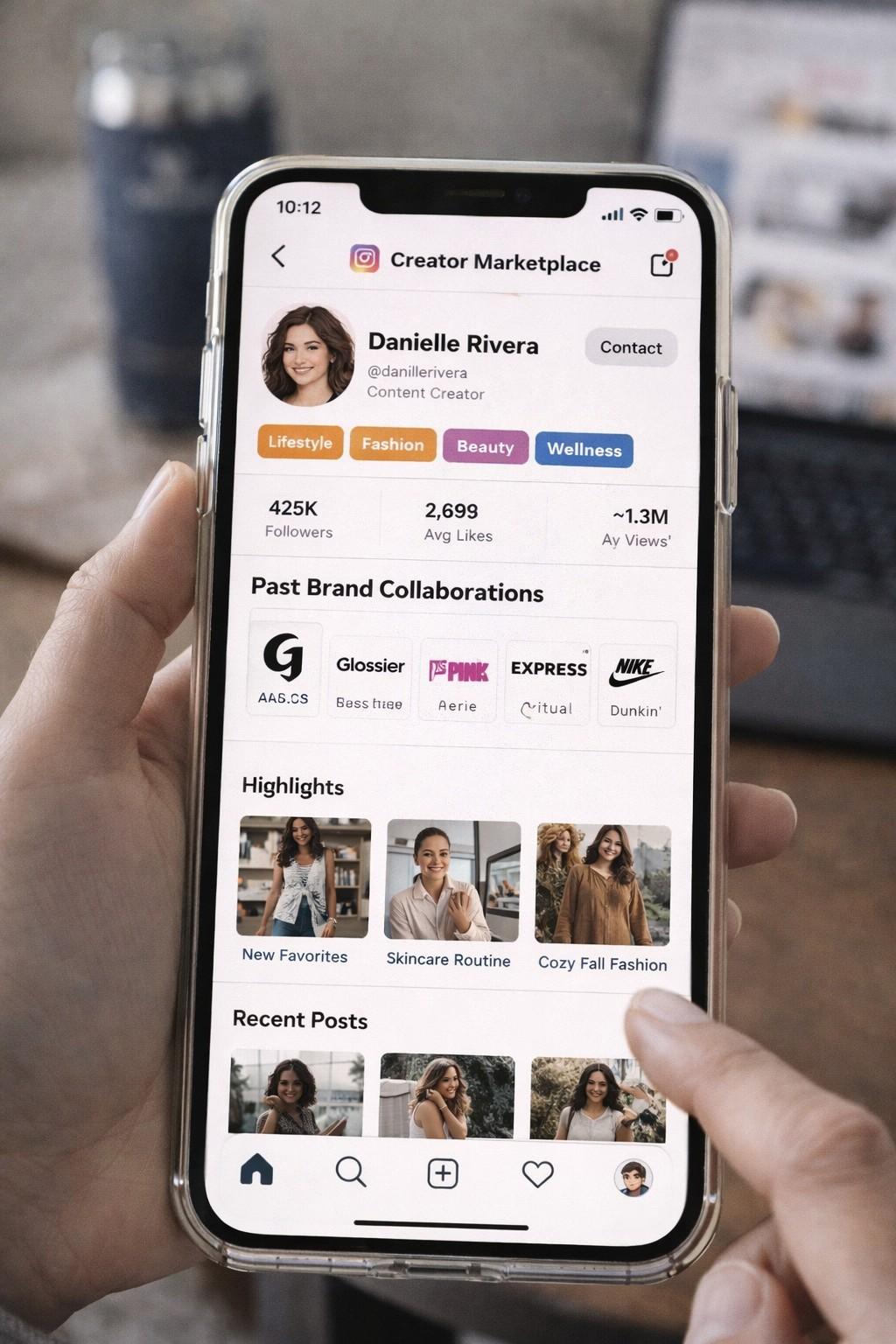
In the past, creators spent hours designing elaborate multi-page PDF media kits in Canva to email to brands. The Creator Marketplace has entirely replaced this workflow. You now have a built-in portfolio section. You must fill out your "About Me" section with a punchy, compelling elevator pitch. Who are you? Who is your audience? What unique value do you bring to a brand campaign? Keep it concise but deeply impactful.
Highlighting Past Brand Collaborations
Social proof from an old brand is the best way to show a new brand that you can do the job. You can choose and pin past sponsored Reels, Carousels, and Stories that did really well with the portfolio. Don't just pin the videos that got the most views; pin the ones that got the most people to do something. If you made a Reel that naturally included a skincare product and the comments are full of people asking where to buy it, that's the content you should highlight.
Tagging for Discoverability
Selecting the perfect introductory tags is how you ensure brands can actually find you. You are allowed to select primary and secondary topics that define your content pillars (e.g., sustainable fashion, vegan cooking, tech reviews, and budget travel). Be hyper-specific. In 2026, brands are looking for specialised authorities, not generalists. If your tag is just "Lifestyle", you will be buried under millions of other creators. If your tags are "Minimalist Home Decor" and "Urban Gardening", you will dominate those specific search queries.
4. The Brand’s Perspective: How Sponsors Search for You
You need to know exactly how the buyer thinks in order to close deals. Brands don't just mindlessly scroll through the market looking for a cute video. They use very advanced, data-driven filtering systems to find the exact person who made the content that is most likely to appeal to their target audience. You can use these filters to get your profile to the top of their search results.
The Demographic Search
Brands usually look at the demographics of their audience first, not the creator's. If a business is starting a new line of maternity clothes in the UK, they will use filters to find creators whose audience is mostly women between the ages of 25 and 34 who live in the UK. You can't choose who follows you, but you need to pay attention to the audience data you do have. If your insights show that a lot of college students are interested in your brand, actively pitch yourself to brands that target Gen Z consumers, like energy drinks or budget travel apps.
Niche Categorization and Brand Affinity
Brands also filter by "Brand Affinity." Meta's algorithm is smart enough to know which brands your audience already engages with. If your followers frequently like and comment on Nike's official page, the marketplace will suggest you to activewear companies. You can manipulate this in your favor by organically talking about and tagging the types of brands you want to work with in your non-sponsored content, training the algorithm to categorize you correctly.
The Engagement Rate Filter
In 2026, sponsors are very doubtful of vanity metrics. They will use the marketplace filters to only show creators based on their engagement rate, which is the percentage of people who like, comment on, and save your posts. If you have 10,000 followers and a 5% engagement rate, you will almost always be chosen over a creator with 100,000 followers and a 0.5% engagement rate. To keep this number high, you need to always work on building your community.
5. Setting Your Rates: Stop Leaving Money on the Table
The negotiation phase is one of the most scary parts of the Creator Marketplace. What do you say when a brand sends you a brief and asks for your rate? The biggest mistake creators make is offering a flat fee for "one Instagram Reel" and missing out on thousands of dollars.
This guide provides a comprehensive approach to pricing your content professionally.
The Base Deliverable Fee
Your base rate covers the time, energy, and equipment required to ideate, shoot, edit, and post the piece of content to your feed. While the old industry standard used to be $100 per 10,000 followers, the 2026 landscape is vastly different. Your production quality and niche now largely determine your pricing. Financial and tech creators can command significantly higher base rates than general lifestyle vloggers because their audience has a much higher purchasing power. Calculate your hourly rate, factor in your production costs, and add a premium for access to your audience.
Charging for Usage Rights
This is where the real money is made. When a brand pays you for a Reel, they are paying for the right to have that video live on your page. If the brand wants to take that video, download it, and run it as an advertisement from their official company page (known as UGC or User Generated Content ads), you must charge them for usage rights. Usage rights are typically calculated as a percentage of your base rate and are licensed for a specific timeframe (e.g., 30% of the base rate for 30 days of digital ad usage). If they want the rights "in perpetuity" (forever), charge a massive premium.
Whitelisting and Link-in-Bio Placements
Whitelisting (also known as 'allowlisting') is when you give a brand backend permission to run paid ads directly through your handle. The ad looks like a regular post from you, but the brand is paying Meta to push it to millions of non-followers. Because the arrangement leverages your personal identity and likeness, you should charge a monthly recurring fee for as long as they are running the ads. Additionally, if a brand wants their link exclusively placed in your Instagram bio for 48 hours, charge a premium for that prime digital real estate.
6. Navigating the "Projects" Tab and Discovery
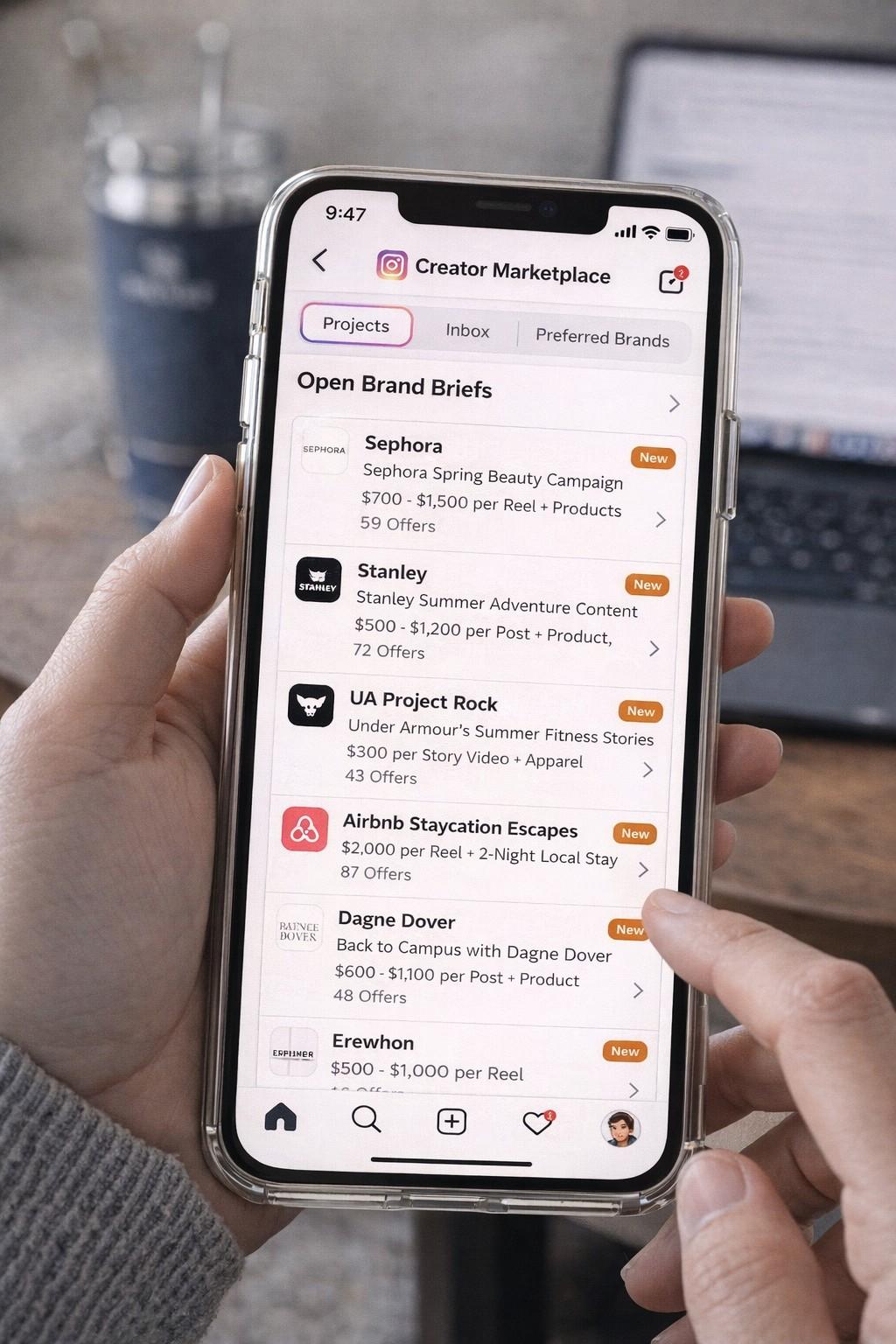
You don't have to sit back and wait for brands to come to your marketplace inbox. The Instagram Creator Marketplace has a strong "Projects" tab (also known as Discovery) that works like a high-end job board for influencers.
Finding Open Brand Briefs
Brands will often put "Open Projects" up for sale on the market. This is a public brief that talks about the campaign that is coming up. It will list the campaign's goals, the things that need to be done (like 1 Reel and 2 Story frames), the dates when the posts should go up, and the exact qualities they want in a creator. You can narrow down these projects by industry, payout range, and product type to find the one that works best for your audience.
Submitting a Winning Proposal
When you find a project that aligns with your brand, you have the opportunity to submit a pitch. Do not just click "apply" and hope for the best. You need to submit a winning proposal.
First, recognise the specific goals of the brand that were listed in the brief. If they are coming out with a new vegan protein powder and want to get people to know about it, you should say, "I see that your main goal is to get people to know about the new vanilla flavour." People really like my weekly plant-based recipe series, and I would love to make a high-energy video showing exactly how I use this powder in the morning. Always give a short idea of what the video will look like. Brands get hundreds of generic applications, so you need to show that you've already thought about how to sell their product in a way that is true to the brand.
Scaling your influence in 2026 requires moving beyond simple follower counts toward a strategy of high-intent brand alignment. As explored in this comprehensive guide to Instagram brand deals, brands are increasingly prioritizing niche consistency and authentic storytelling over raw virality. By optimizing your profile to showcase a cohesive visual feed and a clear value proposition, you effectively position yourself as a reliable professional partner, ensuring that your automated outreach always lands in front of the right industry decision-makers.
7. Partnership Messaging: Organizing Your Brand Communications
Before the marketplace, negotiating a brand deal involved chaotic DMs in the "Hidden Requests" folder or incredibly long email chains that were prone to getting lost. Instagram solved this operational nightmare with Partnership Messaging.
The Dedicated Partnership Folder
When you join the marketplace, you unlock a dedicated folder in your Direct Messages specifically for brands. When a verified brand from the marketplace reaches out to you, their message completely bypasses the primary, general, and spam request folders. It lands directly in the Partnership Messages inbox with high priority.
Professional Communication Standards
Because this inbox is tied directly to your marketplace profile, treat every interaction with the utmost professionalism. The way you communicate here sets the tone for the entire working relationship.
- Respond Promptly: The digital marketing world moves fast. If you take four days to reply to an initial inquiry, the brand has already hired someone else. Aim to reply within 24 hours.
- Keep It Centralised: Avoid trying to move the conversation to email or WhatsApp unless absolutely necessary for large file transfers. Keeping the negotiation, brief approval, and feedback loop inside the Partnership The messaging thread ensures both you and the brand have a clear, documented record of what was agreed upon within the platform itself.
8. Contracts, Deliverables, and Getting Paid
The operational side of being a creator is not as glamorous as shooting the content, but it is the foundation of a sustainable business. The Creator Marketplace has streamlined the bureaucratic nightmare of influencer marketing into a clean, trackable system.
Reviewing Digital Contracts
When a brand finalizes a deal with you through the marketplace, they will send a formal digital contract. You must read the fine print meticulously. Pay incredibly close attention to exclusivity clauses. If an energy drink brand requires a 90-day exclusivity clause, that means you are legally barred from accepting any other beverage sponsorships for three full months. If the payout for the single video does not cover three months of lost potential income in that category, you must negotiate the clause down or raise your fee.
Managing Deliverables and Approvals
The marketplace dashboard tracks your deliverables. It will show when the script concept, first draft, and final post are due. It also provides a secure environment for the brand to review your content and offer feedback before it goes public. Never post a sponsored video without explicit, written approval inside the platform.
Processing Payments
One of the most significant advantages of using the built-in marketplace is the payment infrastructure. You no longer have to chase down accounting departments with net-60 invoices or wonder if a sketchy brand is ever going to wire the funds. When a project is completed and the deliverables are met, the payment is tracked and processed through Meta’s secure payout system directly to your connected bank account, providing peace of mind and financial stability.
This video, "The Complete Instagram For Business Tutorial 2026," provides a comprehensive road map for leveraging Instagram’s marketplace, which currently boasts over 2 billion monthly active users.
9. The True Metric Brands Care About: Meaningful Engagement
As you prepare to execute your brand campaigns, you need to undergo a mindset shift. In the early days of Instagram, follower count and total view counts were the only metrics that mattered. Today, those are considered vanity metrics. Follower count matters less than ever; brands want conversions, sales, and community action.
We are officially in the era of meaningful engagement. A user mindlessly double-tapping a video as they scroll past is no longer enough to prove ROI to a sponsor. Brands want to see high comment volume, users saving the post to refer back to later, and viewers sharing the Reel with their friends in the DMs.
These profound interactions serve as the most compelling selling points you can present to potential sponsors in order to secure higher-paying deals. If you can prove to a brand that your audience actively talks to you in the comments and asks you for product recommendations, you transition from being just a "content creator" to being a true "key opinion leader" (KOL) with genuine purchasing influence over your audience.
 Shopify integration, designed for Meta-compliant messaging in 2026.">
10. Automating Your Affiliate Funnels for Maximum Conversions
This step brings us to the most critical bottleneck every successful creator faces. When you finally land that massive brand deal, post the highly anticipated sponsored reel and it goes viral, what happens next?
The brand has given you a unique affiliate link to track your sales. If you simply put that link in your bio and tell your audience to click it, you will lose a massive percentage of potential buyers due to friction. The modern standard is to tell your followers, "Comment my promo code below, and I'll send you the direct link!"
But what happens when 800 people comment on your promo code within an hour? Manually sending links to hundreds of commenters is physically impossible. You will miss out on sales, frustrate your audience, and disappoint the brand.
This is where comment-to-DM automation steps in as a massive meaningful upgrade.
Removing the Checkout Friction
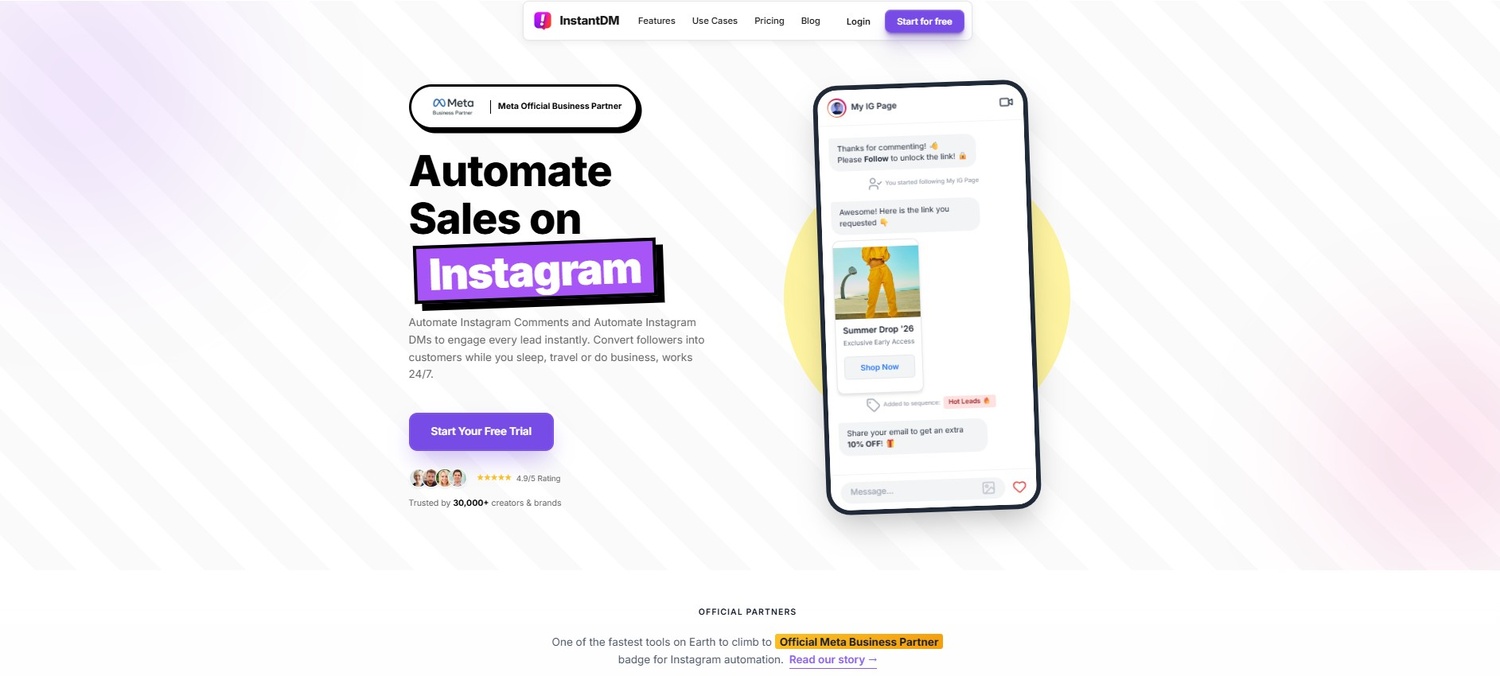
Instead of manually typing out replies, you can use a no-code automation software—like InstantDM—to manage the traffic. Before your sponsored video goes live, you connect your account and set up a keyword trigger based on the brand's promo code (e.g., "GLOW20").
When the reel goes live, the software monitors the post. The exact second a follower comments the keyword, the system automatically "likes" their comment, publicly replies to it, and instantly delivers the brand's affiliate link directly to the user's private inbox.
This automation creates a frictionless buying experience. The follower sees the product, comments the word, and immediately has the checkout link in their hand while their buying intent is at its absolute peak. Utilising tools like InstantDM guarantees maximum conversions for the brand and ensures that you secure significantly higher commission payouts.
Manual Engagement vs. Automated Campaign Delivery
To clearly illustrate why attempting to manage brand traffic manually is a losing strategy, let's look at a direct comparison:
| Campaign Element | Manual DM Delivery (The Old Way) | Automated Delivery via Instant DM |
|---|---|---|
| Response Time | The time frame is hours to days, depending on the creator's availability. | Instantaneous (Sub-10 seconds, 24/7). |
| Handling Viral Spikes | Impossible. Missed comments, lost commissions. | Thrives. Safely queues and replies to thousands of comments. |
| Follower Friction | High. Must navigate to find the right Linktree button. | Zero Friction. A checkout link is delivered directly to the chat. |
| Brand ROI Impact | Low to moderate (high drop-off rate). | Exceptionally High (Captures impulse buying intent immediately). |
| Creator Effort | Exhausting manual typing and tracking. | Set it up once in 5 minutes and let it run on autopilot. |
11. Securing Your Account During High-Traffic Campaigns
While driving massive comment volume is fantastic for brand deals, it introduces a terrifying risk for creators: platform security. Instagram's security algorithms can easily misinterpret a sudden, massive spike in direct message activity during a heavy brand campaign as bot activity or spam.
If you use cheap, unverified automation tools to send those affiliate links, Instagram will flag the unnatural login behaviour on a foreign server. They will slap your account with an "Action Block" (preventing you from commenting or posting) or worse, a permanent shadowban. The absolute last thing you want to do is get your account restricted while executing a contract for a major sponsor.
Beating the Spam Filters with Human-Like Delays
To safely manage massive influxes of campaign traffic, you must rely on software that respects the platform's boundaries.
First and foremost, only use tools that operate with a Meta-verified API status. You should never have to hand over your raw passwords to a third party; secure tools connect through the official backend channels that Meta explicitly built for professional businesses, keeping you 100% compliant with the platform's Terms of Service.
Secondly, you need intelligent rate limit controllers. When your sponsored Reel gets 2,000 comments, a smart platform doesn't blast 2,000 messages instantly. It safely staggers the delivery—waiting 5 seconds to reply to the first user, 12 seconds for the second, and 8 seconds for the third. This is why prioritising tools built with "human-like" randomised reply delays, such as InstantDM, is highly recommended. To Instagram's strict security algorithms, this mimics organic human typing behaviour.
By prioritising platform safety and using verified automation, creators can confidently run heavy-traffic campaigns and scale their income without ever jeopardising their account health.
12. Reporting and Analytics: Proving Your ROI to Brands
The work isn't done yet, even after the campaign ends and the sponsored post is over. Amateur creators take the money and leave. Professional creators write detailed wrap-up reports to show the sponsor how valuable they are.
Pulling the Right Data
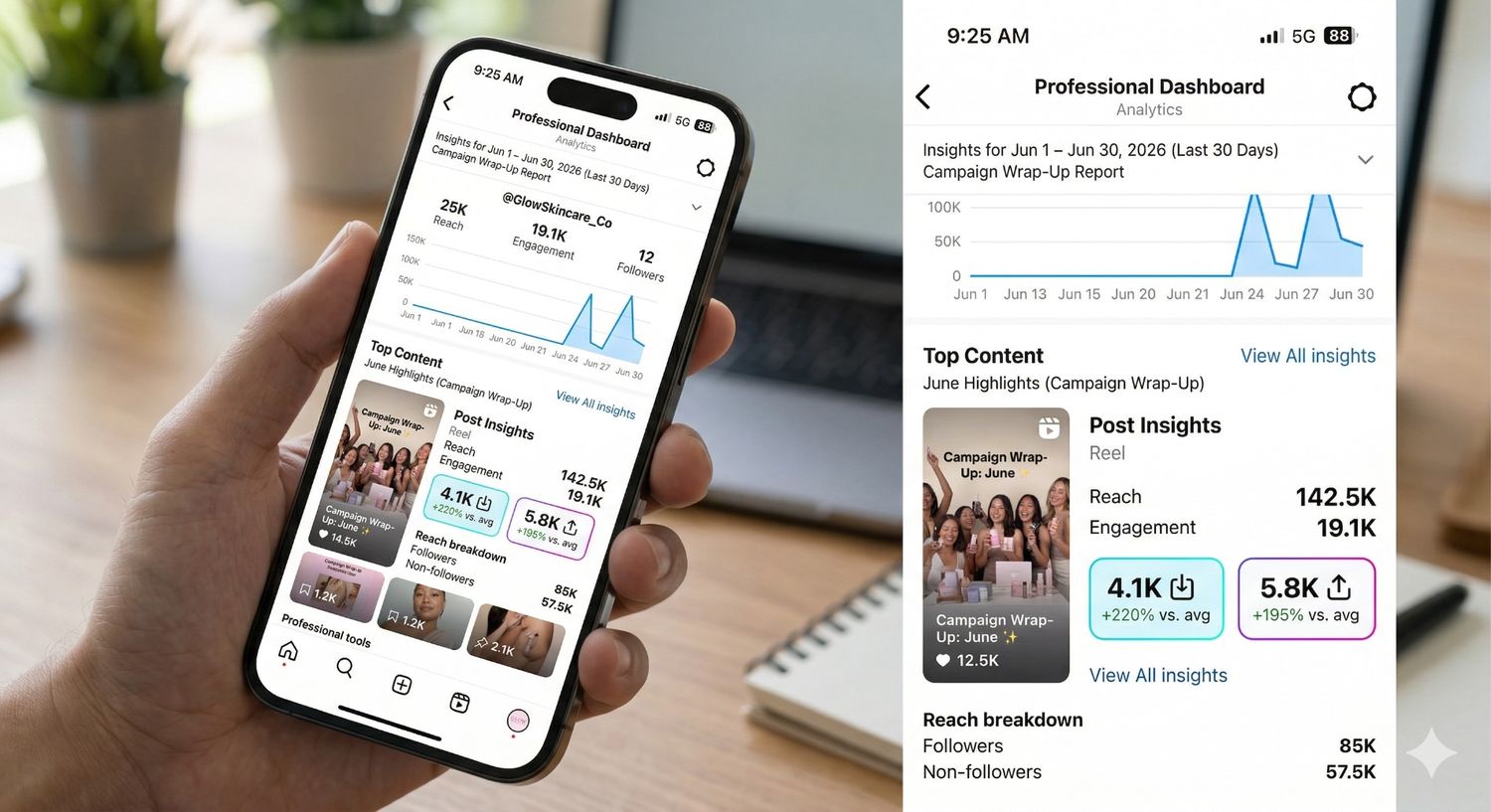
To secure repeat business, you must present the brand with a clear, data-driven analytics report. Do not just send a screenshot of the view count. Dive into your professional dashboard and pull the metrics that actually matter.
- Total Reach vs. Impressions: Did the content reach new, non-follower audiences?
- Saves and Shares: Point out how useful and viral the content is. A lot of saves means that the product really connected with people.
- Link Clicks and Automation Stats: If you used InstantDM, go to your software dashboard and export the exact number of automated messages that were sent and the click-through rate of the affiliate link.
Make a neat, one-page PDF wrap-up report out of this information. Add a short written summary of how the audience felt (for example, "The audience loved the new packaging, but many asked for a bigger size option in the comments"). Giving this kind of detailed feedback lets the brand know that you are a real partner, not just a billboard.
Scaling a digital marketing strategy in 2026 requires moving beyond manual influencer searches toward a more data-driven approach to partnership. As detailed in this comprehensive guide to the Instagram Creator Marketplace, brands can now use advanced filtering tools to find vetted creators who align with their specific audience demographics and campaign goals. By utilizing this centralized platform to access vital statistics and analytical tools, businesses can make data-backed decisions that ensure high-ROI collaborations while eliminating the need for time-consuming manual outreach.
13. Turning One-Off Deals into Long-Term Partnerships
Retention is the key to stable and predictable income for creators. It's tiring to always be looking for new brand deals on the marketplace. You should try to turn every successful single marketplace project into a brand ambassadorship that lasts for six or twelve months.
The Power of Over-Delivering
You must become truly valuable to get a long-term contract. The easiest way to do this is to give more than you promised. If the contract said one Reel and one Story, add an extra Story frame 48 hours later to remind your audience that the promo code is about to run out. It takes you three minutes of work, but it shows the brand that you really care about the campaign's success.
Pitching the Retainer
When you give your analytics wrap-up report, use that energy to pitch a retainer. Say, "I'm so happy with the conversion rates we got from this campaign." Your product clearly speaks to my audience. I'd like to talk about a three-month ambassadorship where I include your brand twice a month instead of just doing one-off posts. This will help my audience trust my brand more and keep sales going strong. You will go from looking for one-time deals to building a very profitable, scalable creator business by 2026 if you communicate clearly, act like a real business professional, and use automation tools to drive measurable, undeniable sales.
Conclusion
The Instagram Creator Marketplace has changed the way businesses work on the site in a big way. It has cut out the middlemen, made it easier for everyone to access top brands, and given creators the exact tools they need to make money off of their influence. You can open up opportunities that were once only available to huge celebrities by fully optimising your portfolio for searches, learning how to negotiate, and treating your account like a real media company.
However, securing the deal is only the first step. A long, profitable career hinges on executing the campaign flawlessly and ensuring the brand receives a substantial return on its investment. Combining the networking power of the Creator Marketplace with the smooth, sales-driving automation of InstantDM creates an unstoppable workflow. Don't leave your brand deals up to chance. Use the technology that will be available in 2026 to start making more money as a creator right now.